
Brown patches do not come with a cause label
A lawn can look fairly even from the front door while small brown spots become obvious beside the walk. When you look closer, a few stems may be lying loose. That combination naturally raises questions about insects. Before calling it billbug damage, describe what is brown and what is loose. Are you looking at leaves, upright stems, runners or a piece of turf that has detached? If those parts are hard to distinguish, a clear photograph and an honest description are a better starting point than a confident botanical label.
The billbug question is especially useful when it leads to a more careful examination of grass structure. It becomes less useful when every brown spot is assigned the same cause without evidence. Happy Grass can discuss how the affected area relates to a mowing visit, but a maintenance conversation cannot confirm an insect simply from the color of the yard. This guide helps you prepare a record that an identification professional can evaluate and that a lawn maintenance provider can understand.
Why the stem is part of the question
LSU AgCenter describes hunting billbug larvae feeding within stems and around lower plant parts and roots. The larvae are pale, legless and brown-headed; adults are hard-bodied beetles with a noticeable snout. LSU also describes scattered brown patches that can join together, with hollowed stems and fine material among possible clues. These features explain why a billbug investigation may look below the outer leaf surface. They do not make a broken stem or an unidentified beetle sufficient proof.
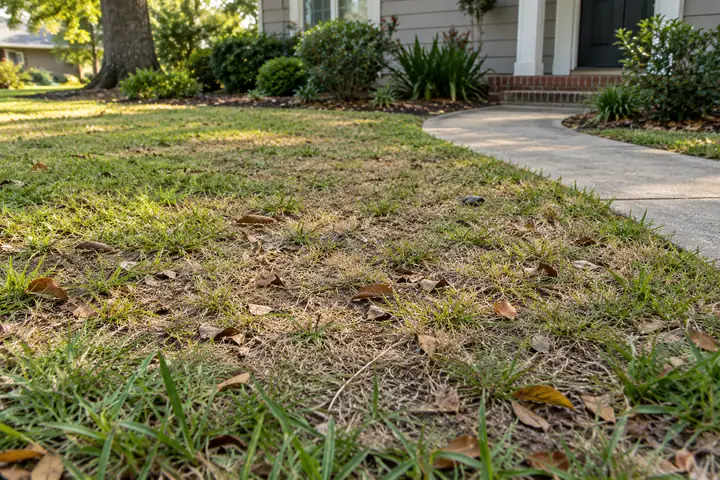
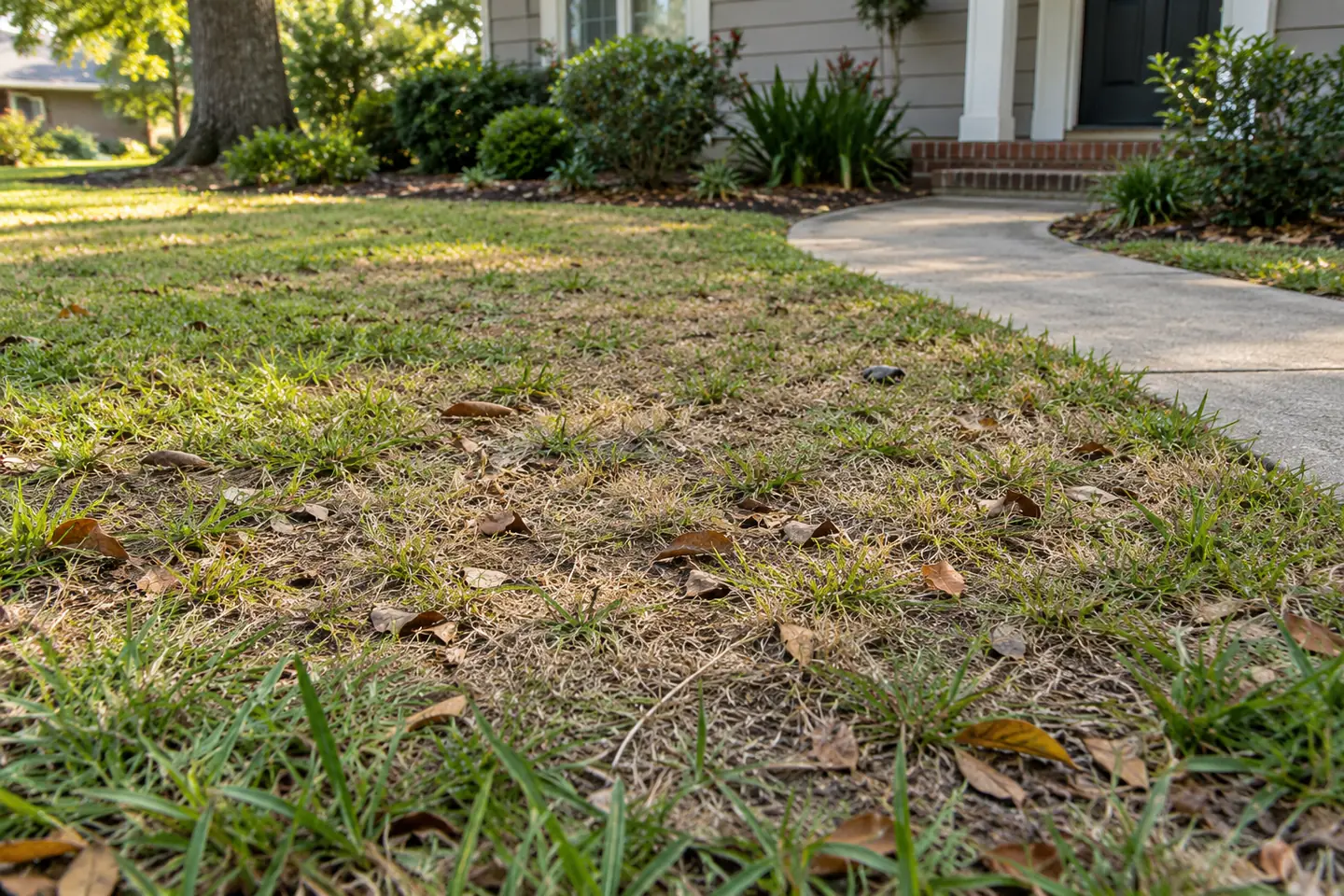
Keep the insect stage separate from the grass feature when you write your notes. A beetle walking on concrete is an adult observation. A pale organism exposed during unrelated yard work is a different observation. A brittle stem is a plant observation. Their locations and dates determine whether they can be meaningfully connected. Do not combine images from different properties or months into a single apparent event. The dry-looking lawn illustration here supplies setting only; it is not an identification image or a record of confirmed injury.
Start with grass that is already visible
You do not need to pull a trail of grass out of the yard to describe a concern. Begin with the material already exposed at the patch edge or on the surface. Photograph where a loose stem was found before moving it, if that is practical. Include a view that shows its relationship to the standing grass. If it was collected after mowing or after another person worked there, explain that history. Otherwise the reviewer may reasonably assume the material was attached when you found it.
Resist the urge to turn a simple pull into a pass-or-fail diagnosis. How easily a plant part separates is an observation that needs context, including what part separated and what was left behind. A phone video that shows you tugging hard can be less helpful than an undisturbed close-up. If the specialist wants a particular examination or sample, follow that request. Keep unnecessary disturbance out of the process so the next person has something useful left to examine.
Map the small spots before they become one large description
Scattered patches are easier to discuss when each has a simple reference. You might identify one beside the porch step, another beyond the driveway curve and a third near the gate. Record whether they appear separate or connected from your normal viewing height. A quick sketch with those landmarks can help you avoid calling three different areas the same spot during later conversations. No precise coordinates or elaborate property survey are required for this private maintenance discussion.
For each location, retain one wider photo and one detail. Use the same orientation when you return so the comparison remains understandable. If the nearby grass has been cut in the meantime, note that before comparing apparent patch sizes. A changed height or camera position can make the edges look different in a photograph. You can still document the change; simply explain the conditions instead of presenting two unlike pictures as a precise measurement of how far a problem spread.
Give an insect image enough information to survive sharing
When a beetle is visible, try to photograph its whole body in focus. Keep the original file so a specialist can inspect details that a messaging preview may blur. State where it was seen: walking along paving, resting on grass, or exposed in a specific patch. If you have several insects in separate photographs, number the files and give each its own note. A label such as beetle one is more honest than assigning a species before the identification is complete.
Do not place an unfamiliar insect on your hand to provide scale or squeeze it to expose a feature. An ordinary nearby object can sometimes provide context without handling, but avoid positioning anything that disturbs the scene. Ask the receiving service whether the existing view is adequate. The best next step may be a different photograph or a professionally collected specimen. Either is preferable to damaging the only evidence while trying to produce a dramatic close-up.
Keep mowing history specific
Write down the date of the most recent cut if you know it, along with whether the brown spots were visible beforehand. If you do not know, say that you first noticed them afterward. First noticed after is a useful statement about your observation; caused by mowing is a different conclusion that needs support. This distinction keeps the conversation fair and makes room for the actual evidence. It also avoids turning the inspection into an argument over a cause that no one has established.
If a lawn section was previously left longer, record that location rather than describing the entire property as uniformly maintained. Include recent work that changed what could be seen, such as moving a large object or clearing a narrow passage. These details can explain why a patch became noticeable without explaining its biological cause. The purpose of the history is to orient the reviewer, not to build a case for the first theory that came to mind.
Use a comparison that could challenge your first guess
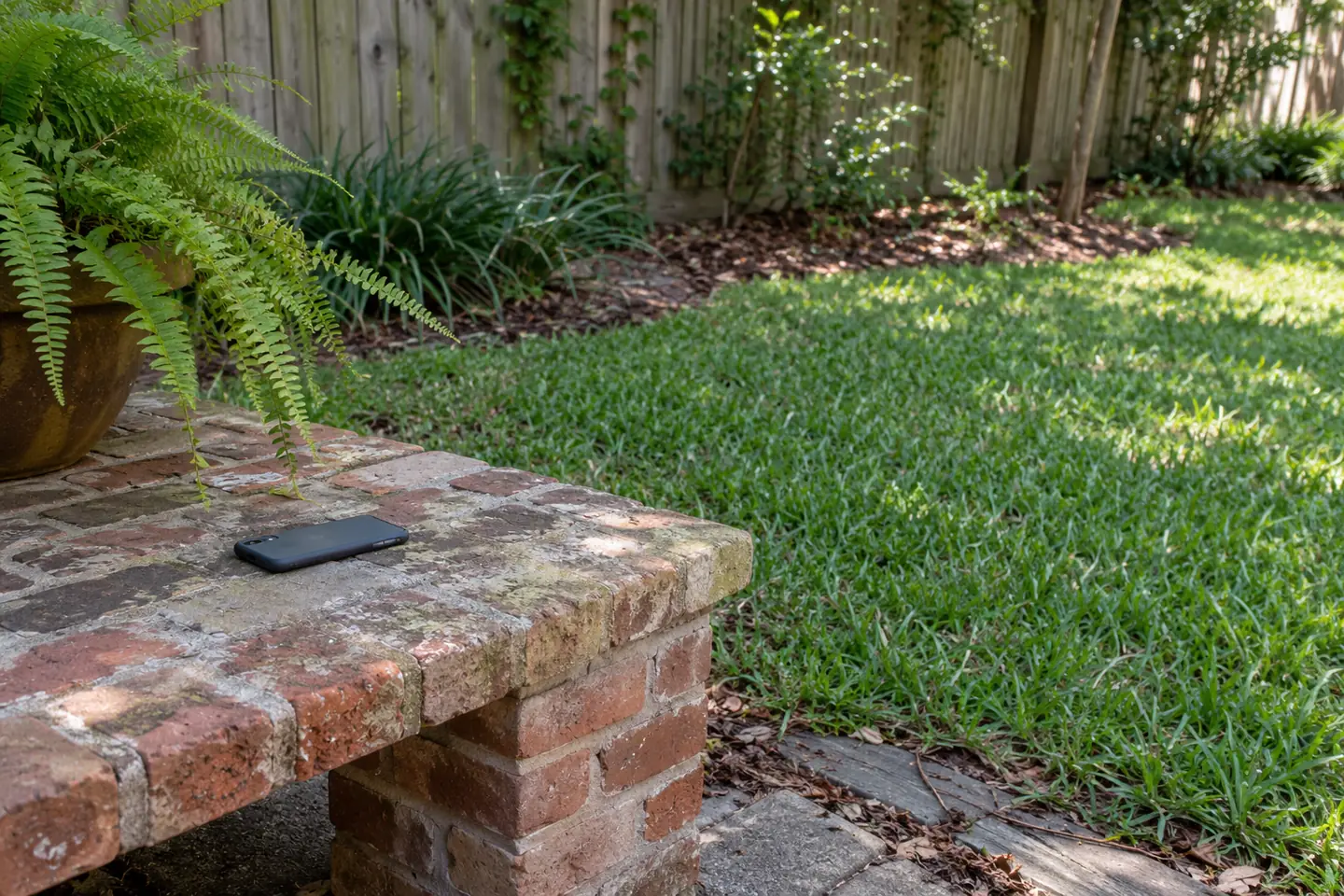
Choose one nearby area that looks healthy to you and photograph its stems and surface from a similar distance. This gives the reviewer a reference for what you mean by unusual. If loose material is also present there, include it rather than omitting it because it complicates the story. A useful record can contain evidence that does not fit your initial guess. That is how the investigation stays open to a better explanation.
Avoid taking a single lawn feature as a reason to change every routine at once. If you alter the cut, watering and yard use simultaneously, later observations become harder to interpret. Ask the relevant professional what needs attention and keep a dated account of any changes you actually make. This is not a treatment schedule. It is a way to ensure that the next person reviewing the lawn can tell the difference between an observed change and an undocumented intervention.
Turn the evidence into two clear requests
For identification, explain the scattered patches, the plant material you saw and any insect evidence, then ask what further information is needed. For maintenance, explain which areas are included in the upcoming visit and whether a particular patch needs review before work. A simple sentence such as brown spots near the driveway are being evaluated is more useful when paired with a named boundary. Do not make the lawn crew infer a treatment instruction from an insect photograph.
Once advice arrives, preserve the actual conclusion. Was a billbug identified, was a specimen inconclusive, or was further sampling recommended? Those outcomes lead to different follow-up questions. Share only the maintenance implications that have actually been established and identify who can answer unresolved technical points. Clear responsibilities let you keep the yard conversation friendly even when the underlying plant problem takes additional work to understand.
File the stem image with the right lawn section
A close view of a stem can become almost impossible to place once it is separated from the original message. Use a filename or caption that connects it to the location identifier and date. If you later find a similar-looking piece beside a different patch, create a new entry. Do not overwrite the old image because the newer photograph is sharper. The earlier observation may still matter to the timing, even when it was not detailed enough for identification.
Keep any statement about where the material came from equally specific. Found on the driveway after the cut is different from still attached at the patch edge before the visit. Those distinctions can prevent a reviewer from drawing a connection that the available evidence cannot support.
Talk to Happy about the maintenance part
Happy Grass offers mowing, edging, weed-eating and blowing discussions for Westbank properties. It does not provide billbug treatment or laboratory diagnosis. Reach Happy at 504-339-3571 and describe the location and requested maintenance scope. A confirmed work agreement can respect a separate investigation without promising that a tidy finish will cure a brown patch.
A short record to bring to the conversation
- Describe which plant part was already loose.
- Label a beetle seen on paving by its actual setting.
- Keep each scattered brown spot identifiable in later photographs.