
A bag of dead grass may not answer the question
When a patch looks bad enough to need help, the completely brown center can seem like the obvious place to collect a sample. It is the part that worries you most. Yet the material that looks most dramatic is not automatically the material a diagnostic service can use best. Before removing turf, describe the situation to the receiving professional and ask what should be collected. The right sample is chosen for the question, not for the most alarming photograph.
This page concerns preparing a plant diagnostic submission, rather than routine lawn soil testing or an informal inspection of roots. Those activities can serve different purposes. Identify which service is receiving the material and what analysis is being requested. A homeowner should not have to guess whether a bag of soil, detached leaves or a whole turf section is appropriate. Asking first helps preserve useful material in the yard and keeps the submission from becoming an expensive version of the wrong question.
Why a transition area can be important
LSU AgCenter's diagnostic guidance describes turf samples that include affected and healthier material at a patch boundary, with foliage, roots and soil connected. It explains that completely dead material is often less useful and emphasizes submitting a good, fresh sample with information about how the problem developed. These principles help explain why the location of collection matters. They do not authorize a homeowner to choose dimensions or packing from memory when the receiving service has current instructions.
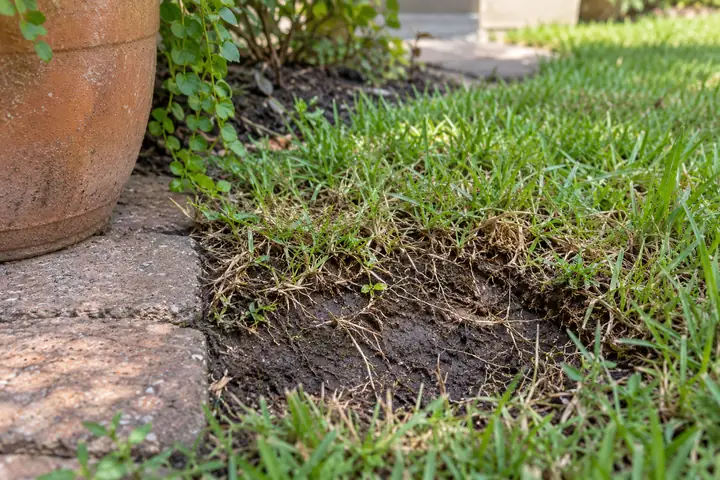
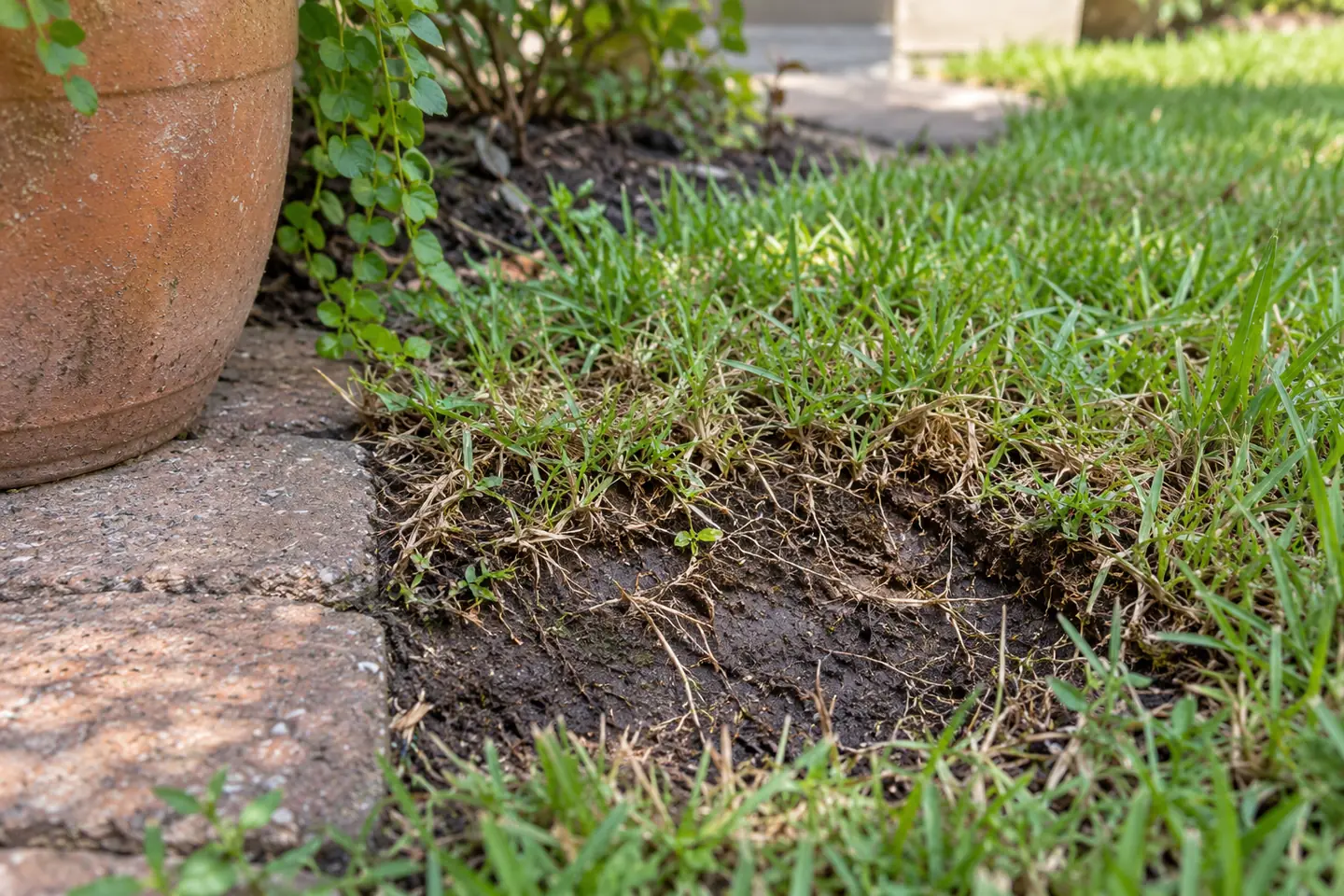
Ask that service about the sample type, size, collection method, packaging and delivery before you begin. Instructions can differ by the question and analysis. This guide is not a substitute form or a promise of a particular diagnosis. The exposed grass-edge illustration supplies a general setting for thinking about connected turf material; it is not a model specimen, a collection demonstration or a photograph of a confirmed disease.
State the diagnostic question in one useful paragraph
Describe the grass change in plain language, where it occurs and when you first noticed it. Include whether the area is enlarging, returning in the same place or newly visible after an object was removed. If you are uncertain about a date, use a supported range rather than inventing a precise day. Ask what evidence would best help evaluate that condition. This gives the receiving service a starting point without directing it toward a diagnosis you have already selected.
If you have an earlier report, mention its actual finding and the area it represented. Do not summarize an inconclusive result as no disease or a suggested possibility as confirmed. The exact wording can affect what the next professional asks for. Keep a copy available and ask whether it should accompany the new request. A clear question can often prevent unnecessary repetition while leaving room for a different test or a better sample.
Keep the sampling map separate from the picture collection
Photographs show appearance; a sketch can show where the submitted material came from. Give the collection location a simple identifier and connect it to stable landmarks. If there are several patches, distinguish them before anyone cuts a sample. A private map might label the walk-side patch A and the rear-border patch B. These labels do not need to appear in public, but they must remain consistent on the sample record and in your communication with the adviser.
Take an undisturbed wider view before collection if the location can be approached appropriately. Follow with a view that shows the intended boundary, without marking up or rearranging the grass for visual effect. Retain the originals and make annotated copies only if they help explain the location. That way, the adviser can see both the untouched photograph and your interpretation. An arrow on a copy should clarify where you mean, not replace the evidence beneath it.
Clarify who is authorized to remove turf
In a shared yard or rental property, make sure the person arranging the diagnostic work has addressed permission for the disturbance. The maintenance provider and the diagnostic collector may be different people. Do not assume one has agreed to perform the other's task. Identify who will collect, who will submit and who will receive the result. If access depends on another person opening a gate, arrange that directly before collection rather than leaving it as an unanswered detail.
Check the requested location for known site restrictions with the responsible people. A homeowner's desire for a sample does not eliminate concerns about concealed equipment, utilities or an unsuitable working route. If the location cannot be sampled as proposed, explain the obstacle to the adviser and ask for an alternative. Do not move the collection to a convenient but unrelated lawn corner while keeping the original label. That would quietly change what the eventual report represents.
Use the requested packaging for the actual submission
Diagnostic instructions may specify how plant material and soil should be kept together or separated. Follow the receiving service's current directions instead of copying a generic gardening image. Prepare the container and form before collection so you are not improvising while exposed material waits. Make the sample identifier legible and ensure it agrees with the paperwork. If a collector uses a different identifier, reconcile it in writing before the sample leaves the property.
If two instructions appear inconsistent, ask the receiving service which applies to this submission. A general brochure, a specialized diagnostic form and a page for another test can describe different situations. Do not blend selected parts into your own procedure. The service should tell you what it needs for the requested analysis. This page therefore avoids prescribing an exact container, shipping day, fee or turnaround promise that could be wrong for the current request.
Record the material's journey honestly
Keep the collection date and the actual submission or delivery date with the sample record. Note an unexpected delay or a packaging issue if one occurs. Give that information to the receiving service and ask whether another sample is needed. A diagnostic report is easier to assess when the professional knows what happened to the material. Hiding a delay to keep the paperwork tidy can make a limited result look more conclusive than it should.
Do not attempt to refresh an old sample by adding water or trimming away inconvenient material unless the receiving professional directs that action. The specimen's condition matters, and an improvised correction can change what is available to examine. If material was altered, describe how. The goal is not to present the neatest-looking parcel. It is to provide a representative sample in the condition and format the service can evaluate, with a truthful account of its origin.
Plan for the opening left in the lawn
After an authorized sample is removed, record the location and physical condition of the disturbed spot. That becomes a separate maintenance detail even before the diagnostic answer arrives. Tell Happy where the opening is and whether the area has any agreed restrictions. Do not leave a loose tool, hidden cover or unexplained container in the grass as the only warning. A dated photograph with a recognizable boundary is easier to connect to the actual work area.
Ask who is responsible for the disturbed location and what follow-up has actually been arranged. The laboratory's receipt of a sample does not repair the lawn opening or define the next mowing scope. Keep those responsibilities visible in your private record. If the surrounding lawn is still part of the ordinary request, say so. If part of the yard should remain undisturbed pending follow-up, confirm that limit rather than assuming everyone knows why the patch is being left alone.
Read a finding in the context of the submission
When the report arrives, verify the sample identifier and collection location before discussing the conclusion. Ask what was established, what remained uncertain and whether further evidence is recommended. A report may narrow the question without explaining every changed area of the property. Keep the interpretation with the diagnostic professional, especially if different patches were never included in the submission. One sample should not silently become a diagnosis for the whole address.
Save the report, photographs and collection notes together. If the adviser recommends a follow-up observation, record what comparison is requested and when you actually make it. This makes the next conversation more useful than starting again with an anonymous patch photo. A careful sample record is valuable even when the answer is limited because it preserves what was tested and lets the next step target a real remaining uncertainty.
Coordinate maintenance around the diagnostic work
Happy Grass can discuss mowing, edging, weed-eating and blowing around a clearly described inspection area. It does not operate a diagnostic laboratory or provide pest-control treatment. Call 504-339-3571 and ask for Happy to explain the current ground condition and the maintenance you want reviewed. Keep sample collection and technical interpretation with the appropriate service.
A short record to bring to the conversation
- Ask which turf material the diagnostic service needs.
- Keep the collection point and sample history connected.
- Communicate the opening left by authorized sample removal.