
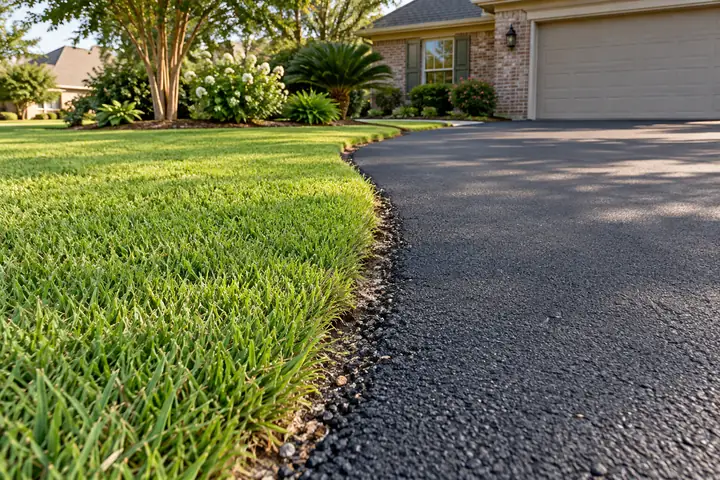
Read the existing edge before choosing a tool
Walk the driveway border and distinguish grass overhang from broken asphalt, gravel shoulder and exposed soil. A dark irregular line may be the original paving shape rather than an overgrown edge. Ask the owner whether the driveway was recently installed, patched or sealed. Happy does not repair asphalt or decide its intended width. The mowing plan should follow a stable visible boundary and leave uncertain sections for the paving provider to assess.
Keep the grass cut independent from the pavement condition
The lawn does not need to be scalped because the shoulder is low or rough. Maintain an appropriate grass height and use controlled trimming where the surface permits it. A bare trench beside asphalt can collect water, expose aggregate and make the transition harder to maintain. If the owner wants a new straight border, that is a design or paving conversation. Happy can explain the existing mower route without promising that repeated edging will create a structural edge that is not there.
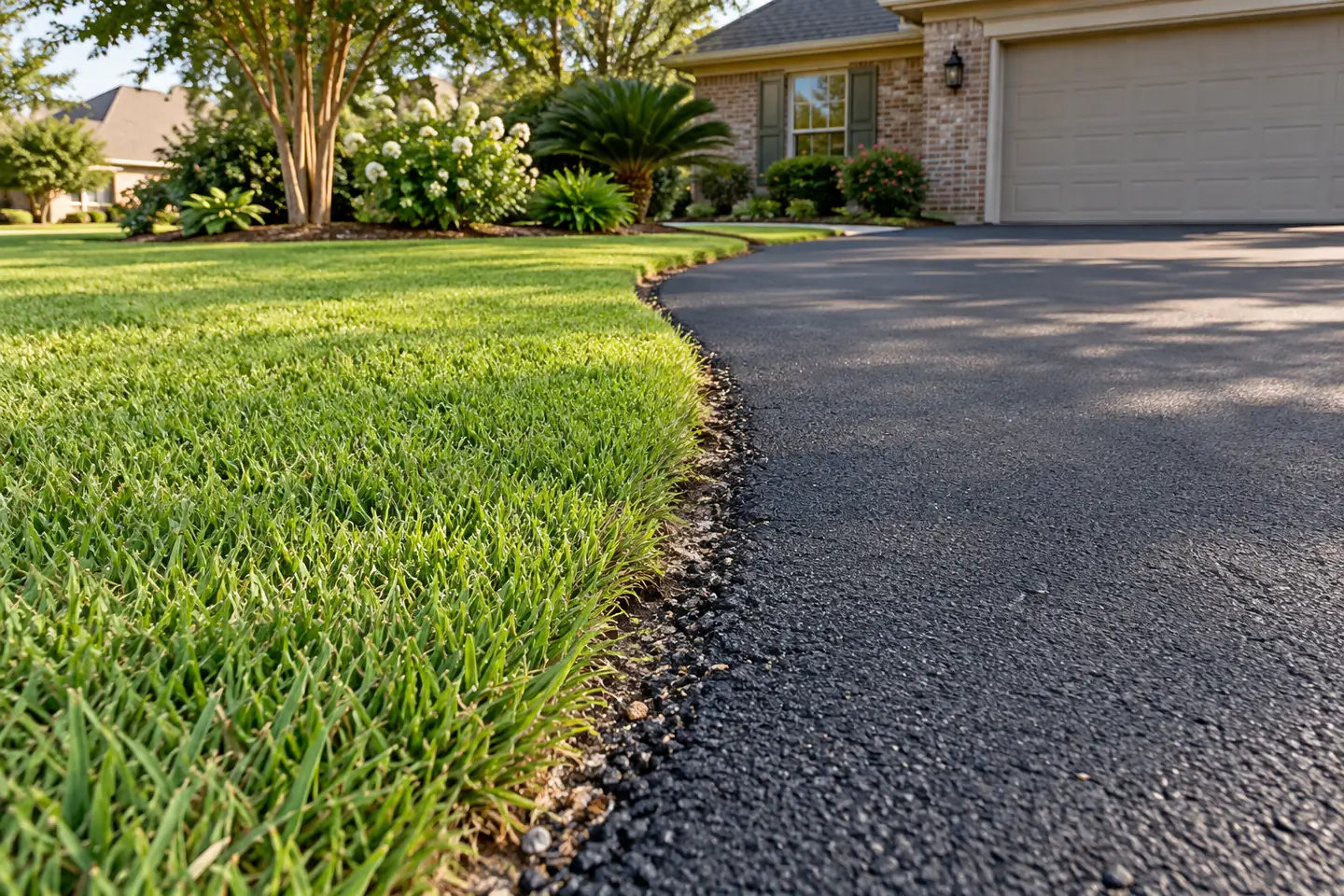
Protect loose or crumbling sections
Small asphalt pieces and stones can become thrown debris. Inspect the lawn fringe and have loose material collected before mowing. Do not run a hard edging blade through a broken shoulder to make it look even. Mark the affected length and keep wheels farther into established grass. The owner should ask the paving provider whether the border needs repair or support. Happy's role is to avoid adding contact damage while keeping the accessible lawn outside the repair area tidy.
Review new paving and sealcoating instructions
Fresh asphalt, patches and coatings have access restrictions determined by the provider and conditions. Obtain the actual release before crossing or turning equipment on them. Do not use a general online waiting period as permission for this driveway. Happy should not touch-test a coating or move barricades. If the usual unloading point is closed, arrange an approved alternate that fits the equipment. The visit can be adjusted without making the lawn crew responsible for judging pavement cure.
Keep turns off the fragile shoulder
A mower pivot at the exact grass-pavement seam can tear turf or place a tire on an unsupported edge. Make turns on firm established lawn with enough room for the machine. When the strip is narrow, choose a route with fewer reversals and use controlled finishing for the remainder. Do not climb the driveway lip repeatedly. A predictable pass protects the border better than chasing every blade of grass with the deck pressed against paving.
Watch hidden gravel and driveway sweepings
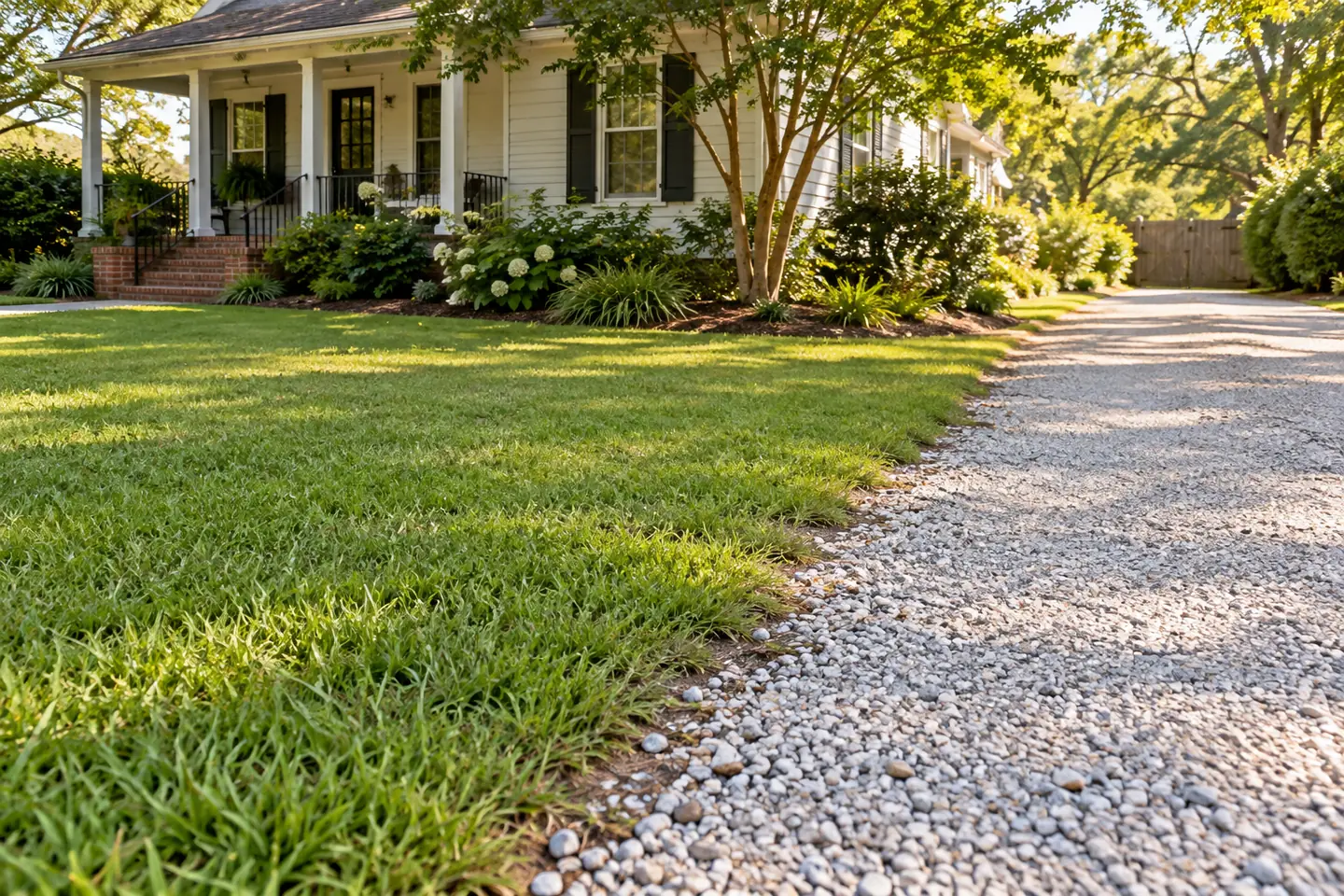
Driveway cleanup can move sand, aggregate, screws and vehicle debris into the lawn. Check the grass after sweeping, repairs or a material delivery. CPSC mower guidance recommends clearing objects before blades start. A blower should not send hard pieces farther into turf or toward a parked car. If the shoulder contains loose gravel by design, define where grass maintenance stops and aggregate management begins. A crisp finish can respect that boundary without pretending the stones are safe to mow through.
Keep clippings away from wet coatings and drains
Direct discharge into open lawn when practical, then clear ordinary clippings from released paving. Avoid blowing material onto a surface still curing or pushing a pile into a street gutter. EPA stormwater guidance advises keeping yard debris out of drainage systems. If the driveway drains through a low lawn corner, note any softness before turning there. Lawn blowing should improve the final surface without redistributing debris into water routes or another property's frontage.
Use an asphalt-edge checklist
- Confirm recent paving, patching or coating work with the owner.
- Identify stable edge, loose aggregate and damaged shoulder.
- Obtain the provider's access release for new surfaces.
- Clear hard debris from the grass fringe before mowing.
- Keep turns and wheel loads away from fragile edges.
- Record any length left for paving or drainage review.
Inspect transitions at culverts and driveway aprons
The lawn edge changes where asphalt meets a culvert, concrete apron, sidewalk or roadside ditch. Look for abrupt drops, exposed pipe ends and uneven patches. Do not assume the safe route along the main driveway continues through the crossing. Happy can maintain the released grass while avoiding questionable footing. Culvert repairs, road work and right-of-way decisions belong with the responsible owner or authority. Add each transition to the private property map so it does not surprise another operator.
Account for parked vehicles before trimming
A car parked partly on the edge can hide broken paving and restrict discharge direction. Ask the owner to clear the adjacent space during the service window when practical. Happy does not move vehicles or squeeze equipment against a bumper to reach a narrow grass wedge. If access remains blocked, document the unfinished strip and discuss the next opportunity. A small inaccessible edge is easier to explain than damage caused by working too close to a vehicle.
Distinguish pavement weeds from the lawn boundary
Plants in asphalt cracks may need a different scope than grass beside the driveway. Edging the turf does not automatically include crack treatment or pavement restoration. Do not dig into a crack or apply products based on a visual guess. Happy's weed-control scope should be discussed specifically, with appropriate label directions and surface considerations. If the paving provider plans repair, coordinate timing so lawn work does not disturb patch material or fresh markings.
Recheck after storms and heavy deliveries
Rain can wash shoulder material into turf, and a delivery vehicle can alter an edge that previously supported light traffic. Photograph any new depression, displaced chunk or soft patch. Describe the change without concluding how much structural damage exists. The owner can ask the paving or landscape provider for an evaluation. Happy should revise its route immediately around the visible condition, even if a repair date is still being arranged.
Set a realistic finished appearance
An older driveway may keep an irregular outline after the lawn is neatly trimmed. That can still be a successful service result. Agree on visible grass height, clear clippings and a protected repair margin rather than a promise of a ruler-straight asphalt edge. If the owner later repairs or widens the drive, update the mowing footprint. The lawn and paving look better together when their boundaries reflect what is actually built.
Keep one current driveway note
Record recent coatings, unavailable crossings, drainage soft spots and the agreed vehicle arrangement in a short property note. Remove obsolete restrictions only after the owner confirms the surface is released. A wide photo from the driveway entrance toward the house is often enough to orient the route. With stable access and clear scope, Happy can leave a tidy lawn border while the paving provider handles the driveway's structure and finish.
Inspect runoff where the driveway meets the lawn
An asphalt surface can shed water toward one low grass corner, especially where an apron or patch changes the slope. Note erosion, exposed roots or a recurring wet fringe without cutting a channel beside the edge. The owner should have the appropriate provider review drainage if needed. Happy can choose a different turn and preserve the visible surface for evaluation. A mowing pattern should respond to the water condition rather than attempting to correct paving drainage through repeated tire passes.
Keep paving materials out of lawn storage
Buckets, tools, tape, cones and bags from a driveway project should leave the grass before service. Some may contain coating residue or loose aggregate that should be handled by the paving crew. Happy should not empty a container or carry it into a bed for convenience. Have the owner confirm the storage area is clear, then inspect the exposed turf. A surface can be released for vehicles while the lawn-side cleanup still needs another step.
Compare old and new borders after repair
Patching may widen a small section or leave an abrupt corner where the old lawn edge used to run. Take a current photograph and update the trimming line. Do not follow an old groove through new paving or assume every dark patch has the same load restriction. The paving provider's release should describe the repaired area, and Happy should maintain the resulting grass footprint as it now exists.