
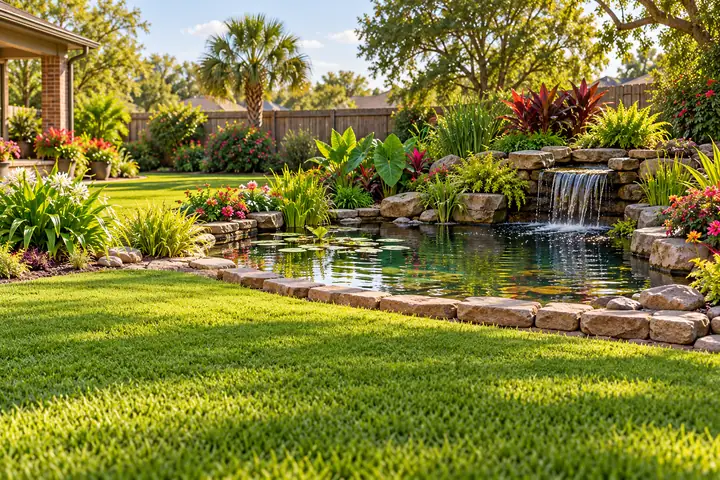
Start with the edge you can actually see
Ornamental ponds use many kinds of borders: mortared stone, loose rock, flexible liner, plants, timber or a gradual shelf. The safest lawn plan begins with the present visible boundary, not the shape remembered from installation. Grass and groundcover can hide a liner lip or unstable stone.
Walk the full perimeter from dry ground and photograph the narrowest approach. Happy Grass can quote reachable lawn outside an agreed buffer. Pond cleaning, aquatic plants, fish, pumps and water quality remain the owner’s responsibility. No one should step onto a border simply to reach one more strip of grass.
Keep a dry buffer around the water
Wet grass reduces traction, and a soft pond edge can settle under weight. Test the surrounding ground before service without walking on loose stones. If the soil flexes, sinks or holds water, widen the excluded area for that visit even when the rest of the yard is ready.
The buffer may change after rain, overflow or maintenance. Mark it with a stable visible feature rather than a loose string in the lawn. Happy can stop farther back when conditions require. A neat finish is not worth damaging the bank, liner or surrounding soil.
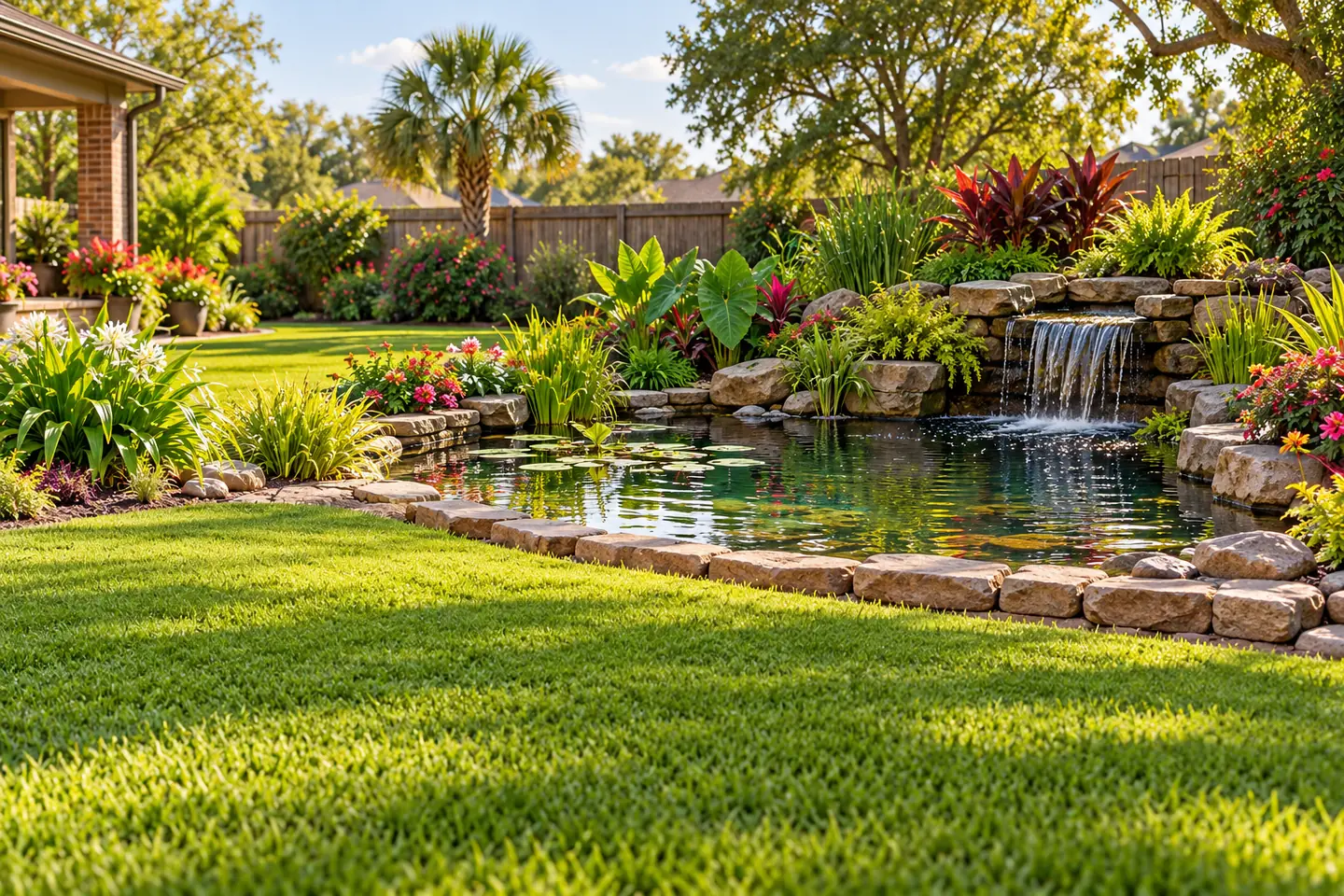
Contain pumps, cords and low-voltage lines
Fountains and filters may have power cords, tubing and control boxes near the edge. These systems must be properly installed and kept out of the grass route. Do not place temporary extension cords across the lawn or cover connections with leaves, mulch or decorative rocks.
Happy Grass does not test electrical protection, unplug equipment or service pumps. If a cord, outlet or control appears damaged or wet, exclude the area and contact a qualified professional. The lawn scope should end before any powered water-feature component.
Coil fill hoses and expose buried tubing
A garden hose used to top off the pond can disappear in tall grass. Coil it at its normal storage point before arrival. Show Happy where fixed supply or return tubing leaves the water feature, especially if it crosses under turf or rises near the mowing edge.
Do not ask the crew to move tubing or decide whether a line is pressurized. Leaks should be corrected before lawn work because they can undermine the border and create soft ground. Happy’s role is maintaining agreed grass, not diagnosing the water system.
Check stones, gravel and decorative pieces
Loose gravel and small rocks can be thrown by powered equipment. Rake displaced material back onto the pond side of the boundary before service. Stable large stones may still have sharp projections or gaps that make close trimming impractical.
Decorative figurines, lights and small planters should stay on a secure surface outside the grass path. If they are set in the turf, the owner should relocate them in advance. Happy Grass does not rearrange pond décor or accept responsibility for items hidden by plants.
Protect wildlife without making lawn-care claims
A pond may attract frogs, birds, insects and other wildlife. Look before walking or moving anything, and keep the agreed buffer intact. Happy Grass does not handle animals, manage habitat or apply pesticides around the feature.
If fish or other animals require special timing, the owner should coordinate that with the appropriate caretaker. Lawn service should never involve adding chemicals, changing circulation or cutting aquatic vegetation. The practical boundary is dry reachable turf outside the water-feature zone.
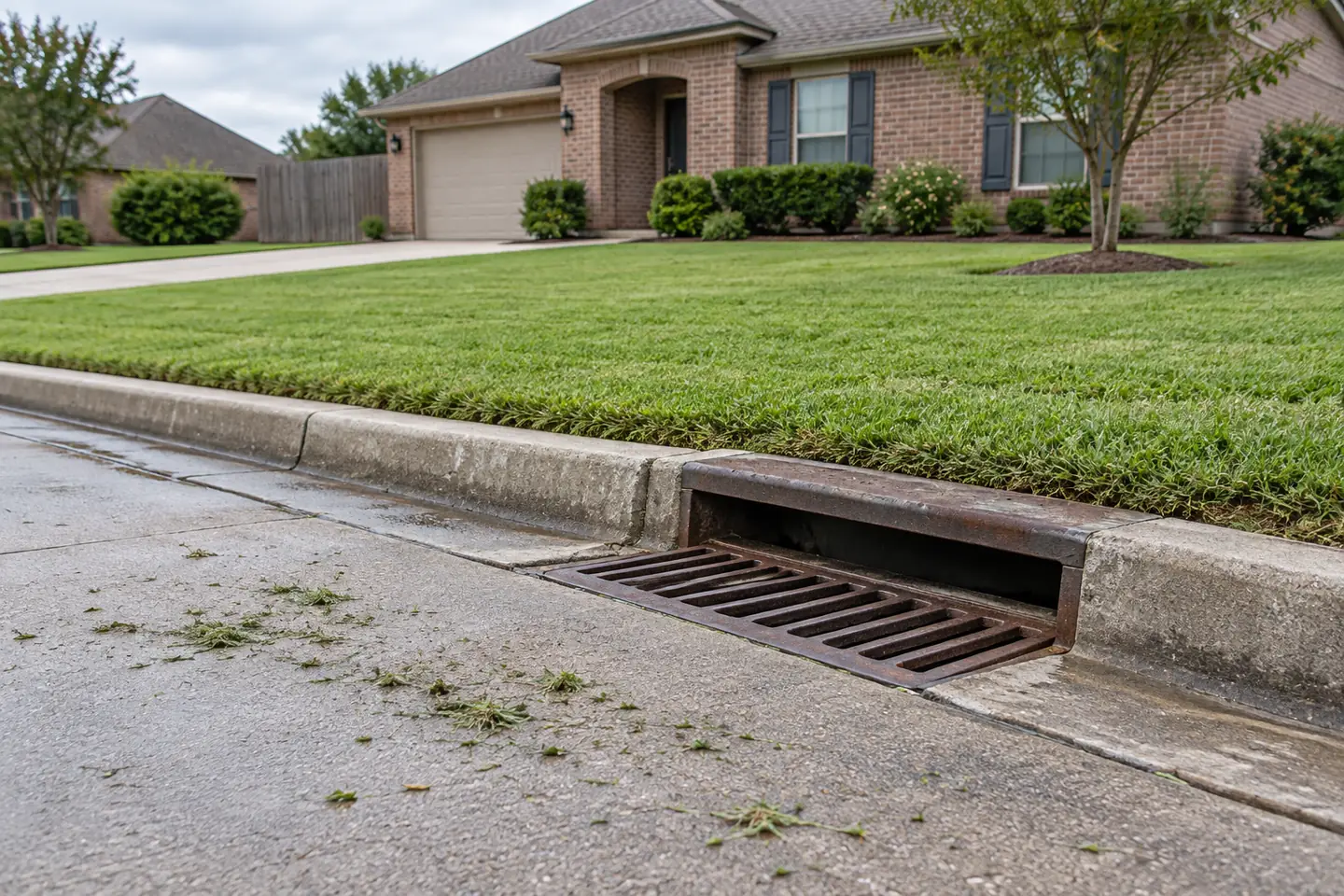
Address standing water honestly
EPA guidance emphasizes eliminating or managing standing water that can support mosquitoes. An ornamental pond needs its own owner-led maintenance plan. Happy Grass does not treat mosquitoes or recommend a specific pond-control product. A fountain that is not circulating should be handled by the pond owner or qualified provider.
Do not allow buckets, trays or removed filter parts to collect water on the lawn. Store them after maintenance. If overflow creates temporary puddles, postpone the nearby grass until the surface dries rather than treating lawn equipment as part of mosquito or drainage management.
Separate clippings from the pond
Grass clippings do not belong in the water. The lawn plan should provide enough room to direct the finish away from the pond and to collect visible clumps on the turf when needed. A very tight grass-to-water edge may require a larger no-mow strip.
Wind can carry light material farther than expected. Let Happy know when a waterfall, skimmer opening or exposed water surface sits immediately beside grass. The owner controls pond cleanup; the service scope should be designed to reduce avoidable debris without promising a debris-free aquatic system.
Plan for overflow and heavy rain
Westbank downpours can raise water levels and saturate the surrounding lawn. Identify the normal overflow route so no one parks equipment across it. After a storm, inspect for displaced stone, exposed liner, erosion and electrical concerns before requesting service nearby.
A pond may look calm while the soil underneath remains unstable. Maintain the open lawn if appropriate and leave the water-feature edge for another visit. Happy Grass does not rebuild banks, replace stone or repair washouts.
Keep children, pets and gates out of the route
Water features may have barriers, covers or gates for household safety. Those protections should remain in their normal secure condition. Do not prop open a gate or remove a cover merely to create mower access. The owner is responsible for water safety at all times.
Secure pets and keep children away from equipment and the pond-side route during service. A crew member should not be responsible for monitoring the water, closing a safety barrier or supervising anyone near it.
Prepare useful photos and measurements
Send a wide view of the whole pond, the lawn approach and every narrow passage. Note the border material, pump and control location, hose route, normal overflow direction and areas that stay soft. Identify decorative items that will remain in place.
Those details let Happy define a realistic grass boundary without taking on pond care. Happy Grass does not provide electrical work, aquatic maintenance, mosquito treatment, pest control, fertilization, aeration or overseeding. The best quote describes dry reachable lawn and the buffer that protects the feature.
Coordinate pond service and lawn service separately
Filter cleaning, pump replacement and stone work can leave tools, wet footprints and open equipment beside the water. Schedule those tasks apart from mowing when possible. A pond contractor may need unrestricted access to the same grass route, and overlapping crews can make each other’s safety checks obsolete.
After pond work, wait until covers are closed, cords and hoses are returned, loose rock is collected and the soil is firm. Send Happy a new photograph if the border changed. Restoring a clear lawn route is the owner’s handoff between the two services, not a decision to be made after a mower reaches the water feature.
Keep seasonal plants from hiding the border
Tall marginal plants and summer foliage can cover stones that were obvious in winter. Keep the boundary visible from the grass side and avoid thin marker stakes that could disappear under leaves. If vegetation extends into the normal route, widen the buffer rather than pushing equipment through it.
Plant pruning and aquatic growth management are not included in mowing. The goal is a readable edge through every season, not a prescription for how the pond garden should look.
Keep maintenance lids and skimmers accessible
Skimmer covers, valve boxes and filter lids may sit beside the pond at grass level. Point them out and keep them fully seated before service. A lid that rocks, cracks or disappears beneath foliage should be handled by the pond owner or technician.
Happy Grass does not open a skimmer or place mower weight on an access cover. Include those components inside the pond-side buffer so ordinary turf maintenance never depends on guessing whether a small panel can support traffic.
Name the lawn-side boundary in ordinary terms
A pond-side photograph may show water, stone, planting and grass all meeting in a small area. Caption the lawn-side border you mean and identify the route that approaches it. Keep an uncertain edge marked for review instead of drawing an exact line through plants or equipment that obscures the actual boundary.
If the owner or pond professional changes the arrangement, describe how that affects the lawn access rather than giving Happy instructions to restore the feature. The follow-up reference should show the feature as it is now, including any part that remains outside the request. This makes the mowing discussion about an accessible perimeter with a recognizable limit. It also keeps pond cleaning, water treatment and feature repairs separate from the ordinary grass finish around the installation.