
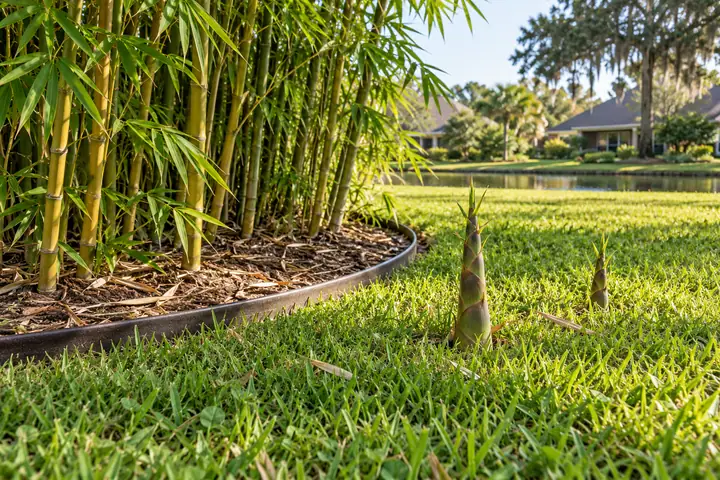
Confirm the planting and the property line
Ask who owns the bamboo, what type was planted if records exist and which side of the boundary Happy is authorized to maintain. Some bamboo forms behave differently, so the name matters to a long-term landscape plan. Do not infer ownership from where a shoot appears. If the stand begins on a neighboring property, the owner should coordinate any work beyond the agreed lawn area. Happy can document the grass-side condition without crossing a fence or deciding a property dispute.
Distinguish a new shoot from a hard cane
Young shoots can emerge quickly and become rigid as they develop. A partly cut cane can leave a hard stub beneath the next layer of grass. Before mowing, inspect the boundary from standing height and identify every visible stalk in the route. Do not drive through the patch to see what the deck can handle. The crew needs a surface suitable for lawn equipment, while woody canes and hidden stubs may require clearing by a provider equipped for that work.
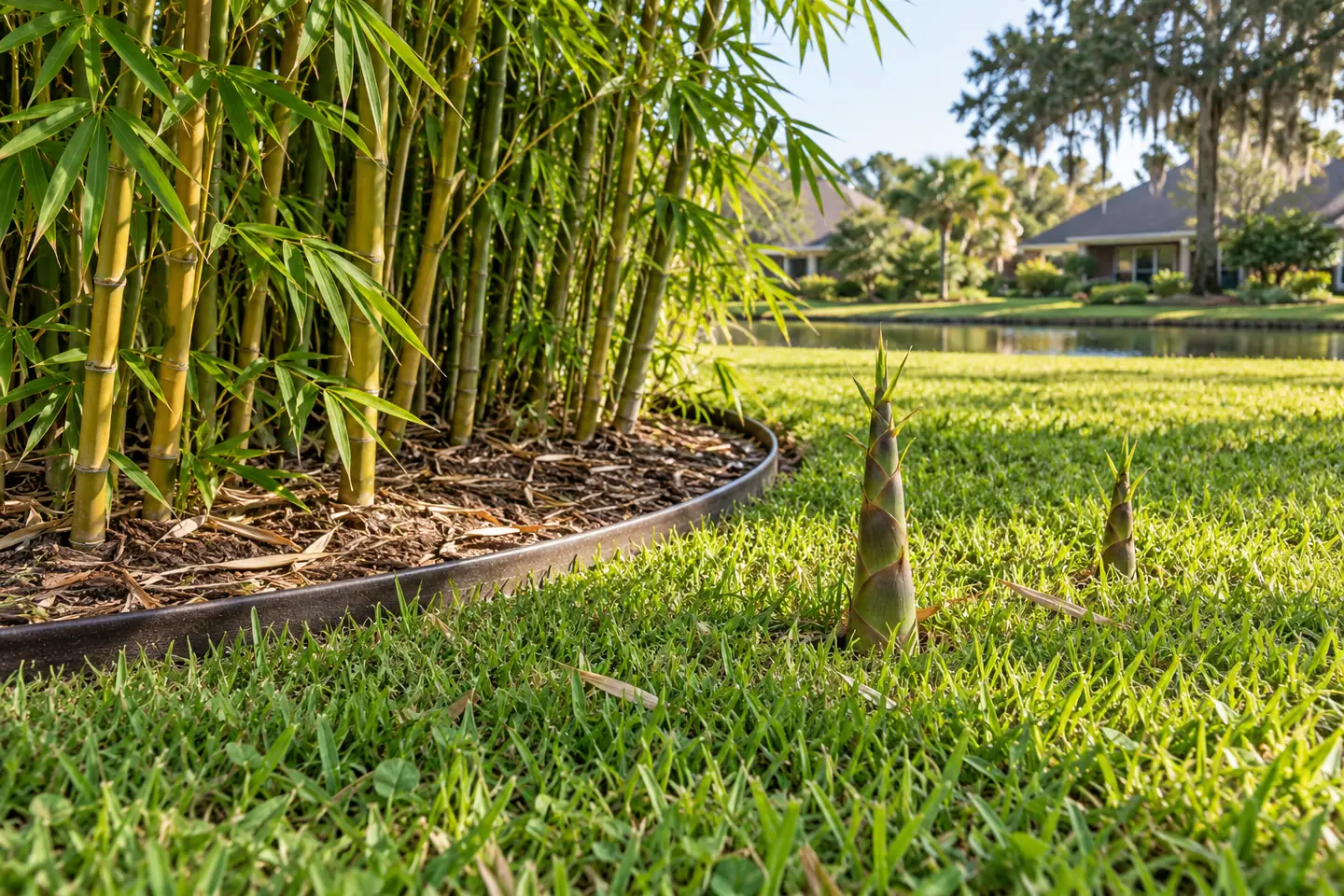
Understand why one cut may not finish the problem
LSU AgCenter explains that bamboo can regrow from remaining rhizome pieces after physical removal. The visible shoot may therefore be part of a larger underground system. This does not mean Happy should dig or apply a treatment during mowing. It means the owner needs a management plan beyond the appearance of one cut. Record where shoots recur and how quickly they become visible. That history can help an extension professional or qualified landscape provider assess options for the particular planting.
Keep the lawn edge readable
Leaf litter and old sheaths can hide hard bases, irrigation parts and edging behind the bamboo. Maintain a visible grass-side boundary, but do not rake blindly into the stand or pull buried material. The owner or landscape crew should clear loose hard debris and establish the final line. Happy can trim the ordinary grass outside it. A wider intentional margin is often easier to maintain than a narrow strip where equipment must brush canes at every pass.
Do not cut a low scalp to hide shoots
Removing extra grass around bamboo does not remove the underground source and can weaken the lawn where shade already limits growth. Keep the surrounding turf at its appropriate mowing height. If shoots make ordinary service unsuitable, exclude the patch until the owner addresses it. A clearly documented strip looks more honest than a bald ring with hard stubs remaining. The desired finish should distinguish lawn maintenance from long-term bamboo control.
Inspect after a clearing project
When a contractor removes canes or rhizomes, the grass may contain fragments, disturbed soil, holes and equipment tracks. Ask the owner to release the surface before mowing resumes. Happy should not compact the excavation or use the mower to chip leftover cane pieces. Check the route after the first rain because loose soil can settle and expose more material. A completed clearing operation includes a stable lawn handoff, not merely a shorter bamboo stand.
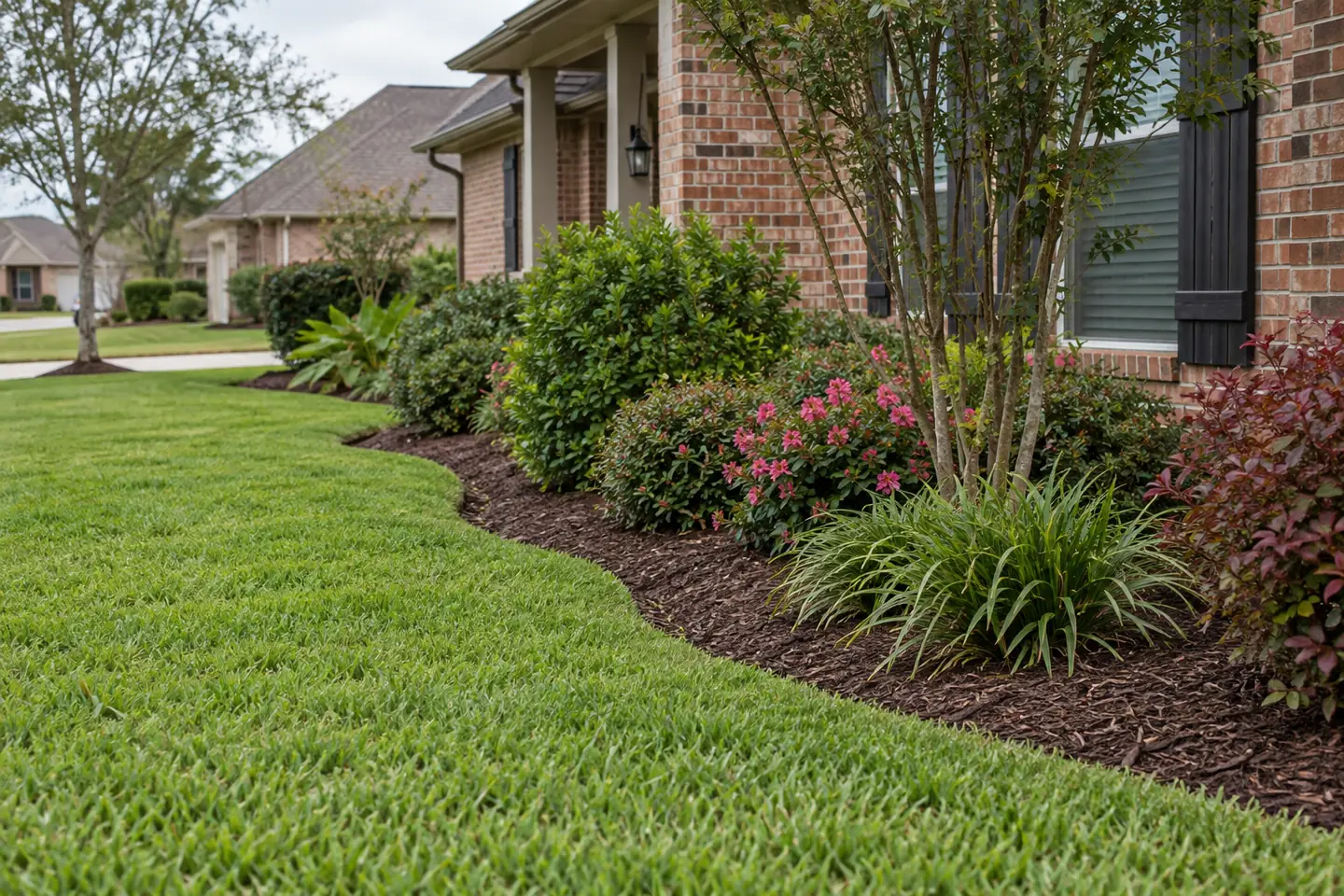
Protect nearby fences and utility routes
Bamboo beside a fence can conceal wire, broken boards, fasteners and low branches. Mark known irrigation, lighting and pet-containment lines before anyone undertakes digging or removal. Happy does not locate buried facilities or cut through a fence-side tangle blindly. If the only mower route passes through the affected strip, review an alternate access or adjust the visit. Keeping the boundary visible helps both the clearing contractor and lawn crew remain inside their separate tasks.
Use a bamboo-edge checklist
- Confirm ownership and the authorized maintained boundary.
- Identify new shoots, mature canes and old cut stubs.
- Photograph the wider stand and recurring lawn-side locations.
- Clear hard fragments and restore holes through the responsible provider.
- Preserve known utilities, fences and intentional plants.
- Release a stable grass route before routine mowing resumes.
Keep chemical decisions with a specific plan
LSU's discussion of bamboo management includes methods that depend on the plant and treatment context. That is not a blanket instruction to spray a lawn edge. Product labels, adjacent plants, water routes and property boundaries all matter. Happy does not offer bamboo eradication or tree and shrub treatment. If the owner engages another provider, share its relevant access restrictions and the treated boundary. The lawn crew should avoid disturbing marked areas and should not judge treatment success from wilted leaves alone.
Use observations that a specialist can act on
Record whether shoots appear close to the stand, in a line toward the driveway or in isolated patches farther into turf. Include dates and photos from the same general viewpoint. Avoid exact public coordinates or claims about underground depth based on the surface. A useful record describes recurrence and interference with mowing. The specialist can then connect those observations with an actual site inspection, rather than receiving only a request to make the lawn look cleaner.
Review the mowing interval without promising control
Frequent observation can catch new shoots while they are easier to see, but a lawn schedule is not a guarantee of containment. Tell Happy if new growth appears between visits. The owner should decide whether the landscape plan needs revision. Do not expect the crew to keep escalating blade contact as stems harden. The appropriate response may be a temporary exclusion, a separate clearing visit or a permanent boundary redesign that gives both lawn and bamboo a defined place.
Manage collected canes and fragments deliberately
Cut bamboo canes can be long, sharp-ended and surprisingly easy to overlook in shade. The removal provider should collect them and follow local disposal requirements. Do not lay fragments along the fence where a trimmer will find them later or hide them under mulch beside the lawn. Keep bundles outside equipment access and account for ties. Happy's ordinary mowing route should contain no hard cane sections, loose wire or stakes left from the project.
Revisit the final landscape boundary
If the owner installs a barrier, changes the bed or removes the stand, obtain a new surface map. Barrier work may bring buried edges, seams and settlement into the lawn line. Happy does not certify containment design or installation. It can follow the visible, stable boundary and report changes. A photo after completion should show the grass route, fence and any marked no-wheel strip so future visits do not rely on an outdated sketch.
Keep the conversation focused on a usable lawn
The immediate goal is a safe mowing surface with clear ownership and scope. The long-term goal belongs in a bamboo-management plan suited to the planting. Send Happy photos before a shoot becomes a hidden obstacle and explain what the owner intends to keep. With hard material removed and the edge established, the surrounding grass can be maintained consistently while the bamboo question receives the specialist attention it needs.
Look for cut stubs after the leaves disappear
A cleared stand can look open from a distance while hard cane ends remain at ankle height. Inspect the grass-side transition carefully and ask the removal provider to address every rigid obstruction. Happy should not use a deck to shave stubs flush or assume mulch makes them harmless. Mark the outermost known stub line until the surface is released. This is a different issue from a soft new shoot and deserves its own photograph and scope note before equipment returns.
Keep leaves and canes from blocking water routes
Bamboo leaves and discarded cane sections can collect in a swale or at a drain near the boundary. The owner should have loose material gathered without washing it downstream. Happy's final blowing should avoid packing debris against an inlet or low cover. If a drainage corridor passes beside the stand, identify it on the property map so lawn work does not treat it as a convenient disposal strip. Recheck after storms because material can move beyond the original clearing footprint.
Describe a practical temporary finish
While management is underway, agree on a visible maintained grass edge, a clearly excluded cane area and an open gate route. The lawn does not need to look as though the bamboo project is complete. A precise temporary finish lets Happy maintain useful ground and gives the owner a clear view of the remaining work. Update the arrangement only after the responsible provider changes the surface.