
Begin with the hive entrance, not the property line
A hive box may occupy only a small footprint, but the active area extends beyond the wooden stand. The entrance direction, normal flight path, beekeeper work side and nearby shelter all affect whether lawn equipment has a sensible route. Marking a circle around the box without understanding those directions can create a boundary that looks neat yet places people directly in front of the colony.
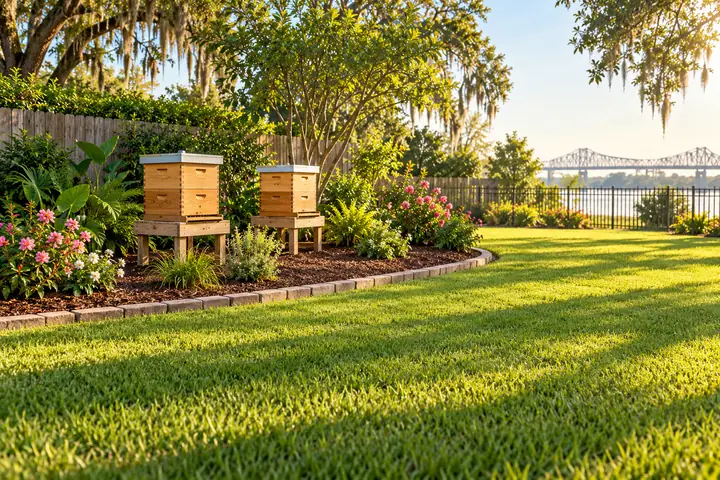
Ask the beekeeper to identify the service exclusion zone. Happy Grass does not decide the appropriate hive buffer or evaluate colony behavior. A wide photograph should show every box, its entrance orientation, the lawn approach and the nearest enclosed shelter. The agreed lawn scope begins outside that beekeeper-defined space.
Keep mowing equipment away from active colonies
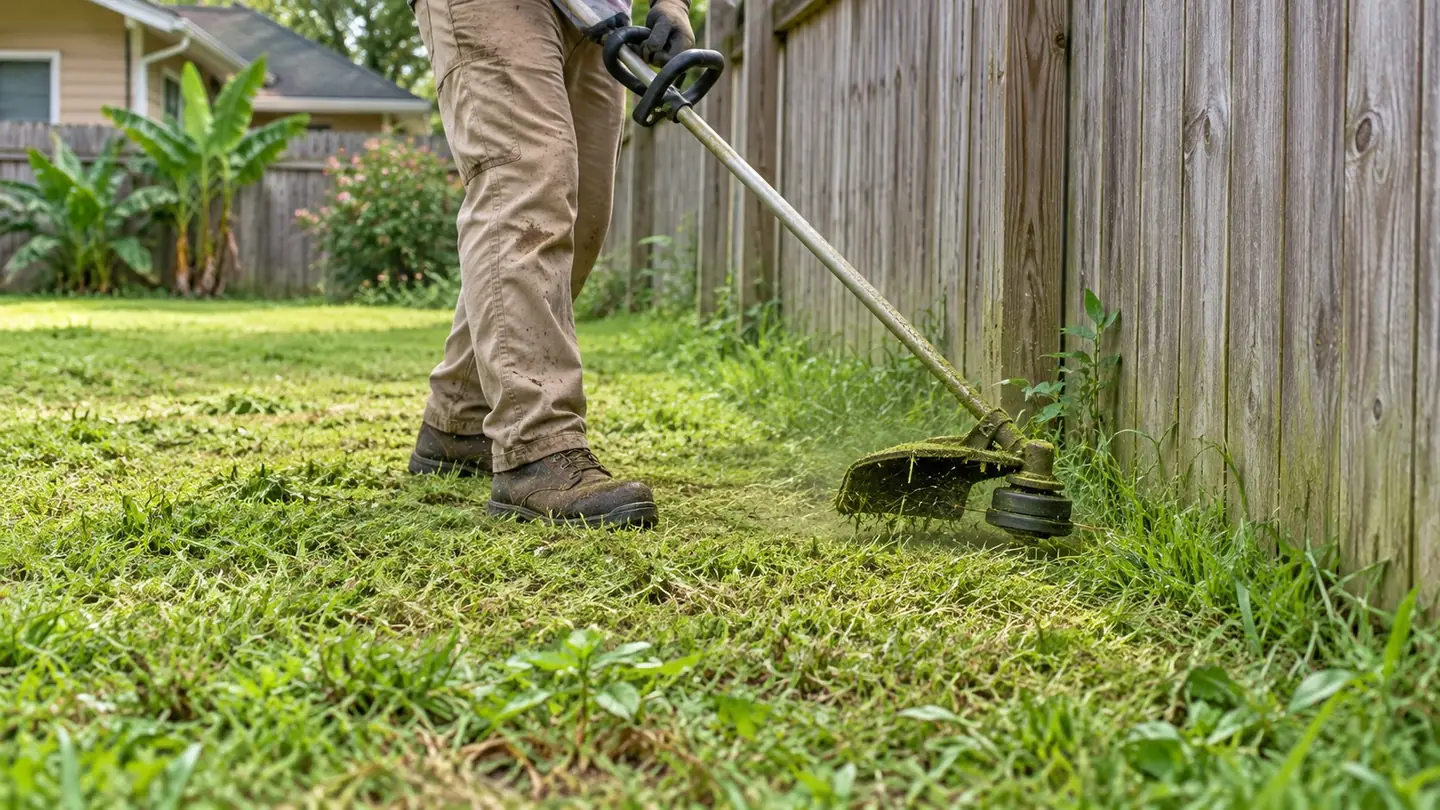
USDA bee-safety material warns that loud equipment and vibration can alarm bees near a colony. Lawn mowers and trimmers should not pass close to a hive merely because the grass is reachable. Distance, timing and local conditions matter more than whether the boxes seem quiet from across the yard.
If the only path to part of the lawn passes the apiary, disclose that before quoting. Do not plan on quickly crossing the flight line or hoping activity is low. Happy may exclude the area, pause the visit or require a different access arrangement. Lawn maintenance never includes opening, moving, covering or smoking a hive.
Let the beekeeper own the safety plan
The person responsible for the colonies should decide when the area is suitable for outside work. That plan needs a clear contact, not a vague note that “the bees are usually friendly.” Colony behavior can change with weather, season, disturbance and other factors. Happy Grass cannot assess temperament or certify a safe working distance.
Before service, the beekeeper should confirm that boxes, lids and stands are stable and that no swarm or unexpected activity is present. If anyone observes unusual clustering, defensive behavior or a colony in an unintended location, keep people away and contact the appropriate beekeeper or professional. Do not use lawn work as a test.
Establish a visible non-mow border
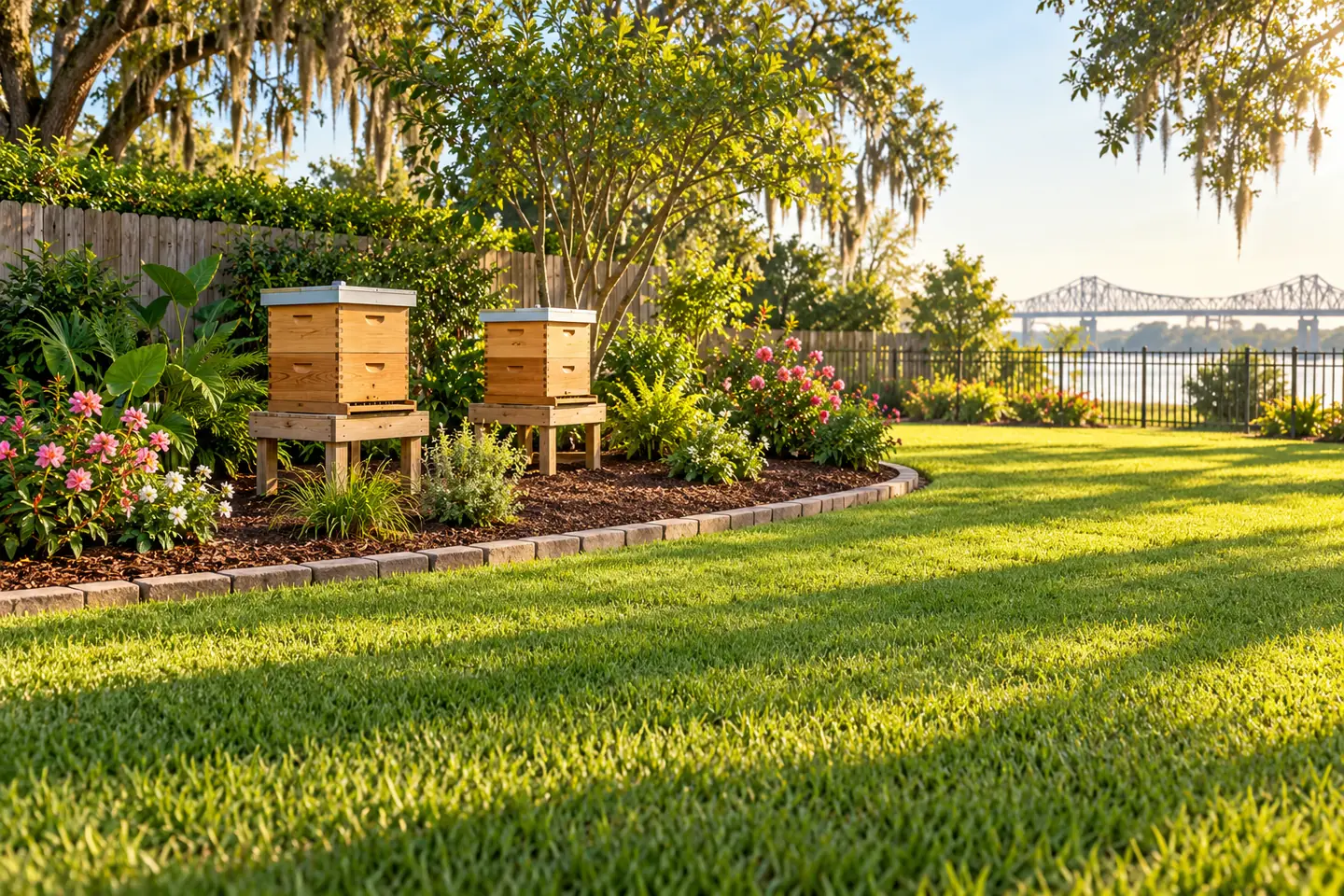
A maintained planting bed, gravel strip or other obvious boundary is easier to follow than an invisible measurement from the hive. The border should remain outside the entrance and beekeeper work area. Happy can stop at the present edge, but installing or redesigning the apiary border belongs to the property owner and beekeeper.
Do not place loose flags, thin wire or hidden stakes in tall grass to mark the limit. Those items can create their own equipment hazards. Use photographs and a stable visible feature. If the border changes, send an updated view before the next visit rather than expecting the crew to infer a new line.
Preserve a direct retreat route
Anyone working outside needs a clear way to move away from the hive area without crossing a fence, locked gate or pile of stored material. Keep the route toward a vehicle or enclosed building open. Lawn equipment should never be parked between the work area and that path.
The escape route is not a place for hoses, wheelbarrows, hive parts or empty boxes. It should also avoid tethered animals and children’s play areas. This planning does not make close mowing safe; it simply prevents the broader yard layout from creating an additional problem if bee activity changes unexpectedly.
Keep hive tools and water sources contained
Bee suits, smokers, supers, feeders and frames belong in the beekeeper’s work area, not scattered across the grass. Store them before the lawn visit. A mower route should never depend on moving a box that may contain bees, honey, wax or equipment requiring special handling.
Bees may use nearby water. Keep intentional water sources on a stable surface outside the mowing path and prevent small containers from becoming hidden obstacles. Happy Grass does not manage the colony’s water or feeding program. The owner should also address leaks that soften the ground around the stands.
Account for flowers without entering the flight line
Flowering borders can create a natural separation between turf and hives, but they can also bring foraging bees into areas farther from the boxes. Foraging insects away from the colony are different from the concentrated activity at an entrance, yet a lawn visit still needs awareness and room. Do not ask a crew to trim through actively visited blooms.
Choose the grass boundary before service and leave pollinator plant care with the owner or gardener. Happy Grass does not apply pesticides, herbicides or bee treatments. The page is about defining reachable lawn, not changing plants or controlling insects to make the route easier.
Review weather and seasonal activity
Warm bright conditions, storms, heat and seasonal colony changes can alter activity. The beekeeper’s current assessment matters more than last month’s note. If the beekeeper cannot confirm the area is suitable, the safer choice is to skip the nearby zone and maintain only the clearly separate lawn.
Wet ground adds another reason to pause. Hive stands need stable support, and mower traffic should not rut the soil near them. Treat the apiary edge as its own zone even when the rest of the property is workable. A fixed schedule does not override a changed colony or surface condition.
Separate wild colonies from managed hives
A managed hive in a known location is not the same as bees entering a wall, tree cavity, utility box or ground opening. If a new colony or swarm appears elsewhere, stop and keep the area clear. Do not approach it to determine whether it is connected to the apiary.
Removal, relocation and pest-control decisions belong to qualified people and the property owner. Happy Grass does not spray colonies, block entrances or disturb nests. Share the new location before service so it can be excluded until the situation has been professionally resolved.
Build a service-day communication routine
Use a short, specific check before arrival. – Confirm the beekeeper has reviewed the colonies that day. – Verify the hive buffer and flight-line exclusion remain unchanged. – Store hive tools, boxes, hoses and water containers. – Open the lawn gate without directing traffic past the hives. – Keep children and animals away from the service route. – Report any new swarm or colony location immediately.
One contact should have authority to pause the apiary-side lawn. This avoids mixed messages from household members. Happy can maintain the clearly separated grass, while the beekeeper remains responsible for every decision about hives, bees and the appropriate safety distance.
Quote only the lawn that has a practical route
Show Happy the hives from a distance, their entrance direction, the visible border and the alternative path around them. State whether a whole side yard must be excluded. A slightly smaller but dependable mowing footprint is better than a quote that assumes someone will work close to active colonies.
The final scope should name the boundary in plain language. It should not promise bee handling, hive inspection, border construction, pest control, fertilization, aeration or overseeding. When the beekeeper and lawn provider each stay in their lane, the yard plan is easier to repeat and safer to understand.
Record changes without approaching the hives
The most useful update can be taken from the same distant photo point each time. A matching view shows whether the visible border moved, vegetation narrowed the alternate route or additional boxes appeared. Do not enter the apiary to create a better picture. The beekeeper can supply any close documentation that is actually needed.
Keep the service note focused on access rather than speculation about the colony. Phrases such as “two boxes behind the mulched bed; lawn stops at the stone edge” are clear. Claims that bees are calm, dormant or harmless are not reliable work instructions. If the layout or beekeeper guidance changes, the quoted hive-side grass should be reviewed before the next visit.
Let the responsible hive contact confirm the handoff
Identify the person responsible for the managed hives and have that person explain any arrangement needed before lawn access is considered. Keep the message focused on what the lawn crew needs to know, including which area is excluded and who can answer a change in conditions. A secondhand assurance from someone unfamiliar with the setup is not the same as a current owner-managed plan.
Describe the reachable lawn separately from the hive area. If the arrangement remains uncertain, leave the affected portion outside the proposed work until the relevant discussion is complete. Record any later relocation as a change rather than quietly reusing the old map. This gives Happy a specific route and contact to review while hive handling, colony decisions and any specialist assessment remain with the people responsible for them.