
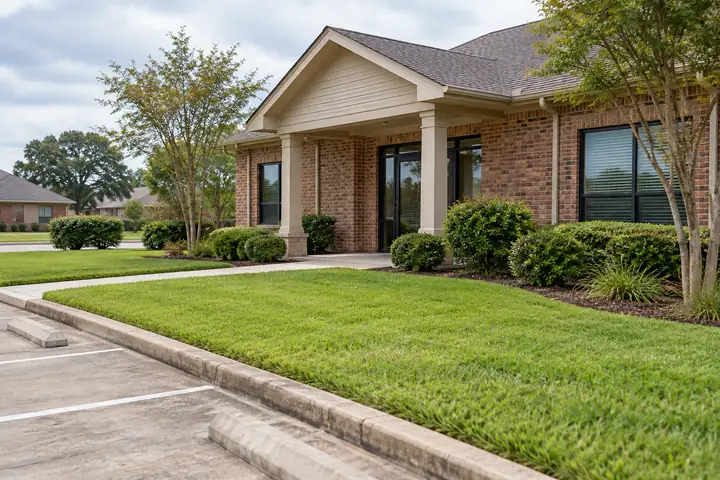
A small lawn can have a busy setting
The grass outside a small business may cover less area than a residential backyard, yet the surrounding activity can make the visit more complicated. Customers park nearby, deliveries use the driveway and people cross the walkway throughout the day. The maintenance plan needs to account for that setting rather than treating the frontage as an empty green strip.
Start by describing the business property and the lawn areas you want considered. Asking about suitability is not the same as assuming a commercial contract is available. Happy needs to review the actual location, requested work, access and scheduling needs. A clear request gives that review a practical starting point.
Confirm authority over the outside area
A tenant may use the building while a landlord or property manager controls exterior maintenance. Clarify who can authorize the grass work before arranging it. A quote is not an interpretation of the lease, and proximity to the storefront does not establish responsibility for every adjoining landscape section.
Identify the person who can approve scope, price and changes. If a manager needs to review vendor requirements, collect those requirements first. Routine lawn discussions should not imply that insurance documents, access credentials or contract terms have already been supplied or accepted. Ask about the actual needs and verify the fit rather than publishing unsupported claims about what the business requires.
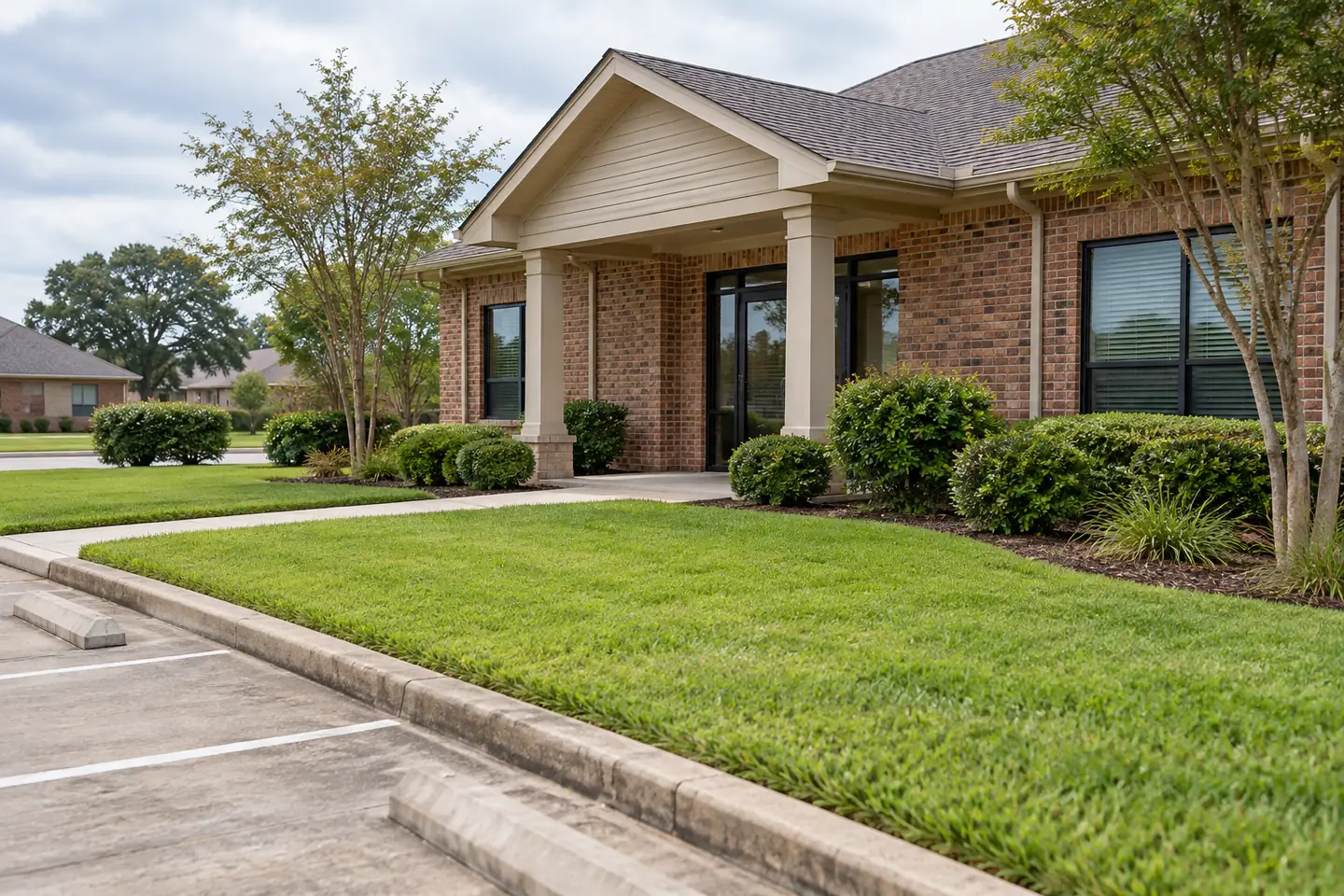
Show the full frontage and pedestrian route
A close-up of lawn height leaves out entrances, parking spaces and delivery access. Send a wide view showing the grass in relation to those features. Include sidewalks, signs, low fixtures and the route equipment would use. Photos should be taken safely without stepping into traffic or interrupting customers.
If there are separate lawn islands or a rear grass strip, identify them individually. A front photograph should not silently stand for every landscaped area on the site. Use fixed references and confirmed boundaries. The goal is a work scope that someone unfamiliar with the building can understand before arriving during a busy day.
Discuss timing without assuming a slot
Preferred service windows can be part of the request, particularly when customer traffic affects the lawn edge. Explain opening times and known busy periods relevant to the work area. Those preferences need direct confirmation; sending them does not reserve a visit or guarantee that work can occur outside the operating day.
If the requested window is essential, say so before accepting a quote. Also explain deliveries, scheduled events and access restrictions. A realistic plan may involve a different time, a limited section or a decision that the site is not suitable for the requested routine. Clear requirements at the beginning are more useful than surprises after arrangements have been made.
Keep people and vehicles out of assumptions
The work area should be reviewed with nearby users in mind. Do not assume customers will naturally avoid equipment or that parked cars will be moved without notice. Explain who can manage preparation and communicate with the people using the property. The maintenance provider should not be expected to improvise control over a busy parking area.
- Identify the normal pedestrian entrance.
- Show spaces directly beside the grass.
- Mention delivery and loading routes.
- Explain gates or areas requiring an escort.
- State any section that cannot be cleared during business hours.
These are planning details, not a complete site-safety program. Actual suitability and work arrangements still require individual review.
Define mowing and finishing tasks
A frontage may need grass cutting, a concrete edge, trimming around fixed features and reasonable cleanup. Specify the areas for each task. Do not assume all planting beds, litter removal and paved surfaces are included because the request says “maintain outside.” The clearer description is easier to quote and evaluate afterward.
Happy Grass offers mowing, edging, weed-eating and blowing within an agreed scope, with weed-control work discussed for the actual location. Fertilization, aeration, overseeding and pest control are not offered services. A lawn request should not imply a complete grounds-management package, pressure washing, tree work or ongoing litter patrol unless a suitable separate arrangement is actually made.
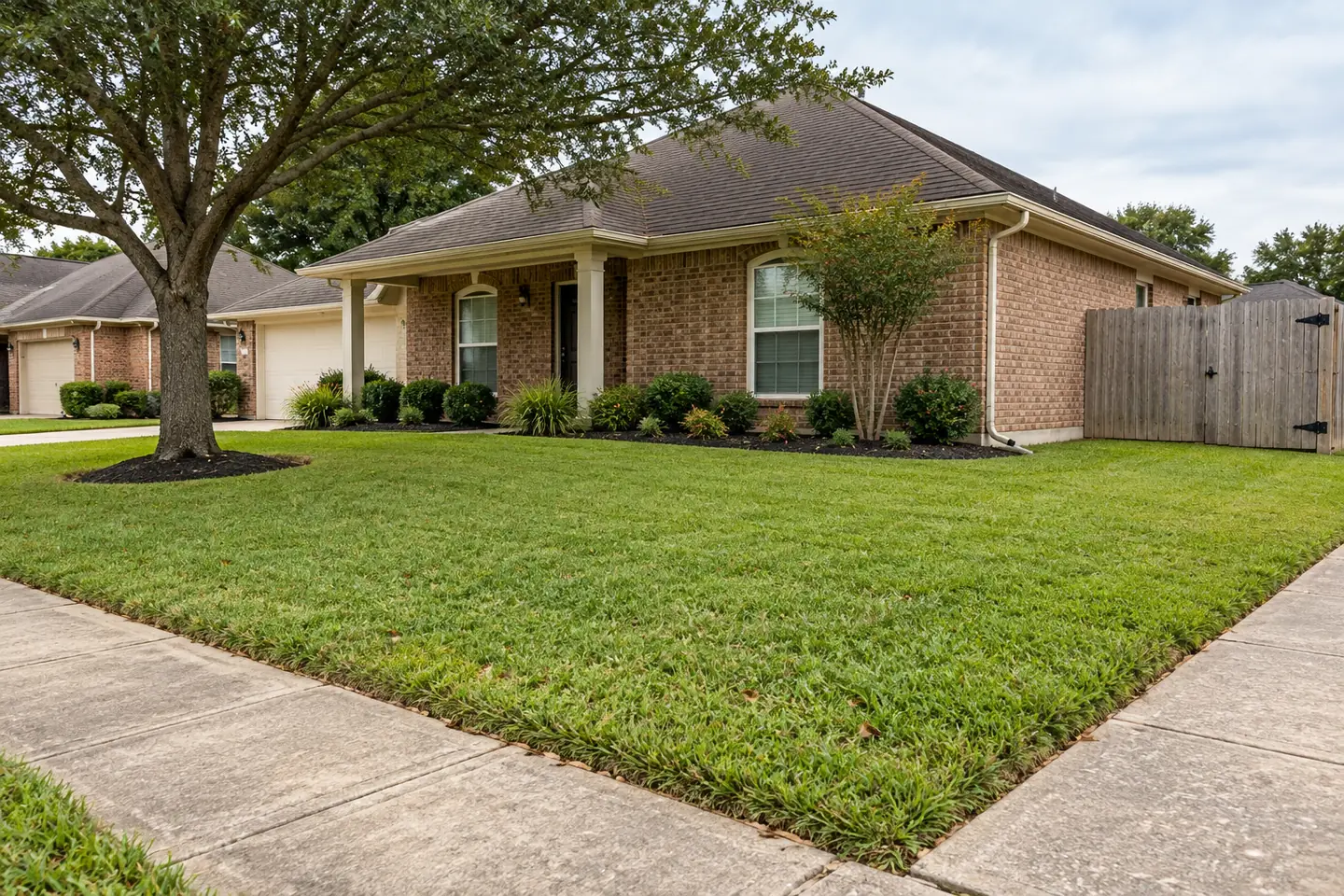
Point out fixtures hidden in the grass
Commercial frontage can contain irrigation parts, utility covers, sign supports and low landscape lights. Identify known items before work. A wide photo plus a closer reference is useful for a fixture that blends into the grass. Do not open unfamiliar covers, controls or electrical equipment to support the quote.
Mention existing damage, leaning components and temporary cables. If another contractor needs to repair something, define the area that remains out of scope meanwhile. Routine mowing should not be treated as an inspection of every utility on the property. Known conditions help establish a sensible boundary without promising technical diagnosis or repair.
Separate turf work from parking-lot cleanup
Blowing the agreed hard edges after cutting is different from a complete parking-lot cleanup. Trash collection, oil removal, sweeping contracts and hauling may require other providers or a specifically agreed service. Explain which result matters to you instead of letting “clean up” carry several different meanings.
Also discuss clipping handling near entrances, drains and parked vehicles. Heavy or wet growth can change the practical finish. Do not assume bagging or hauling is automatic. A clear maintenance scope should connect the grass work with its reasonable cleanup while stating what remains outside the agreement. That avoids a tidy lawn becoming the basis for an unrelated expectation about the entire exterior.
Account for wet ground and irrigation
An irrigation cycle can leave a small frontage wet even when the surrounding pavement is dry. Tell Happy about recent watering, persistent damp areas and known broken heads. Photos from safe ground can show the condition, but they do not establish the cause of a leak or drainage issue.
If the work area is unsuitable, a delay or limited visit may need discussion. Confirm timing directly rather than assuming a same-day replacement after business hours. A routine agreement should still respond to actual site conditions. The schedule is useful only when it fits the ground, access and people using the property on that day.
Make invoicing and records explicit
If your organization needs a purchase reference, particular billing contact or approval step, explain it before service is agreed. Do not assume the person receiving the quote can approve the invoice or that a recurring arrangement has been established by one request. Confirm the actual payment and authorization process directly.
If you need progress photos or a service note, ask whether that can be provided and in what form. Ordinary mowing does not automatically include a detailed facility-management report. Keep the record request proportional and tied to the agreed work. A clear contact path makes it easier to resolve questions without several departments giving different instructions.
Review changes around the frontage
A temporary sign, new delivery setup or construction barrier can change access to a familiar lawn strip. Send an update before the next service discussion. The same applies to a relocated irrigation head or repaired utility area. Conditions should be considered as they are now, not as they appeared when the original photo was taken.
After service, report any concern by exact location with a current image. Ask how it relates to the work scope. An excluded area or obstructed section should not be confused with an unexplained omission. Useful feedback helps refine the property notes and the next maintenance decision.
Ask whether your business property is a fit
Send the address, city, current wide photos, requested lawn areas and the person authorized to approve work. Include access restrictions and essential timing needs. Happy can review suitability and availability without assuming the site receives the same arrangement as every residential lawn or another commercial property.
Call 504-339-3571 or use the quote form for a Harvey or Westbank location. Happy Grass serves Marrero, Gretna, Algiers, Belle Chasse and Westwego too. A small lawn can make a welcoming first impression when the scope is clear and the visit is planned around the place where people actually work.
Distinguish customer access from crew access
A business frontage may have an entrance that customers use all day and another route suitable for discussing lawn access. Name both in the request so a photograph of an open door does not imply permission to bring equipment through that area. Include ordinary delivery and parking patterns as context without promising that those spaces will be empty.
Ask the person authorized over the exterior to confirm which areas and routes belong in the quote. If the property is shared with another tenant, do not let that tenant’s lawn or parking area silently become part of your instructions. After the conversation, keep the confirmed outdoor scope with a current contact rather than a general building directory. This gives a small lawn a workable service discussion within the busier business setting around it.