
Identify the chimneys without exaggerating them
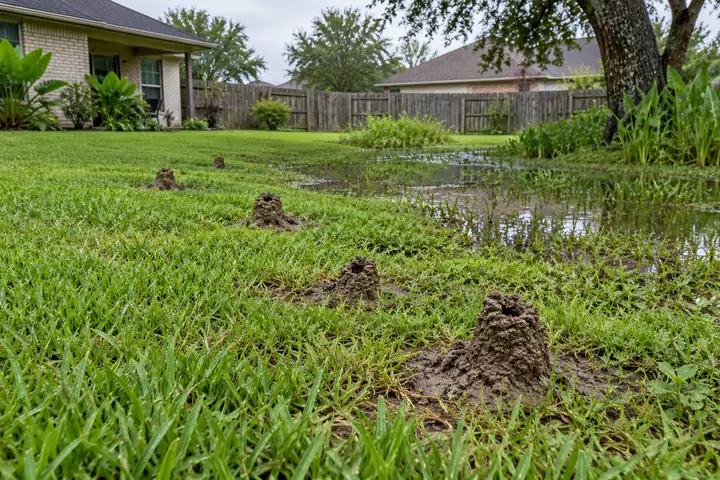
Crawfish chimneys are cylindrical mud structures built around burrow openings. LSU AgCenter explains that crawfish can occur near permanent water or in places that only occasionally hold water, and that the chimneys themselves do not mean the turf has been eaten or destroyed. In a West Bank yard, they may appear after wet weather in a ditch edge, low backyard corner or broad damp patch. Photograph the pattern before disturbing it. Include a ruler, shoe or common object nearby only if you can do so safely, and never reach into a burrow. Happy Grass needs to know the number, location and surrounding footing—not the exact crawfish species.
Show the wet area, not only the mud tower
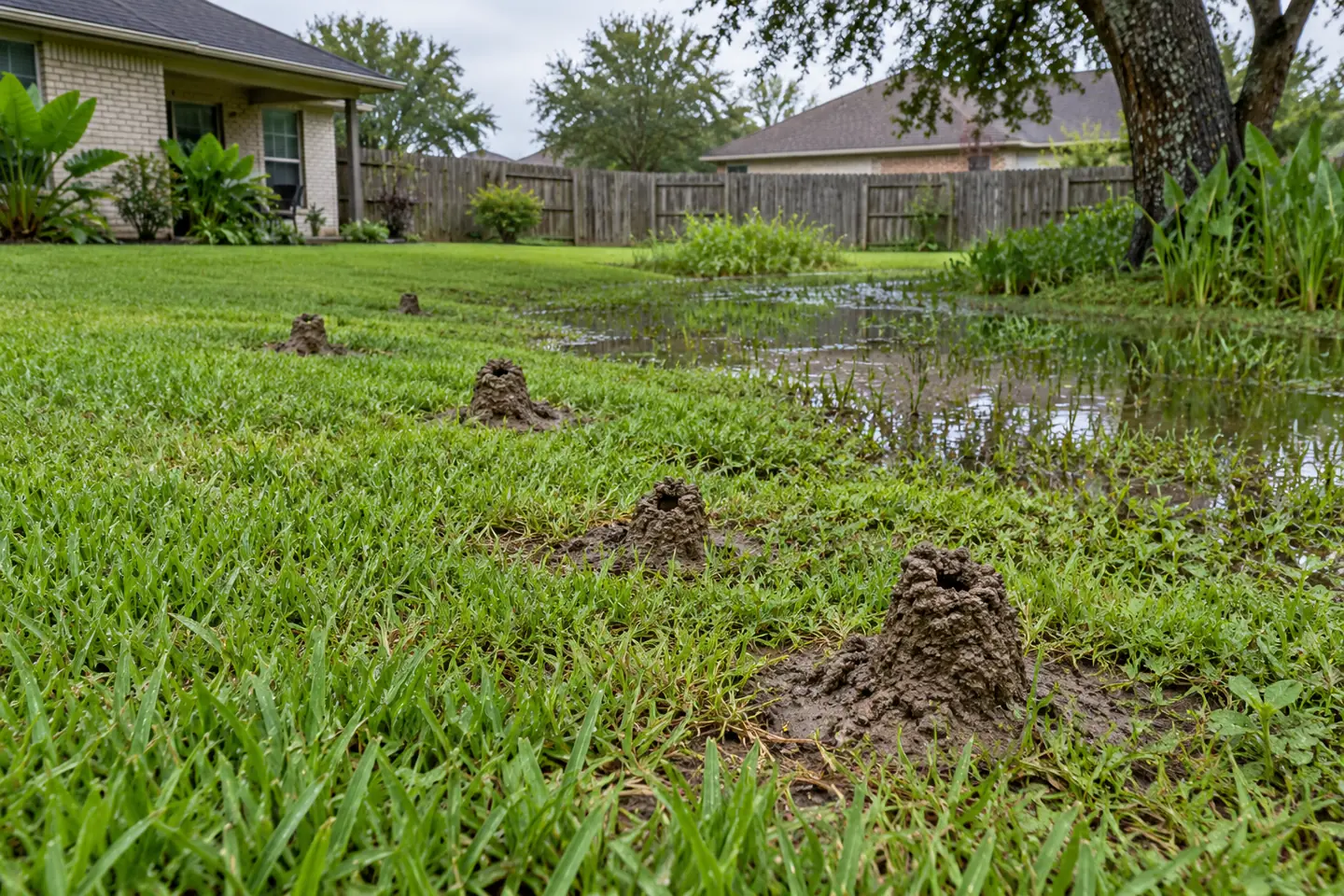
The biggest mowing question is often the ground around the chimney. A close photo proves that a feature exists, but a wide photo shows whether the route is firm, flooded or cut off by a soft patch. Walk the area in ordinary shoes and stop if the soil sinks. Mark the outer limit of the damp ground rather than flagging only the tallest tower. Several small chimneys can indicate a larger network of burrows, so equipment should not weave between them blindly. Happy can adjust ordinary lawn access based on visible conditions; we do not perform drainage diagnosis or subsurface inspection.
Keep the burrow opening out of the wheel path
A chimney can crumble under light pressure while the opening below remains. Driving over it may leave a rut or expose a hole. Establish a conservative bypass on firm grass. If the affected area sits at the only gate, tell Happy before the visit instead of asking the crew to discover it after unloading. Where no firm alternate route exists, that section may need to wait. The goal is not to preserve a perfect mud tower forever; it is to avoid treating an uncertain wet opening as ordinary level turf.
Do not add chemicals as part of lawn preparation
Happy Grass does not provide crawfish control, pest-control treatment or pesticide application. Do not pour household chemicals, fuel or unapproved products into burrows before a lawn visit. Any control decision should follow current label directions and advice from an appropriate Louisiana source, separate from our mowing work. Also keep children and pets away from any area where another provider has applied a product, following that provider's instructions. Our service plan can note and bypass the feature without claiming to solve the wildlife or moisture issue.
Decide what to do with loose dried mud
When a chimney dries, parts of it can break into hard clods. Before mowing, pick up or crumble only loose surface material that can be handled safely without reaching into the opening, and keep the burrow visible. Remove stones, glass or other debris that may have collected nearby. Do not use a mower blade to pulverize the tower. If you flatten the surface for appearance, mark the location so the opening is not lost in the grass. Happy will not hand-excavate burrows or level the soil as part of routine service. A visible, debris-free boundary is more useful than a hidden hole.
Distinguish chimneys from other lawn changes
Ant mounds, worm castings, mole activity, construction spoil and simple mud splashes can look different but may all be described as “little piles.” Send clear photos rather than guessing. We do not identify pests from a blurry image, yet the shape and location help plan access. Mention whether the feature appeared after rain and whether nearby ditches or drains held water. Avoid claiming that every soft patch has crawfish. The practical mowing response can be cautious even when the homeowner has not confirmed the cause.
Plan around roadside ditches and drainage paths
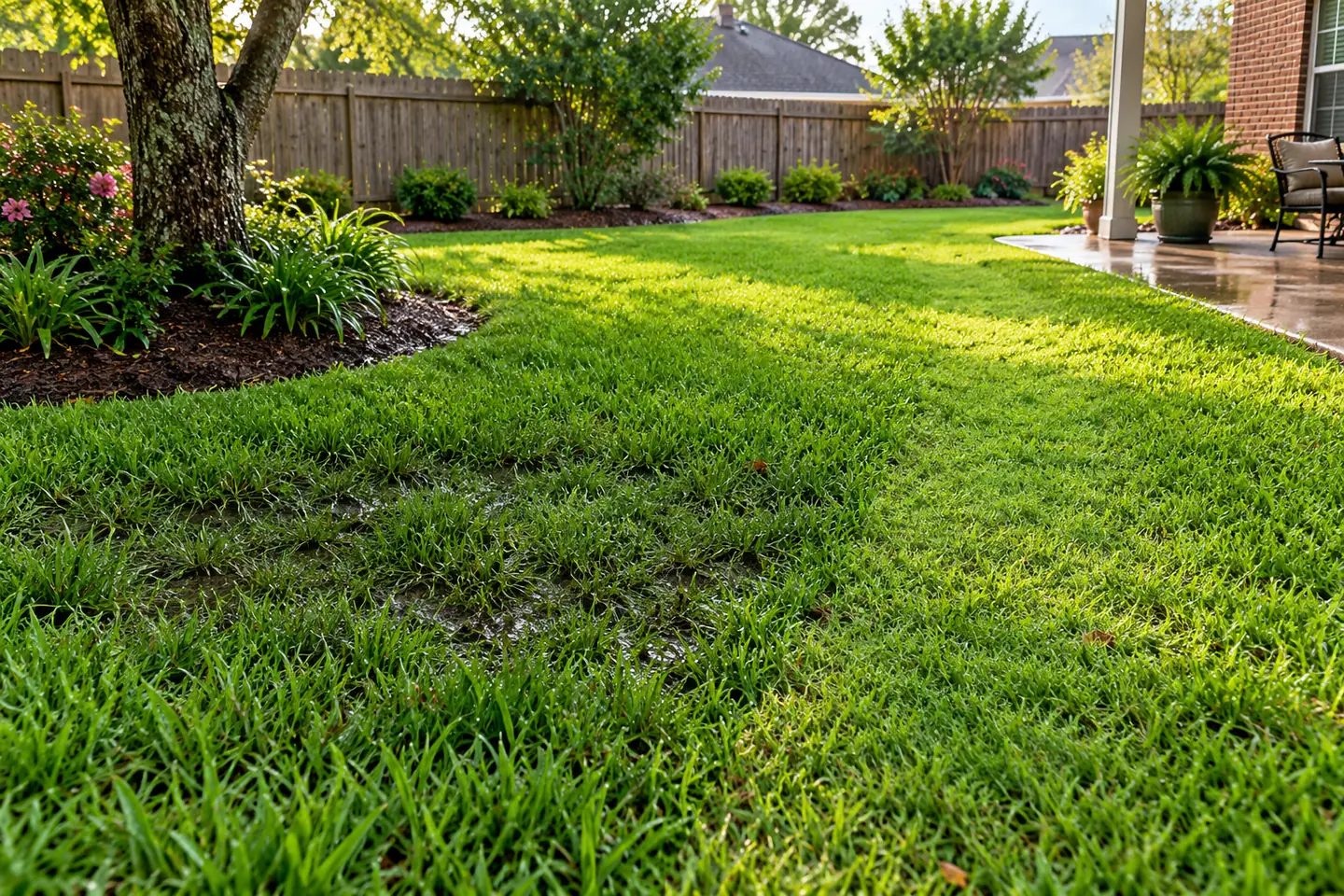
Crawfish chimneys sometimes appear on a ditch bank or near a culvert, where slope and wetness already complicate mowing. Show the entire bank, driveway edge and water line. Do not place stakes in a way that blocks drainage or creates a new hidden obstacle. Jefferson Parish or another authority may control parts of a roadside area, so do not ask Happy to alter a ditch, culvert or public right-of-way. We can discuss the ordinary grass scope that is safely accessible on the property. Drainage construction and government-boundary questions remain separate.
Recheck after heavy rain
A route that was firm at quote time can change quickly. After a storm, inspect from stable ground and send a new photo if water, new chimneys or washouts appear. Do not wade through standing water to create evidence. If flood debris is present, remove hard hazards only when it is safe or use an appropriate cleanup provider. Happy may service dry sections while leaving a wet corner untouched. That is an honest response to current conditions, not a promise that the area will be skipped forever.
Keep a simple seasonal record
Photograph the same low corner from a consistent viewpoint when chimneys first appear, after major rain and once the ground dries. The record can help you explain recurrence to an extension professional, drainage contractor or pest-management provider without asking the mowing crew to diagnose it. Note the date and general condition, but do not publish precise location data. For lawn service, share only what affects access: firm route, soft boundary, visible openings and recent change. A clear record keeps the conversation useful and prevents a recurring feature from becoming a recurring surprise.
Let the lawn visit stay in scope
Happy Grass can mow, edge, trim and blow the agreed accessible lawn. We can take a wider route around visible crawfish chimneys and wet ground when you point them out. We do not capture crawfish, treat burrows, redesign drainage or guarantee that the towers will not return. Those limits are not a lack of care; they are what lets the lawn work be performed honestly. When the area is prepared, marked and firm, the service can continue around a very Louisiana yard detail without pretending every mud chimney is just another clump of soil.
Protect gates, walkways and hard surfaces
Mud from a soft crawfish area can track onto patios, driveways and pool decks. Keep the bypass on firm ground and remove loose clods from the access gate before service. Do not hose mud into a storm drain or ditch as a quick cleanup. If the only entrance is muddy, postpone that section or provide another route. Happy's normal blowing is meant for ordinary lawn debris, not washing or transporting wet soil. A clean threshold also makes it easier to see whether new chimneys appeared between visits.
Tell other providers about the mowing schedule
If a drainage contractor, extension agent or pest-management provider is evaluating the area, coordinate their flags, traps and access restrictions before Happy arrives. Do not leave an unmarked device in the grass. Share only the information needed for safe access; Happy does not need treatment records unrelated to the route. If another provider instructs you to avoid the area for a period, keep it excluded and tell us the date when ordinary access can be reconsidered. Clear handoffs prevent one service from disturbing another's equipment or evidence.
Avoid turning the wet corner into a storage spot
Homeowners sometimes move toys, pots or yard waste into a skipped area because it is already outside the mowing route. That makes the next inspection harder and can hide openings. Keep the damp zone uncluttered. Store hoses, boards and empty containers on a firm surface, and remove anything that can hold additional water. The simpler the corner remains, the easier it is to compare photos and decide when a safe route has returned.
Record the area without turning it into a treatment log
Choose one safe viewing position and photograph the area where the raised mud structures are visible. Note the date, the approximate extent you can see and any access uncertainty. Keep these observations separate from an explanation of why they appeared. A location record can be useful even when no cause or animal identification has been confirmed.
In the lawn request, say whether your immediate concern is the reachable grass, the surface condition or the timing of a visit. Do not treat the mowing conversation as a request for pest control or as proof that a particular repair is needed. If the visible area changes after rain or another property task, add a new dated entry instead of rewriting the old one. That gives the next conversation a fair comparison while leaving diagnosis and any specialist response outside ordinary lawn maintenance.