
Start with the speed of the change
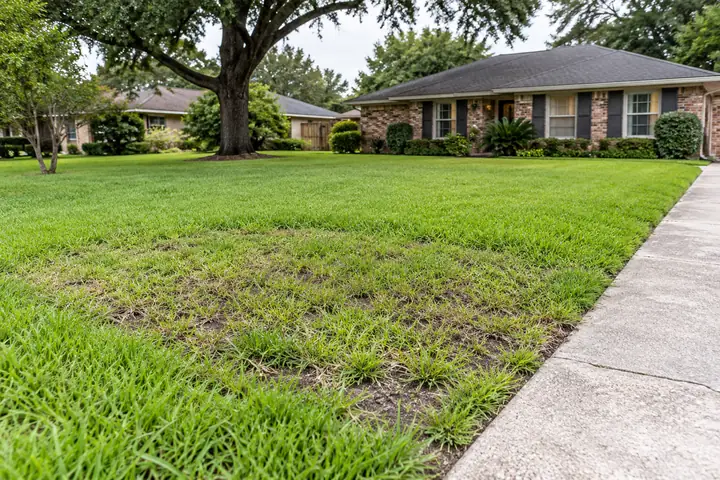
A lawn that looks different from yesterday deserves a more precise description than the grass looks bad. Begin with the last time you personally saw it in its usual condition. Then record the first time you noticed the change. Those two observations define what you know; they do not prove the exact hour when something happened between them.
This is particularly useful when several people share yard responsibilities. One person may remember a green lawn from the weekend, while another noticed a thin strip on Monday. Keep both accounts dated instead of combining them into an invented overnight event. If nobody checked the backyard during that period, leave the gap visible. A clear timeline gives an adviser something useful to work with and helps Happy understand whether the current request is ordinary mowing or a changed starting condition.
Know what makes armyworms a relevant question
LSU AgCenter describes fall armyworms as caterpillars that feed on turfgrass leaves before developing into moths. Bermudagrass is a frequent host, although other turfgrasses can be affected. Feeding can leave thin or bare areas, and substantial change can occur quickly. Its Louisiana guidance describes injury across the warmer part of the year, including summer and fall.
The same source notes differences between younger larvae that remove leaf tissue and larger larvae that may consume whole leaves. Chewed fragments, green pellets and visible caterpillars can be useful observations. None should be converted into a confirmed identification from a distant view. The practical point is to notice the leaf-level change and seek an appropriate answer promptly, without treating a seasonal name or a familiar photograph as proof.
Look at remaining blades rather than only the brown color
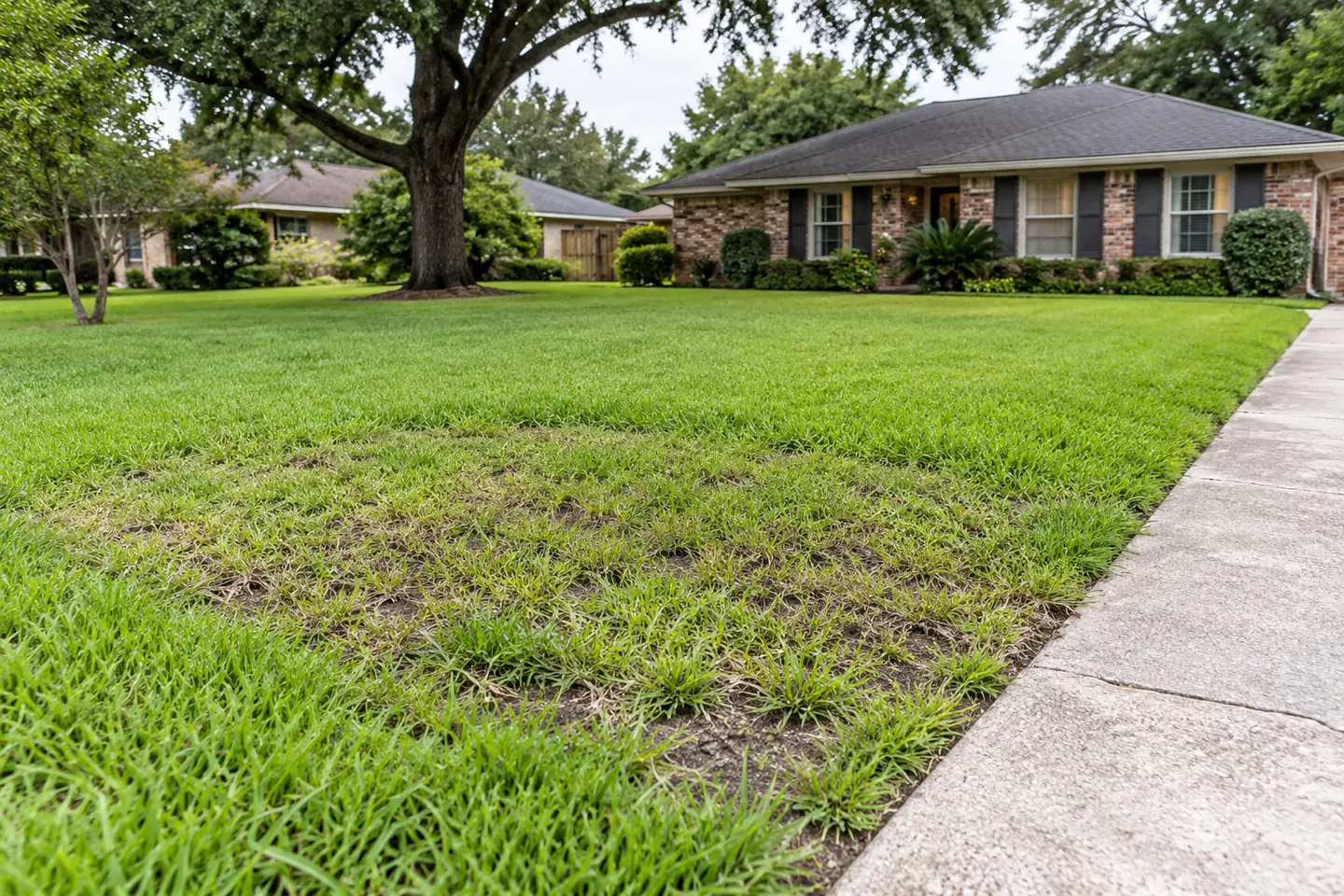
A broad photograph shows the pattern across the lawn, but a closer view of the remaining grass can explain why a feeding question arose. Describe whether leaves look shortened, irregular or missing in the area you can see. Avoid labeling every rough edge a bite. Record the appearance first and let identification remain a separate question.
Keep an ordinary unaffected section in the photograph set as a comparison. It need not look perfect; it should simply show the lawn outside the particular area being discussed. Name both locations so a later reader does not mistake the comparison picture for another damaged patch. This is a record of visible differences, not a demand that an adviser infer the entire cause from the color of a phone image.
Distinguish the adult moth from the feeding stage
Seeing a moth and seeing a caterpillar are different observations. When you describe an insect, state which form you actually saw rather than letting the word armyworm cover everything moving above the lawn. A night-time view near a light may be useful context, but it does not replace an image or examination of the organism associated with the grass concern.
Keep images of different insects separately labeled. If the household has several close photographs from different corners, do not assume they all show one species or one event. Ask an appropriate Extension or qualified source which images are useful for identification. That preserves the connection between the insect, the observed turf and the place where each was found, rather than creating a misleading collection of unrelated yard sightings.
Make a useful two-scale record
Take a wide view from a safe existing position that shows the affected strip and a fixed reference. Then take a closer view only where access is ordinary and safe. Keep the original files if you crop a copy to make a small detail easier to see. The wide view explains extent; the closer image explains the particular detail that prompted your question.
Add a short caption rather than a long conclusion. A caption can say that this is the grass beside the driveway, photographed before the next cut, with the insect identity unconfirmed. That is more useful than naming a cause as fact. If the picture includes a boundary beyond which you could not see, explain that limit. The strength of the record comes from its accuracy, not from how dramatic the photograph appears.
Ask about the current evidence, not an online action threshold
Recommendations written for hayfields, sod production or another region should not automatically become instructions for a small Westbank home lawn. Use a source relevant to the setting and explain what has actually been observed. A number copied without its sampling method or context can create false confidence even when it originally came from a reputable publication.
When contacting an adviser, ask what evidence is needed to identify the insect and assess the lawn concern. Do not improvise a sampling or product procedure simply to produce a count that seems to match something online. If the receiving source requests additional information, retain those instructions with the resulting record. Keep observations made under different methods separate so they are not presented as directly comparable measurements.
Preserve uncertainty about where the insects came from
A recent sod installation, a neighboring lawn problem or an earlier service visit may stand out in memory. None should become an accusation without evidence. Record the actual dates and what you personally observed. If the lawn was not inspected before installation or another event, say so rather than assuming the absence of an earlier photograph proves the absence of insects.
A qualified source may ask about the timing and size or stage of insects, but the homeowner does not need to turn that inquiry into a verdict about responsibility. Keep installer questions with the installer and identification questions with the appropriate adviser. For the lawn-maintenance conversation, focus on the current work area and any instruction that affects access. This avoids making a routine visit carry a dispute it cannot resolve.
Separate leaf loss from a request to cut lower
When parts of the lawn already appear shortened, ask what mowing work is currently appropriate instead of requesting that the entire property be lowered to match. The desired visual uniformity is a different issue from the condition of the remaining grass. A maintenance decision should not be used as a substitute for understanding an active change.
Explain to Happy which area prompted the concern and whether an assessment is still pending. If the owner wants a temporary exclusion, define it with fixed references and identify who can update the instruction. Keep the unaffected accessible lawn named separately. That gives the service conversation a practical scope without implying that a mowing pass is an insect-control operation or that a very short finish will settle the cause.
Keep water, products and mowing on separate lines
An owner may already have changed irrigation or contacted another provider before speaking with Happy. Record what actually happened and when, using the information available rather than guessing at a product or method. Do not add several new actions to the same day and then describe the later appearance as proof of which action worked.
If another responsible professional provides access instructions, carry those instructions into the lawn arrangement accurately. Ask that source to clarify anything uncertain instead of asking the mowing crew to interpret an unfamiliar product or treatment plan. This page offers no pesticide selection or application prescription. It helps keep an observation, a specialist decision and an ordinary maintenance request from becoming one undefined instruction to fix the lawn.
Use a short follow-up that answers the original question
A later photograph should return to the same location and say how much time has passed. Note any confirmed work or owner-reported change since the original view. Keep an improved appearance separate from a confirmed identification or assessment. A fresh cut, different light or a narrower camera angle can change the picture without answering the underlying question.
Close an observation only when its actual next step is clear. That may mean an identification has been provided, an exclusion remains in place or the maintenance scope has been reviewed. Keep unresolved parts visible rather than recording a blanket all clear. The purpose of a useful record is not to make the first guess look right. It is to support a sensible decision about the lawn as it is now.
Put the next request in plain language
A helpful message might explain that grass near the driveway has changed rapidly, current photographs show the affected area, and an insect identification is still being sought. Then state the maintenance question: whether the included areas or upcoming visit need review. Use your own facts rather than copying a hypothetical sequence that did not occur.
For Harvey, Marrero, Gretna, Algiers, Belle Chasse or Westwego, that combination gives Happy a clear starting point. You can be specific without pretending to have diagnosed the lawn. The grass may have changed quickly, but the response can still be organized: preserve the evidence, ask an appropriate source, and keep the actual service decision understandable to everyone involved.
Keep the service boundary clear
Call or text 504-339-3571 and ask for Happy to discuss lawn maintenance. Happy Grass does not provide pest control, fertilization, aeration or overseeding. A guide about possible insect injury does not add those services. Scope, price and available timing require direct agreement.
A short record to bring to the conversation
- Keep rapid leaf-loss observations dated.
- Separate the moth sighting from the caterpillar record.
- Describe what changed before asking about a new cutting plan.