
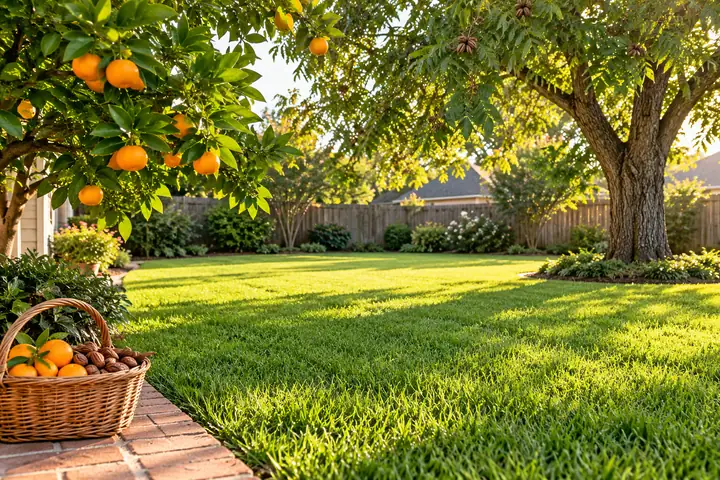
Tree drop changes through the season
A yard beneath satsumas, pecans, magnolias, oaks or other fruiting trees may look clear one week and be covered the next. Wind, maturity, wildlife and rain all affect what reaches the ground. A few soft petals are different from hard nuts, thick seed pods or spoiled fruit. Before Happy Grass arrives, walk beneath each tree and remove the drop that could roll, crush, hide a hole or become a projectile. Use the household's normal safe collection method and wear appropriate protection for thorny or irritating material. Happy provides lawn maintenance, not harvesting, orchard care or pest control. A clear mowing footprint should be ready before the crew reaches the property.
Sort hard objects from ordinary leaves
Leaves and fine clippings can often remain part of the lawn routine, but pecans, walnuts, large acorns, cones and woody pods behave like small hard objects. Collect them from open turf, turning zones and narrow passages. Do not assume a mulching mower will safely process every piece. LSU AgCenter pecan guidance describes the seasonal nut drop and the value of pickup; from a service perspective, collection also makes the lawn route easier to read. Place gathered material in an appropriate container off the grass. Avoid glass bowls, open metal trays or baskets that can tip back into the route.
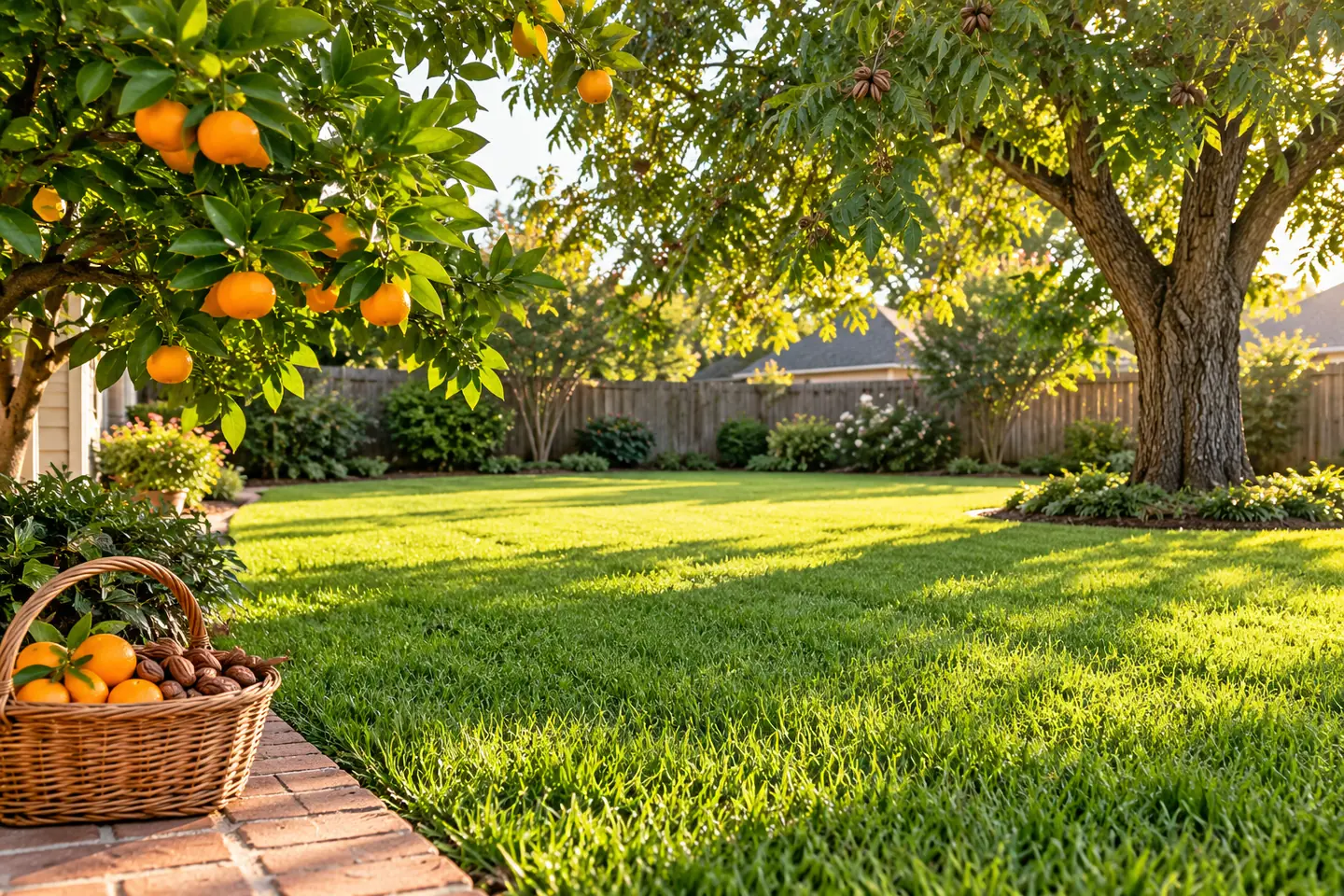
Remove slippery and spoiled fruit
Fallen citrus, figs, mayhaws and other fruit can split underfoot, attract insects or create a slick patch. Collect sound fruit for household use if desired and dispose of damaged material according to the property routine and local requirements. Do not leave piles under the canopy for the crew to mow around. If fermenting fruit, stinging insects or animal activity makes the area unsafe, close the zone and address it separately. Happy does not handle food waste, nests or wildlife. The goal is not to make the ground spotless; it is to remove concentrated soft and hard drop so the lawn can be approached predictably.
Check what the drop is hiding
Fruit and leaves can conceal roots, irrigation heads, holes, toys and branches. After collection, look across the ground from a low angle. Mark fixed features and remove sticks or hand tools. If the soil is soft from rotting fruit or repeated traffic, send a photo and keep equipment back. Do not fill a hole with shells or sweep loose material into a drainage inlet. One careful second look often reveals the actual access issue that the colorful fruit was hiding.
Keep harvesting and mowing separate
Schedule household pickup before lawn service, not while equipment is working. Do not have children or pets gather nuts in the active service area. If you plan to shake branches, use tarps or operate orchard equipment, finish and clear that work first. Happy will not shake trees, spread harvest tarps or wait while a crop is collected. If drop is heavy for several weeks, adjust the pre-visit routine or temporarily reduce the service boundary beneath the tree. Separation keeps both activities orderly and avoids mixing food with lawn debris.
Watch for branches and unstable trees
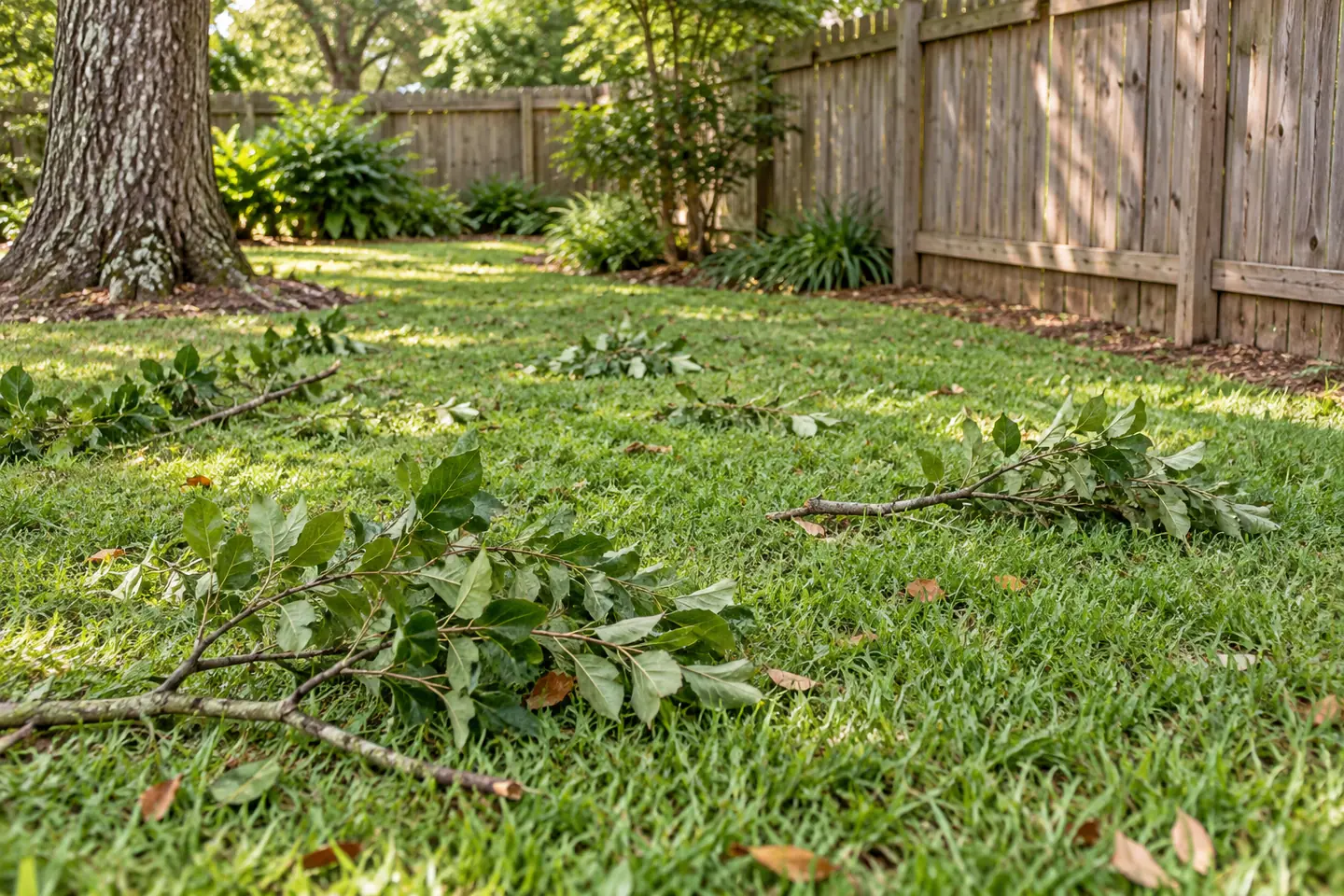
A sudden increase in fruit or nuts after wind may arrive with broken twigs or limbs. Look up from a safe distance and keep away from hanging or storm-damaged branches. Happy does not assess tree stability or perform tree work. Contact an appropriate licensed tree professional when needed. On the ground, remove small loose twigs only when safe; larger branches or debris piles may change the lawn scope. A cleared fruit layer should not create a false sense that the canopy above is normal.
Protect drains, beds and water
Do not sweep fruit, shells or pods into storm drains, canals or roadside ditches. Keep collected material in a stable container and follow local disposal or composting practices appropriate to the material. If you compost, place the bin outside the mowing route and manage it so spilled food does not return to grass. Lawn clippings and tree drop should not be blown into water. A good cleanup route moves material away from drainage paths while leaving the serviceable turf open.
Explain tree-drop expectations in the quote
Tell Happy which parts of the lawn sit under fruit or nut trees, when drop is heaviest and whether you will clear it before every visit. Send a broad canopy-to-ground photo and a closer view of typical material. Mention low branches, exposed roots and narrow access separately. You do not need to promise a perfectly bare lawn. The useful promise is that hard, slippery and concentrated debris will be removed and any unsafe zone will be identified. That scope lets the quote reflect lawn work rather than recurring harvest cleanup.
Review the finish beneath the canopy
Shade, roots and uneven growth can make the turf under a tree look different from the open yard even after mowing. Judge the finish based on the agreed boundary and grass condition, not on whether every leaf or shell disappeared. If a thick layer remained because the drop changed after your last check, update the preparation routine. If trimming clearance around roots needs clarification, send a close photo. Happy will use conservative treatment near woody features rather than chase a perfectly uniform appearance beneath a complex canopy.
Build a quick collection routine
Use a small basket, bucket or other suitable container and walk the tree zone in overlapping passes before service. Check again after overnight wind. Keep the container on pavement or in storage, not at the grass edge. Involve household members only before the crew arrives and keep pets out of the active route. Record the weeks when drop becomes heavy so next year's schedule is easier. Ten focused minutes of preparation can prevent many tiny surprises and lets the mowing visit stay centered on grass.
Separate the service route from the collection pile
Choose the destination for gathered material before beginning the walk. A bucket parked just inside a gate, a wheelbarrow left on turf or a bag propped against a fence can undo the cleanup by creating a new access obstacle. Move filled containers to a stable location outside the lawn route and close or secure them so wind and animals cannot scatter the contents again. If municipal pickup or household composting happens later, keep that process distinct from the scheduled mowing visit. Photograph the cleared tree zone after collection when seasonal drop is especially heavy. That simple record helps Happy understand that the visible grass is ready even if more fruit may fall between the photo and arrival.
Check the approach as well as the canopy zone
Fruit and nuts may roll down a driveway, collect beside a gate or fall from a neighboring branch over the access route. Begin the preparation walk where the crew will enter, then follow the path to each tree. Clear hard shells from pavement where they can shift underfoot and remove soft fruit from the threshold before it is tracked onto grass. Keep collection tools off the gate opening when finished. If material falls from outside the property, address only what can be handled safely within the owner's area and do not reach across a fence or into a road. The service route needs one continuous clear approach, not just a tidy circle beneath the trunk.
Update the plan when wildlife redistributes the drop
Birds, squirrels and other animals may carry fruit or nuts beyond the original tree zone. Happy does not manage wildlife or nests, but the property owner can include the scattered areas in the pre-visit check. Never approach an aggressive or distressed animal to clear the lawn. Close that zone and obtain appropriate guidance. If shells repeatedly appear near a shed, fence corner or feeding area, mention the pattern during quoting so the boundary does not depend on a single clean-day photo. Removing deliberate feed and managing attractants are property decisions; the lawn-service requirement is simply a route free of concentrated hard or slippery material at arrival.
Use a collection boundary that matches the drop area
When the owner prepares fallen material, define the collection area by what is actually on the ground rather than only the tree canopy overhead. Show the approach and any nearby border where material has gathered. This makes the readiness note more accurate when the current spread is wider or differently shaped than the shaded patch beneath the branches.
Keep the collected material and the remaining lawn route separately described. Moving everything into a pile beside the gate may clear one area while creating a new obstacle to the visit. If collection is incomplete, name the unfinished section rather than marking the whole yard ready. Afterward, compare the same wider view before assuming another mowing request starts from a cleared surface. The record should describe the presented condition, not a collection task that is only planned.