
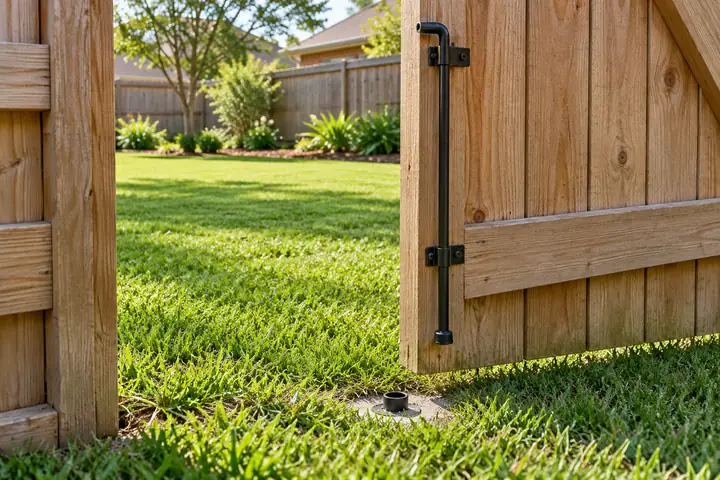
Understand the gate’s normal operating position
Double gates often use one leaf as the primary opening and pin the second leaf with a cane bolt. Other gates have a vertical rod that drops into a pipe or hole in the ground. Before service, demonstrate which leaf opens, where the rod rests when raised and whether the gate can stay safely secured. Happy should not improvise a latch with rope, a rock or a mower. The owner provides safe access; the crew uses that access without modifying the fence hardware.
A raised rod must be captured, not merely lifted
If the rod can slide down while the gate moves, it may gouge the lawn, catch on concrete or lock the gate unexpectedly. Use the gate’s intended retainer or clip so the rod remains fully raised. Do not wire it up with a loose twist tie that leaves sharp ends. Check the bottom tip from both sides because grass can conceal how far it hangs below the gate. A secure raised position creates clearance; a dangling rod creates a moving obstacle.
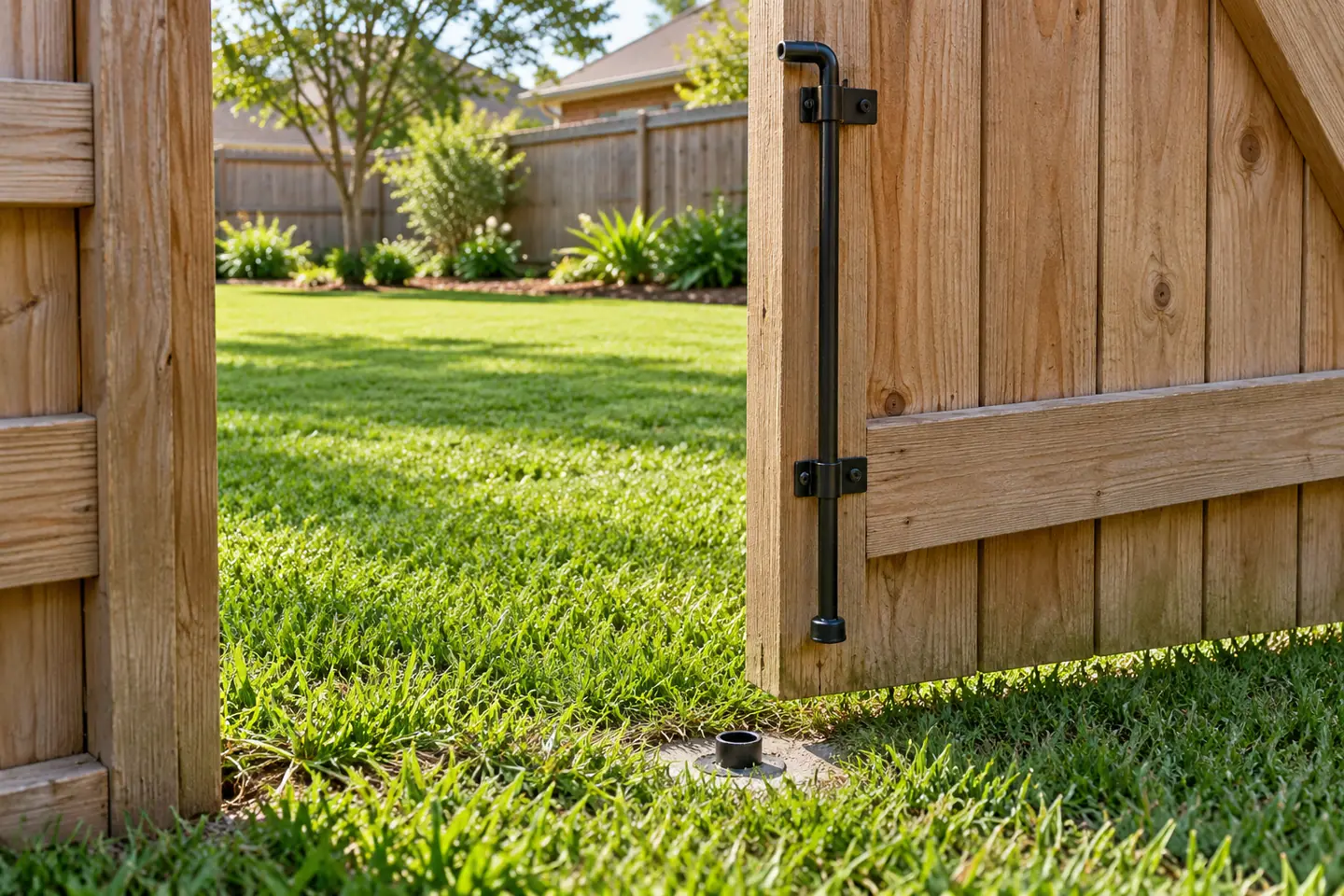
Keep the ground receiver visible
The sleeve, pipe or concrete hole that accepts the bolt may sit in turf at the threshold. Clear enough growth to see its rim without excavating around it. A missing cap on an unused receiver can leave a small opening; address it with appropriate gate hardware rather than an improvised plug. Mark the receiver in the property note even when the gate is open, because equipment may cross the threshold after the rod has moved out of sight.
Measure the real opening with both leaves secured
A wide gate can narrow when hinges sag, a wheel stop protrudes or one leaf swings into the lane. Open it to the exact service position and measure between the closest fixed points, not between fence posts at shoulder height. Include the turning space immediately inside. Happy may use a smaller machine or alternate gate if the route is tight. Forcing equipment through risks scraping the gate, catching a rod or repeatedly wearing the same turf patch.
Threshold grass takes concentrated traffic
Every visit funnels wheels through the gate. If the receiver is in the middle of the lane, repeated turns can compact soil and expose the hardware. Approach straight where possible and avoid pivoting on the threshold. After rain, check whether the gate area is softer than the yard beyond it. A rut can keep the gate from closing or create a new low edge around the sleeve. Happy can adapt a route; grading, paving and gate alignment remain separate property work.
Keep pets and children behind another secure barrier
An open service gate is not pet containment. Move animals indoors or behind a second closed boundary before the gate is prepared. Tell household members not to close or drop the rod while equipment is passing. The crew should never rely on a child, loose dog or temporary tether to manage access. Once service is complete, the owner can return the rod to its normal locked position and verify both gate leaves.
Trimming around the receiver requires control
String line can catch grass at the sleeve, but it should not strike a loose metal rim or wrap around a protruding rod. Work from firm footing and stop if the hardware moves. If the receiver is damaged or surrounded by sharp material, isolate the small area for repair. Do not use the trimmer to dig soil from the hole. LSU AgCenter guidance encourages awareness of sensitive features and safe operating conditions; a gate threshold combines both hardware and a traffic pinch point.
Remove temporary gate props
Bricks, boards, bungee cords and landscape tools are often used to hold a gate open. They are poor service-day substitutes for functioning hardware. A loose brick can be thrown by equipment, and a bungee can release under tension. Use the gate’s intended hold-open arrangement or have an adult owner manage access without entering the active route. If the gate cannot remain safely open, coordinate another solution before the visit rather than creating a last-minute prop.
Gate-day checklist
- Demonstrate the normal opening and the rod’s secured raised position.
- Keep the receiver rim visible and document its location.
- Remove bricks, cords, boards and other temporary props.
- Confirm usable width and turning room with the gate fully positioned.
- Secure pets and keep people out of the threshold.
- Report sagging hinges, loose sleeves or sharp damaged hardware for repair.
Storm and soil movement can change alignment
Wood swells, posts lean and soft ground shifts. A rod that entered its sleeve easily last month may scrape the rim today. Do not force the gate or hammer the bolt during lawn service. Note the change and let the owner or fence professional realign the system. An access problem can be handled by another gate or rescheduling; it should not become an unplanned repair that delays the whole lawn visit.
Separate weed control from mechanical repair
Vegetation around a gate may be addressed only within Happy Grass’s stated lawn and weed-control scope. Spraying or trimming does not fix a loose receiver, corroded rod or sinking post. Avoid applying products onto hardware or beyond labeled, approved use. If the owner wants a hard threshold, new stop or replaced latch, that is fence or landscape construction. Keeping these responsibilities distinct makes estimates and expectations clearer.
Close the visit with an owner check
After equipment exits, the owner should close both leaves, lower the rod into the receiver and confirm latches work as intended. Happy can report visible interference but should not guarantee security. A final photo of the ordinary closed position helps document what the property expects between visits. The lawn result is successful when the threshold is neat, hardware is untouched, access stayed controlled and the gate returns to its normal job.
Double gates need a plan for wind
Wide leaves can catch a gust and swing even when the yard seems calm. Use the manufacturer’s intended hold-open hardware or a secure owner-managed method outside the equipment path. Do not count on the weight of the gate or a shallow rod dragged across the ground. If weather makes the opening unstable, pause access rather than having someone stand in the swing arc. A predictable stationary gate is part of the safe route, just like firm turf and adequate width.
Note wheels, stops and automatic hardware
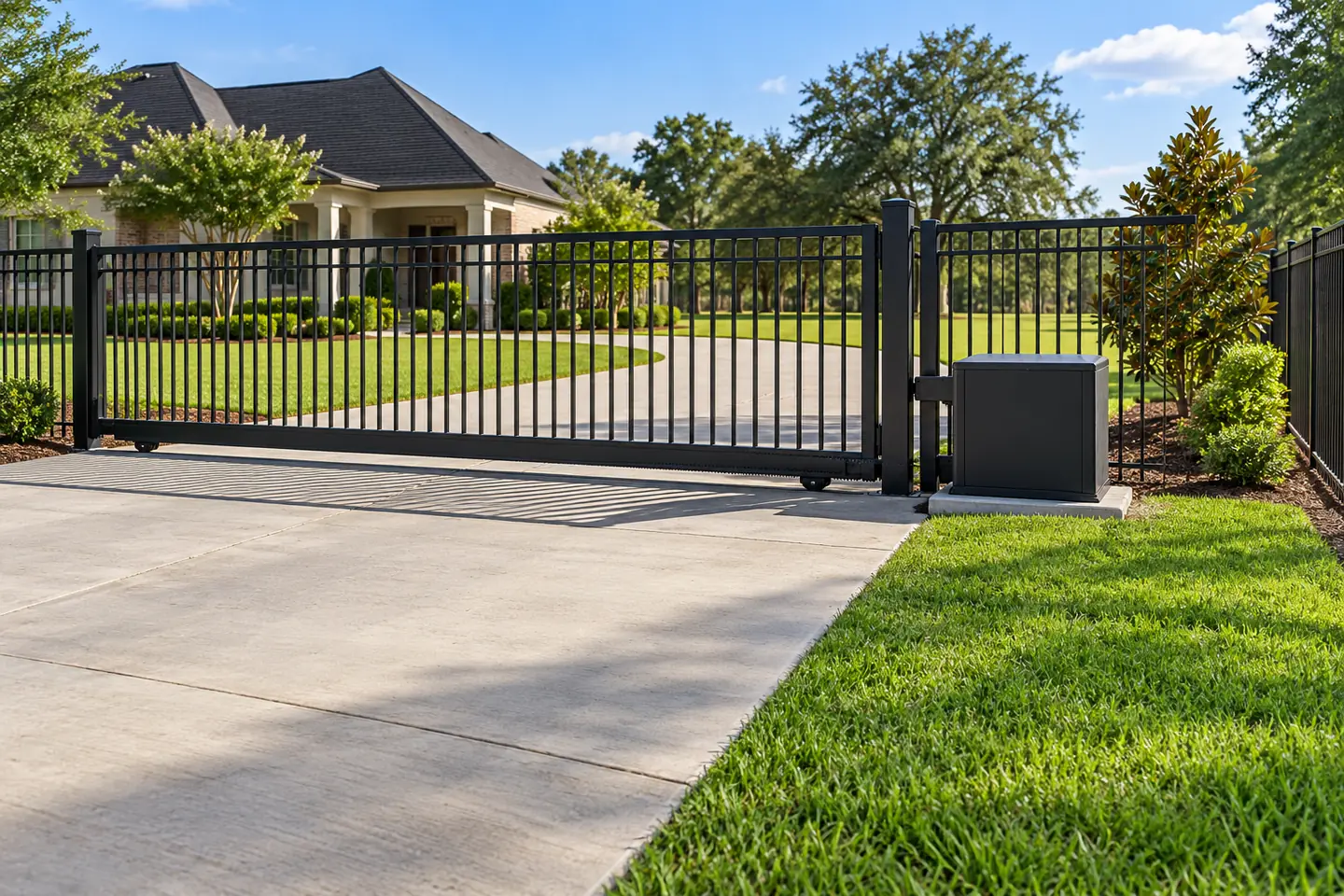
Some large gates use a support wheel, center stop or powered operator in addition to the drop rod. Each adds a low feature near the grass. Keep operator arms, photo eyes and cables outside trimming contact, and never disconnect an automatic system for lawn access. Demonstrate the approved manual or open position before the visit. If the route depends on powered movement, the owner should remain responsible for operating it. Happy’s equipment passes only after the gate system is stable and clear.
Shared alleys need explicit access permission
A rear gate may open into a common alley or neighbor’s drive rather than private lawn. Confirm the crew may enter and that parked vehicles, bins or locked secondary gates will not trap equipment. The lawn estimate should not assume public access through a private route. Clear coordination prevents the drop rod from being handled repeatedly while permissions are sorted out and keeps unrelated property outside the service area.
Recheck hardware after high wind or a service visit
A wide gate can rack or swing differently after strong wind, hinge adjustment or driveway work. Before the next lawn visit, test it by hand from the normal standing position and confirm both the open and closed holding points. Look for a rod that now lands beside its socket, a sleeve lifted by soil movement or fresh hardware left in the grass.
If operation has changed, update the route photo and arrange gate repair before equipment enters the swing zone. Happy can follow a stable documented access plan, but should not bend a rod, realign a socket or improvise a prop to make the opening usable.
Describe the gate in its prepared position
A gate photograph should show the position the owner will actually leave for authorized access. Explain which leaf is intended to open and which hardware remains fixed, without posting private entry codes in a general quote packet. A wide view of an open entrance can omit the low hardware that makes its real usable width different.
Keep owner preparation distinct from permission to repair or alter the gate. If a rod, latch or stop does not work as expected, describe the access consequence and resolve the appropriate repair question separately. After a change, update the current note rather than allowing an older opening instruction to remain authoritative. This gives Happy a practical arrival arrangement to review and keeps a routine lawn entrance from becoming an improvised gate-service task on the day of the visit.