
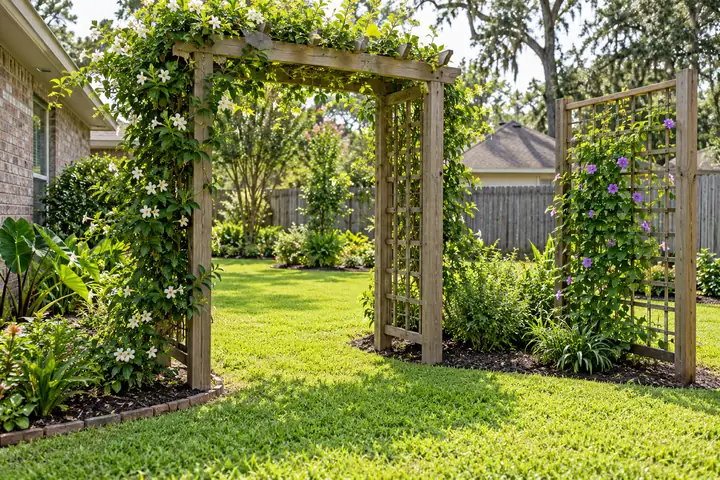
Measure the usable opening, not the pretty opening
An arbor may look wide from eye level while vines, planters and trim boards narrow the passage close to the ground. Measure the clear width at the tightest point and include any roots, edging or stepping stones that affect wheels. Also note the overhead clearance if long canes or hanging baskets droop into the opening. Happy Grass needs a practical route, not just a decorative doorway. Send one straight-on photo and one view from each side so the approach is visible. If the arbor is not part of the mower route, identify the alternate gate or passage. We will not force equipment through a structure that appears too narrow, unstable or obstructed. A precise route protects the arbor and prevents the lawn behind it from becoming an unexpected unreachable section.
Keep vine growth inside the structure
Vines rarely follow the trellis perfectly. New shoots can cross the grass, wrap around low braces or reach into the path. Before service, tie back or prune growth according to the plant's needs and your garden plan. Happy does not decide which vine stems are valuable, and routine string trimming is not a substitute for plant training. Mark new plantings and keep ground-level tendrils visible. Thorny or stiff growth deserves extra clearance. If the vine supports wildlife activity or a nest, tell us and establish a quiet buffer rather than asking the crew to work underneath it. The goal is to keep living material on the garden side of the boundary while preserving a clear lawn lane.
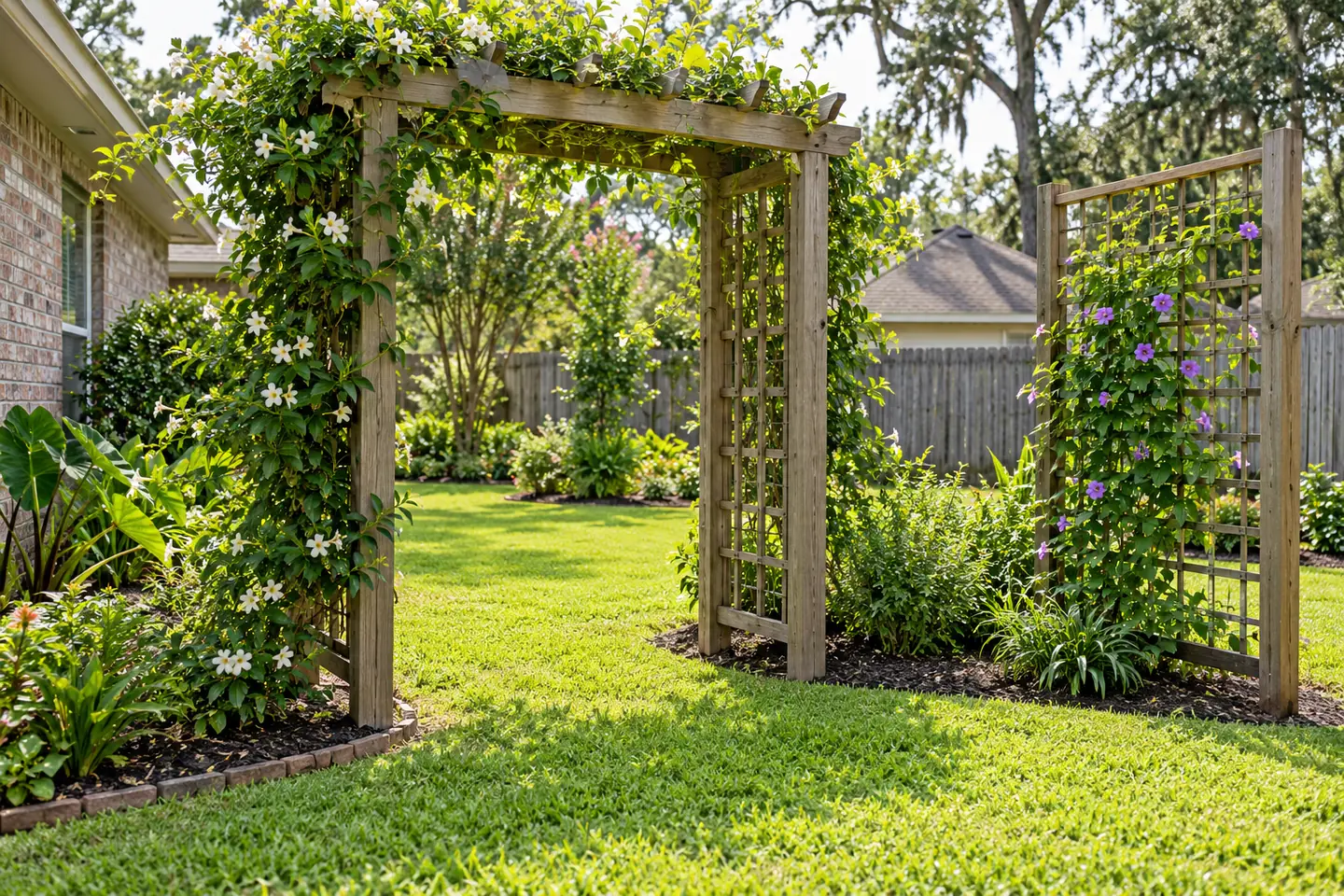
Identify anchors, braces and wires
Freestanding trellises and arbors may use metal feet, buried anchors, guy lines or angled braces. Those parts can extend beyond the posts and disappear under leaves. Show every low attachment in quote photos and mark it physically if the grass grows tall. Never run temporary twine or wire across a mowing route. Check that stakes are secure after storms, but do not ask the lawn crew to test or repair the structure. A leaning post, loose top beam or pulled anchor closes the nearby route until the owner or appropriate professional makes it stable. Happy can work around a sound, visible feature; carpentry, anchoring and structural judgment are outside our service.
Decide where the grass stops
Some arbors stand inside planting beds, some span a turf path, and others sit directly at a fence gate. Each arrangement needs a clear grass boundary. A continuous mulch band around the posts can reduce awkward trimming, while a firm path through the opening may separate two lawn sections. Avoid leaving tiny triangles of turf between post, edging and bed. Tell Happy whether grass under the arbor should be mowed, trimmed conservatively or excluded. If stepping stones are present, make sure they are stable and visible. A deliberate boundary creates a cleaner finish than repeatedly cutting closer to delicate wood, paint or vines.
Protect wood, metal and finishes
Trimmer line can mark painted wood, soft lumber, vinyl coatings and thin decorative metal. Soil and moisture at the post base can already make finishes vulnerable. Happy will not use the structure as a trimming guide. A small clearance, mulch collar or planted base can protect the material and still look finished. Remove low decorations, bells and solar caps that might shake loose. If a trellis has rust, splinters or sharp edges, point them out and keep a wider buffer. Detailed restoration or repainting is the owner's responsibility. The lawn plan should preserve the feature rather than trading a slightly closer cut for visible wear.
Plan access to the lawn beyond
An arbor sometimes serves as the only entrance to a side garden or rear lawn. Confirm that the entire route is open on service day. Unlock any gate, move furniture and coil hoses away from both approaches. Hanging baskets should not reduce headroom, and decorative stepping stones should not wobble under ordinary foot traffic. If the crew must use a different path because of rain or construction, tell Happy in advance. We cannot lift equipment over walls, carry it through a home or squeeze past fragile containers. A beautiful gateway works best when it remains an actual gateway.
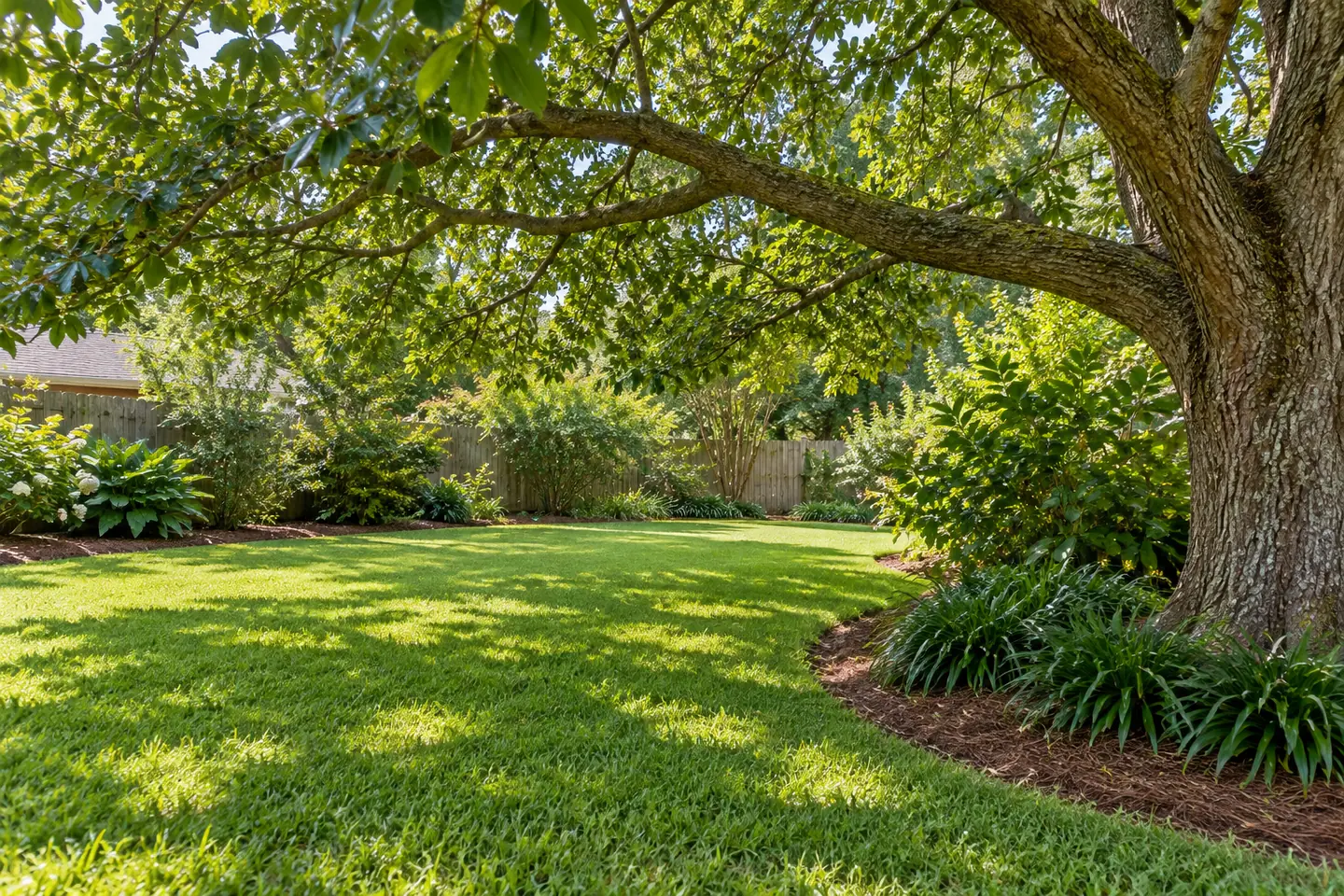
Check the ground after rain
Shade and concentrated roof or vine drip can leave the soil around arbor posts wetter than the open lawn. Walk both approaches after rain. If the path is soft, close it rather than assuming the equipment can stay exactly on the stones. A muddy entry can track soil across hard surfaces and damage the turf at the threshold. Happy may adjust or postpone that section while the rest of the lawn remains workable. Lawn service does not include correcting drainage or rebuilding the path. An updated photo is enough to start a useful conversation about access.
Separate garden care from lawn care
Pruning vines, treating insects, repairing trellis panels and replacing mulch are garden or property tasks, not automatic parts of mowing. Happy's scope can include agreed mowing, edging, trimming and blowing around a prepared feature. If you want a special no-trim zone for a new vine, mark it and explain it before the visit. If seed pods, leaves or flowers fall onto the grass, remove hard or bulky debris that could obstruct equipment. Clear scope prevents a helpful lawn visit from becoming accidental garden maintenance.
Recheck the route as seasons change
An arbor can change quickly between visits. Summer growth narrows openings, wet soil loosens stakes and seasonal décor adds cords or hanging pieces. Walk the route at mower height before each service. Keep the same boundary, remove temporary items and report any structural change. After a storm, look for a lean, cracked joint or dangling wire from a safe distance. When the opening remains clear and the bases stay visible, the arbor can continue doing what it does best: welcoming people into the garden while letting the lawn service pass without drama.
Map a second route when one is available
If the property has both an arbor opening and a wider utility gate, tell Happy which one is preferred for routine access and which one is the backup. Keep the backup free of locks, vehicles and stored bins on service day. This matters after rain, when the decorative route may be soft even though another path is firm. Do not change the gate plan without an update; equipment may already be positioned for the expected entrance. A simple two-route map can prevent a delicate arbor from becoming the only option.
Watch for hardware at hand and wheel height
Decorative latches, hooks, screw ends and wire ties can protrude from the inside of a trellis. Inspect the opening from both directions and remove or shield sharp loose hardware according to the structure's design. Happy does not modify the hardware, but we need a passage that will not snag clothing, hoses or equipment. Pay particular attention to temporary plant ties that have stretched across a gap. A secure connection attached closely to the trellis is different from a long loop hanging into the lawn lane. When hardware cannot be corrected before service, close the route and use the backup entrance.
Keep addresses and private views out of quote photos
Photograph the opening from inside the yard when possible, and crop out neighboring windows, house numbers and unrelated people. Happy needs the posts, bases, boundary and access lane—not a detailed record of the neighborhood. A close, practical set of images can document the route without exposing private information. If the arbor sits on a shared boundary, describe which grass is in scope instead of relying on a photograph to settle ownership.
Review the opening in both directions
An arbor opening may look clear from the house but have a narrower approach from the lawn entrance. Show both directions when the route matters to the request, including fixed bases and the current extent of climbing growth. Name any part that the owner plans to prepare rather than photographing a cleared layout that will not actually be available.
Keep passage through the opening separate from work around the outside. If the interior route remains uncertain, explain which grass area depends on it and whether another authorized approach exists. A decorative entrance need not become an equipment route simply because a person can walk through it. Once the approach is agreed, date the reference photos and review them after a new trellis panel, plant support or seasonal display changes the available space.