
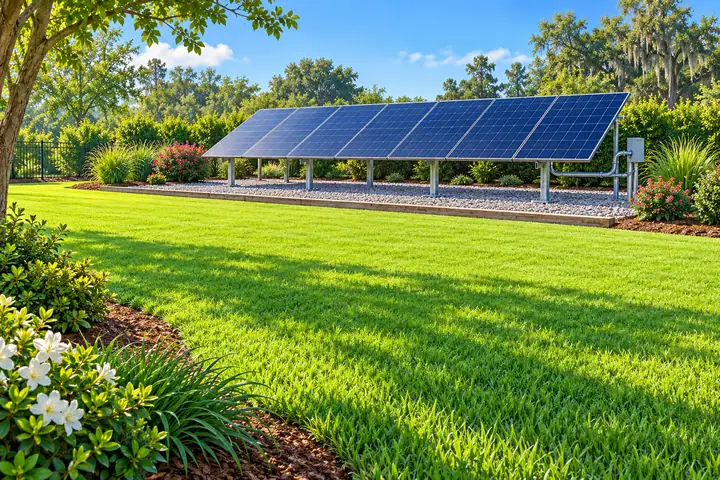
View the array as energized infrastructure
Panels, racking, posts, wiring, conduit, disconnects and inverters form one system even when only part of it is obvious. Happy Grass does not touch, clean, test or inspect any component. The lawn plan begins outside a visible no-contact boundary and never relies on reaching beneath energized equipment.
Take photographs from the main gate and from a safe side angle that shows the whole perimeter. Avoid leaning on the rack for a better view. Tell Happy where the installer normally enters and whether a fence or gravel strip defines the equipment zone. A useful quote documents space; it does not attempt an electrical assessment.
Find the outermost fixed point
The panel edge may extend beyond its posts, and conduit can leave the rack toward a house or service cabinet. Measure the lawn boundary from the outermost overhang, support or protected electrical route. Do not assume the gravel rectangle is the only exclusion if equipment projects beyond it.
Keep the boundary clear of planters, bags and stored tools. A solar service technician may need unobstructed access around the array. Happy Grass can maintain adjacent reachable turf, but it will not move system parts or block a service side with lawn materials.
Keep the underside out of ordinary mowing
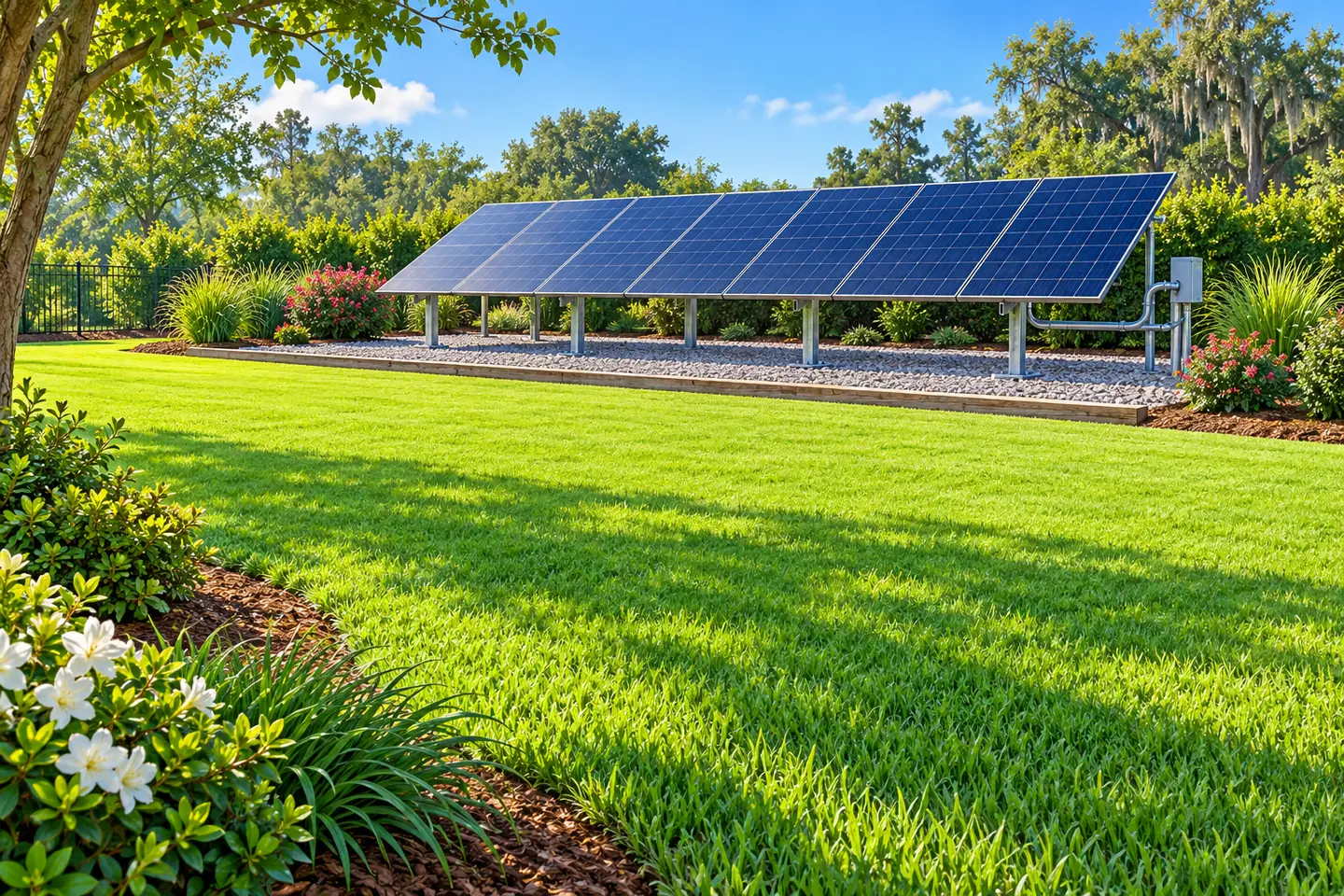
Low clearance, cross-bracing and wiring make the space under an array unsuitable for routine mower access unless a separate established design explicitly provides it. Do not ask a crew member to duck under panels or reach between posts with powered equipment. Identify that interior as excluded unless the property has a documented, safe lawn-care arrangement.
Vegetation beneath panels remains the owner’s responsibility to manage through an appropriate plan. Happy Grass does not promise vegetation control inside an electrical installation, and it does not offer herbicide or pest-control service. A visible non-turf surface can simplify the boundary, but installing or changing it is a separate project.
Protect conduit and private lines
Above-ground conduit should remain visible and supported. Buried runs may not be obvious at the surface. Before any digging, edging installation or post work near the array, use the applicable utility-location process and coordinate private solar lines with the owner and qualified installer. Do not assume a public locate covers every private conductor.
A loose cover, sagging conduit or exposed cable requires an electrician or qualified solar provider. Exclude the nearby grass until repaired. Happy Grass will not tape, lift or reposition electrical hardware to create a route, and a lawn visit does not certify that the system is de-energized.
Maintain a clear technician path
Identify the route from the property entrance to the array’s service side. Keep that path free of patio furniture, hoses, branches and lawn bags. If the route crosses turf, it can still be mowed when suitable, but it should not become a storage strip between service calls.
Gate codes and locks need an owner-approved process. Do not leave a gate unsecured for convenience. When solar and lawn appointments occur on the same day, stagger them so technicians and moving equipment do not compete for the narrow route.
Watch shade and runoff patterns
Panels create shade that moves through the day and can direct rain along a drip line. Grass just beyond the array may grow differently from the open yard or stay wetter after storms. Observe where water lands rather than assuming the entire perimeter dries together.
If the drip line is saturated, skip that edge and return under suitable conditions. The crew should not enter the gravel or electrical zone to avoid a wet patch. Happy Grass does not redesign panel drainage, correct erosion beneath the rack or promise identical turf density around the structure.
Clear debris without touching panels
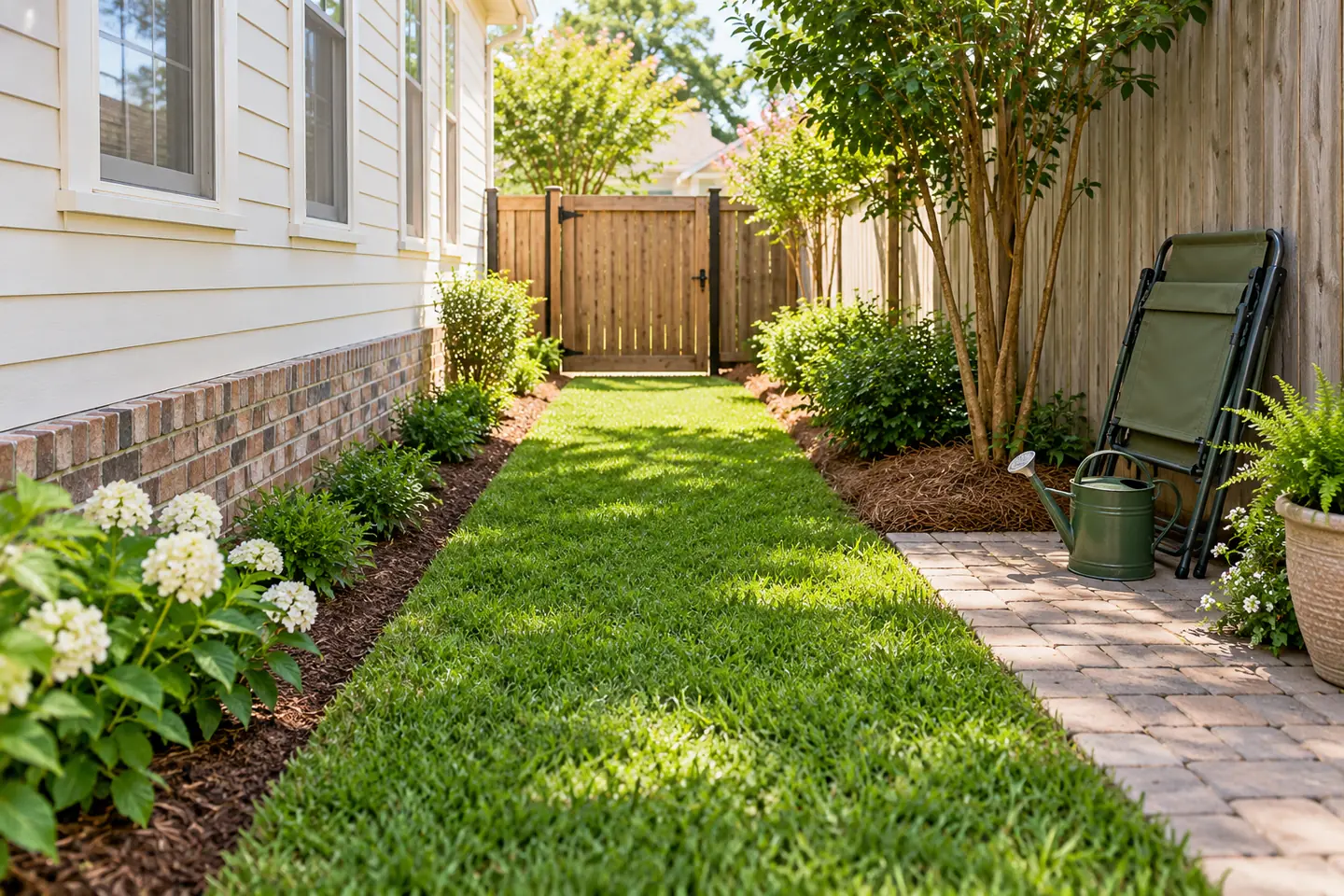
Wind can deposit branches, leaves and litter against the outer border. Remove ground debris only when it can be reached without contacting system components. Debris on top of or caught beneath panels belongs to the owner and qualified solar-maintenance provider. Lawn equipment is not a panel-cleaning tool.
After a storm, look for shifted gravel, leaning posts, damaged fencing or hanging wire from a safe distance. Do not approach suspected electrical damage. Follow the system provider’s and emergency authority’s guidance, then update Happy only after the area is confirmed appropriate for adjacent lawn work.
Avoid reflection and heat assumptions
Panels can reflect bright light, and metal racking can become hot. The lawn boundary should already provide enough room that crew members do not need to lean against the system. Do not cover components with fabric or spray water on them for lawn-service comfort.
The homeowner should schedule work at a sensible time and disclose any known site restriction from the installer. Happy Grass can adapt the adjacent lawn sequence, but it does not determine electrical shutdowns or manufacturer clearances. Those decisions stay with qualified parties.
Prepare the perimeter before arrival
Walk the outer edge without entering the equipment zone. – Remove toys, hoses, tools and branches from the lawn route. – Keep gravel, stone and mulch inside the defined border. – Identify every visible conduit route and service cabinet. – Check the panel drip line for wet or eroded ground. – Preserve the technician’s normal access side. – Report storm damage, loose hardware or changed fencing.
Do not trim a hidden wire into view. If vegetation obscures hardware, stop and ask the owner or solar provider for the correct next step. Visibility should come from proper system maintenance, not from risky improvisation.
Update the map after solar work
Installers may replace an inverter, add protective posts, extend conduit or enlarge a gravel pad. Each change can alter the lawn edge. Send current photos before the next visit and revise the scope. A previous mowing path should never override new electrical equipment.
Construction cleanup also belongs to the installer or owner. Remove packaging, wire offcuts, fasteners and temporary markers before lawn service. Keep official utility flags in place until the responsible party says they can be removed.
Keep turf claims modest
Shade, concentrated runoff and restricted access can produce a different grass condition near the array. Happy can discuss mowing suitable reachable turf, but the company does not offer fertilization, aeration, overseeding or pest-control services. It also does not promise that mowing alone will restore thin areas.
If the long-term plan calls for a wider gravel or planted buffer, complete that design with the appropriate providers and confirm buried utilities first. Once stable, the new border can become the repeatable lawn edge. The current quote should describe today’s safe, visible layout.
What Happy needs for a quote
Share the array footprint, lowest panel edge, outer overhang, gravel or fence boundary, visible conduit route and the ground condition along the drip line. Identify the normal technician side and gate width. Wide photos are more useful than close-ups of individual cells or labels.
That information lets Happy keep a generous no-contact margin while caring for the open lawn. The solar provider remains responsible for the electrical system, and the homeowner controls access, repairs and vegetation inside the equipment zone.
Keep installation records separate from lawn notes
The owner should retain electrical drawings, warranties and installer instructions with the solar records, not inside a mowing request. Happy only needs the visible perimeter, access side and ground conditions. Separating those records prevents a service note from being mistaken for technical approval and keeps sensitive system information out of an ordinary lawn conversation.
For a rental or managed property, identify who can authorize solar-provider access and who can update the lawn boundary. If nobody is available to resolve a changed conduit or damaged fence, exclude the area. The open yard can still be discussed on its own merits while the equipment-side decision waits for the responsible person.
Keep the installer’s map distinct from a lawn sketch
An installation document may contain details that are useful to a qualified solar professional but unnecessary in a general quote packet. Keep that document with the owner’s records and create a simpler lawn sketch that identifies the outer boundary, authorized route and any exclusion the owner has had confirmed. Do not redraw hidden connections from guesswork.
Label the sketch with a date and note what remains uncertain. If a later service visit or alteration changes the visible installation, update the lawn reference before relying on it again. The crew needs a clear description of the accessible grass around the presented perimeter, not permission to troubleshoot equipment or interpret an electrical layout. Separating those records gives the lawn request practical context while preserving the role of the appropriate professional and the source of equipment-specific instructions.