
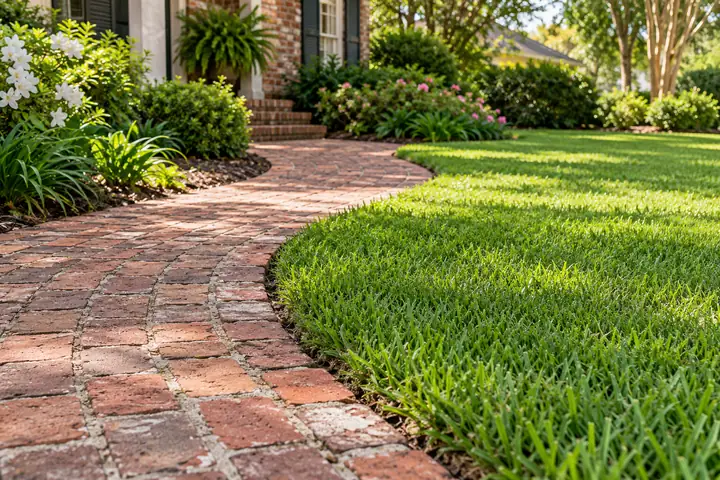
Find the walkway before choosing its finish
Brick paths rarely look exactly like the straight concrete edge beside a driveway. Their outer course may curve, step outward at a landing or disappear beneath spreading grass. Before asking for a sharper lawn line, identify the actual walkway you want revealed. Take a view along the path and another across the border. Those angles help distinguish a grass lip from the position of the bricks underneath it.
Happy can discuss mowing, edging, weed-eating and blowing in relation to the existing walk. Rebuilding paving, replacing mortar or changing the path width is a different project. You do not need to settle every landscape question before requesting a lawn quote, but explain which result you mean. Wanting the grass kept back from the original outer course is a much clearer starting point than asking for the bricks to look new. An older walk can retain its character while its lawn boundary becomes easier to understand.
Separate the outer edge from the joints
Grass growing over the outside of a brick walk is one issue. Plants growing between the bricks are another. In a photograph, both can make the path look green, yet the requested work may be quite different. Point out whether the concern is a grass overhang at the perimeter, scattered growth in joints or both. Do not let a general edging request imply that every joint will be cleared or that a treatment will be applied.
Mortared paving and bricks set with open joints also deserve different descriptions. State what you know about the construction, and say when you do not know. If a plant between bricks was intentionally retained, identify it before someone interprets all green material as unwanted growth. A tidy lawn border does not require stripping the whole walk. Keeping those requests distinct helps you compare a lawn-maintenance scope with any separate paving or joint-maintenance work you might choose to arrange later.
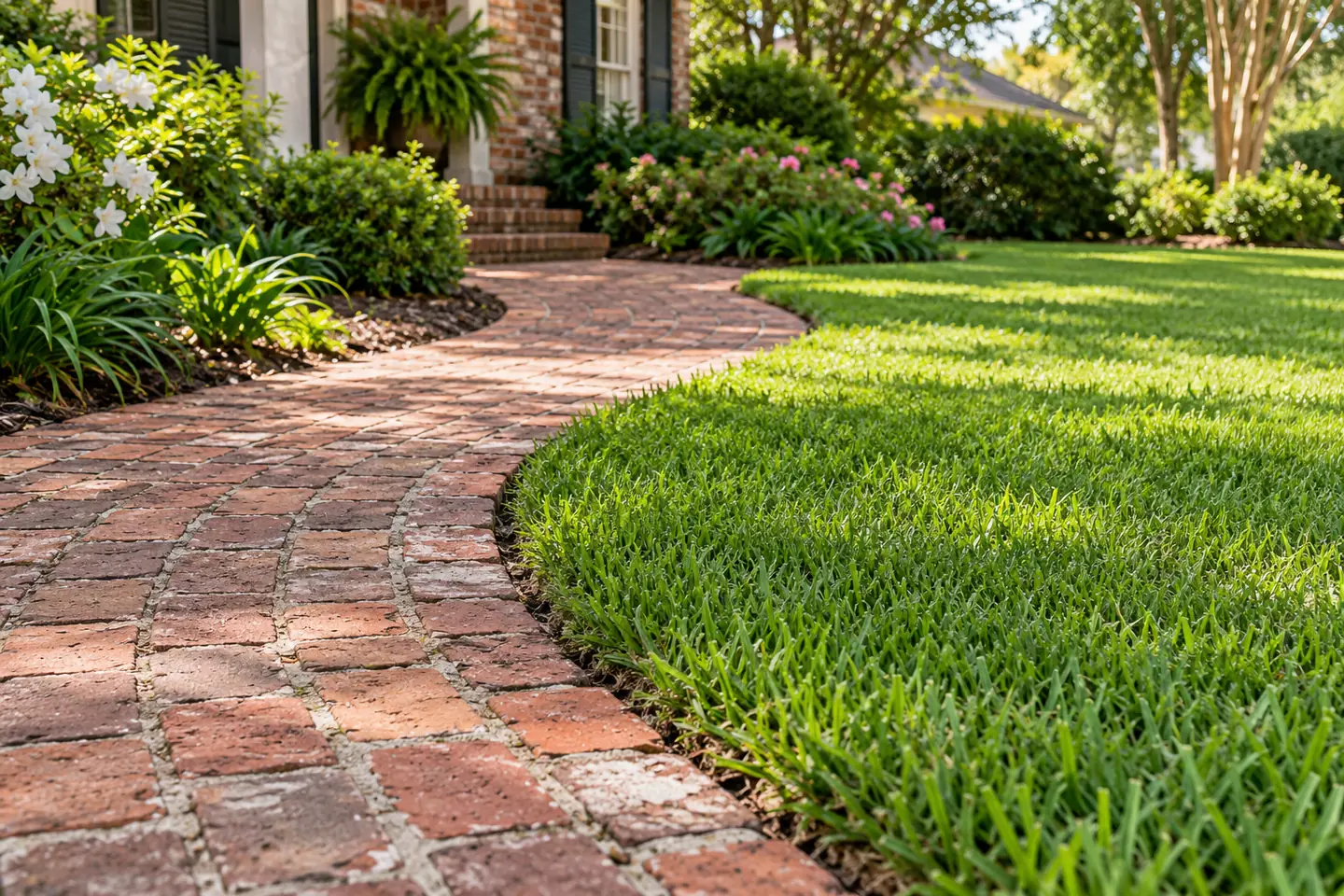
Show loose pieces and changing levels
A single brick standing above its neighbors may be hard to spot when grass leans across it. Look from ordinary standing positions and describe a raised corner, broken fragment or dip that you already know about. You are not expected to test the paving by rocking loose units or lifting a hidden edge. Leave unstable material alone and bring it into the conversation before the visit.
Toro's mower guidance calls for inspecting the working area and avoiding solid objects. For your walk, the practical preparation is to identify those existing objects, not prescribe a universal machine setting. A smooth-looking picture cannot prove that a mower can cross the paving or that an edging pass is suitable along every brick. The route, surface and equipment need their own review. If a short section is excluded while a paving concern is resolved, record that section clearly so an intentional exception is not mistaken for a forgotten part of the lawn.
Describe curves, landings and narrow grass pockets
The lawn beside the main straight stretch may be simple while the corner near the front steps is not. Curves, a small landing and decorative brick patterns create pockets that do not appear on a rough lawn measurement. Include those places in your photos. Explain whether the same finish is wanted along the whole path or whether a planted corner should remain softer and less sharply defined.
A useful border description includes several separate observations:
- The beginning and end of the brick section included in the visit.
- Any outer course that sits higher than the adjacent lawn.
- Small grass pockets between a curve and a fixed wall or step.
- Plants that belong beside the walk and should stay outside the lawn task.
That information is more practical than estimating how many inches of grass should disappear. It gives the shape a context and leaves room to agree a suitable approach on the actual property.
Keep a clean finish separate from deep cleaning
Fresh clippings on a brick walk can hide the border you just had maintained. Tell Happy which paved areas should be included in the blowing portion of the agreed visit. Mention nearby doorways, open garden beds and places where loose material should not be directed. The goal is to discuss the handling of lawn debris without assuming that dust, old stains or worn mortar will be repaired by the same work.
Pressure washing, removing embedded marks and restoring joint material are not interchangeable with blowing off fresh clippings. If the walkway already has an uneven color, photographs before the visit help you evaluate the lawn finish fairly. Look first for remaining cut grass and the agreed perimeter shape. Then separate an older paving condition from the current lawn work. That small distinction keeps feedback useful and prevents a clean-border request from becoming an unspoken promise about the appearance of every brick in the path.
Coordinate the path with how people use it
A walkway may be the route from the gate to the back lawn, not just a decorative feature beside it. Explain whether equipment would need to pass along it, cross it or use another entrance. A wheelbarrow, porch delivery or parked cart can change that route on the day. Put portable belongings in a location that leaves the agreed access open rather than moving them from one end of the same path to the other.
If someone is replacing bricks or working on the steps, coordinate the lawn request around the actual handoff. Share which sections remain unfinished and whether the normal route is temporarily unavailable. Do not assume a lawn crew should bridge a gap or reposition paving to reach the backyard. A revised access plan may be more sensible than trying to preserve the usual route at all costs. The path can be beautiful and useful while still needing a clear explanation of its present condition.
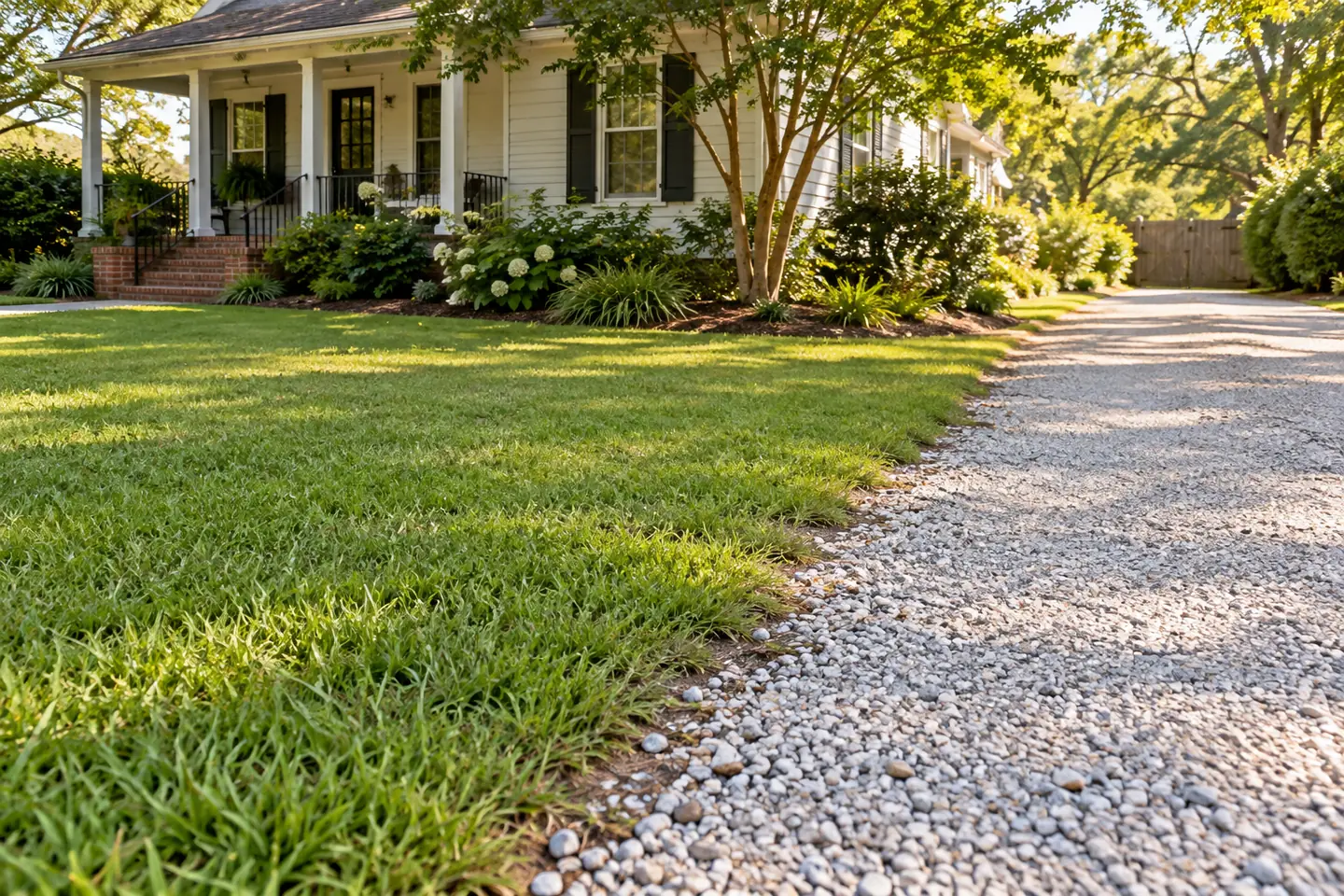
Compare the edge across visits
Grass can gradually obscure the outer line again, especially where the lawn grows laterally over the brick. To discuss a change, use pictures taken from a similar direction. Note whether the concern is the same grass lip returning or a new section becoming hidden. A distant photograph taken in different light may change the apparent color and neatness without showing a meaningful difference in the border itself.
Review the line in manageable sections: the entrance, the long side, the bend and the landing. If one portion needs a different expectation because of loose bricks or intentional planting, keep that exception in the property notes. Avoid judging the whole walk by a perfectly straight edge on a different surface elsewhere. A consistent finish follows the agreed existing layout. It does not need to erase the variations that make a brick path different from a newly poured slab.
Start with the part of the walk that bothers you
When you call, describe the specific improvement you want to see. Perhaps grass covers the first row near the porch, or clippings collect in a recessed corner after cutting. That starting point helps Happy ask about the rest of the route and include the appropriate lawn tasks in the discussion. A short series of clear views is better than trying to fit the full walkway into one distant image.
For a Westbank property, include access information along with the brick details. A narrow side gate and an uneven back path affect the same visit even if they appear in different photographs. Call 504-339-3571 and ask for Happy to talk through the lawn border, trimming needs and paved finish you have in mind. With the original edge identified and the separate paving questions named, it is easier to arrange maintenance that makes the grass look cared for while respecting the walkway already in place.
Be clear about decorative brick outside the walk
A border made from upright or angled bricks beside a planting bed is different from the flat brick surface people walk on. If both appear in your yard, photograph them separately and label their roles. An angled decorative piece may project well above the grass even when the walkway beside it is nearly level. Do not ask for the same equipment approach simply because both materials are brick. Explain the grass on each side, the plants that remain and the visible outline you want retained. That distinction is particularly helpful near a landing where several different borders meet in one small corner.