
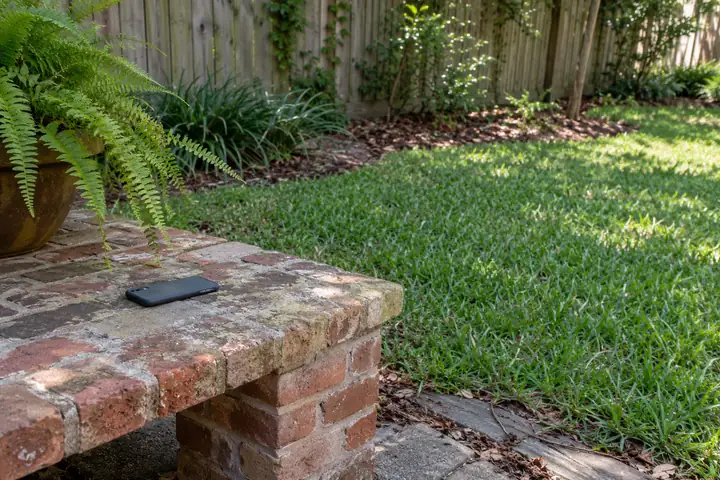
The insect is the subject, but the lawn still supplies context
When you notice an unfamiliar insect, the first picture often shows a large area of grass with a tiny blur somewhere in the middle. You know exactly where the creature was, so the image feels obvious. The person receiving it may see only leaves. Begin by deciding what question each photograph is meant to answer. One image can show where you were looking; another can show the insect itself. Expecting a single distant photograph to do both jobs often leaves the important detail unresolved.
This guide is about an identification request, not the broad yard photographs used to discuss a maintenance quote. Keep those purposes separate when organizing files. Happy Grass may need the whole lawn and access route to understand proposed work. An insect identification service may need a much closer view and a description of where the organism was found. Preparing those distinct views avoids sending the wrong evidence to the wrong person and then treating a limited answer as a firm conclusion.
Establish which image service you intend to use
LSU AgCenter's entomology identification page provides a route for Louisiana residents to submit insect images for general identification. Read its current instructions before sending a request. A service that identifies an organism does not automatically diagnose the condition of every nearby plant, prescribe treatment or agree to visit the property. State the question you want answered and let the receiving professional explain what it can establish from the evidence provided.
Iowa State Extension's insect submission guidance also emphasizes useful context and a size reference in an insect photograph. Its process is a different service, not a substitute submission route for the LSU request. The general lesson is to keep the organism, location and question connected. This page does not promise that an image will be enough. A receiving professional may ask for another view, more history or a properly prepared specimen instead of making an identification from the initial set.
Start with an unambiguous location image
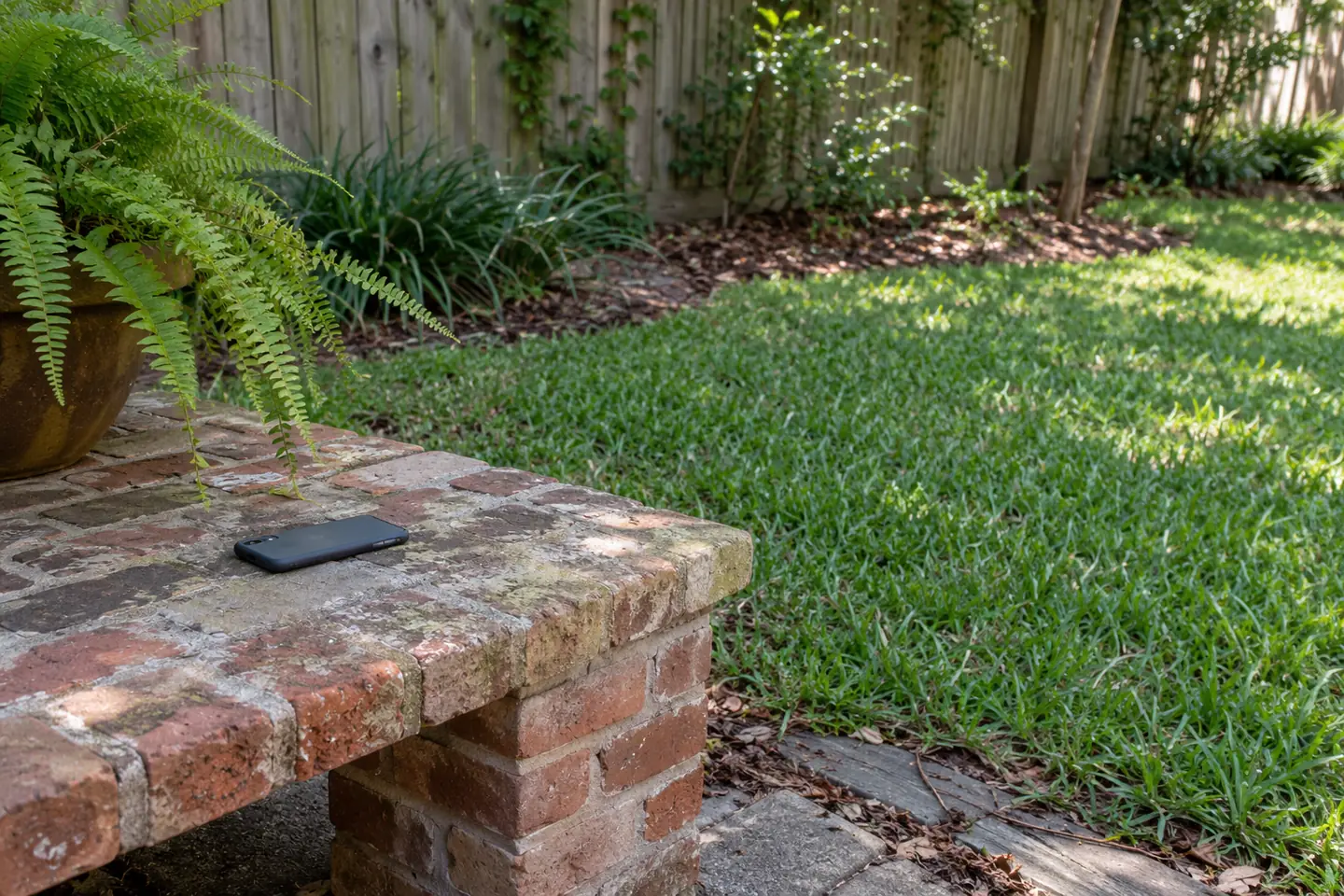
Take a wider photograph from an accessible position that shows the actual surface where the insect was seen. If it was on the patio, do not frame the grass behind it so tightly that the picture appears to show an insect collected from turf. A wall, shrub leaf, paved edge and grass stem are different locations. Explain the actual one in a short caption. The image should let the reviewer understand where the observation occurred without guessing at the surroundings.
Use a stable landmark if you also need to connect the sighting to a lawn patch. An image showing the patio corner and the adjacent thin grass can establish that relationship. It cannot prove that the insect caused the thinning, and your caption should not claim that. Keep the two observations separate: insect on paving; thin grass beside paving. This simple habit prevents an apparently persuasive photo set from implying a biological connection that has never been observed.
Focus on a feature rather than enlarging a blur
For the closer image, review the result on the phone before sending it. Can you actually see the whole body? Is the sharpest point the insect or the grass behind it? If the subject is no longer there, keep the imperfect image and explain its limits. If another view is available without approaching or handling an unfamiliar organism, try a clearer angle. Do not spend the entire observation chasing a tiny moving subject across unsuitable ground.
Retain the original file at its available resolution. An enlarged screenshot can make a small insect occupy more of the screen while discarding useful detail. If you create a crop to show where to look, send it as a labeled companion to the original rather than silently replacing the original. Avoid filters that alter color or add artificial sharpness. A more dramatic picture is not necessarily a more faithful record of the features a specialist needs to examine.
Supply scale without turning your hand into a prop
If a suitable size reference is already present and can be included without disturbance, show it in the same plane as the insect as closely as practical. Explain what the object is. A distant fence board does not provide a reliable measurement of a creature near the camera. If no useful reference can be obtained, say that the size is approximate. An honest estimate with a stated limitation is better than a false exact measurement.
Do not pick up an unfamiliar insect or ask someone to hold it beside a coin for the sake of the photograph. The identification service can advise what additional evidence is needed. A household maintenance question does not require a staged specimen portrait. If the creature is in a place you cannot approach appropriately, use the view available or describe the sighting in words. The record should reflect the conditions under which it was actually observed.
Keep several insects from becoming one invented specimen
If you photograph more than one organism, assign separate identifiers before sending the files. Insect A beside the path and insect B on the shrub may be different species or stages. Do not combine the body of one photograph with the markings of another in a single description. State whether you believe the files show the same individual and why, or simply say that you do not know. A reviewer can then assess the set without inheriting an unsupported assumption.
Also distinguish photographs you took from reference images found online. A comparison page can help you form a question, but its picture is not evidence of what was in your yard. Do not forward a downloaded image without identifying it as reference material. If an identification tool suggested a name, report it as a suggestion rather than a verified finding. The original observation should remain available independently of the label that an app or search result supplied.
Write a caption that answers the first questions
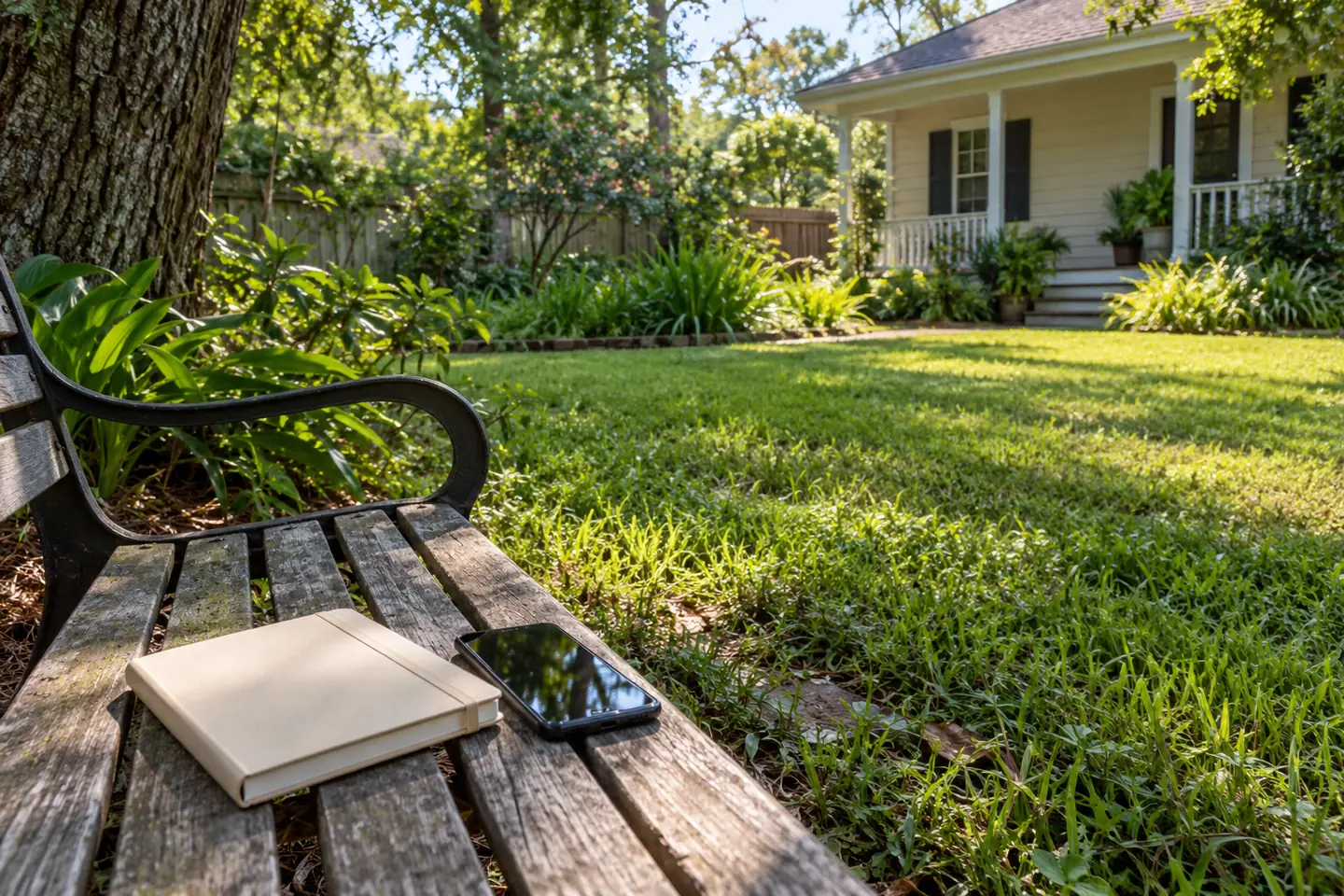
A useful caption can state the date, approximate time, surface or plant, number actually observed and the action you saw. For example, an insect resting on paving is different from an insect directly observed chewing a grass leaf. If feeding was not observed, do not use feeding as shorthand for present nearby. The caption need not be technical. Ordinary accurate words often provide more useful information than an uncertain species name attached to a blurry image.
Keep private property details out of any public sharing unless there is a specific reason and authorization to include them. The receiving service can request necessary contact information through its own process. For a public discussion, a general yard location is usually enough to explain the photographic method. Review the background for people, house numbers or documents before posting. A useful insect picture does not need to expose unrelated household information to make the organism visible.
Ask a bounded question and preserve the answer
Begin by asking whether the organism can be identified from the attached evidence. If the lawn is also changing, describe that as a related but separate question. Let the professional explain whether the identification supports any connection. An answer naming an insect is not automatically a conclusion about turf injury. Similarly, an answer saying the photo is insufficient does not mean there was no insect. It means the submitted evidence did not establish an identification.
Save the response with the file identifiers and the original date. If another photograph is requested, label it as a follow-up rather than substituting it into the first set without explanation. This preserves the progression from uncertain sighting to whatever conclusion is actually reached. The resulting record can be brief, but it should remain possible to tell which image supported which answer. That matters when you later discuss a different-looking insect or a separate lawn patch.
Check the attachment set before sending
Open the files you intend to attach and compare them with the captions. Remove accidental duplicates, unrelated reference downloads and any image whose label points to the wrong location. Keep the original sequence in your own folder even if the receiving service requests only a few selected views. This lets you answer a later question about timing without having to reconstruct which file was taken first. A small checked set is easier to review than a large batch whose organization is uncertain.
If a messaging service compresses photographs, ask whether the identification service prefers another submission method. Do not assume that the image visible on your phone is identical to the version received. Follow the service's instructions for sharing files rather than sending a series of increasingly enlarged copies. The objective is to preserve available information through the transfer, while being clear about what the camera captured and what it could not resolve.
Tell Happy what affects the lawn work
For a maintenance discussion, send the relevant area view and explain any requested boundary or access review. Happy Grass does not provide insect identification or pest-control treatment. Call 504-339-3571 and ask for Happy about mowing, edging, weed-eating or blowing. Keep the specialist's identification process attached to the original evidence, and keep the proposed lawn work clear enough to agree on its own terms.
A short record to bring to the conversation
- Retain the original insect image rather than only an enlarged screenshot.
- State the actual surface and activity in the caption.
- Check that each attachment agrees with its identifier.