
Choose the day before choosing the hour
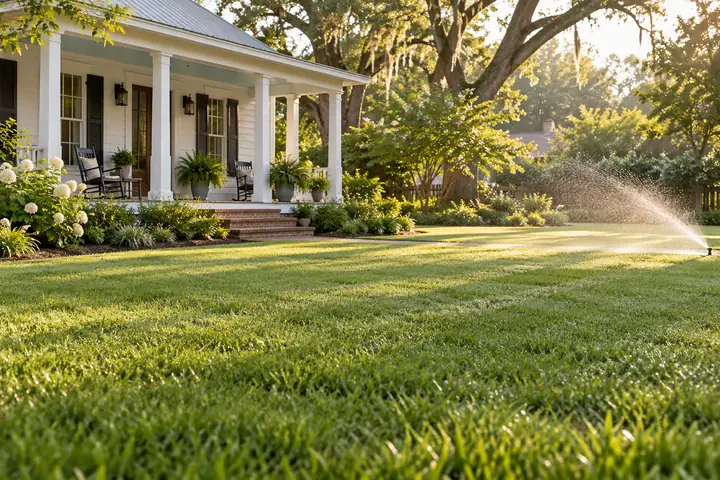
Finding the best hour to water does not tell you whether watering is needed that day. Begin with the lawn, recent rainfall and the care plan for its grass and soil. Then consider when an appropriate irrigation event should occur. This order prevents an efficient-looking timer from running automatically through a rainy week. It also keeps a pale patch from becoming a reason to add another evening cycle without asking what changed. A Westbank yard may include an open front lawn and a sheltered side strip that behave differently. The hour on a shared controller cannot describe all those conditions by itself. Think of timing as one part of a decision with several inputs, not as a substitute for them.
Understand why early morning is commonly recommended
LSU AgCenter guidance favors early morning watering because cooler conditions and lower wind can reduce evaporative loss, while the timing overlaps the period when dew commonly occurs. That is a general reason to review an evening routine. It is not a guarantee that a particular lawn will stay disease-free or that every early-morning event is necessary. Local weather, coverage, soil condition and the equipment still matter. If an existing system has always run after dinner, start by learning how that schedule was chosen. Ask whether it was based on convenience, a plant-care recommendation or simply the default left on the controller. Knowing the reason helps make a thoughtful change instead of replacing one unexplained habit with another.
Separate leaf wetness from soil moisture
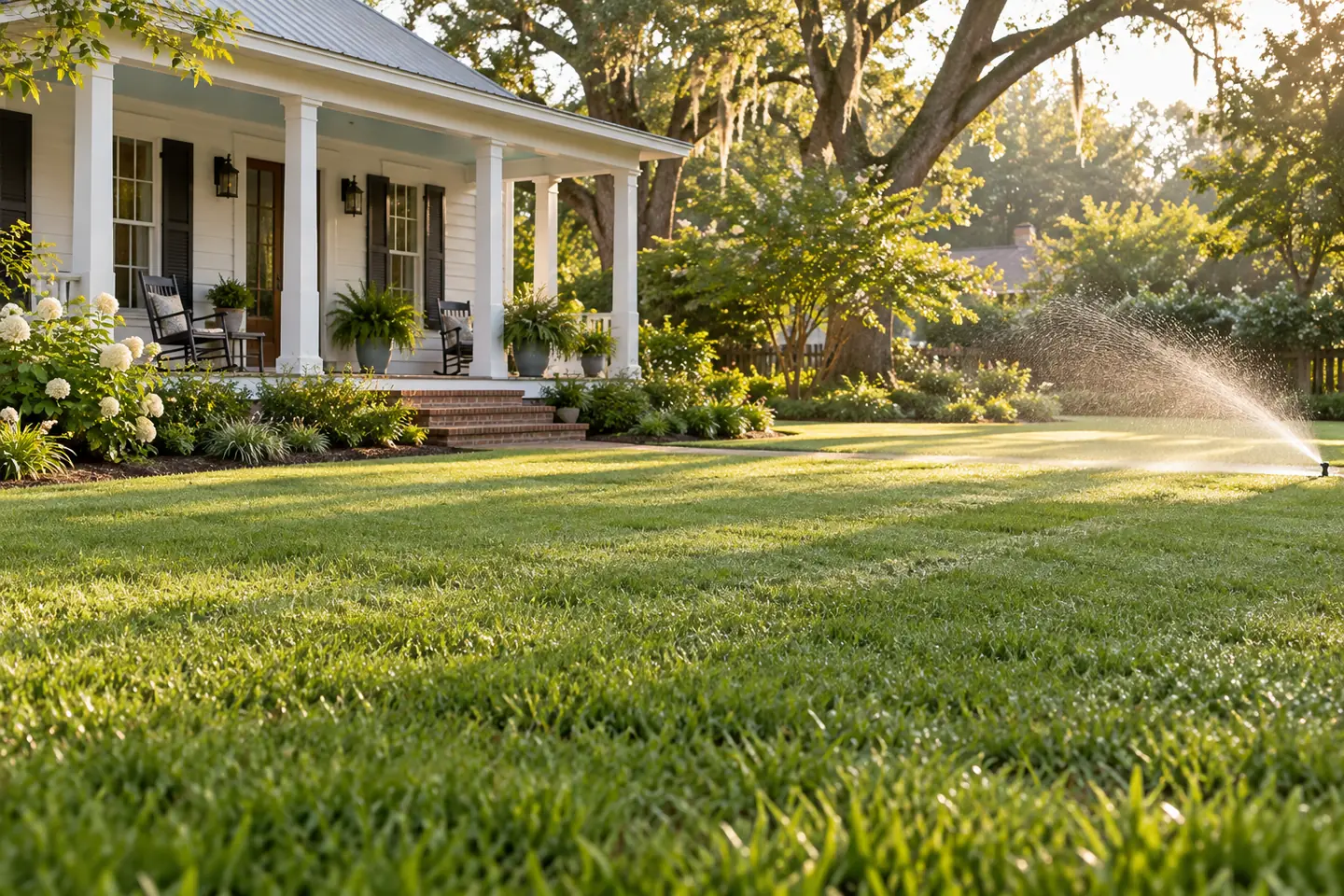
Wet leaf surfaces and a moist root zone are related observations, but they describe different locations. Dew can leave the foliage wet without representing a substantial irrigation event. A sprinkler can wet leaves while applying water unevenly across the ground. A shaded patch can retain visible surface moisture after the sunny strip has dried. Avoid turning any one of these observations into a complete assessment of the soil below. If persistent wet foliage is part of a plant-health question, describe the time of day and whether water came from dew, rain or irrigation. If the issue is root-zone moisture, ask how that should be checked for the particular site. Clear language helps keep a disease concern from being mistaken for a simple timer problem.
Notice how evening irrigation joins the overnight period
An evening run can wet foliage before a night that would already bring dew. That sequence is worth describing when reviewing prolonged leaf wetness. Do not claim that one evening event caused a disease; plant-health problems require more evidence. Instead, preserve the schedule and the observations so the relevant professional can interpret them. Record whether the run ended just before dark, whether the grass was visibly wet the next morning and whether the same area received another cycle. A general warning about nighttime watering becomes much more useful when connected to a real sequence. It also prevents an owner from withholding needed water indefinitely because of a fear that every wet blade is automatically harmful.
A timer's start time may not be a zone's start time
On a multi-zone system, the program can begin at one hour while the last lawn zone runs much later. Review the sequence rather than photographing only the first start time on the display. Note separate programs, repeated start times and any manual events that may have been added. Do not experiment with unfamiliar controls merely to find out what they do. Use the manufacturer's instructions or ask the person responsible for the system to explain the saved program. A clear zone list can reveal why someone sees sprinklers after sunrise even though the controller appears to start much earlier. The household needs to understand the actual operating sequence before discussing whether its timing fits the lawn.
Keep convenience visible in the conversation
There is no benefit in pretending that household routines do not matter. A hose-fed sprinkler may require supervision, and a homeowner may not be available at every suggested hour. Explain those constraints when seeking advice. A workable plan must account for safe use, attendance and the device's operating instructions as well as plant needs. Do not leave unfamiliar portable equipment running unattended just to imitate an automatic schedule. Nor should a family be told to accept a wet entry walk at the busiest departure time without discussing alternatives. The useful conversation is how to meet the lawn's needs with the equipment and supervision actually available, while avoiding unnecessary watering and preventable inconvenience.
Wind and heat deserve observations of their own
Timing recommendations often refer to conditions that tend to occur during part of the day. The conditions on a particular day can differ. Notice whether wind is moving spray away from the intended turf, whether water reaches pavement and whether the event is interrupted. Keep those observations separate from a broad statement that afternoon watering never works or morning watering always works. The purpose is to understand efficiency and coverage, not to declare an absolute rule from a single event. If the system regularly runs during strong winds, save that fact for a coverage review. Do not compensate by extending every run without considering where the additional water is landing.
Do not schedule from the lawn's color alone
Color changes can involve dormancy, shade, disease, nutrition, injury or water stress. The appropriate response cannot be selected from the clock and a distant photograph. If a patch is changing rapidly, describe that separately rather than repeatedly adding irrigation at a supposedly better hour. Keep the grass identity and the symptom history with any plant-health request. A timing improvement may reduce unnecessary leaf wetness or water loss, but it does not establish the cause of the existing damage. That distinction is useful when several providers are involved. The irrigation person can review the program, while an Extension or diagnostic resource can help investigate a suspected plant problem without either conversation becoming a promise of a quick green-up.
Write a schedule summary another person can understand
A short summary should show what actually operates, when it operates and who can authorize changes. Identify the lawn zones, their order and any recent manual watering. Include rain-related pauses if those are part of the system's normal operation. Keep account credentials and access codes out of a routine maintenance message; the person cutting grass generally needs timing information rather than control over the irrigation account. If a provider revises the program, save the date and the reason. This creates a record you can revisit when seasons change or the yard behaves differently, without trying to reconstruct several months of button presses from memory.
- Name the lawn zones and their operating order.
- Distinguish programmed events from manual watering.
- Note visible overnight leaf wetness without claiming its cause.
- Save weather or coverage concerns alongside the schedule.
- Keep control-system access with the authorized person responsible for it.
Treat a missed event as information, not a debt
After a controller pause or a missed supervised watering, avoid assuming that the lawn is owed the exact minutes that did not run. Weather and soil conditions may have changed during the gap. Revisit the need for irrigation with the responsible person instead of adding a second event automatically to compensate for the first. This is especially useful when rain interrupted a routine: the interruption and the rainfall belong in the same record. Keep the question practical by describing what was missed, what water arrived from another source and how the lawn looks now. A calendar can preserve the sequence without becoming a ledger of watering minutes that must eventually be repaid.
Coordinate water timing with a lawn visit
A sprinkler run immediately before a visit can affect the walking route, equipment access and surface conditions even when its hour otherwise fits an irrigation recommendation. Share the planned maintenance time with whoever manages the watering. Discuss an appropriate adjustment rather than asking a lawn crew to work through active spray or guessing that a short pause has made the ground firm. If the yard remains soft, provide a fresh update. For a homeowner in Westwego, this may be as simple as identifying which side path the sprinkler reaches and when it normally finishes. The coordination supports a sensible visit without turning the maintenance provider into the person responsible for designing the property's watering schedule.
Keep Happy's part clearly defined
Happy Grass can discuss the grass-cutting visit, its access and the agreed finishing work. Tell Happy when sprinklers normally operate and whether the ground is still soft. Ask for Happy at 504-339-3571. This educational timing discussion does not promise irrigation programming or plant-disease treatment.