
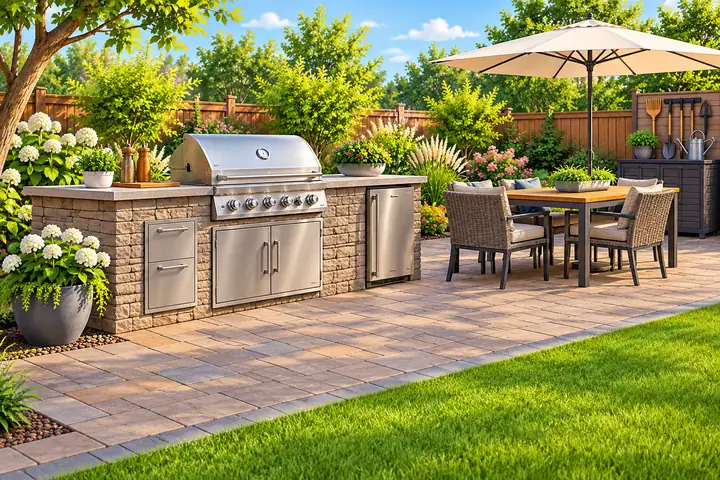
Define the complete cooking zone
Photograph the grill, counters, cabinets, appliances, patio and grass border in one wide view. Include any side burners, smokers, carts or islands that change the working footprint.
Happy Grass does not operate, move, clean, connect or inspect cooking equipment. Fuel systems, electrical connections and appliance clearances remain with the owner and qualified professionals.
Schedule only after everything is cool
Do not mow beside an active or recently used grill. The property contact should confirm burners, coals, grease trays and nearby surfaces are cool and secure before lawn work begins.
CPSC grill guidance emphasizes outdoor placement and fire awareness. Lawn scheduling should keep ignition, hot metal and powered equipment from sharing the same active zone.
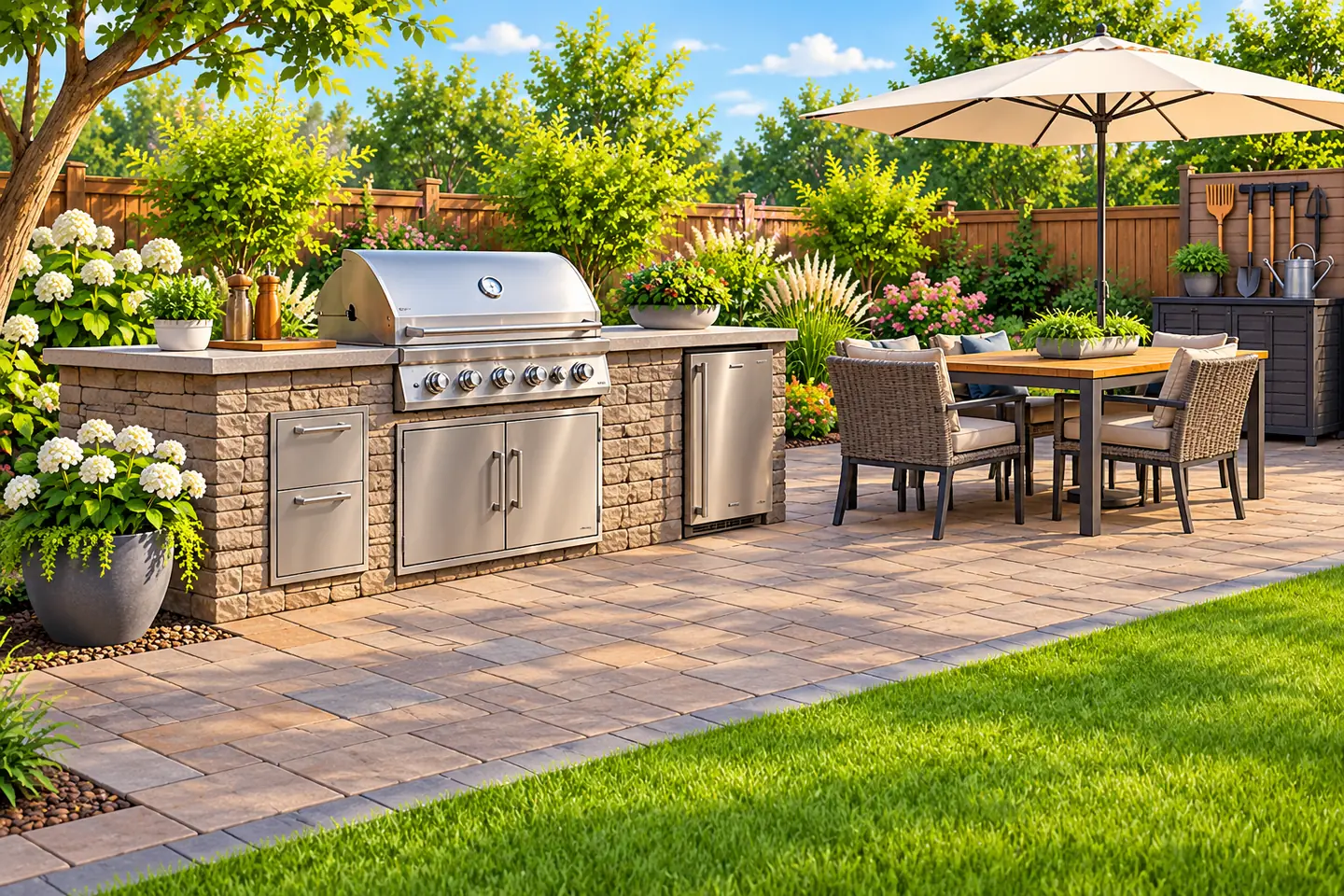
Keep fuel owner-managed
Propane cylinders, charcoal, starter products and electrical cords should be stored and handled according to their product guidance. A lawn crew should never move fuel to reach grass.
If a cylinder, hose or cord crosses the lawn border, exclude that section until the owner corrects the route. Do not disconnect anything as an access shortcut.
Identify the true hard edge
Mark where pavers, concrete or another stable patio surface meets turf. A sound visible edge may support routine edging; loose blocks, gravel or buried borders call for a conservative finish.
Do not use a cabinet toe-kick, grill wheel or gas line as the edging guide. The lawn boundary belongs to the surface, not to movable or connected equipment.
Move furniture before the visit
Place chairs, stools, umbrellas and serving carts in the agreed paved location. Do not stack them on grass or against the gate where they create a second obstacle.
Heavy built-in islands stay fixed, while ordinary owner property remains owner-managed. The quote should not assume the crew will rearrange a patio to begin mowing.
Protect hoses, cords and lighting
Show electrical outlets, low-voltage wires, water connections and any string-light cords that reach the ground. Temporary extension cords should be removed from the lawn route.
Never unplug appliances or lift a live cord with lawn equipment nearby. If the connection is not ready, pause the bordering strip rather than improvising.
Separate grease cleanup from lawn work
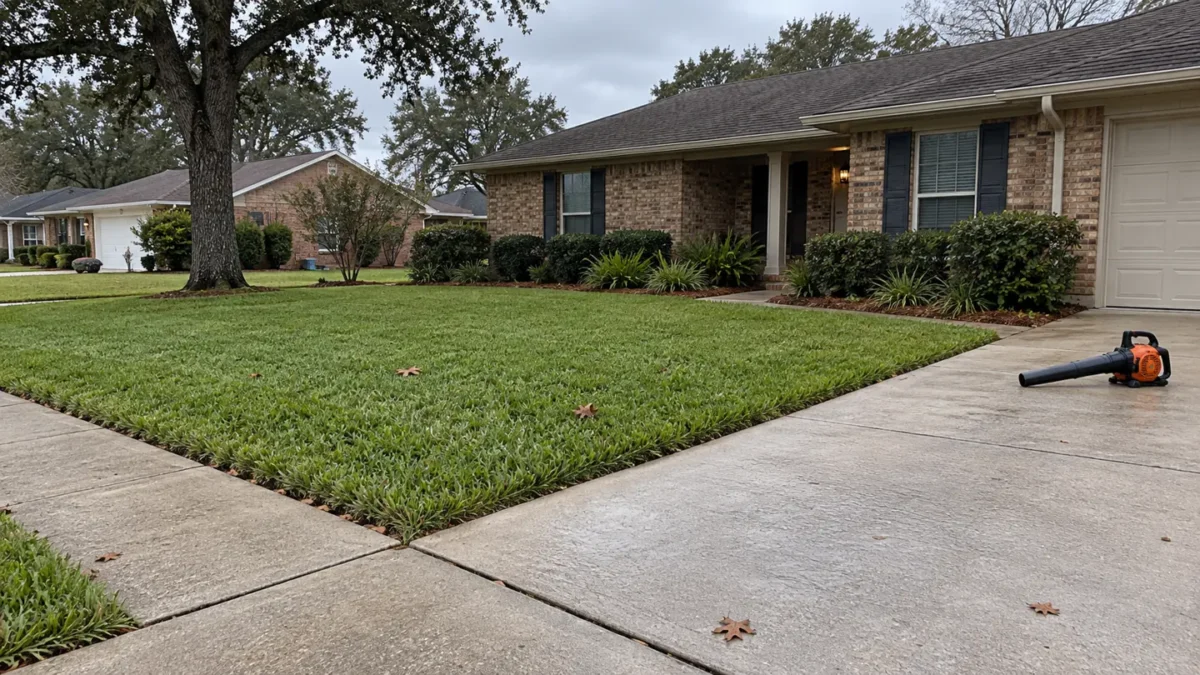
Grease, ash, food waste and cleaning chemicals do not belong in the routine clipping finish. The property contact should handle spills and appliance cleanup before the area is released.
Do not blow residue through a greasy patch or toward a storm drain. If the hard surface needs washing or degreasing, that is a separate property task.
Keep the gate and service route open
Outdoor kitchens often occupy a patio near the only backyard gate. Walk the turn from gate to open lawn and account for counter corners, overhangs and furniture.
If equipment cannot pass without contacting the island or entering the hot zone, use another route or leave the rear lawn unavailable. A built-in kitchen is not moved for mowing.
Coordinate guests, children and pets
No one should cook, dine or play beside active lawn equipment. Clear the patio edge and keep pets secured away from both the cooking area and lawn route.
When household access is needed, stop and secure equipment first. Do not block the only door or step with blowers, bags or mower staging.
Read runoff at the patio border
Sink discharge, roof runoff and cleaning water can leave the grass edge soft. Observe actual soil firmness without assuming the source or diagnosing plumbing.
Skip saturated turns to avoid ruts and splash near cabinets. Drainage and plumbing repair are outside lawn maintenance.
Keep residue away from appliances
Direct fresh clippings away from vents, burners, cabinet gaps, refrigerators and stored cookware. A blower should not be used to clean the kitchen itself.
Leaves or nests inside an appliance require owner or professional attention. The lawn finish ends at the agreed surface boundary.
Plan around umbrellas and shade structures
Record umbrella bases, awning legs or canopy ties that influence the lawn edge. Their above-ground footprint may be wider than the furniture arrangement suggests.
The owner should secure or retract movable shade features before service if needed. Happy Grass does not adjust canopies or judge wind safety.
Photograph without implying a real event
Use an empty wide view showing the cooking pad, border and gate. Avoid people, food preparation, house numbers and neighboring private space.
Update the images when appliances, counters or patio edges change. Old photos should not remain the controlling route after a remodel.
Pause during construction or deep cleaning
Masonry work, appliance installation and pressure washing can introduce cords, wet surfaces, sharp debris and curing materials. Skip the area until the project contact confirms normal access.
Construction cleanup and surface restoration are not routine mowing. Request a fresh boundary review after a new patio or island changes the grass line.
Handle a newly exposed strip carefully
If a cart or old grill is removed from turf, inspect the footprint for glass, metal, grease and compressed soil. Mowing alone does not repair damaged grass.
Reduce living growth conservatively and keep contaminated or bare areas outside implied turf recovery. Happy Grass does not provide overseeding.
Use a kitchen-side readiness list
Confirm all cooking is finished, surfaces are cool, fuel and cords are secure, furniture is on pavement, the gate route is open and the grass is firm.
This checklist does not certify appliance safety. It simply creates observable conditions for working on the neighboring lawn without entering the cooking zone.
Write the scope at the surface line
List the open lawn, reachable trimming, approved hard edge and any named patio section included for fresh clipping removal. Exclude cooking equipment, fuel, grease, furniture movement, washing and wet or blocked pockets.
Happy Grass does not provide fertilization, aeration, overseeding or pest control. A weed-control conversation should never imply treatment of patio joints, kitchen cabinets or planted containers.
Ask Happy about the patio border
For an outdoor-kitchen yard in Harvey, Marrero, Gretna, Algiers, Belle Chasse or Westwego, call 504-339-3571 and ask for Happy. Share a cool, empty patio photo and the gate route.
Clear separation lets the cooking area remain owner-managed while the accessible grass receives a neat repeatable edge. The best plan never asks lawn equipment to share an active grill zone.
Keep planters and herb pots contained
Herb containers often sit along the grass border and may hide wheels, irrigation tubes or broken saucers. Move them fully onto the agreed patio area before service.
Do not trim through trailing plants or relocate edible containers. The owner should define where the planted patio ends and ordinary turf begins.
Coordinate deliveries and service visits
Fuel delivery, appliance repair and catering setup can occupy the same gate and patio route used for lawn access. Schedule the activities separately or exclude the affected yard section.
Technician tools and open cabinets are clear stop conditions. Resume only after the property contact confirms the cooking area is closed and ordinary access has returned.
Review the finish after a remodel
New pavers, counters or utilities can move the grass edge even when the kitchen remains in the same corner. Replace old measurements and photos after the contractor completes cleanup.
Do not edge a new surface until its border is visible and released. The lawn quote should describe the built result, not the renovation drawing.
Treat sinks and drains as fixed utilities
An outdoor sink may add supply lines, traps and a drain route near the grass. Keep equipment away from visible plumbing and report leaks to the property contact without diagnosing them.
Do not place clipping bags beneath a sink or use its water connection. Plumbing service and drain cleaning remain outside the lawn visit.
Keep fire features distinct
A patio may include a fire table, pizza oven or separate smoker in addition to the main grill. Add each item to the equipment footprint and require a cool inactive condition.
Ash containers and firewood are owner property. They should stay on an appropriate hard surface and out of the mower route.
Avoid cleaning chemicals
Degreasers, grill cleaners and patio treatments may be present after maintenance. The owner should complete the product’s use and secure containers before the lawn zone is released.
Happy Grass does not mix, rinse or move chemicals. If runoff reaches turf, pause that area and let the owner seek appropriate product guidance.
Separate the cooking layout from the lawn layout
Make a small lawn-day plan that shows the installed kitchen or grill pad independently of temporary seating, serving tables and stored supplies. Name which portable items the household will prepare before the visit. This helps distinguish the fixed grass-to-pad edge from an event arrangement that may look different every weekend.
If another person manages the cooking equipment, have that person confirm the readiness details that belong to them rather than letting a general yard message speak for the equipment. Keep unresolved use or maintenance questions separate from the lawn appearance request. After the agreed visit, compare the named border with the prepared layout, not with a photograph taken during a gathering. A stable reference gives the lawn conversation a clear perimeter without implying appliance cleaning, fuel handling or outdoor-kitchen service.