
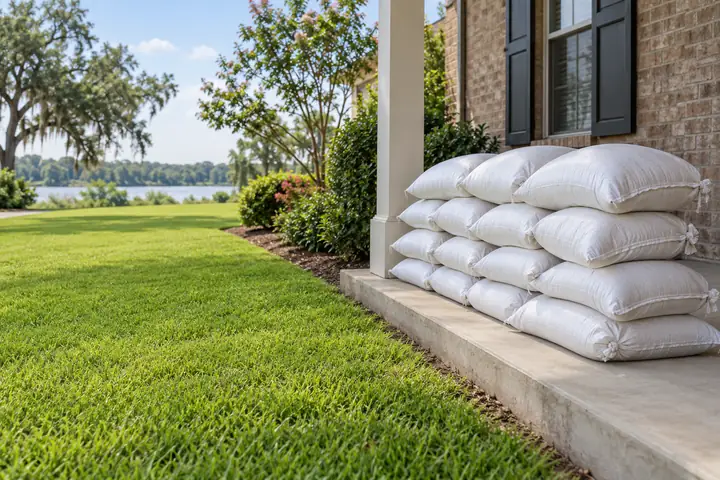
Preparation materials change the property
Filled sandbags, water-filled barriers, plastic sheeting and temporary flood panels may appear quickly when weather threatens. Even when they are intended to protect a doorway, their storage and installation can block the same route used for lawn equipment. Before a scheduled visit, tell Happy Grass what has changed and send current photos. Identify which bags are stored on pavement, which barriers are deployed and which lawn areas are closed. We do not install, move, inspect or certify flood-protection systems. FEMA guidance can help property owners understand flood preparation, while local officials and product instructions govern actual use. Happy's role is limited to deciding whether an ordinary dry lawn route remains available.
Keep filled bags off the mowing footprint
Sandbags are heavy, awkward and capable of leaking material through worn fabric. Store them on a stable surface according to local guidance, away from gates and grass whenever possible. Do not line a lawn edge with bags and expect mowing equipment to press against them. Loose sand, ties and torn fabric can enter the route. Happy will not lift or restack filled bags. If bags must occupy the grass, mark the entire footprint as temporarily excluded and include enough clearance for shifting or settling. A narrow strip between a bag wall and fence may no longer be serviceable.
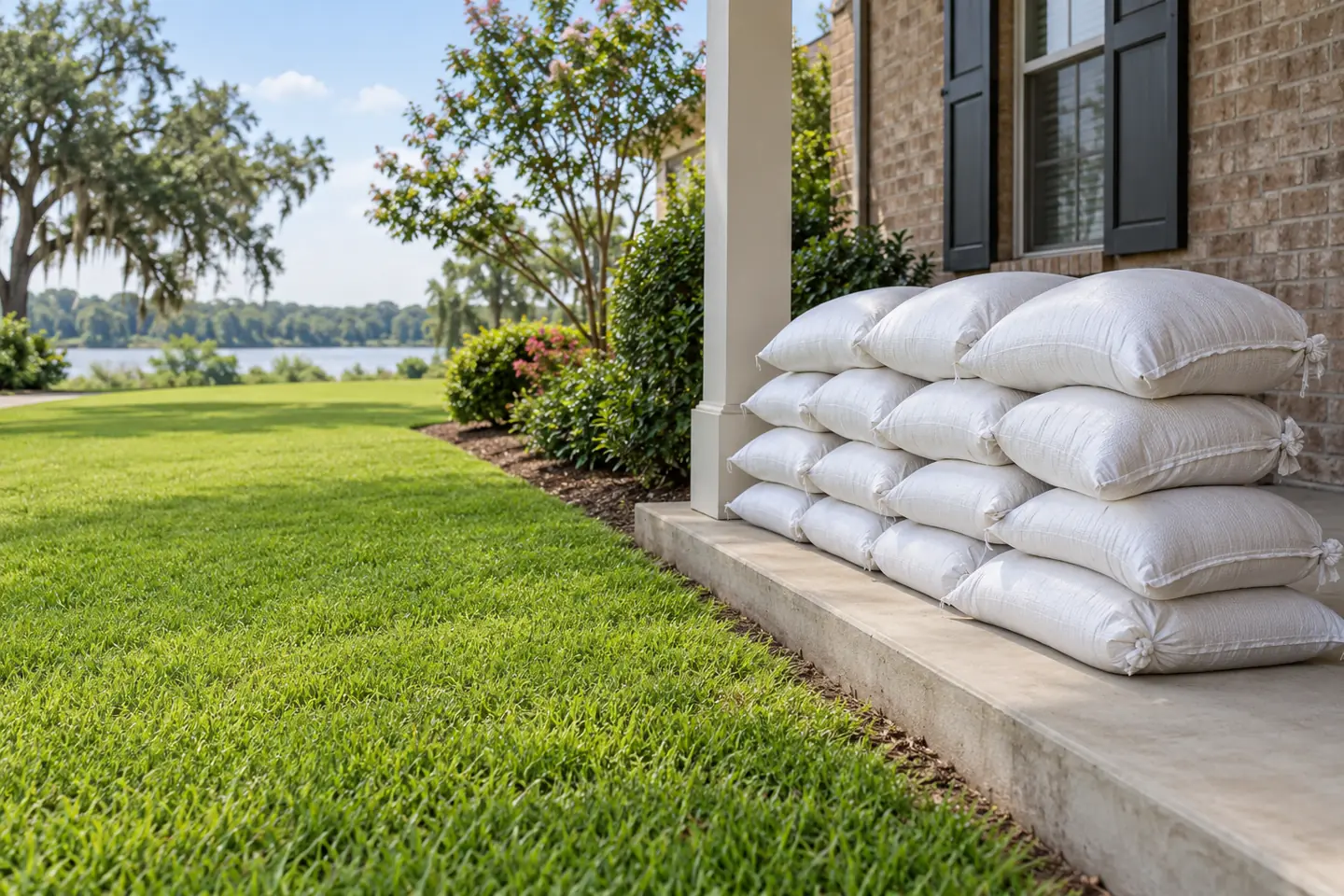
Leave emergency access wider than lawn access
Storm preparation should not block household exits, utility access or the route emergency responders may need. Lawn service is secondary. If the only gate is covered by a barrier, reschedule or reduce the visit rather than asking the crew to climb, disconnect or cross it. Keep vehicles, generators and fuel containers out of the mowing path as well. Happy does not determine whether an emergency route meets code. The property owner should follow official instructions and qualified guidance. From the lawn perspective, access is either clearly open or unavailable.
Treat plastic and fabric as hidden hazards
Plastic sheeting, flood skirts, tarps and barrier membranes can extend beyond the visible bag line. Wind may lift an edge into grass, and stakes or anchors may sit below leaf cover. Show the full installed footprint, not only the doorway. Do not ask Happy to fold, pin or blow around loose material. If a tarp crosses the route, close that area. Thin fabric can wrap around moving equipment, while hidden anchors can create hard contact points. Remove the system only according to its instructions and after the flood concern has passed.
Check the lawn after removal
Heavy bags can flatten grass, compress wet soil and leave shallow depressions. Sand may spill into turf, and anchors may leave holes. After removing barriers, inspect the ground in good light and send updated photos before returning the area to service. Collect ties, plastic scraps and loose hardware. Do not mow over sand piles to spread them. Happy does not restore compacted soil, fill anchor holes or repair flood damage. A dry firm route must be re-established through the property plan before ordinary service resumes.
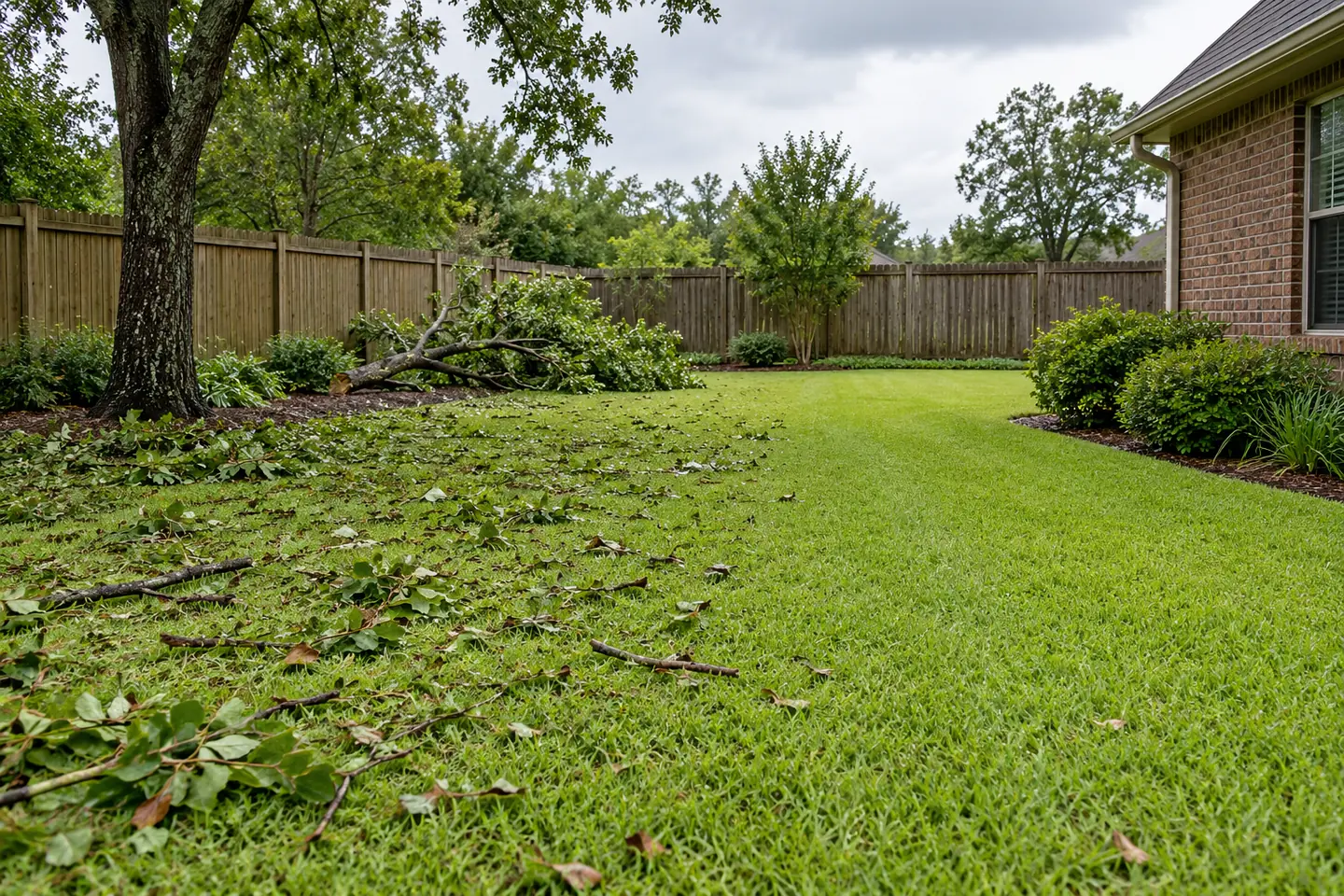
Keep storm debris separate
Sandbags are not the only storm-season obstacle. Branches, fence panels, roof material and household items may accumulate nearby. Sort the property into accessible lawn, closed debris zones and emergency routes. Happy does not remove storm debris or work beneath unstable trees and structures. A small clean lawn patch should not be reached by passing through a hazardous pile. If most access is blocked, postpone the visit and focus on safety and recovery. The lawn can wait until the site is ready.
Protect drains and waterways
Loose sand and damaged bag material should not be swept into storm drains, ditches or canals. Follow local disposal instructions, which may differ depending on whether bags contacted floodwater. Happy will not haul used bags or contaminated material. Keep drainage inlets visible and store intact supplies where they do not shed into runoff. If floodwater reached the lawn, report that condition and obtain appropriate health and property guidance before requesting routine mowing. We do not evaluate contamination.
Describe the temporary boundary clearly
A useful update includes the number and general location of deployed zones, the open gate, the stable route and the date you expect the setup to change. Use broad photos from outside the protected area. Do not disclose private emergency supplies or security details that are irrelevant to access. Mark inaccessible grass in a simple sketch if needed. Happy can quote or rescope visible serviceable turf, but the crew will not interpret a barrier system on arrival. Clear communication prevents a temporary protection measure from becoming an unexpected lifting job.
Coordinate timing with official alerts
Do not remove or rearrange flood protection just to fit a mowing appointment when weather risk remains. Follow local emergency information, FEMA guidance and manufacturer instructions. Lawn service can be moved; protective decisions should not be rushed. After the event, wait until officials say conditions are appropriate and the property route is dry and free of hazards. If a visit was skipped, the next cut may require a new assessment because grass height and debris changed. Honest timing protects the household and gives the eventual lawn visit a realistic scope.
Return to a repeatable lawn plan
Once bags and barriers are removed, inspect gates, soil, turf and fixed features. Photograph any compressed strip or new hole. Restore normal storage away from the lawn and update Happy that the route is open. Keep a storm-season note listing which lawn zones are normally sacrificed to preparation so the next event is easier to explain. The best recurring plan accepts that emergency preparation temporarily outranks appearance. When conditions are normal again, a clear dry route lets Happy bring the accessible grass back into routine without guessing.
Keep unused supplies out of recurring access
Empty bags, spare stakes, bundled plastic and unopened supplies still need deliberate storage. Place them in a dry household location that does not narrow the normal gate or lean over a grass edge. Do not leave empty fabric where it can blow into a mower path, and do not use filled bags as a permanent edging system. If emergency materials must remain near the entrance through hurricane season, send a photo showing the clear width that remains. A predictable storage location lets the lawn route stay recognizable between alerts. It also avoids asking a crew to decide whether a loosely stacked item is active protection, abandoned debris or something safe to move.
Recheck the day of service
Conditions can change after an access photo was sent. Overnight rain may soften a previously firm route, wind may shift plastic, or a new advisory may lead the household to deploy more protection. Walk the gate and grass path again before the visit and update Happy if anything changed. Keep the visit paused when water remains, barriers are active or debris makes the route uncertain. There is no benefit in forcing routine mowing into an evolving storm setup. A brief same-day update preserves the boundary agreed during the quote and keeps emergency decisions with the property owner and official guidance.
Separate clean stored materials from used materials
Unused supplies kept for a future event should not be mixed with bags, plastic or barriers that were deployed. Used material may be wet, torn or subject to disposal guidance based on what it contacted. Happy does not decide whether a bag is reusable or contaminated. Keep the entire sorting and disposal area outside the lawn route, and follow instructions from local officials and the product provider. Do not empty questionable sand onto turf or a drainage edge. Once the responsible household process is complete, remove scraps and photograph the restored access. That sequence avoids turning a post-storm cleanup decision into an unplanned part of lawn service.
Distinguish a barrier in use from supplies in storage
Use separate labels for an active protective arrangement and unused materials awaiting storage. The lawn request should not imply permission to move either one simply because it blocks grass. Name the person responsible for deciding when the protective setup can change and keep that decision outside an ordinary mowing instruction.
When the responsible owner confirms that an area has been reopened, describe the remaining materials and the route as it actually exists. A planned removal date is not the same as a completed removal. Keep any uncertainty about used materials with the appropriate responsible source rather than asking the lawn crew to classify them. This gives Happy a clear account of accessible grass after a property change while official guidance, barrier decisions and material handling remain separate from the maintenance finish.