
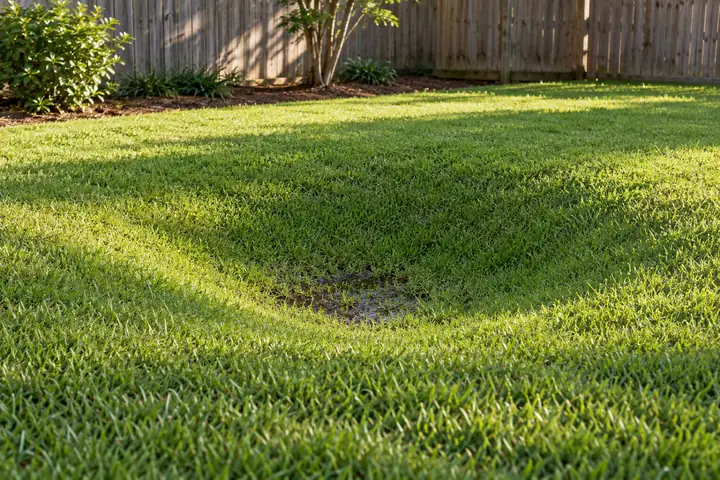
Notice when a low spot is new
A shallow bowl in the lawn can become obvious when the light is low, after rain collects briefly, or when the surrounding grass has just been cut. Start by asking whether the contour is familiar. An old, stable dip is a different service conversation from ground that has recently sunk. Do not label a new depression harmless merely because grass still covers it. A green surface can make a change harder to see without explaining what caused it.
Happy needs the location, when you first noticed it and whether its outline seems to be changing. Describe nearby features such as a buried utility route, previous excavation or a removed landscape feature only when you actually know that history. Guessing that an old tree caused the dip can send the conversation in the wrong direction. If the ground is opening, moving or otherwise uncertain, keep people and equipment away and obtain the appropriate review before treating it as an ordinary mowing obstacle.
Show the contour from more than one angle
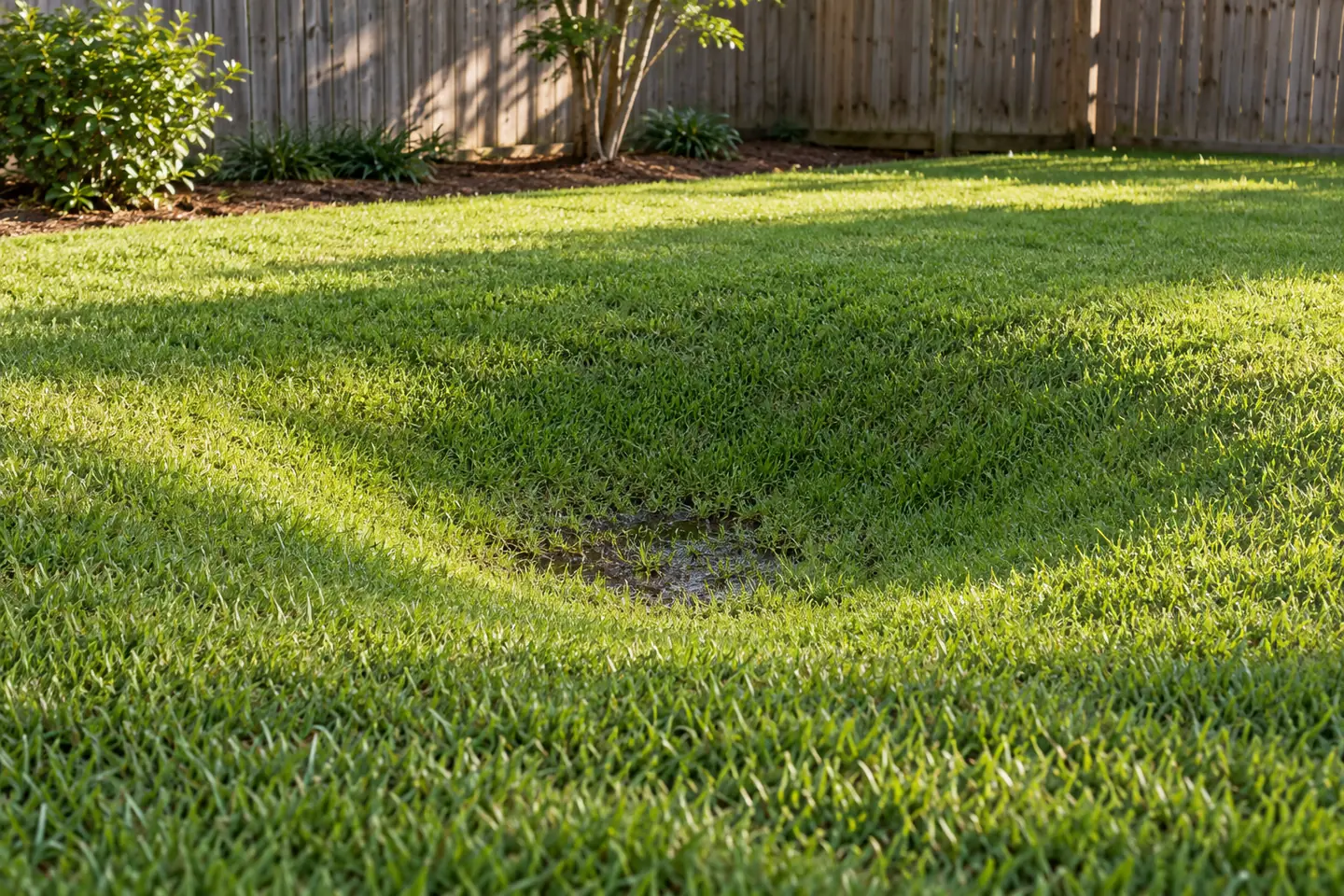
A straight-down photograph can make a depression disappear. Take a wider oblique view from sound ground so the change in level is visible against the surrounding lawn. A second view from the side can show how gradually the turf slopes into the low area. Include a fixed reference such as a path or fence. Avoid placing a person, mower or heavy object inside the dip to demonstrate its size.
Tell Happy whether the picture was taken while the area was wet or after it had dried. If there was water in the bottom, a dated photograph of that condition can be useful, but do not step into it to gather evidence. State whether water remained after nearby lawn had dried without inventing an exact duration you did not observe. The photographs are for locating the issue and planning the visit. They cannot determine the stability of the ground or replace a drainage, utility or other specialist assessment when one is needed.
Understand why the cut can look different there
A mower follows the ground through its wheels, while its deck has a fixed shape and position relative to the machine. An uneven surface can influence how the cut looks even when the operator maintains the same setting. A broad dip, a sharp lip and a narrow channel present different geometry. That practical relationship is a reason to review the contour, not a reason to demand repeated passes until every blade looks identical.
Discuss what you notice: longer grass at the bottom, a short-looking edge, or a visible change along the route into the dip. Do not assume each difference is a setting error. A photograph after mowing should include both the low area and the adjacent finished grass. If a particular contour cannot be traversed suitably, leaving that section out may produce the more responsible result. Routine mowing can maintain accessible turf, but it cannot guarantee a uniform visual plane across ground that is not level.
Keep the travel route on suitable ground
A low area may remain soft after the higher grass feels firm. Before the visit, tell Happy whether the dip lies in the normal entry route, in a turning area or off to one side. An alternative route needs to be genuinely usable; a narrow squeeze between a bed and fence may introduce another problem rather than solve the first one. The available space should be reviewed with the equipment and the actual site in mind.
If a section is excluded, agree where the boundary will be recognized. A picture with a familiar reference is often enough to explain it before arrival. Do not put a stake into uncertain ground or near underground services just to make a temporary mowing marker. Existing utility flags and contractor markers should remain visible and undisturbed. A short note identifying the low spot can prevent it from being mistaken for an ordinary patch of longer grass that simply needs one more pass.
Separate mowing from filling and grading
Bringing in soil, changing a slope or rebuilding a low area is a different project from maintaining the grass. University of California site-preparation guidance emphasizes settling and final grading when establishing turf; those principles show why ground shape deserves deliberate planning. They do not make a new layer of fill an automatic remedy for an established lawn. Material, depth, existing turf and water movement all matter to a repair decision.
Do not add a mound of loose fill just before the regular visit and expect the mower to spread or compact it. Tell Happy about any work already performed, including who reviewed the repair and whether the area is ready for traffic. If a contractor has left restrictions, share them before equipment arrives. Happy Grass can discuss routine mowing and related lawn maintenance around the project. Avoid assuming that leveling, excavation, drainage installation or turf replacement is part of that agreement. An explicit boundary keeps the ordinary service useful while a separate ground problem receives the right attention.
Keep water observations factual
A dip that catches water once is not the same record as a low spot that repeatedly stays wet. Note the dates you actually observed and compare the surrounding lawn. Was water present immediately after rain? Did you return later and find the bottom still damp? Is the entry route also soft? These details are more useful than describing the yard as always flooded when you have seen it only once.
Look from a suitable edge for obvious site changes that you know about, such as a downspout extension recently moved toward the area. Do not redirect water across a neighboring boundary or alter a drainage feature as a quick mowing preparation. Water-routing decisions should be reviewed for the property. If the low spot is near a drain, cover or other infrastructure, identify that feature in the service request. Mowing access can be assessed without opening covers, probing soil or treating a maintenance crew as a substitute for a drainage inspection.
Set a fair expectation for the finished lawn
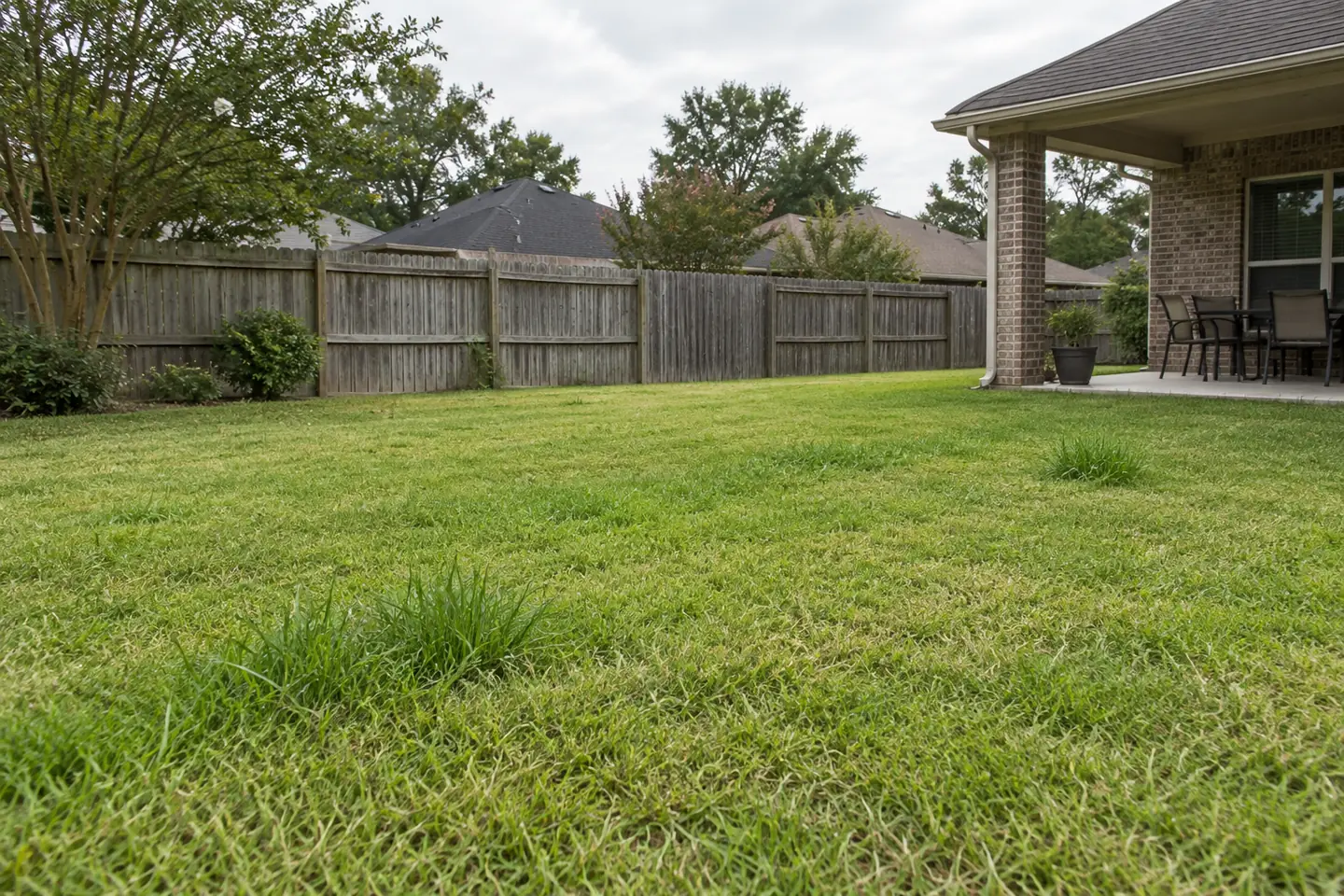
A successful limited visit might leave the open lawn cut and the low patch untouched. Another might maintain the stable surrounding turf while avoiding the sharpest edge. Confirm which result you are requesting before service. The difference between an intentional omission and a missed spot should be clear to both owner and crew. If the boundary is temporary, note what needs to happen before it can be reconsidered.
Afterward, photograph the result from the same side angle used before the visit. Compare the ground contour and the grass condition separately. A new tire mark, a recurring longer strip and an unchanged low bowl are different observations; describe each specifically if you need follow-up. Do not demand that a second lower pass correct the shape of the ground. If the grass at the bottom continues to behave differently, that may be part of the site condition to review, not an invitation to keep lowering the cutting height.
Build the low spot into the service notes
For an ongoing arrangement, record a stable description such as the shallow dip behind the rear path, alongside dated pictures. Tell Happy when the condition changes, when repair work starts and when a contractor says the repaired area can carry traffic again. Do not assume the old access plan remains valid after soil has been added or equipment has crossed the lawn. A one-time note becomes useful only when it is kept current.
An owner in Gretna, Algiers or elsewhere in the service area can begin with the same practical information: where the low spot is, what changed and which lawn sections need maintenance. The town name does not tell Happy how the ground behaves. Clear property details do. Call 504-339-3571 and ask for Happy to discuss the next visit. A suitable cut and an honest record of an excluded depression can move the yard forward without making a promise that ordinary mowing will repair the ground beneath it.
Separate apparent low spots from confirmed measurements
A darker patch in a photograph may draw attention to an area that looks lower, but the image alone does not establish a measurement. Describe it as the spot you want reviewed and show its relationship to the surrounding grass. If you have an actual measurement from an appropriate assessment, identify that information separately rather than treating an estimate from the photograph as equivalent.
For a maintenance request, explain whether the spot falls inside the proposed cutting area or along the access route. Those positions can lead to different questions even when the visible depression looks small. Do not make filling or grading an implied condition of an ordinary visit.
After another project changes the area, update the record with what was actually done and the present view. Keep any uncertainty about the result explicit. That makes the next lawn discussion about the current condition rather than an assumption that the ground must now be level because a repair was mentioned.