
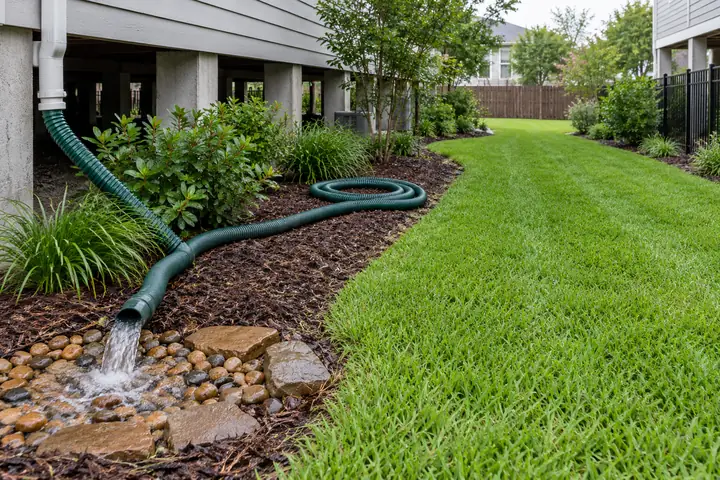
Treat every hose as active equipment
A sump-pump discharge hose can lie quiet for days and then move water during a storm or high-groundwater event. Flexible hose may shift, kink or flatten into grass, especially where heat and traffic soften it. Rigid pipe may have joints, adapters or a termination that sits below normal mowing height. Neither should be treated as a harmless stick in the yard.
Happy Grass can maintain accessible turf around a clearly identified discharge route. Happy does not install, reconnect, extend, winterize, repair or test sump pumps, hoses or drainage outlets. The owner and the appropriate plumbing, foundation or drainage professional remain responsible for safe discharge design and operation.
Trace the route from wall to outlet
Begin at the building penetration or pump connection and follow the hose all the way to its end. Note couplings, check-valve areas, clamps, buried transitions and places where the hose crosses a walkway or mowing lane. Take a wide photo from each direction. If part of the route disappears under vegetation, do not assume where it continues.
Look for splits, loose fittings, crushed sections, standing water and soil erosion beneath the outlet. A wet patch may be soft long after the pump stops. Keep equipment away until the surface is firm. If the hose is disconnected, leaking or discharging toward a structure, stop nearby work and contact the responsible professional.
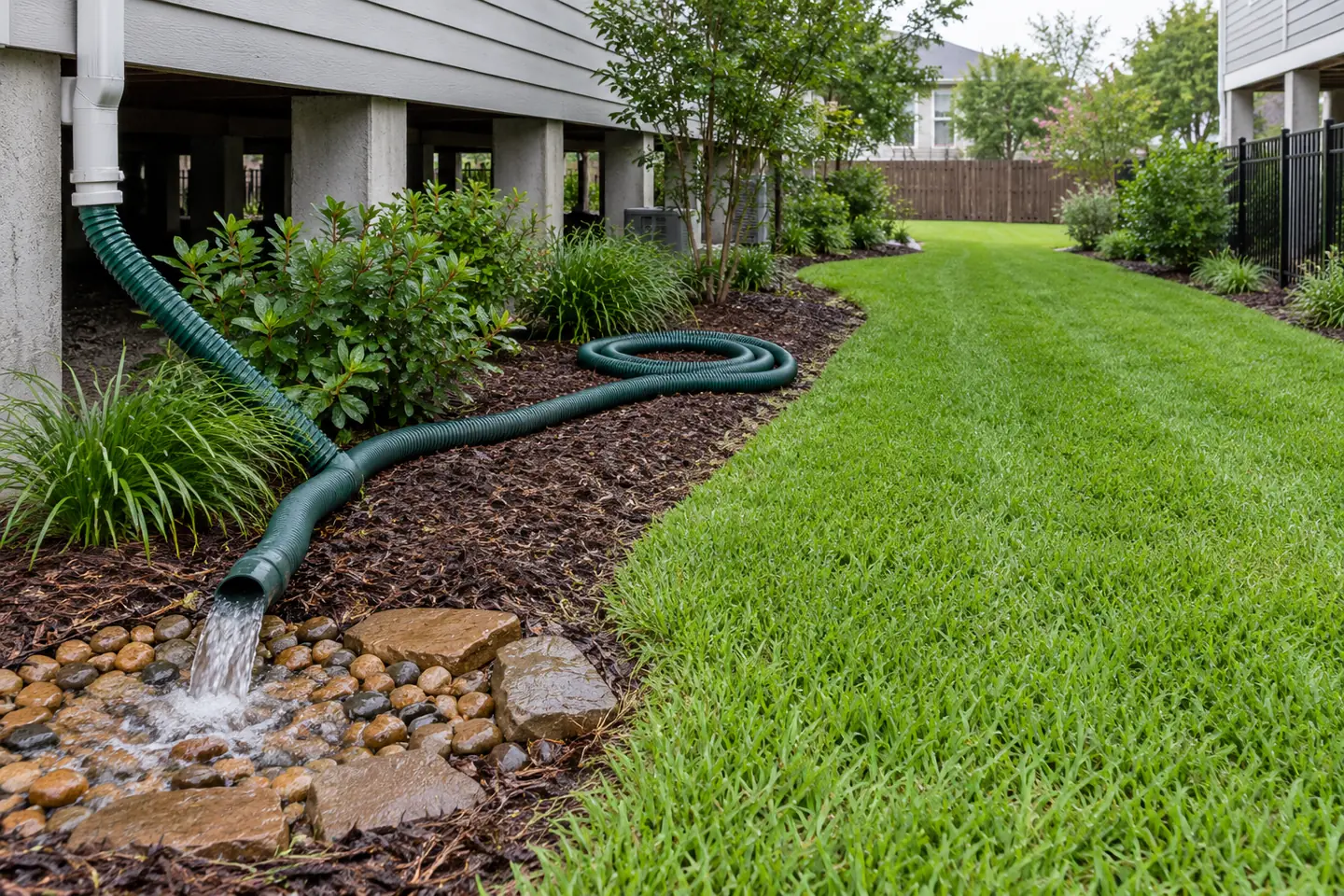
Pick a route that does not depend on moving it
The best lawn plan leaves the discharge line in a stable documented position between visits. Repeatedly dragging flexible hose for mowing can loosen a coupling, change the discharge point or damage the material. Where possible, create a visible buffer or a protected crossing designed by the system professional.
If the owner routinely removes a temporary hose, that owner should disconnect and restore it according to the equipment provider's instructions—not ask a lawn crew to guess. The pump should never be operated without the required discharge path. Happy can adjust the mowing pattern around the line but should not alter the drainage system.
Crossing a lawn without creating a trip line
A hose laid across open turf is easy to overlook when grass grows around it. Use a bright, durable cover or marked bridge only if the system professional approves it and it remains stable under expected foot traffic. Do not cover a hose with loose plywood, carpet, wire or landscape fabric. Those materials can shift, hide damage and become mower hazards themselves.
At a gate or narrow side yard, preserve a separate walking strip. If the hose blocks the only safe equipment route, service the zones separately or postpone that section until the owner provides safe access. Never drive over a hose to save time; even a flexible line can rupture or collapse under a wheel.
Protect the outlet and the soil below it
The discharge end may use a splash block, pop-up fitting, rock pad or open hose termination. Keep grass from hiding it, but do not trim against plastic or pipe. The outlet needs enough visibility for the owner to confirm that water can leave without washing soil onto the lawn route.
Concentrated flow can scour a small trench, expose roots or leave a slippery mat of clippings. That is a drainage issue, not something to disguise with a lower mowing height. Avoid the softened area and ask the appropriate professional to address erosion or outlet placement. Do not direct clippings into the outlet or downstream flow path.
Storm-day timing matters
Do not schedule mowing while the pump is actively discharging across the work area. Flow can start unexpectedly during continuing rain, and saturated turf may not support equipment even after surface water recedes. A dry hour does not guarantee a firm route. Check footing and postpone if shoes sink, water rises around a step or grass stays flattened under light pressure.
After a major storm, inspect the entire hose rather than only the outlet. Floating debris can move a flexible line, and runoff can uncover a previously buried section. Photograph changes and tell the crew before arrival. If electrical cords or controls are visible near water, stay away and contact the qualified provider; lawn service should not troubleshoot electrical pump equipment.
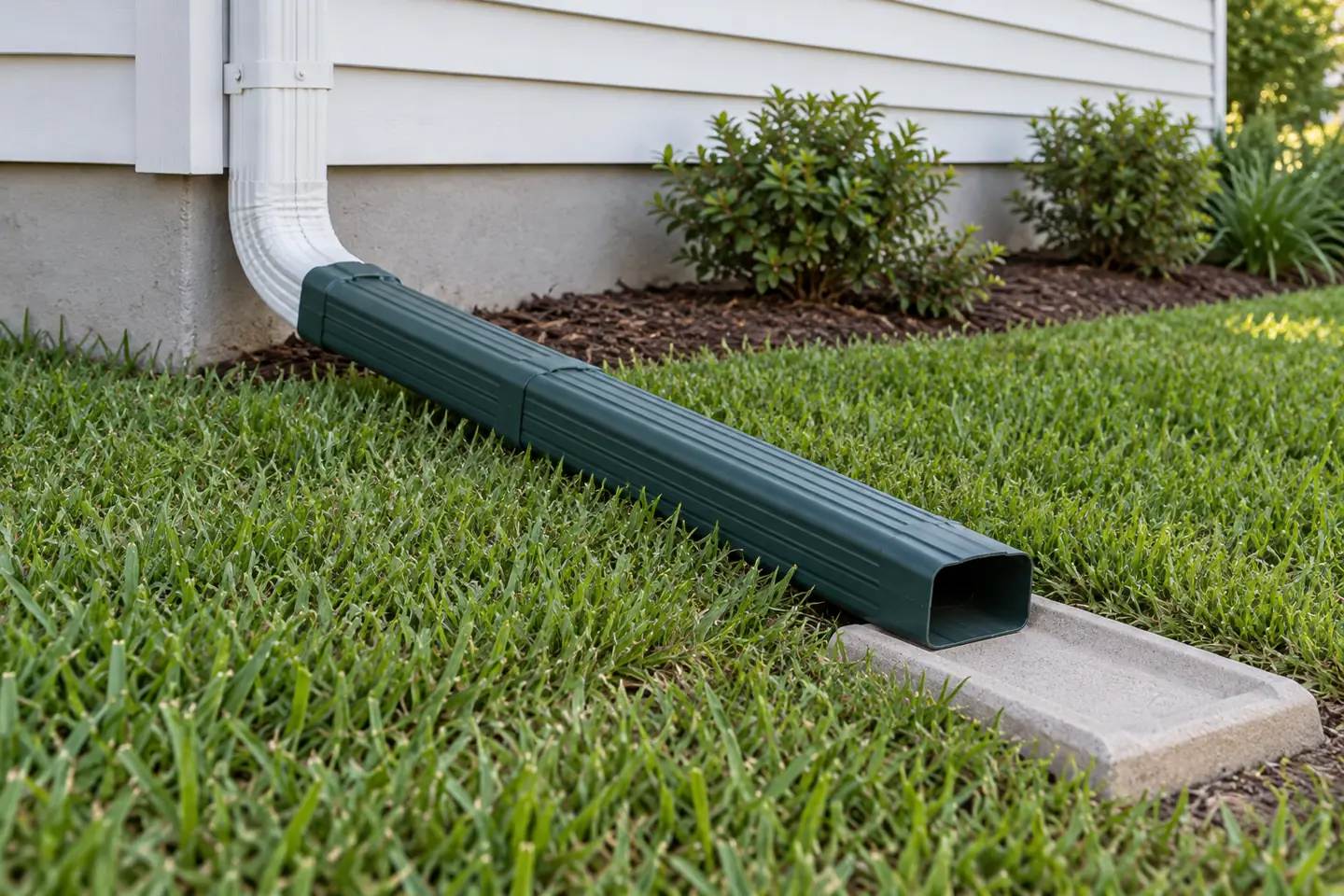
Keep cords and controls out of the lawn
Some temporary pump setups include extension cords. CPSC guidance warns against using damaged cords and against placing cords where they can be damaged or create hazards. A cord across turf is not an acceptable mower route. The owner should have electrical supply arranged by the appropriate qualified person and keep all connections protected from weather as required.
Happy will not move, unplug or test pump cords. If a cord, plug, alarm lead or control box is in the service area, identify it beforehand and create a no-work buffer. Never hide connections under leaves, bags or improvised covers.
Mowing and trimming near the line
Approach parallel to a visible hose with enough clearance to stop before a turn. Do not straddle it with a deck. A hand-finished strip may be safer than bringing powered equipment close to couplings or thin corrugated material. If grass has grown over the hose, expose the route by hand only after the pump owner confirms it is safe and inactive.
Blow clippings away from joints, outlets and nearby stormwater paths. Avoid high-pressure air that might move a lightweight hose. The finished area should leave the route easy to inspect; a perfectly hidden discharge line is not a successful lawn outcome.
Changes that reset the service plan
Review the route after pump replacement, hose extension, grading, landscaping, foundation work, storm damage or any change in where water exits. Old photos are useful history but not permission to assume the current path. A new outlet can turn yesterday's mower lane into today's soft spot.
If the system is seasonal, record when it is installed and removed. Store unused hose off the lawn rather than coiled behind a shrub where a trimmer can find it. The owner should confirm the active configuration before each seasonal transition.
Before Happy arrives
- Trace and photograph the complete active discharge route.
- Keep pets, children and visitors away from the work zone.
- Move toys, loose covers and unrelated hoses from the lawn.
- Mark couplings, outlets and soft ground with a safe visible buffer.
- Keep all electrical cords and controls out of the mower route.
- Do not run the pump across an active lawn-work area.
- Report leaks, erosion or route changes to the responsible professional.
With the equipment left intact and the boundary clear, the turf can be maintained without turning lawn care into pump service. Call 504-339-3571 and ask for Happy to describe the access route and the areas that need mowing.
Shared yards and neighboring property
Confirm that the hose and its water remain within an authorized route. A line should not be shifted across a property boundary, sidewalk or shared access simply to clear the grass. If discharge affects a neighbor or public way, the owner should address placement with the appropriate professional and local requirements before lawn service continues nearby.
In a rental or managed property, identify who controls the pump and who may approve changes. The lawn crew should receive one current instruction rather than conflicting directions from occupants and managers. Happy can follow the agreed safe turf boundary; it cannot decide drainage rights or system configuration.
Rigid extensions and buried transitions
Some flexible hoses connect to rigid pipe or enter a shallow buried segment. Keep the transition visible enough to inspect and avoid trimming directly against the fitting. If soil settles around it, do not fill or compact the area with lawn equipment. Ask the responsible installer whether support or grading needs attention.
A buried section should be documented even though its exact path is not visible. Before staking, edging or other soil disturbance, the property owner must arrange the appropriate utility and private-line locating. Mowing on the surface is different from authorizing excavation.
Treat a changed outlet as a changed route question
If a sump-pump discharge hose has been extended or shifted, update the entire visible route from the building toward the outlet. A photograph of the familiar starting point may hide a new crossing farther into the lawn. State which part changed and whether the same grass sections remain reachable under the current arrangement.
Do not make disconnecting, shortening or relocating the line an assumed preparation for mowing. The responsible person needs to address equipment and discharge decisions separately. For the lawn request, identify the grass to be considered and the route that does not depend on an unconfirmed alteration. After the setup changes again, replace the affected view so an old clear passage does not quietly remain the basis of the next service discussion.