
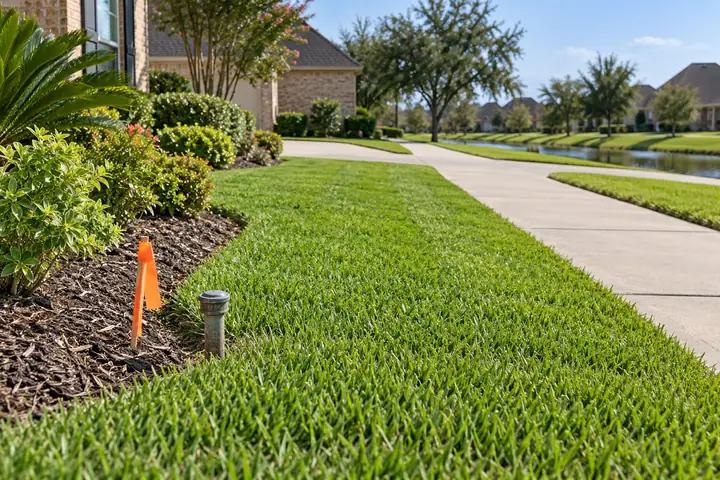
Start by learning what each marker represents
Not every flag in a yard means the same thing. A licensed surveyor may set or recover a monument and use temporary stakes to make points visible. Utilities use color-coded marks for facilities. Contractors may outline excavation, drainage or landscaping. Homeowners also place decorative flags and pet-fence indicators. Before mowing day, ask the person who placed a marker what it is and how long it must remain. Happy Grass does not determine property lines, verify monuments or decide whether a stake is legally significant. Louisiana surveying rules require monuments on plats to be described and identified as found or set; that professional documentation is different from a lawn crew’s visual impression. If the purpose is unknown, leave the marker in place and establish a generous no-contact area. A few minutes of clarification prevents a mower from turning an important reference into loose debris.
Do not move a marker to create a straighter cut
A stake that interrupts the normal mower stripe is still not ours to relocate. Pulling it out, pushing it aside or trimming until it falls can erase useful field evidence and create conflict between neighbors or contractors. Keep the grass immediately around the marker reachable by hand trimming only when it can be done without contact. Otherwise, accept a small uncut ring until the authorized person removes the marker. Do not hammer a leaning stake deeper or straighten a cap. A buried metal pin may have a flagged witness beside it; removing the witness can make the actual point difficult to find. Happy Grass will work around visible markers but cannot guarantee hidden monuments will be discovered. Owners should identify known points before service and tell us whether adjacent grass is within the authorized work area.
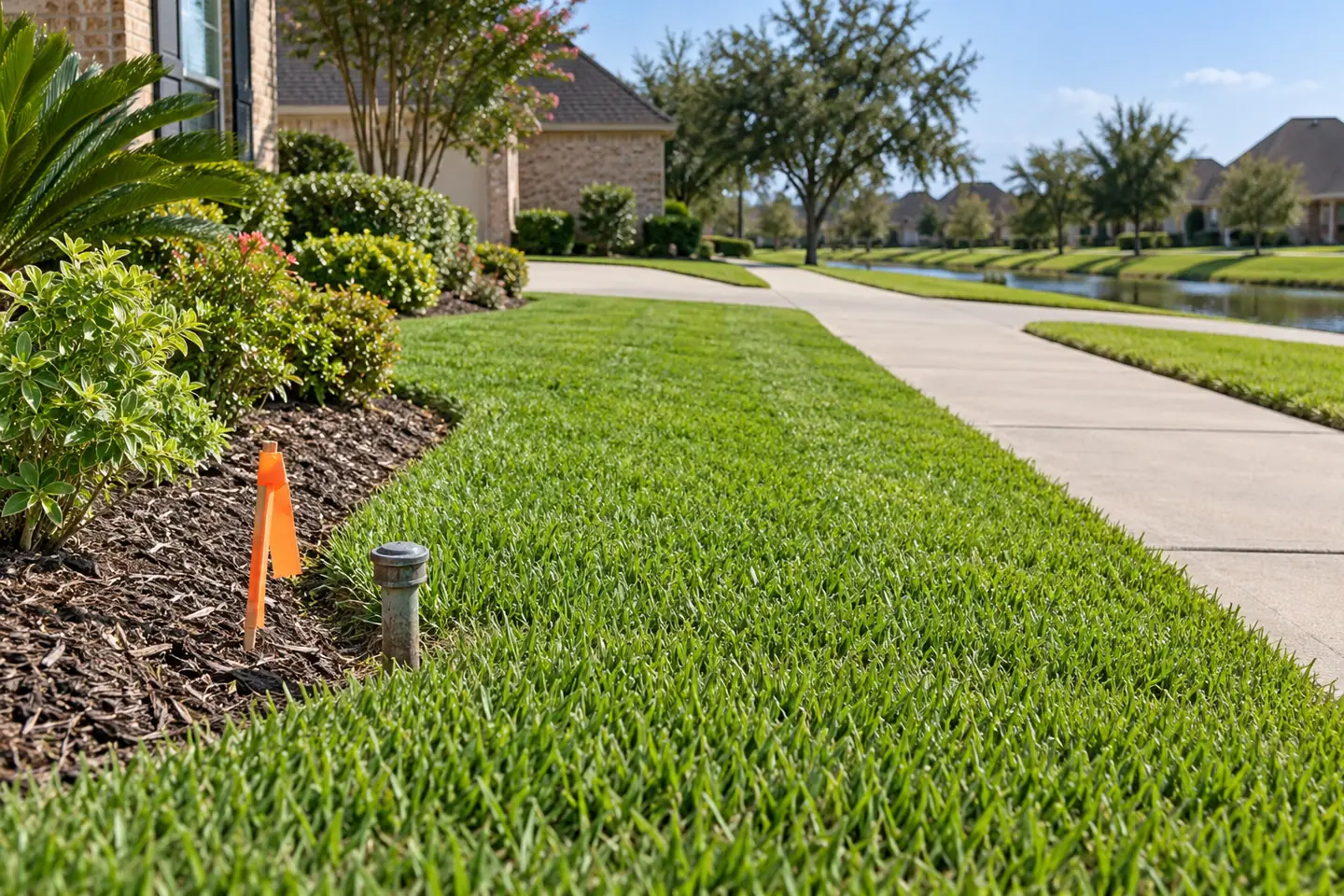
Separate the mowing boundary from the legal boundary question
A fence, driveway edge or line of trees may not coincide with a deed or survey line. Lawn maintenance history also does not settle ownership. Give the crew a practical stopping instruction that you are authorized to provide, such as “mow only inside this fence” or “stop at the white owner flags,” while resolving any dispute with a licensed surveyor or attorney. Do not ask Happy Grass to choose between competing neighbor instructions. If two people claim the same strip, pause that strip until they agree or provide clear authority. The crew’s role is to maintain the approved lawn, not create evidence about possession. A neutral skipped band is often the wisest temporary result.
Preserve utility markings and their time-sensitive context
Louisiana 811 explains that white markings show proposed excavation and other colors identify types of facilities. Those marks are for damage prevention, not decorative lawn guidance. If a locate is active, tell Happy Grass about it before the visit and avoid washing away paint or pulling flags. Mowing can often proceed around clearly marked surface features if no excavation is occurring, but construction staging, exposed lines or active crews may require postponement. Never assume a utility flag identifies a property corner. Conversely, do not use a survey stake to decide where digging is safe. Each system has a separate purpose. Once the authorized project is complete, the project manager or marker owner should say what may be removed.
Make temporary stakes visible from the equipment route
Tall grass can hide short lath, wire flags and metal pins until a blade or tire reaches them. Before the appointment, walk the lawn in daylight and place a clearly communicated buffer around markers—without adding confusing colors or moving the original point. Remove unrelated toys, hoses and decorative flags so the important items stand out. If a marker sits in a shaded corner or near a fence, photograph it from the gate and from the approach. Low markers can be difficult to see when the sun is behind them. Where multiple stakes create a survey corridor, consider postponing that section until field work is complete. The safest route is one that does not require an operator to remember dozens of tiny obstacles.
Coordinate survey fieldwork and lawn service in sequence
Freshly cut grass can help a survey crew see the ground, but active fieldwork can also add stakes, flagging and paint after the lawn appointment is scheduled. Ask the surveyor what access they need and whether mowing should happen before or after their visit. Do not mow through an active work area or around unattended instruments. After fieldwork, collect instructions from the surveyor about temporary witnesses and permanent monuments. Then send Happy Grass an updated map or photographs. If brush clearing is required for survey lines, that may be a different service from routine lawn mowing and should be handled by the appropriate crew. Good sequencing protects both the survey work and the lawn finish.
Handle neighbor communication before the crew arrives
Shared corners and narrow side yards can attract attention when markers appear. Tell adjacent occupants when authorized lawn work will occur and make the stopping point clear. Do not expect the mower operator to negotiate at the fence. If a neighbor asks the crew to move a stake or cross a line, the crew should pause and refer the question back to the customer. Keep gates on the approved route unlocked and prevent pets from entering the disputed or marked strip. A written instruction with a simple photo is better than a chain of verbal messages. Happy Grass wants a friendly visit, and the friendliest option is sometimes to leave a small area untouched until property questions are settled.
Treat monuments as durable references, not lawn ornaments
Metal rods, pipes, concrete posts and capped pins may be at or below grade. They can damage equipment and should not be covered with soil, driven down or used as anchors for landscape edging. Do not build a flower bed or install pavers over a known monument without professional guidance. Routine lawn service can maintain the surrounding grass while leaving a visible, non-contact ring. If erosion exposes a sharp marker, keep people away and ask the licensed surveyor how it should be protected. Happy Grass does not alter or cap it. A monument’s appearance may be plain, but its value comes from the survey record and professional placement.
Close out markings deliberately after the project
When construction, utility or survey activity ends, ask the responsible professional which stakes and flags can be removed. Keep the final plat or site sketch with your property records and note permanent points for future service. Remove only authorized temporary material, then inspect the grass for wire, nails, broken lath and holes. Fill or repair disturbed soil only after confirming that doing so will not bury a required feature. If the route changed, send new photos with the next quote or scheduling message. This deliberate closeout turns a confusing field of flags back into a maintainable lawn without losing the information the markers were meant to preserve.
Keep records separate from the visible mowing cue
A photo of a flag is useful for the next service visit, but it is not a substitute for a survey plat or professional record. Save the surveyor’s documents in a durable place and label your lawn photos by date. Temporary paint can fade, storms can move loose flags and landscaping can change sight lines. When recurring service begins, choose a mowing cue that is easy to see yet does not alter the surveyed point. For example, a fence-side stopping instruction may be practical even while the actual monument remains protected several inches away. If the cue disappears, pause and ask rather than reconstructing it from memory.
Plan extra care after storms and excavation
Heavy rain can soften soil around a stake, tilt lath or expose metal. Construction equipment can leave ruts that force a mower toward the marker. Inspect the area after weather or digging work and postpone equipment traffic until the surface is stable. Do not press exposed metal back into the ground or fill around it without the surveyor’s direction. Clear only loose debris whose purpose is known. If an official marker seems damaged, photograph it without disturbing it and contact the licensed professional responsible for the project. Lawn service can resume around a new conservative buffer once the site is safe.