
Start with an accurate station map
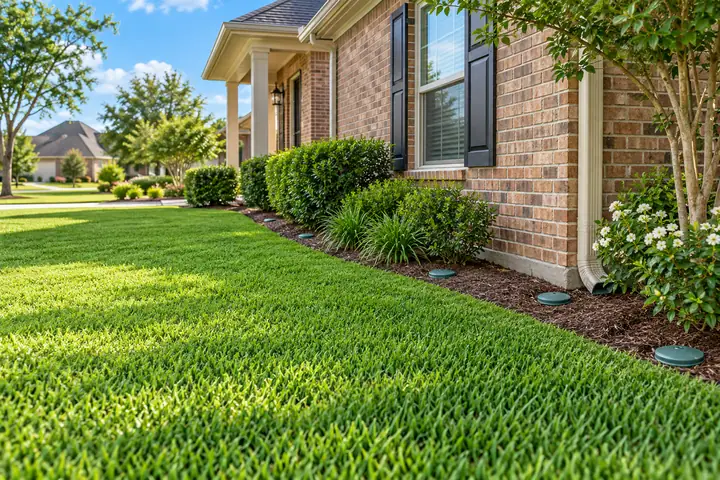
Walk the foundation with the owner before the first visit and identify every known cap. Stations may sit in turf, mulch, gravel or the narrow seam between a bed and grass. Record a wide photo and a close photo that show the cap relative to a window, corner or downspout. Count the visible stations, but do not assume the count is complete if landscaping hides part of the perimeter. Happy only needs a practical surface map for equipment clearance. The pest-control provider remains responsible for the installed layout, inspection schedule, identification and treatment plan.
A bait cap is not an ordinary lawn lid
EPA describes termite baits as one available control approach, and registered systems come with product-specific labels and servicing instructions. The cap may cover a cartridge, wood monitor or other component below grade. Opening it, twisting it, filling around it or swapping a damaged lid can disturb the system and may expose material that lawn crews are not authorized to handle. Keep the station closed. If its identity is uncertain, treat it as protected fixed hardware and ask the owner to confirm it with the licensed pest professional.
Make every cap visible from standing height
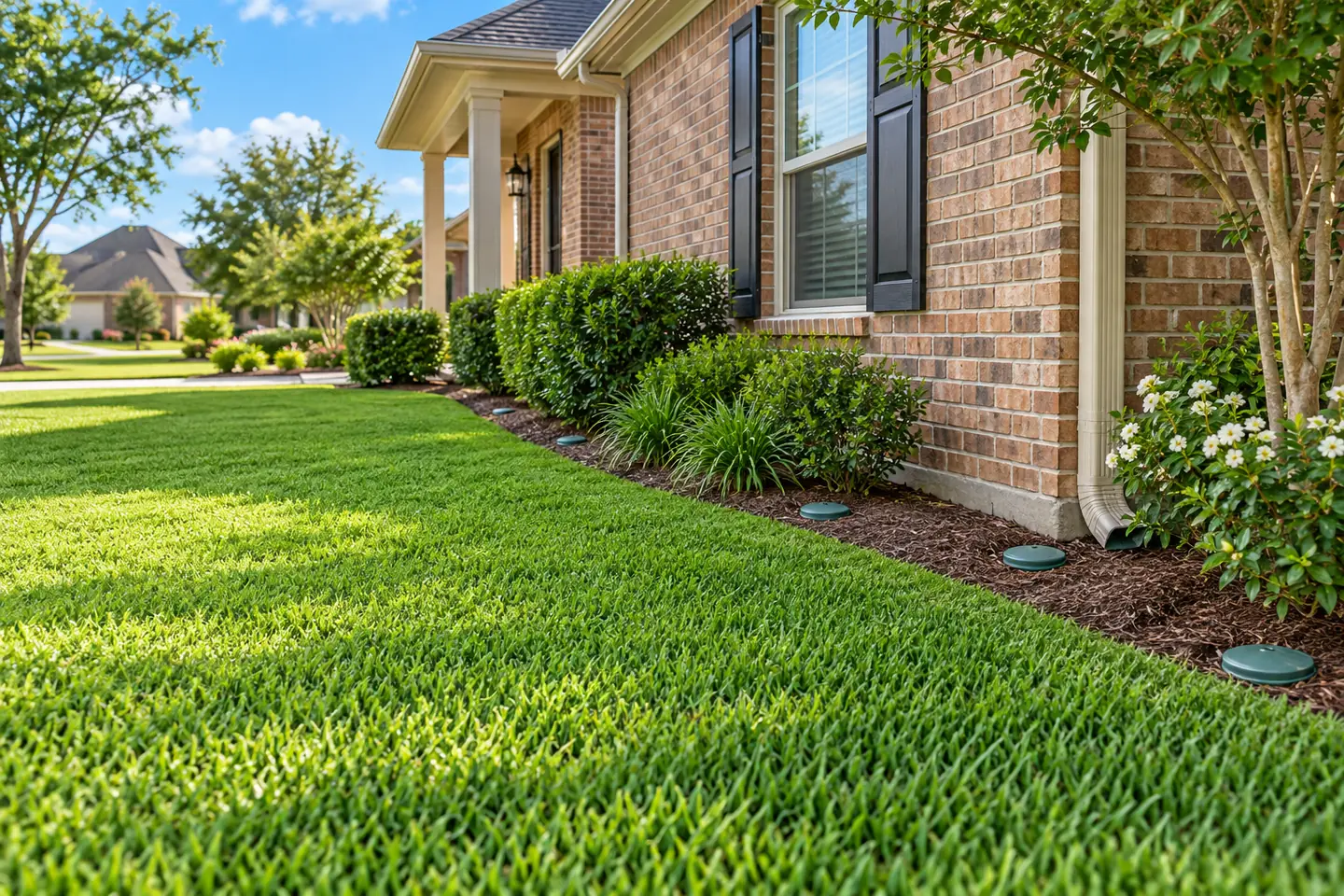
A flush dark cap disappears quickly under St. Augustine runners, loose mulch and leaf litter. Visibility does not require a scalped circle. Use a modest, deliberate grass boundary so the operator can see the rim before the wheel reaches it. Keep mulch from drifting across turf-side stations, and ask the pest provider how much access is needed for its own tool. A small property marker can help temporarily, but it should be flexible, obvious and placed far enough away that it does not become a mower hazard itself.
Leave placement and depth to the pest professional
Do not lift a station that appears too low, push down one that stands proud or pack soil against a loose rim. Soil movement, root growth and repeated foot traffic can change the apparent height, but the correct response is documentation, not an improvised adjustment. Take a photo from the same angle as the original property note. If the cap rocks, is cracked, has been pulled out or is missing, keep equipment outside a generous buffer and send the owner the observation so the servicing company can address it.
Build the mower route before starting blades
Stations commonly follow the house perimeter, which is also where turns, discharge direction and narrow bed edges can become complicated. Plan a pass that keeps wheels off the cap line and avoids tight pivots over recently disturbed soil. Where several stations sit close together, treat the entire strip as one protected corridor. Finish the remaining grass with controlled trimming from the lawn side. The objective is a repeatable route that a different crew member can understand without rediscovering each cap through contact.
Keep clippings and mulch out of the service point
Do not direct a concentrated discharge of clippings at station lids. A mat of wet grass can hide the cap, hold moisture and make the pest provider's next inspection messier. Blowing should reveal the lid without lifting it or forcing air into an opening. If bark or soil has washed over the cap after heavy rain, photograph the condition and let the responsible provider decide how to expose it. Lawn cleanup ends at the closed station; it does not include excavating or clearing the interior.
Separate chemical questions from lawn work
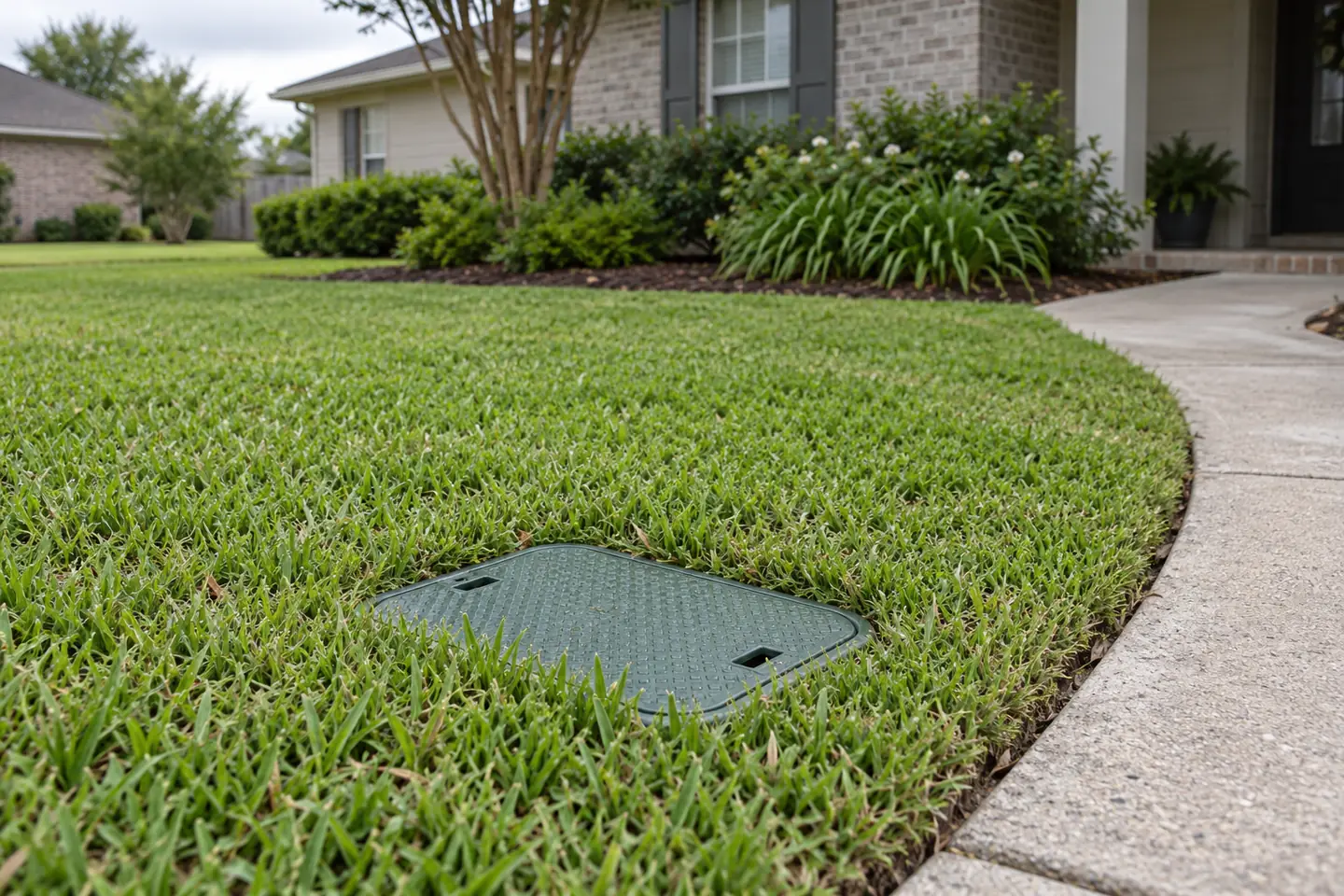
Happy Grass does not provide termite treatment, pesticide application, station refilling, pest identification or system monitoring. Do not ask a lawn crew to add product, spray around a cap or decide whether bait is active. EPA advises following the pesticide label, and that direction belongs with the user or professional authorized for the product. If the owner wants weed control near stations, the service scope and the pest company's instructions should be reconciled before anything is applied. Never guess about compatibility.
Watch for landscape changes around the line
New edging, a wider flower bed, a downspout extension or fresh sod can change which side of a station is easiest to approach. Before lawn work resumes, compare the new layout with the station map. A cap formerly in turf may now be inside mulch, or a contractor may have covered it accidentally. Do not chase a missing station with a shovel. Mark the last confirmed location for the owner and allow the pest provider to locate and evaluate its equipment.
Use a simple visit-day checklist
- Confirm the owner has identified the visible stations.
- Keep pets and children away from active equipment and the station line.
- Remove toys, hoses and loose edging from the foundation route.
- Note any cracked, raised, buried or missing cap before mowing.
- Keep mower wheels and tight turns outside the mapped corridor.
- Leave every station closed and report changes with a photo.
Rain can change the ground around a station
West Bank rain may soften the small column of disturbed soil surrounding an in-ground cap even when the rest of the lawn supports equipment. A wheel passing beside it can create a depression, tilt the rim or smear mud over the lid. Check the perimeter on foot before committing to the route. If a station sits in standing water or saturated soil, pause that strip. Lawn service can return when the ground supports work; drainage or station-placement concerns belong with the property owner and the appropriate specialist.
Protect access without creating a bare moat
An oversized dirt ring is not necessary and can invite erosion, weeds or mud splash. The better boundary is narrow, readable and compatible with the grass height used across the yard. Keep runners from crossing the lid and stop edging before hard contact with plastic. Where a station sits at the bed line, define whether the pest company approaches through mulch or turf. That division helps the lawn stay finished while preserving the station as a serviceable object rather than a hidden obstacle.
Know when the lawn visit should stop
Pause if a station is open, contains exposed material, has been crushed into a hole or is surrounded by insects that create an immediate concern. Keep people and equipment away, notify the owner and follow the pest provider's instructions. A lawn crew should not touch unknown bait, collect samples or offer a diagnosis. Likewise, visible termite activity on the building is not something mowing can solve. The honest boundary is useful: Happy protects the surface route; a qualified provider handles termites and registered products.
Keep privacy and records practical
The property note needs general locations and photographs, not precise public coordinates or details about the home's vulnerabilities. Store the station map with the service notes, update it after landscaping or pest work, and make it available only to the people coordinating the visit. A quick before photo is especially useful when a contractor is active on the property. It shows why a strip was trimmed differently without suggesting that Happy inspected or certified the termite system.
Coordinate station inspections with mowing dates
If the pest provider plans to open stations, schedule that work before or well after the lawn visit rather than creating simultaneous traffic around the foundation. The provider may place tools, kneel beside caps or temporarily disturb soil that looked stable earlier. Ask the owner to confirm when every lid is closed and the route is released again. Happy should not mow through an active inspection line or infer that an unattended open cap is ready. A short scheduling note keeps the pest company's observations intact and gives the lawn crew a predictable surface.
Check newly installed stations twice
Fresh installation leaves the highest chance of loose soil, proud rims and unfamiliar placement. Review the line when the work is completed, then check again after the first meaningful rain. Add clear photos before the grass grows over the disturbed ring. The first mowing may use a wider margin than later visits, which is sensible rather than unfinished. Once the ground settles and the pest provider confirms the lids, update the route without moving the stations themselves.
Good coordination makes two services fit
The pest company needs access to stations, and the lawn crew needs a route that does not strike them. Those needs work together when the caps stay visible, the owner reports changes and each provider remains inside its role. Tell Happy if a station was recently installed, relocated or damaged. With one current map and a sensible buffer, the lawn can look intentional while the termite system remains closed, undisturbed and ready for the professional who maintains it.