
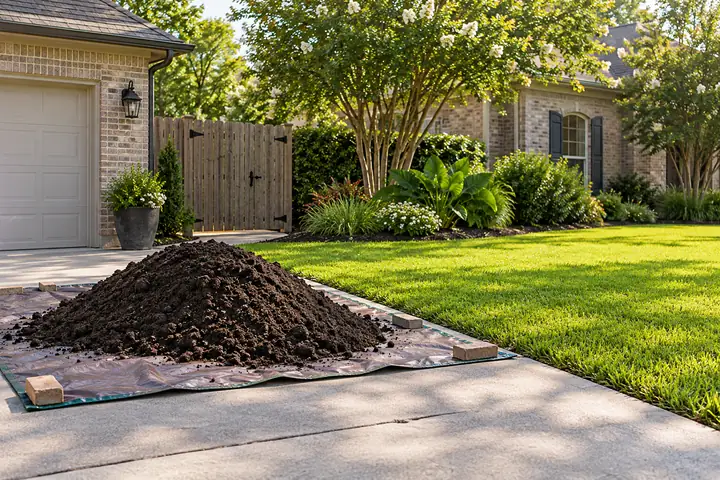
Name the purpose of the soil before planning service
Topsoil might be intended for a bed, a repair area, a contractor's grading project or future sod. Those uses call for different boundaries. Tell Happy whether the material is only being stored or has already been spread, and identify who is responsible for the project. Mowing does not include deciding where soil should go. Happy does not provide grading, fertilization, aeration or overseeding. A clear purpose prevents a simple access conversation from becoming an unapproved landscape repair plan.
Keep the delivery footprint away from the lawn lane
An approved hard surface can make a temporary pile easier to contain, but the supplier and owner must confirm truck access and surface suitability. Preserve the gate opening, driveway turning space and route to any rear lawn. Do not cover meter lids, cleanouts or drainage inlets with a tarp. Mark the drop location before the driver arrives and provide an alternate if the original spot is unavailable. Happy should not be expected to redirect a delivery without the owner's instructions.
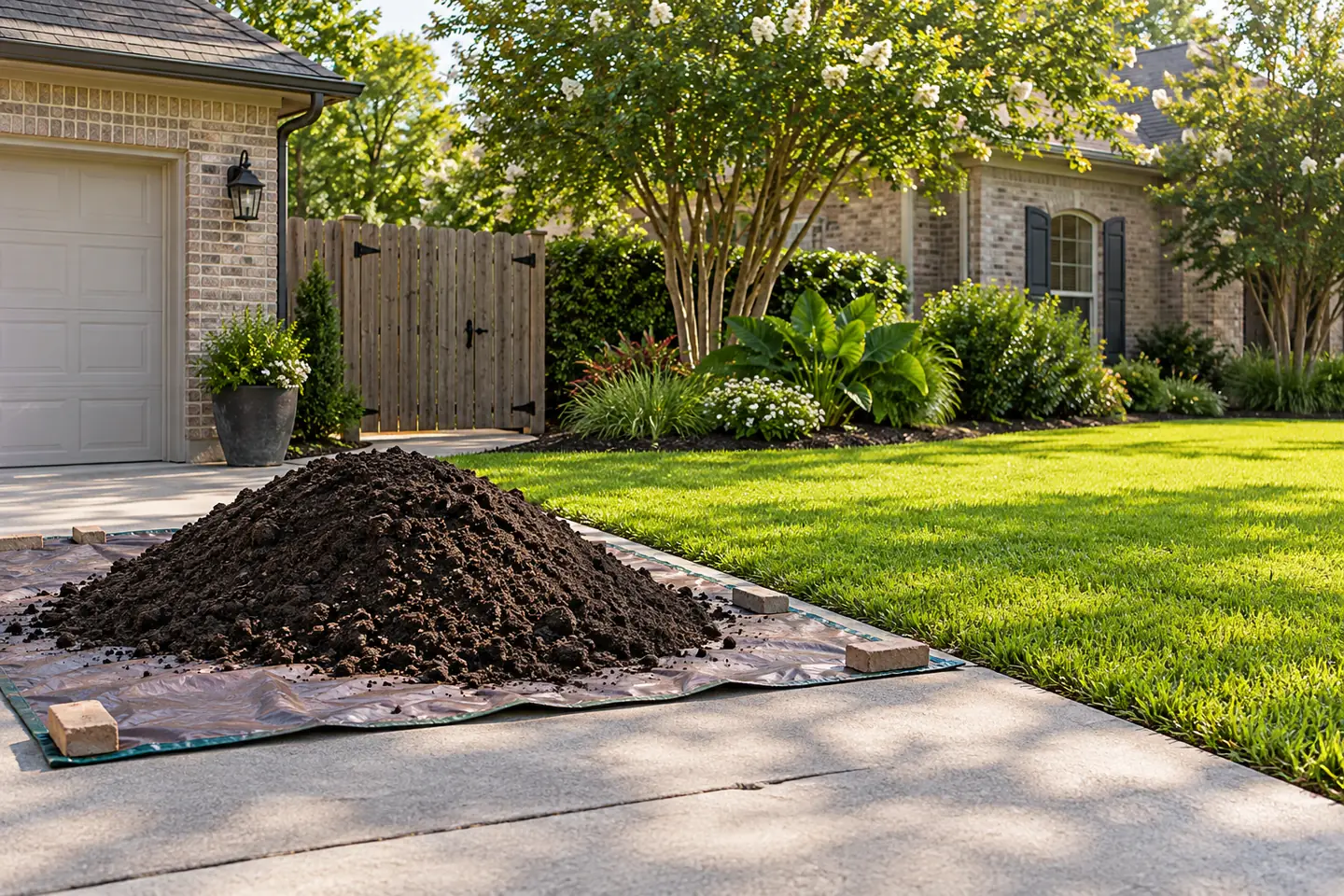
A pile on turf creates a separate recovery area
Stored soil blocks light, adds weight and can leave a layer that changes the lawn surface after removal. The affected footprint may remain bare or soft even when the mound is gone. Mark it as a project area rather than driving across it to test whether it is ready. The owner should ask the landscape provider how the surface will be restored. Happy can maintain the established grass around the footprint once a safe route is available, while the repair follows its own schedule.
Check what is mixed into the material
Delivered soil can contain stones, sticks, packaging or other visible material depending on its source and specification. Do not assume it is ready for a mower merely because the load was sold as topsoil. The supplier or landscaper should address foreign objects before spreading, and the owner should inspect the completed area. A mower cannot screen soil safely. If hard debris remains at the surface, exclude it and request cleanup instead of using repeated passes to break it down.
Keep the hauling path distinct from the finished lawn
Wheelbarrows, compact loaders and repeated foot traffic can create a temporary corridor between the pile and destination. Choose that corridor before work begins and protect low features along it. After the project, inspect for ruts, loose clods and displaced covers. Ground-protection boards must be removed by the responsible crew before mowing. Happy should not cross a makeshift bridge or assume boards hide sound soil. A photograph of the exposed route gives a more useful basis for the next visit.
Freshly spread soil needs its own release decision
Dark soil can make a surface look smooth while concealing holes, roots or an uneven transition. The owner or grading contractor should confirm the final elevation and drainage behavior. Happy does not certify compaction or grade. If new sod was added, its establishment plan also matters. Keep heavy turns on established grass and avoid cutting through soil that smears or shifts underfoot. The first lawn visit may be limited to the surrounding area until the project surface becomes firm and usable.
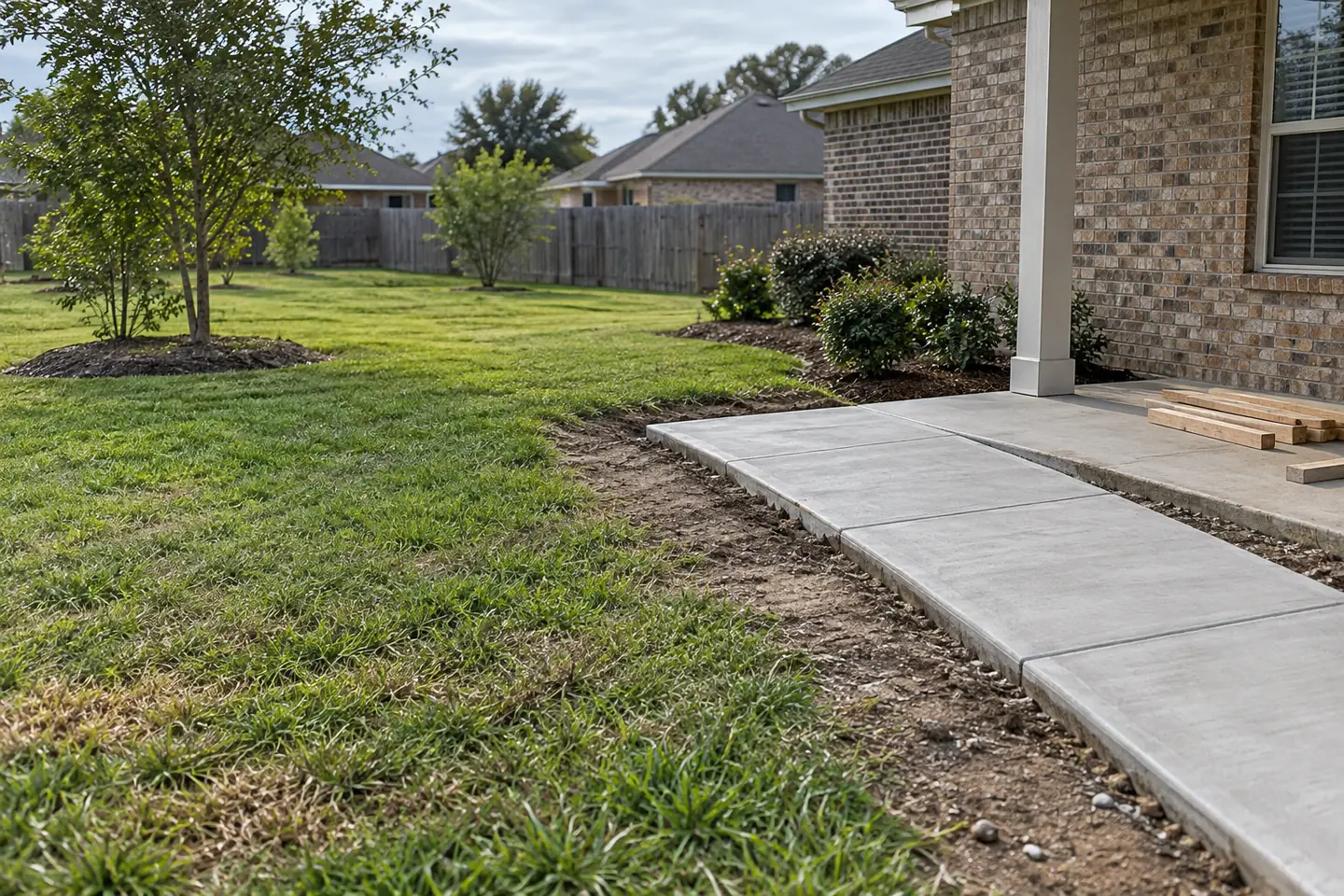
Preserve drainage and foundation clearances
Do not move excess soil against a foundation, into a swale or over a drain to make the delivery disappear. Changes in grade can affect water movement and building details. Those decisions belong to a qualified provider working with the owner. For mowing, record the visible slope, soft edge and any outlet that must stay clear. If rain sends soil toward a street or storm drain, ask the project crew to contain and collect it through its plan rather than blowing or washing it farther.
Rain can turn a storage spot into a new obstacle
A dry mound may shed fine sediment during a storm, while the driveway tarp becomes slippery and heavy. Check downslope turf and the gate threshold after weather. Do not drag a loaded tarp across the lawn or let its loose corner enter an equipment lane. The owner should have the supplier or landscape crew manage covering and removal. Happy can adjust the route around a stable contained pile, but should not handle unstable material or reshape runoff paths during ordinary service.
Use a project handoff checklist
- Identify the intended soil use and the responsible contractor.
- Keep delivery, storage and hauling routes mapped separately.
- Preserve gates, service lids and visible drainage features.
- Remove boards, tools, packaging and hard debris before mowing.
- Mark fresh fill, bare footprints and soft transitions.
- Ask the owner to release established and repaired zones individually.
Do not lower the mower to match a bare patch
The surrounding lawn should keep its appropriate cut rather than being shaved down to the level of fresh soil. A bare footprint may look unfinished beside taller grass, but scalping the edge creates another recovery problem. A controlled boundary can make the temporary zone readable until restoration is complete. Explain that difference in the service note. The visual goal for the first visit is a tidy established lawn around an honest project exclusion, not an artificial impression that all surfaces have already recovered.
Separate settling from an ordinary uneven cut
New fill can settle after the first storm or a few weeks of use. If a depression appears along the project edge, photograph it and ask the owner to contact the responsible provider. Do not infer that the mower created it simply because it became visible after cutting. Likewise, do not drive repeatedly over the area to press it flat. The record should describe the surface, date and recent weather so the person managing the soil work can make a grounded decision.
Account for watering and temporary equipment
Sod restoration may bring hoses, sprinklers, timers and stakes into a route that used to be clear. Ask the owner to store or secure them before mowing and provide the relevant access instructions from the landscape provider. Happy does not change irrigation schedules or pull stakes that may locate new work. If the repaired area needs to remain wet, the lawn visit may need to avoid it entirely. Coordinate the water plan and equipment access instead of treating them as competing chores.
Finish with one current property map
When the pile is gone and the project is accepted, update the route with the final bed line, repaired turf and any remaining soft spot. Archive the temporary drop-area note so another crew does not avoid a location forever or cross a newly changed feature. A wide photo from the driveway toward the gate often captures all three. With the soil project clearly handed back, Happy can resume the regular lawn pattern and keep the next visit focused on grass rather than material handling.
Keep quantity questions with the soil project
The lawn crew should not estimate how much fill will solve a low area from a photograph or decide whether the delivered load is suitable for a particular plant. Soil selection, volume and final grade need the supplier and qualified project provider. Happy can explain which established grass is included in mowing and where equipment needs to pass. If a load is larger than expected, revise the storage plan before material reaches the gate or sidewalk. A surplus should have an approved destination rather than being spread opportunistically across lawn features.
Watch covers and valve boxes after spreading
Even a shallow new layer can hide the lip of a low utility or irrigation cover. The soil crew should preserve access and restore the final relationship between the lid and surrounding surface through its project plan. Happy should not scrape soil off an unknown box or lift a cover that became buried. Compare current photos with the earlier property map and flag missing reference points for the owner. The grass-side route can remain excluded until the responsible person makes the feature visible and stable again.
Review the first cleanup after the pile leaves
Sweep or collect loose material through the project provider's process before the lawn visit. A thin film of soil on paving may be slippery or wash into a drain, while clods at the grass edge can conceal stones. The handoff should expose the real surface so Happy can assess footing without redistributing the delivery leftovers.