
Treat collection day as a moving layout
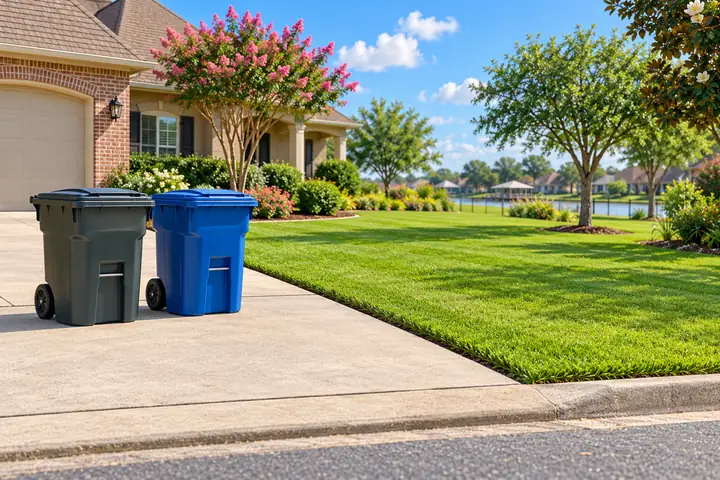
Trash and recycling carts are not permanent yard features. They can be at the house, along a side passage, on a driveway apron or at the curb within the same week. A useful lawn plan identifies each normal position and explains which one will apply when maintenance and collection happen close together.
Start with the local collection instructions supplied to the property, because placement rules and pickup timing are not set by a lawn company. Then look at the actual grass border. A cart sitting fully on pavement may still block a narrow turn, while one wheel on turf can hide an edge and soften the soil beneath it.
Choose a paved waiting point
When allowed by the applicable collection rules, use a stable paved location that keeps both wheels and the handle clear of the lawn. The point should not obstruct a sidewalk, accessible route, driveway sight line or gate. Do not invent a universal distance; the correct placement depends on the property and the collector’s requirements.
Mark the waiting point with a durable reference such as a driveway joint or wall corner, not paint or a stake added without permission. If carts must stand near the grass temporarily, decide who moves them after collection and before service. One assigned action is clearer than assuming someone will notice.
Keep the curb strip visible
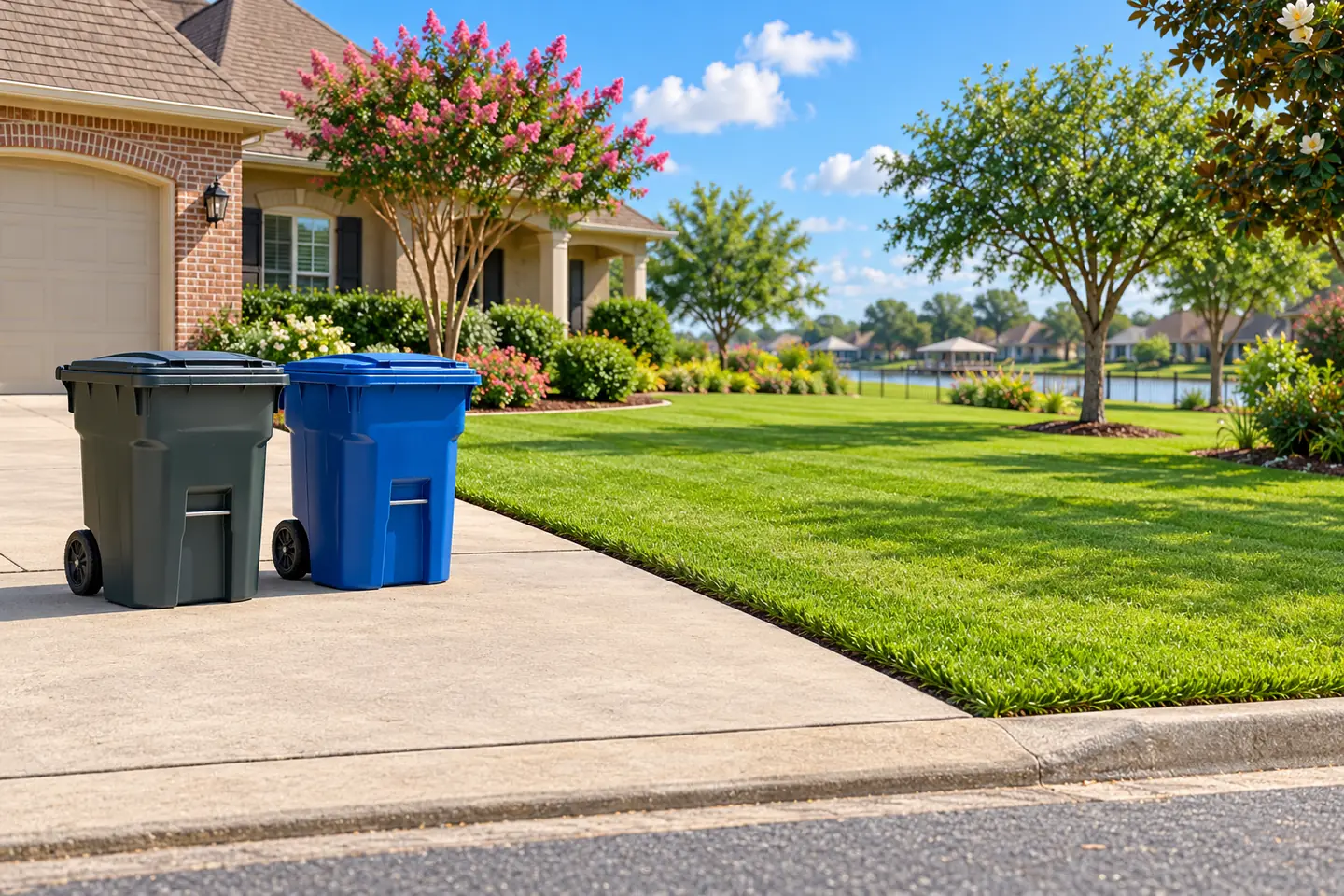
A detached grass strip between sidewalk and curb can disappear behind multiple carts. Photograph that strip when it belongs to the property’s requested scope, and name its endpoints. Confirm who is responsible for any neighboring-looking section rather than using the cart line as a boundary.
After pickup, inspect for lids, bag ties, loose paper or spilled material before mowing. Routine blowing covers ordinary lawn residue on agreed hard surfaces; it is not waste collection. Household trash, broken glass, leaking bags and unknown debris should be handled through the proper property or municipal process.
Avoid dragging full carts across soft turf
Heavy wheels can press into wet ground and leave a route that is difficult to mow cleanly. Use pavement where available and permitted. If the only path crosses grass, the property contact should judge whether moving the cart can wait; lawn service should not be asked to transport household waste as part of maintenance.
Describe the surface rather than promising it will support weight. “The side strip is still soft after rain” is useful. “It is safe” is a conclusion that may not be justified. A current photo of the wheel path can support a zone decision without pretending to certify the soil.
Coordinate two different schedules
Collection and lawn visits may both shift because of holidays, weather or route changes. Avoid building the plan around an exact arrival minute. Instead, choose a simple condition: carts remain on pavement until emptied, then an authorized person returns them before the lawn visit if timing allows.
If that handoff fails, decide in advance whether the nearby lawn zone will be skipped. This protects the rest of the property from an all-or-nothing decision. Do not ask for a special immediate return unless it is separately discussed and accepted.
Keep handles and lids from reaching the grass
An open lid or turned handle can extend farther than the cart body. Close lids when appropriate, nest nothing on top and orient the container according to collection instructions. Check the full footprint from ground level, especially where a cart stands beside tall turf or a low bed.
Do not modify a cart, remove municipal markings or tie it to a fence for lawn convenience. The container belongs to the property or collection provider and must remain usable for its intended purpose. The lawn plan works around that responsibility rather than changing it.
Give every container a role
Properties may have separate carts for trash, recycling and yard material. Use the names shown in the property’s own instructions instead of relying only on color, which can vary. Record the number of carts and their ordinary storage area without exposing account numbers or other unnecessary details.
Yard-waste rules are a separate municipal question. Happy Grass does not promise hauling merely because a container is present. Clarify whether ordinary mowing clippings stay dispersed in the lawn, are handled another agreed way or require a different conversation; never use a cart without authorization.
Check the storage route beside the house
Many carts live behind a gate or along a narrow side yard. Walk the route with the cart in its stored position, then with the gate open. Confirm that the remaining width, turns and surface allow the planned lawn access without moving the container.
If access depends on rolling a cart elsewhere, assign that task to the property contact before arrival. Keep pets secured during the move and visit. A lawn crew should not be expected to choose a new storage spot or leave a gate unsecured after shifting household equipment.
Separate spill cleanup from lawn finishing
Loose dry leaves or a few grass fragments on included pavement fit a normal blowing conversation. Food waste, liquids, broken containers and sharp objects do not. Photograph a significant spill from a respectful distance and direct it to the person responsible for sanitation and waste handling.
Do not mow through scattered trash in hopes that smaller pieces will be easier to collect. That can spread debris and conceal hazards. Leave the affected patch alone until the surface has been cleared and the remaining lawn condition can be seen.
Plan for street parking and driveway access
Collection carts often share the curb with parked vehicles. Confirm that the lawn route does not require squeezing equipment between a vehicle and container. The property contact should handle parking arrangements; the crew can report that a zone is inaccessible without touching a vehicle or cart.
Use broad references such as “driveway-side curb strip” instead of recording plates or personal travel patterns. The objective is a clear maintenance route, not surveillance. Update the note when the regular storage or parking pattern changes.
Keep accessible routes open
Sidewalks, curb ramps and residential accessibility routes should not be treated as convenient cart storage merely to clear the grass. The U.S. Access Board’s accessibility standards provide technical requirements for accessible routes; property-specific compliance belongs with the owner and appropriate authority, not a lawn estimate.
For maintenance planning, the practical rule is simple: do not move a cart into a route another person needs. If the only apparent lawn clearance would create an obstruction, ask the authorized contact for a different plan and skip the zone until it is resolved.
Photograph normal and collection positions
Two wide images can explain the weekly change: one with carts stored and another with them placed for pickup. Frame the grass edge, driveway joint, sidewalk and gate. Avoid people, labels with account information, house numbers and neighboring private space.
Date the views and replace them after a new cart size or collection point appears. Images show where objects were; they do not guarantee where they will be on visit day. Pair the photo with a short confirmation from the responsible contact.
Use a collection-day checklist
Before service, confirm that bags and loose waste are gone, lids are secure, wheels are on the approved surface, the gate route is open and the curb strip can be seen. Add recent rain or a soft wheel path to the message if it changes access.
This checklist is intentionally about visible readiness. It does not decide collection rules, sanitation questions or property boundaries. Those remain with the appropriate owner or public service. The lawn decision is whether each named zone can be reached and maintained as agreed.
Handle missed pickup without improvising
If collection is missed and full carts remain, keep them in the approved pickup location and contact the collection provider through the property’s normal process. Do not relocate them onto grass simply to open pavement for lawn equipment.
Tell Happy which lawn area is blocked and whether the rest is available. A missed pickup may affect only a driveway edge or curb strip. Clear communication keeps that temporary exception from changing the recurring scope by accident.
Recheck the edge after carts move
A cart can flatten grass or leave a small wheel indentation. Observe the area once the container is gone. Do not fill, level or diagnose the mark as part of mowing. Note soft ground, hidden debris and the actual border before deciding whether the strip is ready.
LSU AgCenter’s general mowing guidance includes avoiding removal of more than about one-third of the blade in one mowing. If a blocked patch grows well beyond the rest, discuss a conservative return instead of demanding that one pass erase the delay.
Put the cart plan on the zone map
Show the storage point, pickup point, curb strip and gate route with simple symbols. Avoid collection account data or precise schedules that do not help lawn access. Use the map to distinguish a temporary cart obstruction from the permanent service boundary.
Review it after moving, receiving different carts or changing driveway use. Keep only the current version with the accepted lawn scope. A map that reflects last year’s container arrangement can create more confusion than no map at all.
Start a property-specific conversation
Happy Grass serves lawns in Harvey, Marrero, Gretna, Algiers, Belle Chasse and Westwego. Call 504-339-3571 and ask for Happy with the zone name, current cart position and any blocked edge. A wide photo is more helpful than a promise that collection will happen at an exact time.
The recurring conversation can cover mowing, edging, weed-eating, blowing and an accurately defined weed-control scope. It does not add waste hauling, sanitation cleanup, fertilization, aeration, overseeding or pest control. The best plan lets both collection and lawn care happen without treating either service’s equipment as movable clutter.