
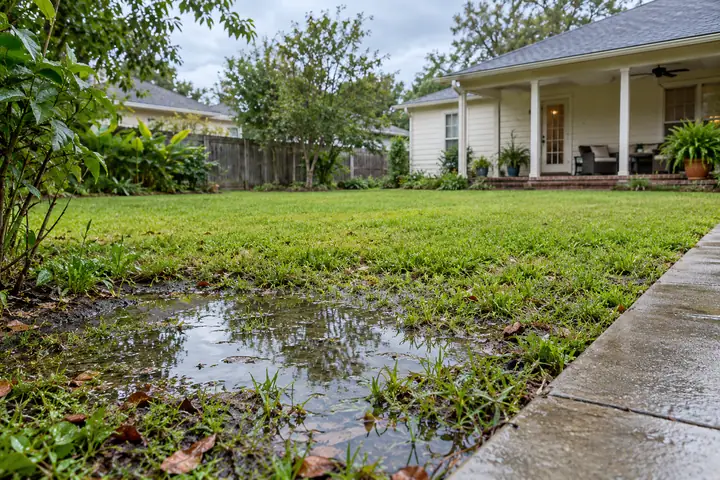
Begin with the wetness you can actually describe
An owner may call a lawn overwatered because it looks yellow, grows unevenly or feels soft. Those observations are worth keeping, but they do not all establish the same thing. Identify where water is visible, which ground remains soft and when the condition appears. Keep the grass color and growth pattern as separate observations. A wet corner can coexist with a pale strip that has another cause. Starting with the actual condition makes the next conversation more useful than assigning one label to the whole property. It also prevents a household from reducing every watering event before anyone has asked which source is contributing water and which part of the lawn is affected.
Make a timeline of incoming water
List recent rainfall, programmed irrigation, manual watering and any visible discharge reaching the area. Include what is known and mark gaps honestly. A controller may run more than one program, while a hose-fed sprinkler may have operated outside the saved schedule. A downspout or equipment outlet can contribute water at a particular border. The timeline does not have to measure every drop to reveal a useful sequence. It can show that the lawn was already wet before a scheduled event began. Keep the sources distinct instead of calling every wet area a sprinkler problem. The appropriate next assessment depends partly on where the water came from, not just on how the grass looks afterward.
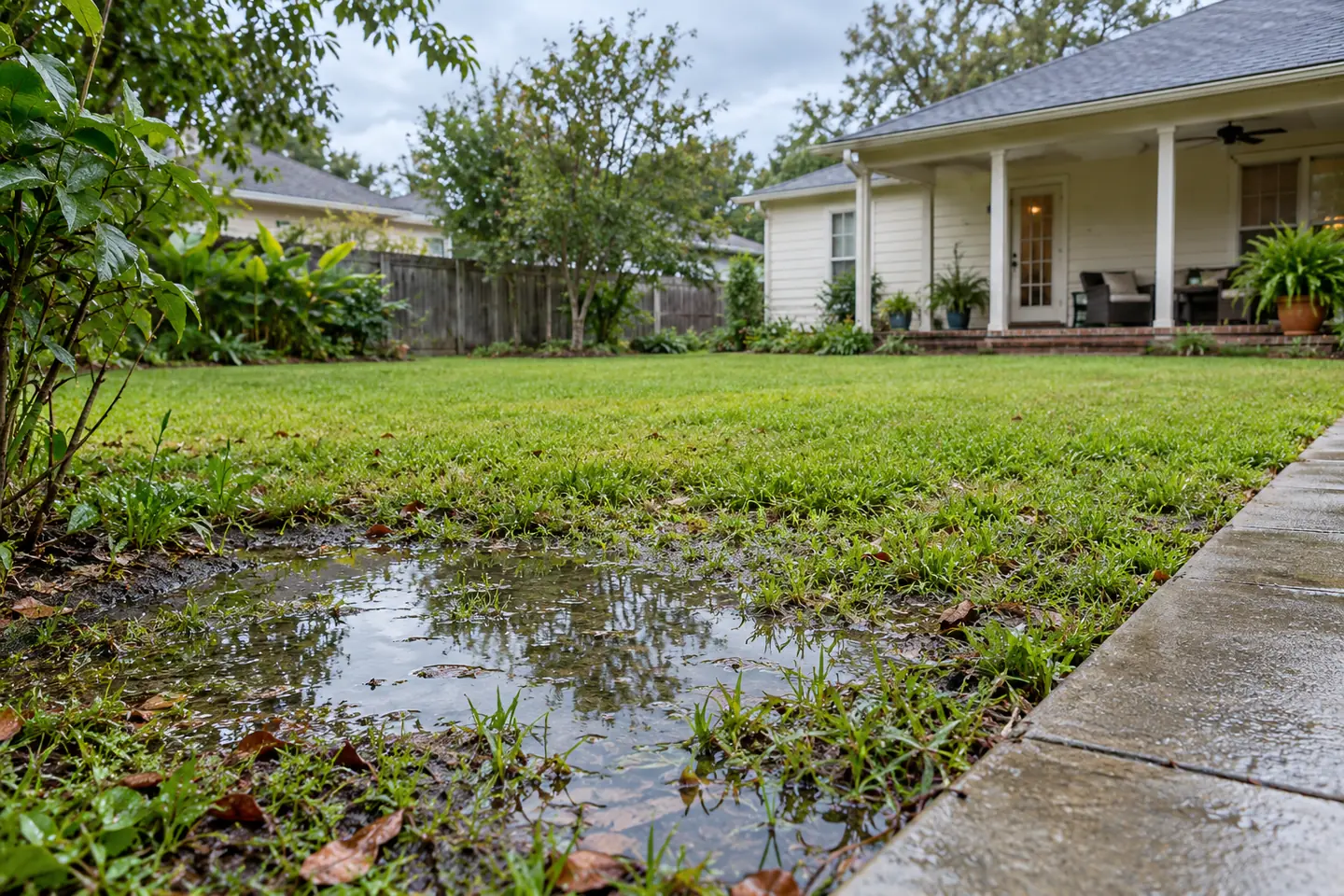
Understand why prolonged saturation matters
University of California turf guidance explains that saturated soil can reduce soil aeration and weaken turf, while unnecessary watering can also encourage excess growth. This is a reason to investigate persistent wetness, not a diagnosis of its cause. Root health, soil condition and other plant problems can still require separate assessment. Do not claim a particular disease from the fact that the ground is wet. Likewise, do not assume that a softer lawn simply needs to dry for a fixed number of hours and will then be suitable for equipment. Observe the actual surface condition and seek the appropriate advice for the plant or drainage question being investigated.
Compare the affected area with the rest of the zone
A zone can deliver water to places with different exposure, slope or soil history. Notice whether the wet area is a low point, a sheltered strip or a location receiving water from another source. Save the intended zone boundary and any coverage information. A consistently damp center and an inadequately covered edge can exist in the same operating program. That is why a whole-zone timer change should not be treated as an automatic solution. Ask whether the layout, application and plant needs fit together. The comparison is most useful when it preserves the differences rather than averaging them into a single statement that the backyard is either wet or dry.
Distinguish standing water from a wet-looking leaf surface
Dew and recent spray can make foliage shine while the ground below has a different moisture condition. Conversely, soil can remain wet after the blades no longer look damp. Describe what you observed rather than using a distant photograph as a complete moisture test. If a probe or other method is used, identify its location, depth and limitations. A plant-health resource may need additional information about symptoms and roots. The owner can help by keeping these observations separate. That way, a discussion about leaf wetness does not become a claim about the entire soil profile, and a soil concern does not disappear simply because the leaves look dry in the afternoon.
Look for operation that does not match the household's understanding
An extra start time, a manual event or a rain pause that was bypassed can change how much watering occurs. Ask the person responsible for the controller to review the actual saved program and recent changes. Do not experiment with unfamiliar settings while trying to reconstruct the history. Save the current program before an authorized adjustment. A useful review can reveal whether the system is operating as expected without assuming the equipment is faulty. If the observed event cannot be explained, document it for an irrigation professional. The record should show what happened, what the controller reported and which parts of the sequence remain unknown.
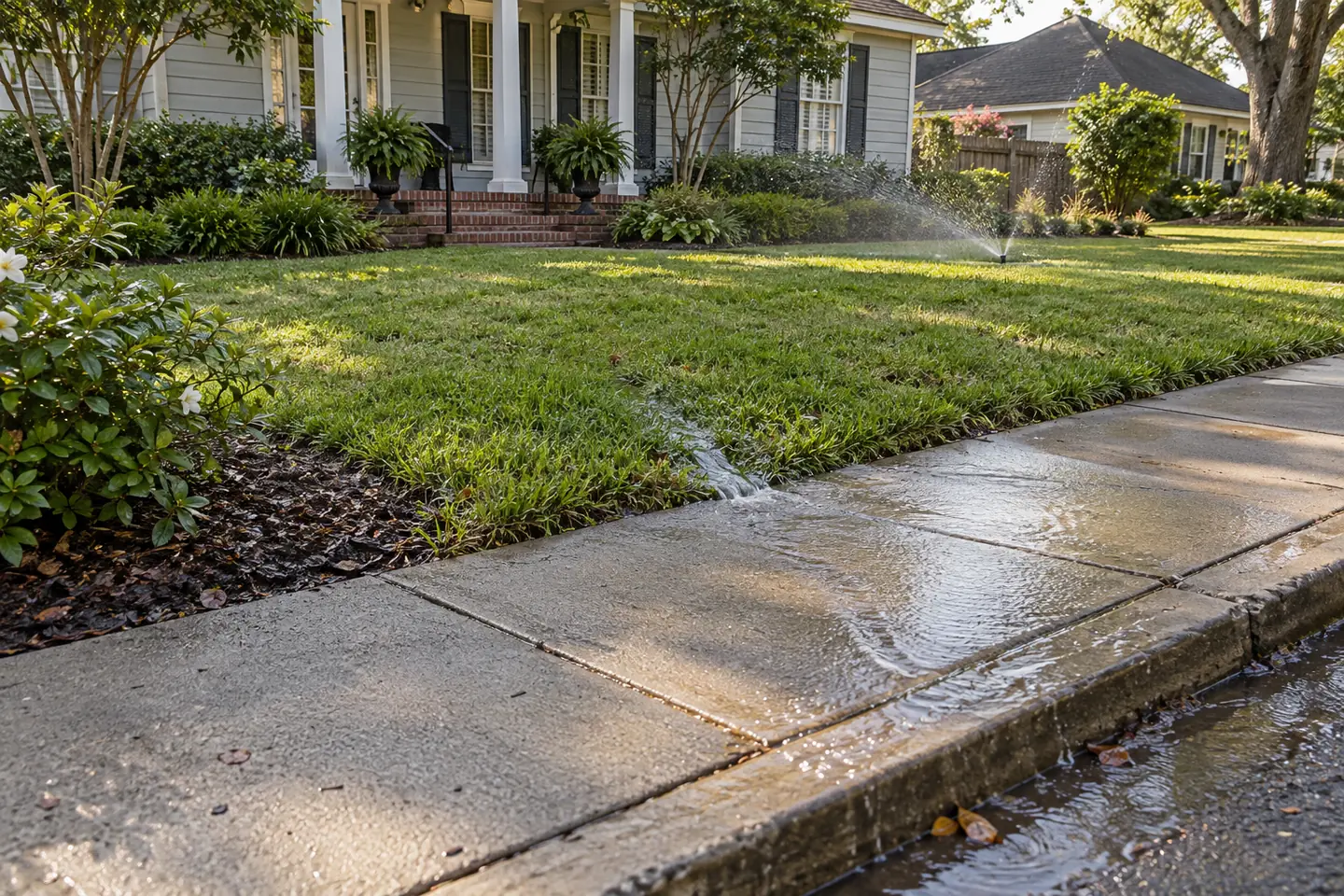
Persistent wetness can need a drainage question too
Water arriving faster than it leaves an area may involve more than irrigation frequency. Surface flow, soil layering, grade and drainage features can matter. Record the visible route and how long the condition persists after the known source stops. Do not dig channels, cover outlets or modify a shared boundary as an improvised response. If a drainage assessment is appropriate, keep it as a separate scope with a clear purpose. A sprinkler adjustment and a drainage alteration are different kinds of work, even when both concern the same corner. The owner should understand which observation supports each proposal and what remains unconfirmed before authorizing a change to the site.
Avoid making brown grass the opposite of wet grass
Reducing water until every pale patch changes color is not a reliable investigation. Some discoloration may reflect injury or other conditions that do not reverse immediately when irrigation changes. Keep the original symptom history and any diagnostic advice. If a qualified provider revises the watering plan, ask what result is expected and when the situation should be reviewed. Do not keep making additional changes simply because the lawn has not become uniformly green by the next afternoon. A defined observation period and a clear purpose are more useful than alternating between extra watering and complete withholding whenever a new photograph looks different.
Describe the effect on yard use and access
A wet route may affect an ordinary household walkway, a gate opening or the approach used for maintenance equipment. Identify that consequence directly. Do not ask someone to infer it from a broad lawn photo. A message saying the left gate path remains soft is more actionable than saying the lawn may be overwatered. Keep people away from unknown unstable or slippery areas, and arrange an appropriate assessment when needed. The practical access question can be handled while the source is still being investigated. It does not require the owner to announce a complete diagnosis before explaining that the planned route currently differs from its usual condition.
Keep a leak suspicion separate from a confirmed leak
A wet spot that appears without known rain or irrigation deserves a focused question about possible water sources. Note whether water is visible when the relevant equipment is not operating and whether the area changes between observations. Do not open pressurized equipment, excavate a line or enter an unsafe enclosure to investigate. Report the sequence to the appropriate responsible provider. A suspicion can justify an assessment without being presented as a confirmed repair need. This is particularly helpful when a property's irrigation, plumbing and drainage responsibilities are handled by different people. The observations can guide the correct contact while the actual source remains to be established.
Distinguish an event from a condition that persists
A photograph of water just after a shower records an event. A series showing the same corner still affected well after known inputs stop records persistence. Keep both kinds of information without assuming the same conclusion follows from each. Note when you first checked, the later observation time and whether another source operated between them. If that interval was not supervised, say what is unknown. This gives an adviser a better basis for deciding whether to investigate supply, drainage or another condition. It also prevents an ordinary post-rain view from being presented as proof that a persistent problem was observed continuously when it was not.
Make the next response proportional to the evidence
Collect the source timeline, affected-area sketch, program information and separate turf symptoms. Ask the relevant adviser which question should be investigated first. A homeowner in Harvey may need the irrigation schedule explained, a water route reviewed or a plant symptom assessed. Those are more useful starting points than requesting a product to fix an overwatered lawn. Keep any recommendation with its stated reason and limits. The outcome may involve a control adjustment, equipment work, further observation or another appropriate step. The value of the record is that it helps the responsible person choose that step from the property's conditions rather than from a label that tried to explain everything at once.
- Identify actual water, soft ground and plant symptoms separately.
- Preserve rainfall, irrigation and other supply sources on a timeline.
- Compare the affected patch with other areas in the same zone.
- Keep drainage alterations and irrigation adjustments as distinct scopes.
- Ask what a proposed change is expected to accomplish and how it will be reviewed.
Give Happy a current condition update
Tell Happy Grass if the route or lawn remains wet or soft before a scheduled visit. Discuss available mowing, edging, trimming and finishing work with Happy at 504-339-3571. This guide does not promise drainage repair, irrigation programming or plant-disease treatment as part of the maintenance scope.