
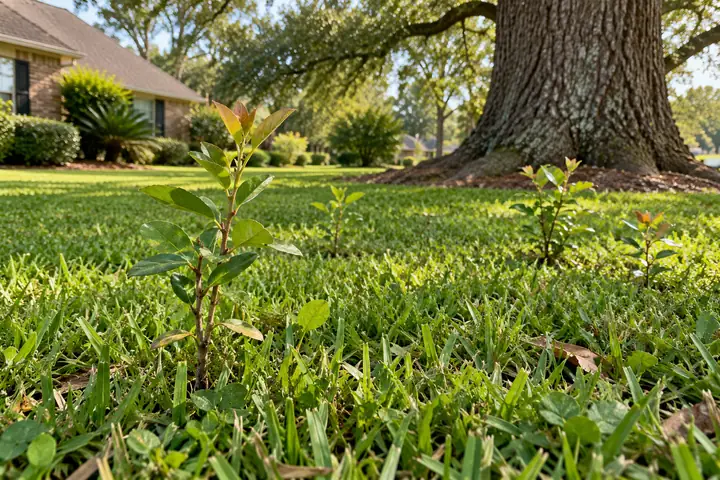
Start by asking which plants are intentional
Homeowners sometimes leave a young tree to grow, protect a seedling for a family member or move a small plant later. A lawn crew cannot infer that intention from size. Walk the yard together or use a wide photo with the chosen plants clearly marked. Keep the note current as decisions change. The safest default for an unfamiliar woody stem is to pause that point and ask, rather than treating every tall leaf as an ordinary weed that belongs under the deck.
Distinguish seedlings from root shoots
A seedling begins from seed, while a sucker or root shoot can remain connected to another plant. Extension guidance distinguishes these growth forms because their management can differ. Happy does not excavate roots or diagnose a tree from one leaf. Photograph the stem, nearby mature plants and the broader pattern. Several shoots in a line near a tree may deserve an arborist or horticultural review. Do not pull, cut roots or apply a chemical simply because the growth appears in the lawn.
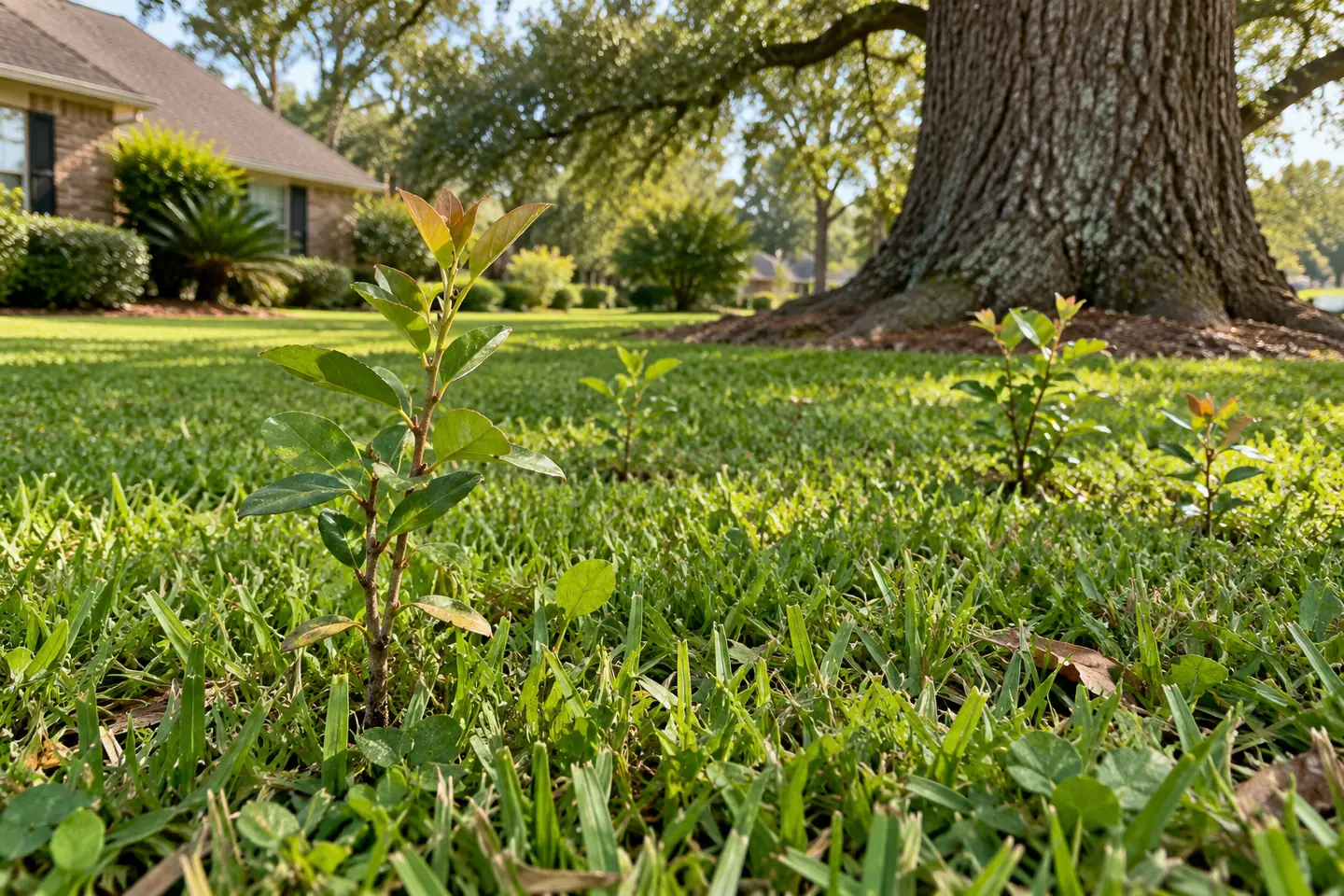
Look closely at the stem, not only the leaves
Small woody growth can hide a stiff central stalk even when its leaves look soft. As stems mature, they may no longer fit a normal mowing task. Check from a safe standing position and describe approximate height, density and whether the base is visible. Do not test the stem with the mower. CPSC advises clearing objects from a mowing area, and a rigid woody obstruction deserves the same advance attention as other hard features. The operator should choose the method from a clear view, not blade contact.
Map the seed-fall area under mature trees
Acorns, berries, pods and windblown seed can produce clusters beyond the trunk. Inspect the canopy edge, fence corners and places where leaves collect. A single wide photograph may miss small stems in shade, so add close views of representative patches. The goal is not to identify every species publicly; it is to show where the lawn surface contains more than grass. Happy can then review whether ordinary mowing is suitable or whether a cleanup provider needs to address the woody growth first.
Protect chosen seedlings with a visible boundary
If the owner wants to keep a plant, establish a sensible no-mow area and use a clear flexible marker. Avoid loose string, wire cages with sharp feet or rigid stakes hidden by grass. The plant needs room beyond the stem so wheels and trimmer line do not brush it. A landscape or tree provider can advise on a permanent bed and care plan. Happy should follow the marked boundary without claiming the marker itself makes the planting safe or properly located.
Do not use repeated scalping as tree control
Cutting the surrounding lawn excessively low can damage turf while leaving the root system or woody base unresolved. Some plants resprout after cutting, and repeated growth does not mean the next pass should be more aggressive. Keep grass height appropriate for the lawn and discuss the unwanted plant separately. Happy does not promise eradication or offer tree-root treatment. A qualified provider can recommend management once the plant and its connection are understood.
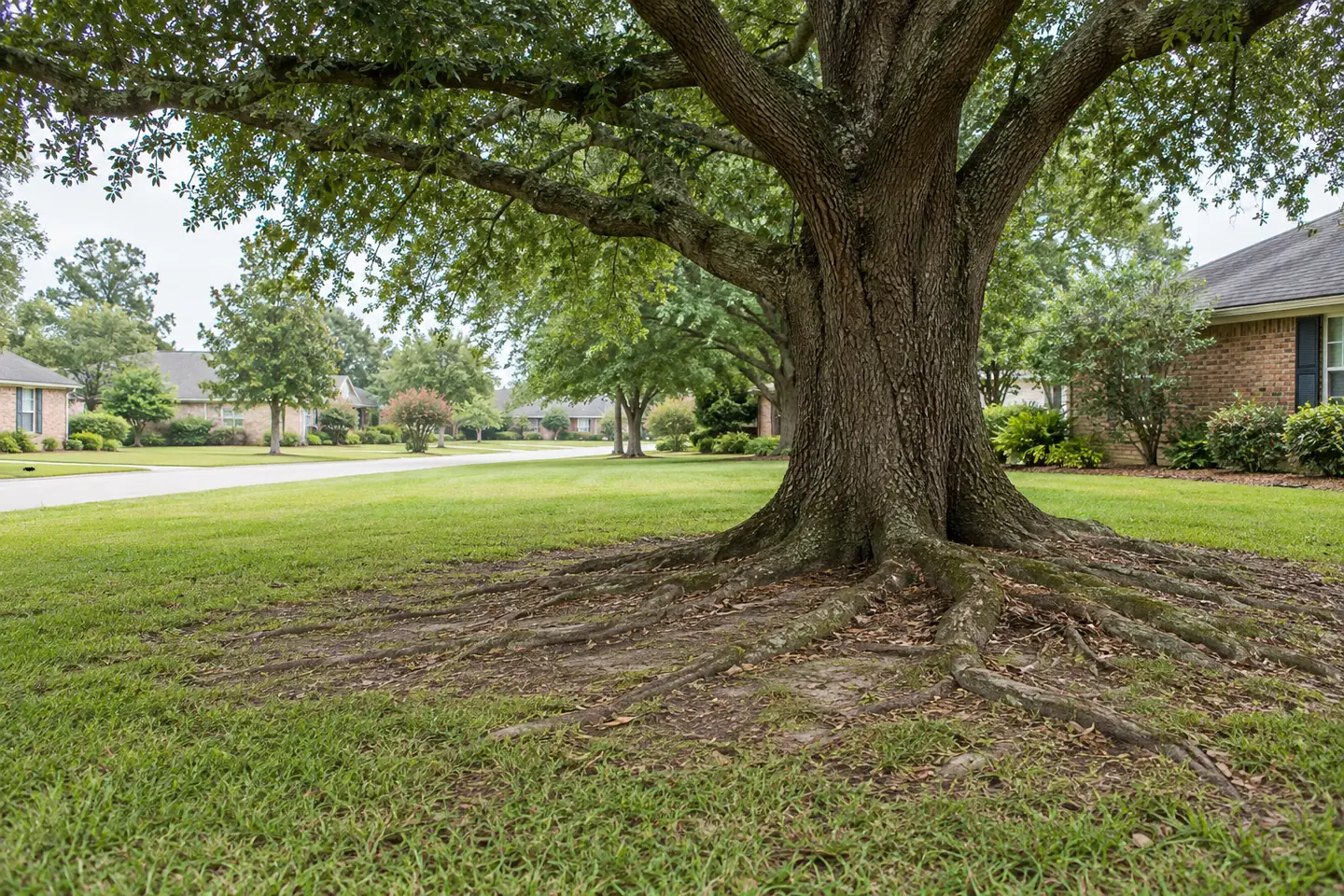
Review access before pulling anything
A small-looking seedling may sit beside irrigation, a buried wire, an exposed tree root or an unknown cover. Pulling can disturb more than the visible stem. Happy should not dig as part of mowing preparation. If the owner plans removal, use the appropriate utility and landscape process and restore any resulting hole before equipment returns. A cleared plant with a hidden depression can create a new risk unless the surface handoff is completed as carefully as the removal itself.
Use a pre-cut decision checklist
- Identify plants the owner wants to retain.
- Photograph representative stems and their wider location.
- Separate soft lawn growth from stiff or woody obstructions.
- Mark selected plants with a visible safe buffer.
- Refer root or species questions to the appropriate provider.
- Confirm removed plants leave a stable, debris-free surface.
Watch fences and neglected corners
Woody seedlings often survive where the mower cannot easily reach: inside a fence mesh, behind a shed or under a low branch. A trimmer may cut leaves while leaving a hard stem beside the next pass. Inspect those corners before the visit and decide whether they are part of routine trimming. Established saplings inside a fence are a different task from ordinary grass. Do not pull them through wire or cut blindly against metal. A separate clearing plan can protect the fence and improve future lawn access.
Check after pruning, storms and landscape changes
Changes in light or recent tree work can make previously unnoticed growth stand out. Storm debris may also hide new stems. Tell Happy what work occurred and whether the owner selected any volunteer plant to keep. Avoid assuming that a shoot near a freshly cut stump is an independent seedling. A photo sequence can show when the growth appeared without proving its cause. That distinction helps the owner ask the right specialist for advice.
Keep herbicide decisions outside a guess
Species, nearby plants, label directions and the source of the shoot affect any chemical decision. Do not request a broad spray around the stem as an automatic part of mowing. Happy's weed-control scope must be discussed separately, and it does not include tree treatment, fertilization or pest control. If another provider treats the plant, share the relevant access instructions before the next lawn visit. The crew should not disturb marked treatment areas or infer readiness from wilted leaves.
Document the agreed result
A useful service note says retain the marked seedling near the rear corner, skip the woody cluster beside the fence, or mow the cleared established turf after the owner completes removal. Avoid vague phrases such as get all the little trees. Record boundaries with stable landmarks and update them after work. This gives another operator enough context to preserve the owner's chosen plant and avoid repeating an already settled conversation.
Review the lawn as the plant grows
A retained seedling can become a low branch or larger root-zone feature over time. Revisit its clearance as part of the property plan, not only after equipment brushes it. The owner may eventually create a bed or move the plant with a qualified provider. Happy can adjust the mowing footprint around the final layout. What begins as one small exception should develop into a deliberate boundary so the lawn and young tree have room to coexist.
A clear choice beats a surprise cut
The lawn visit is easier when unwanted woody growth is addressed before mowing and selected plants are unmistakable. Send Happy current photos, state which stems matter and confirm any specialist work is complete. Ordinary grass can then be maintained consistently without turning the mower into an identification tool. The result respects the owner's planting choices and keeps the service focused on a safe, readable lawn surface.
Give intentional plants a name in the record
A marker alone can become ambiguous when several small stems grow together. Describe the retained plant by its general location and attach a close photo, even if the species is still being confirmed. The owner can say keep the single marked stem near the patio without asking Happy to identify it botanically. If the plant is transplanted later, retire the old instruction promptly. That prevents a crew from protecting an empty spot while cutting the newly chosen location elsewhere in the lawn.
Consider how removal affects the next wheel pass
After a provider pulls or digs a sapling, inspect for a root hole, loose soil and buried debris from the work. The owner should have the surface restored appropriately before mowing. A small depression hidden by grass can catch a wheel even though the woody obstruction is gone. Happy can use a wider turn until the repair is stable and visible. Record that temporary route separately from the original plant exclusion so the reason for caution remains accurate as the project progresses.
Do not confuse a protected volunteer with a planted tree service
Maintaining a no-mow margin does not include watering, staking, transplanting or evaluating the young plant. The owner should assign those tasks to the appropriate person. Happy can keep ordinary grass clear of the visible boundary while the plant-care plan proceeds. This keeps a thoughtful preservation choice from becoming an undefined ongoing responsibility.