
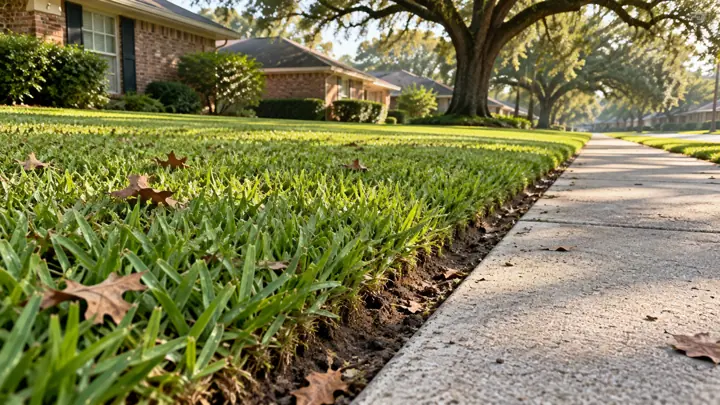
The edge is where a fresh cut looks finished.
A mowed lawn can still look unfinished when the grass has swallowed the sidewalk line. Edging puts that boundary back where you can see it. Happy Grass offers edging alongside mowing, weed-eating and blowing on the Westbank.
The useful next step is to identify which boundaries your property needs maintained.
Start with the surfaces people notice most: the walkway to the front door, the driveway and the sidewalk beside the lawn. Show Happy where grass has crept onto the concrete and which edges already have a clear line.
That makes the quote conversation more specific than simply asking for a tidy yard.
A defined border changes the whole view
Edges give the eye a clean separation between lawn and hard surface. They help a routine mowing visit look deliberate without requiring a different landscape design.
For a homeowner who likes a neat entrance, that visible line may matter as much as the cut itself.
Edging is still maintenance. Grass grows back, borders can become covered again and the finish depends on the existing surface. We do not describe a single visit as a permanent fix or promise that lawn work can correct broken concrete.
The goal is a boundary you and Happy have agreed to keep in shape.
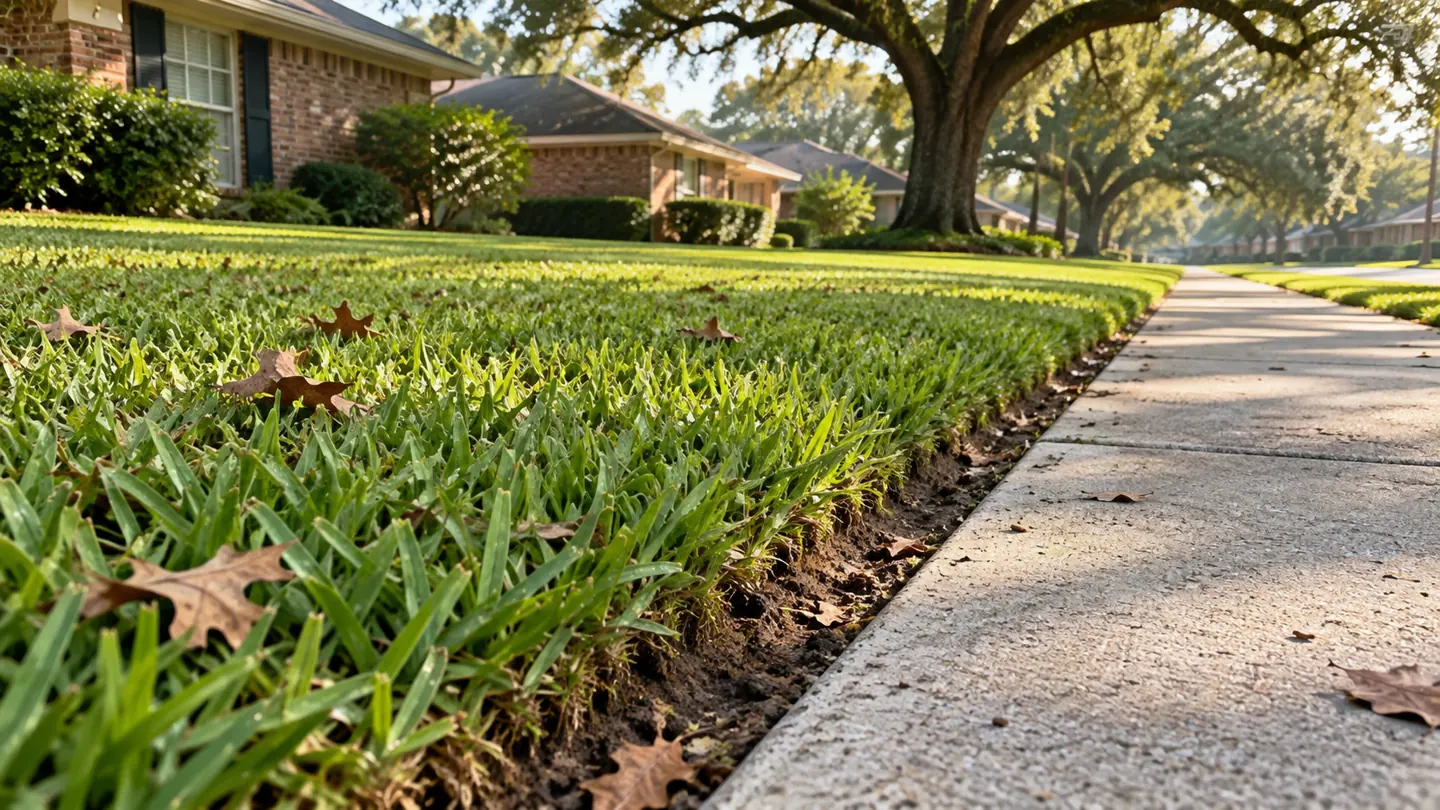
First-time edging and repeat maintenance are different jobs
An edge that has been maintained regularly is usually easy to identify. A walkway partly covered by turf may require more careful review before a clean boundary can be established.
The extra growth can conceal cracks, corners, soil buildup and shallow features beside the pavement.
Take a wide photo along the full border and a close photo of the heaviest growth. If you know where the concrete continues underneath, explain that without asking anyone to guess.
Happy can review the requested area and decide whether it belongs in a routine visit or needs a different initial scope.
Be specific about what is included
A property can have several kinds of borders: driveway edges, sidewalks, garden beds, fence lines, pool surrounds and irregular paved areas. Not all of them call for the same operation.
A hard-surface edge is not the same as digging a garden trench, reshaping a bed or cutting roots.
- List the hard surfaces you want edged.
- Explain whether the front and back are both part of the request.
- Identify areas that are already damaged or overgrown.
- Say whether mowing, trimming and blowing are requested too.
- Discuss any collection or extra cleanup needed after the first pass.
A clear scope also makes price comparisons more useful. A quote covering one short driveway edge cannot fairly be compared with a whole-property visit that includes several walkways and a heavily overgrown border.
Protect the things near the line
Lawn boundaries often run close to features that deserve a little care. Sprinkler heads, garden lighting, shallow wires and edging materials may be partly hidden by growth. Point these out before the work begins.
If a feature has recently been installed, tell Happy even if the area looks unchanged from the driveway.
Parked vehicles and movable items can also limit access. Arrange practical clearance where possible and discuss tight areas in advance. A neat edge is not worth an avoidable equipment conflict with a car, a delicate plant or an unidentified line.
Where the boundary cannot be safely understood, the appropriate response may be to leave it until the issue is clarified.
Pair edging with the rest of the finish
Mowing sets the general height of the lawn. Weed-eating reaches suitable growth outside the mower’s path. Edging defines the hard-surface line. Blowing addresses the immediate clippings and loose material on agreed paved areas. Each contributes a different part of the finished appearance.
Ask which of those steps belong in your quote. If the edges look good but the driveway is covered in loose material, the service may not match what you pictured.
Conversely, a request limited to edging should not silently expand into unrelated cleanup or landscaping. Agree on the result before the visit.
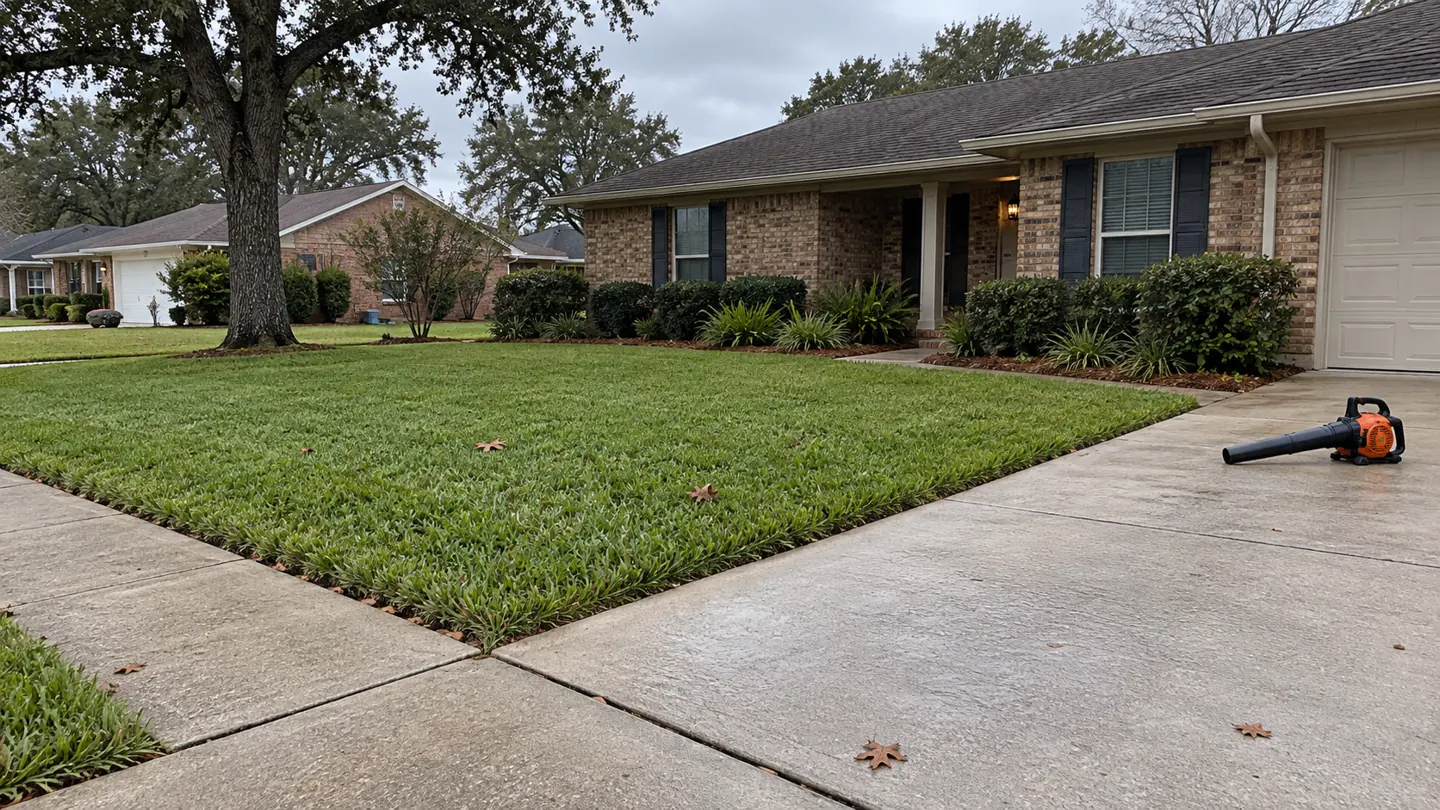
Keep debris out of the wrong places
Some material is loosened during edging, particularly where growth has crossed a sidewalk for a while. Discuss how that material will be handled and which surfaces should be cleared. Storm drains, open garages, vehicles and neighboring yards deserve attention in that conversation.
Routine blowing is not a substitute for disposal arrangements when there is a large amount of sod, soil or old debris.
If you are asking for a more substantial first-time recovery of an edge, say so and let Happy assess the additional handling. The scope should reflect the condition rather than assuming every edge produces the same amount of work.
Request a quote that shows the actual boundary
Happy Grass’s listed areas include Harvey, Marrero, Gretna, Algiers, Belle Chasse and Westwego. Send the property address, a photo of the main boundaries and your preferred maintenance frequency.
If you want the complete mow-and-finish combination, choose it on the form and describe anything outside a normal visit.
Request lawn edging or call (504) 339-3571 and ask for Happy. We can start with what you want the yard to look like, then confirm which work, price and route arrangement fit the request.
A little edge talk before the first visit
Try looking at the lawn from your usual arrival point. If you pull into the driveway every day, that may be the border you notice first.
If guests come up a front walkway, its edges may matter more to your idea of a tidy finish. Tell Happy which lines you want maintained and whether you want all suitable paved boundaries included.
What if the pavement line is hard to see?
Show the covered area as it is. A wide picture can explain where the walkway goes, while a closer view can show how much growth is over the edge.
You don’t need to uncover it yourself just to request a quote. Happy needs to understand the current condition, including whether this is a first-time definition or a line already kept up regularly.
If you know of a damaged edge, a raised slab or a shallow irrigation part nearby, point it out. Edging concerns the lawn boundary; it doesn’t turn a broken surface into a repaired walkway.
Keeping those two jobs separate makes it easier to discuss the appearance you want without expecting a lawn visit to solve a pavement problem.
Build the finishing combination you actually want
Imagine the boundary after edging.
- Will the nearby grass also be mowed?
- Does the fence line need trimming?
- Which paved surfaces need attention to the immediate debris?
These are connected details, but they are still worth naming. You can ask for a complete lawn-maintenance visit while being clear about the edges that matter most.
Once the quote is prepared, read it with your own property in mind. Match the named surfaces to your photos and ask about any area you can’t account for.
If a path or driveway section is intentionally excluded, it’s useful to understand that before work begins. A specific plan makes a tidy result easier to recognize.
Ready for a lawn with a little more definition? Send Happy your edging request, or call and explain the lines you’d love to see again. We’ll talk through the work and timing, then you can get back to enjoying the view from your front door.
Give each edge a clear start and finish
For a property with several concrete lines, label the photo views in your message. One can show the driveway from the street toward the garage; another can show the front path from the porch toward the sidewalk. Explain where each requested line starts and stops, including any section excluded from the visit. A recognizable reference point makes a later question easier to locate without relying on left or right from an unknown camera angle. Keep the same labels when sending an update so Happy can connect the new condition to the boundary already discussed.
When one border changes halfway along
An edging request can contain two different conditions on the same sidewalk. Imagine a straight, visible concrete edge near the front door that becomes broken and partly covered beside the driveway. Calling the whole length a regular edge hides the change. Describe the first stretch by its visible endpoints, then identify where the surface becomes uncertain. A wide photograph can connect those two descriptions without suggesting a new line through the lawn.
The useful question is whether both stretches can receive the same agreed finishing work. An existing clean line can serve as a visual reference, but it does not prove that the damaged section can match it. Keep replacement concrete, buried borders and changes to the lawn shape outside that comparison. This makes the request easier to review and gives you a fairer way to judge the result: compare each stretch with its own starting condition and the work actually confirmed for it.