
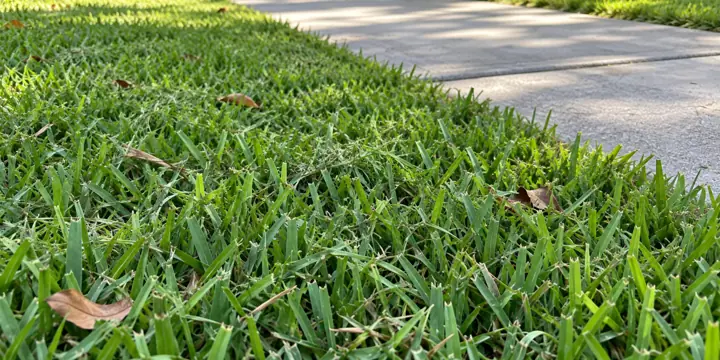
Know the weed.
Understand the plan.
Weeds making themselves at home? Tell Happy what’s growing and let’s talk about your options. Weed control is a separate conversation from weed-eating. That distinction is useful when you ask for help.
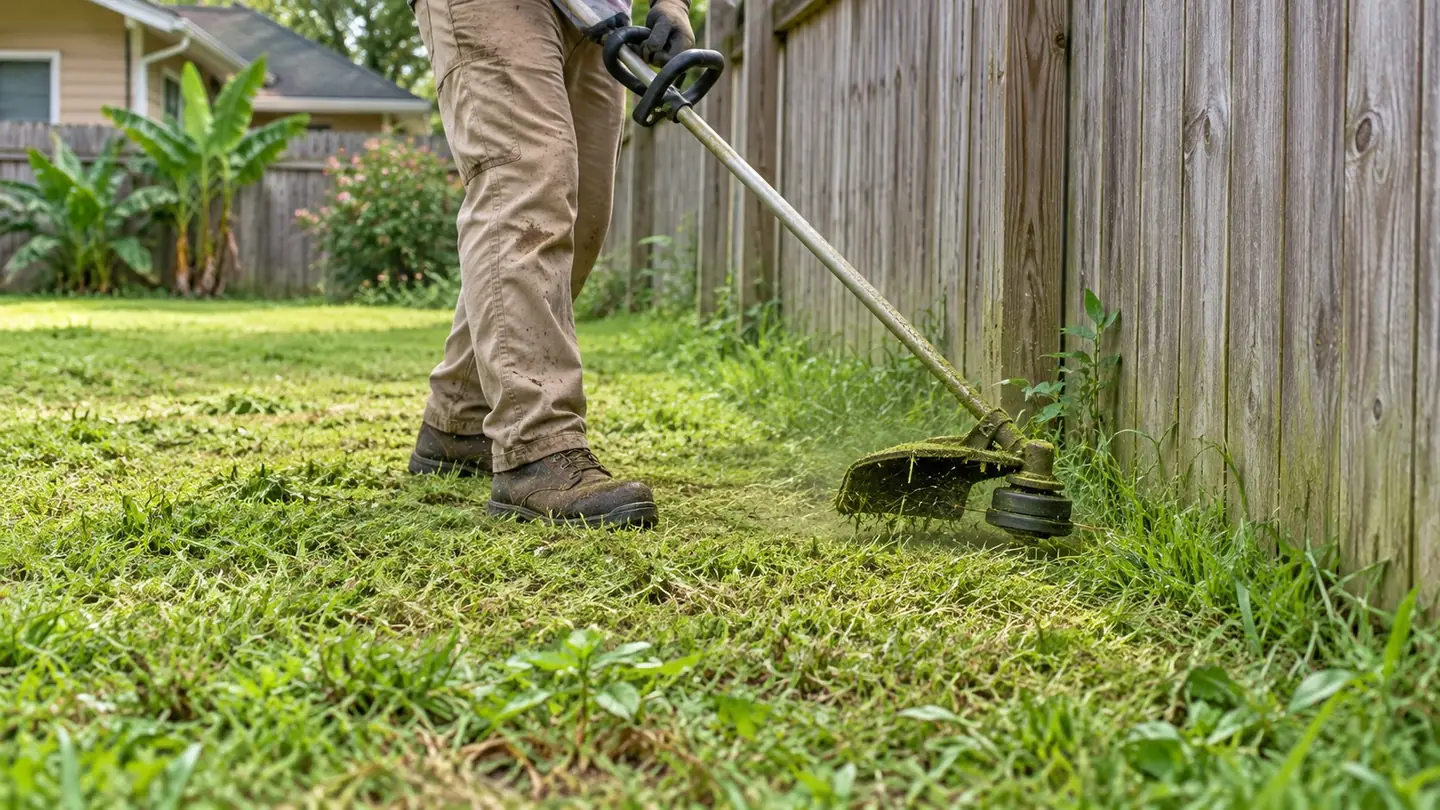
A string trimmer reduces top growth in awkward spots; a weed-control request needs a clearer conversation about the unwanted plants, the location and the method being considered.
Start by describing what is happening rather than asking for an unnamed treatment.
- Are broadleaf plants scattered through the turf?
- Is growth coming through a paved joint?
- Is the problem a fence line that looks tall, or a plant that keeps returning after it is cut?
Those are different requests, and the answer should reflect the actual issue.
A useful photo shows more than a green patch
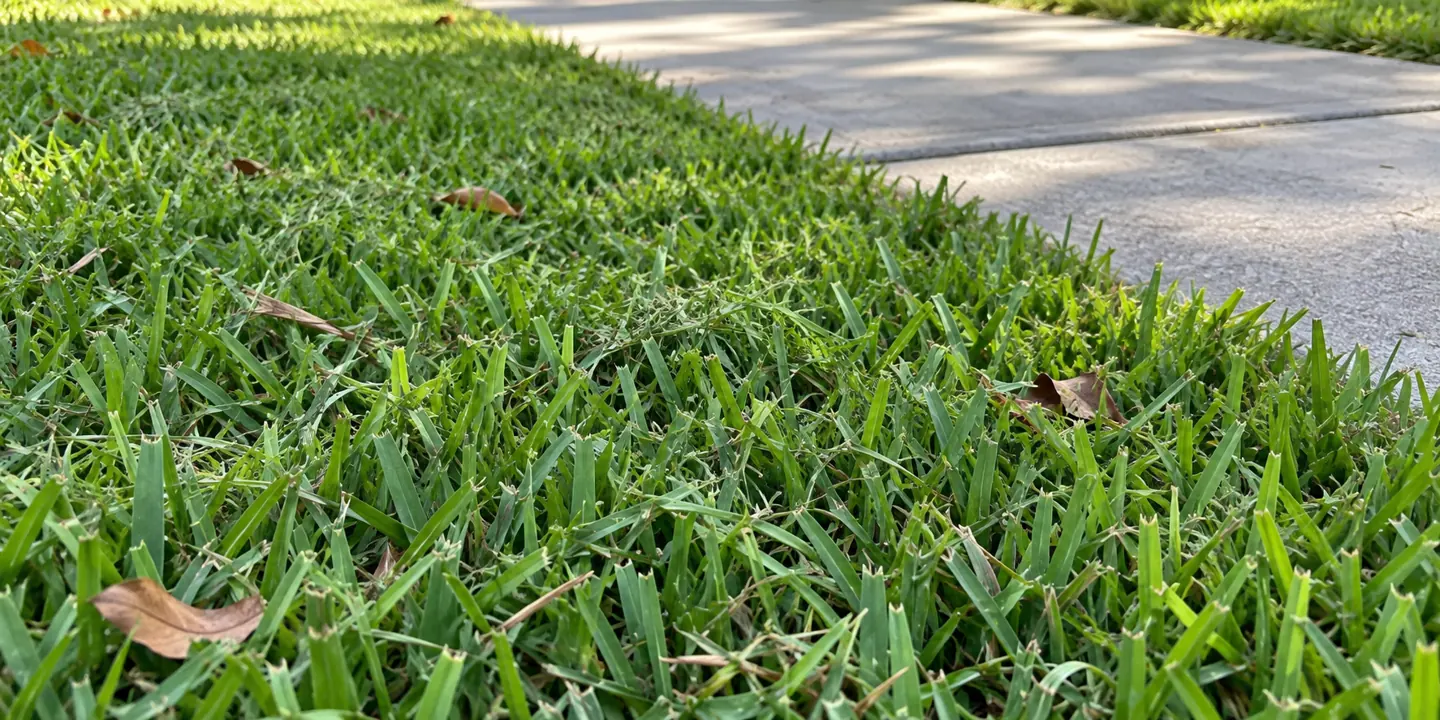
Take a closer photo of the plant and a broader one showing the surrounding area. The wider view helps explain whether it is growing in the lawn, beside desirable plants, near a drain or in a tight paved space.
Include the extent of the problem and the areas you want left alone.
Do not assume every unwanted plant can be identified reliably from one image. Happy may need more detail or may explain that the request needs a different kind of assessment.
Giving the problem a specific name without enough information is not a shortcut to a useful plan.
Ask what the method actually involves
Before any work is agreed, ask which area is included, what the intended outcome is and how the method will be carried out. If a product is involved, ask for its information and the instructions that apply.
A label such as weed control should not be used in place of an explanation.
We do not promise that an unidentified plant will disappear permanently after one visit. Regrowth, weather and the conditions that support unwanted plants can affect the outcome.
If follow-up maintenance is part of the plan, that should be discussed rather than discovered later.
Your preferences belong in the first conversation
If you prefer trimming only or want to discuss a nonchemical approach, say so before the quote is finalized. Describe how you use the yard and which features need protecting.
A request for a tidy fence line should not silently become permission to apply a product.
The same clarity applies in reverse. Asking about a treatment does not automatically include all trimming, mowing or debris handling. The work, areas and price should be defined together. Happy can then explain which parts of the request fit the available service.
Point out the sensitive areas
- Vegetable beds, herbs, fruiting plants and other food-growing areas.
- Pet use areas and places where children spend time.
- Ponds, pools, drains and locations where runoff collects.
- Desirable plants close to the unwanted growth.
- New plantings or features that should be left untouched.
- Any recent product use or treatment you know about.
If a product is proposed, its instructions and the applicable requirements govern its use.
Do not rely on a universal claim that every treatment is harmless, pet-safe or ready for use after a fixed number of minutes. The actual product and site need to be understood.
Separate appearance from the underlying issue
A lawn can look neater after mowing and trimming without the unwanted plant being removed at the root. That does not make routine maintenance useless; it means the appearance goal and the plant-control goal should be described separately.
If repeated regrowth is the main concern, explain where it occurs and what has already been tried. Do not guess a product mixture or apply extra material in preparation for a quote.
Accurate context is more useful than a rushed attempt to hide the problem before someone reviews it.
Keep the service limits clear
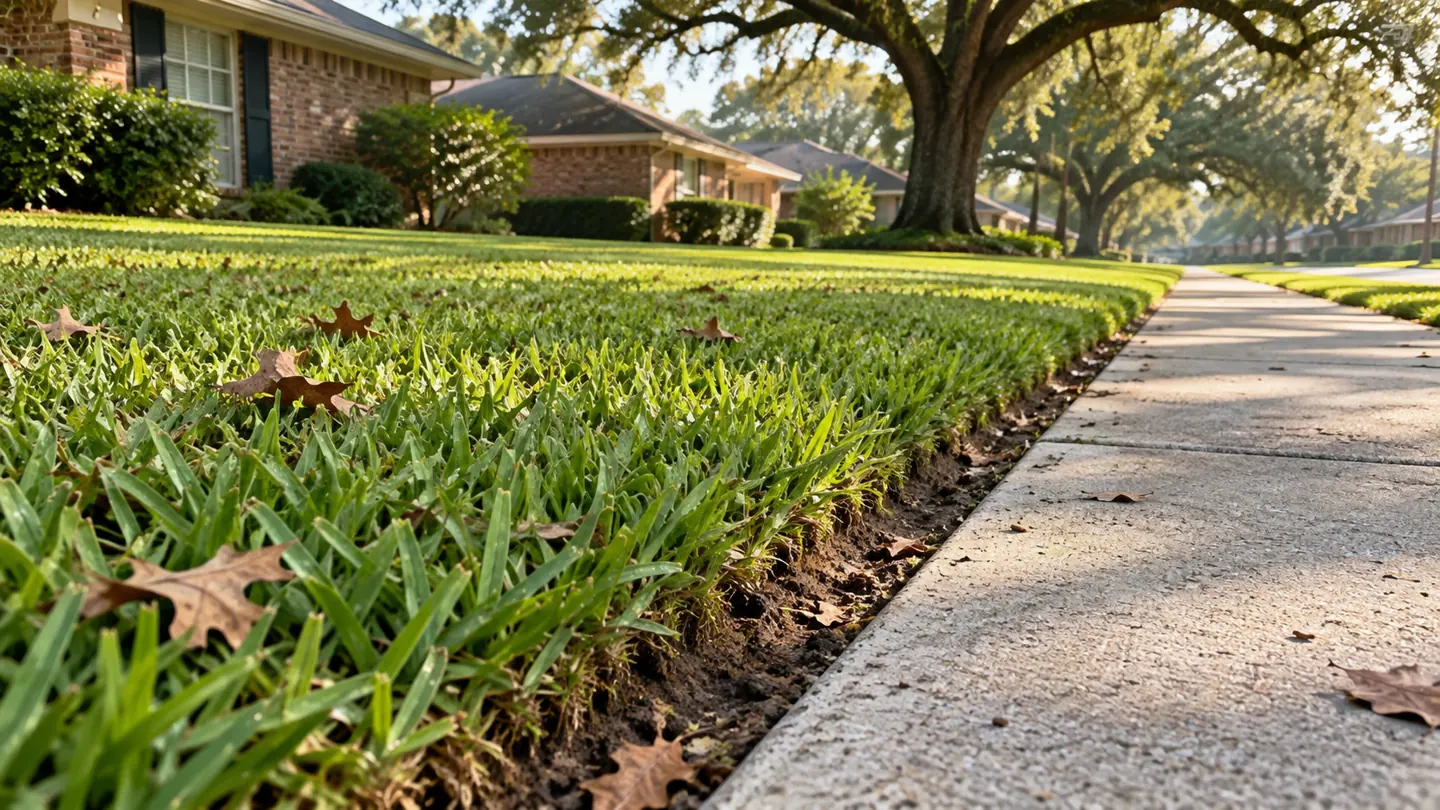
We don’t offer fertilization, aeration, overseeding or pest control. A weed-control conversation does not expand that list. Nor does it turn lawn maintenance into drainage repair, tree work or a diagnosis of every brown patch.
To ask about your property, send a lawn quote request and choose the weed-control inquiry option. Include the address, recent photos, target area and your preferences. Happy will need to confirm whether the work can be accepted, explain the scope and agree on the next step. You can also call (504) 339-3571.
Turn “these weeds” into a useful request
You don’t have to identify a plant before asking a question. Start with where it is growing and what is bothering you.
Is it scattered across the open turf, gathered in a paved joint or mixed into an area you want left alone? Those details describe the request without guessing at a product or promising a particular result.
Take a broad picture that shows the setting and a closer one that shows the unwanted growth. If you know when it first appeared or what has been done there recently, include that information. If you don’t know, say so.
A clear account of the property is more useful than a confident plant name copied from a picture that only looks similar.
Explain what you want to keep
A weed-control request should include the plants and areas you care about, not only the growth you dislike. Show nearby beds, individual plants you want preserved and any boundary that might be hard to recognize.
Tell Happy about vegetable growing areas, pet spaces and other features that should be part of the discussion before a method is proposed.
If you have a preference about the work, state it early. You may be asking whether the issue is suitable for trimming, whether another method is available or whether the area needs a separate assessment.
The conversation can start with those questions. There’s no need to request an unnamed treatment simply because unwanted growth is visible.
Know what you’re being asked to agree to
Before work is arranged, ask what area is included, what method is proposed and which instructions you would need to follow. If a product is involved, ask for its identity and the applicable directions before deciding.
Avoid treating a general statement such as “weed control” as a complete explanation of a specific service.
Also ask how any follow-up question should be handled. The useful point is to understand the proposed work and its expectations; it isn’t to assume that every unwanted plant disappears permanently after one visit.
If the explanation doesn’t answer your concern, ask again before the work begins. Happy should know what you are trying to achieve and what you need clarified.
Separate the work from the appearance you want
Similarly, a thin or discolored lawn is not automatically a weed-control request. If that is what you are seeing, include it in the description rather than assuming one treatment explains everything.
Happy’s lawn-maintenance services have limits, and a separate problem may call for a different kind of assessment.
Get the right lawn conversation growing
Happy Grass serves Harvey, Marrero, Gretna, Algiers, Belle Chasse and Westwego. Send the actual address, pictures of the affected area and a short note about your preferences.
We’ll need to discuss coverage, the proposed work, quote and available timing before a visit can be confirmed.
If all you know is that the yard looks shaggy, that’s still enough to start. Show Happy what you mean, or call (504) 339-3571. We can talk through whether you’re asking about mowing, trimming, edging, blowing or a separate weed-control question. A little clarity now makes for a happier lawn plan later.
Keep the plant name and the request separate
If someone helps identify the unwanted growth, record who supplied the identification and which photo or location it refers to. Keep an uncertain suggestion marked as uncertain. A confirmed name still does not establish which work has been accepted for the property. Retain the proposed area, method and relevant instructions with the quote, then use that same location reference for later questions. If a new patch appears elsewhere, show it separately rather than assuming the earlier discussion covered every part of the yard. This makes the follow-up useful without inventing a treatment result or guarantee.
Write down what would count as an answered question
Before discussing a weed concern, decide what you are trying to learn. You may want to understand whether a plant has been identified, whether ordinary trimming changes its visible height, or whether a particular weed-control method is being proposed. Those are separate answers. Keeping them distinct helps prevent a general conversation about weeds from sounding like an agreement to a specific action.
After the reply, record any unresolved identification or method question alongside the agreed maintenance work. Do not replace uncertainty with a guessed plant name just to make the note look complete. If the concern involves an edible planting, a neighboring bed or a place outside the lawn, keep that boundary visible in the record. The useful result is an informed next step with a clear scope, rather than a promise that every unwanted plant will disappear.