
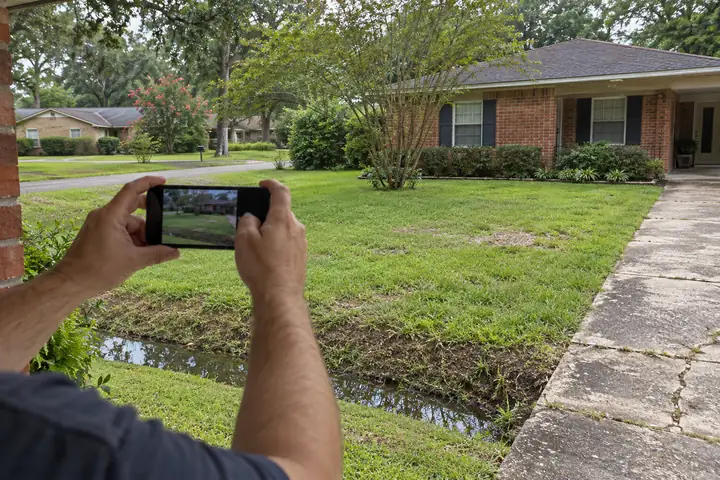
Start with the yard you want included
Your lawn does not have to be photo-ready to ask for lawn care. Long grass, a tired fence corner or that strip you keep forgetting are all useful things to show. The goal is a clear picture of the work you want, including the parts that are easy to miss from the street. Take photos in ordinary daylight, from a place where you can stand comfortably. There is no need to climb, walk into traffic or step into a soggy area for a better angle.
Begin with one wide view of each grass area you want included. Front lawn, backyard and side strips should be recognizable as separate spaces. If a fence or house blocks the view, add another picture from the other end. You are helping Happy understand the layout, not trying to produce a real estate listing. A plain, recent picture is just right.
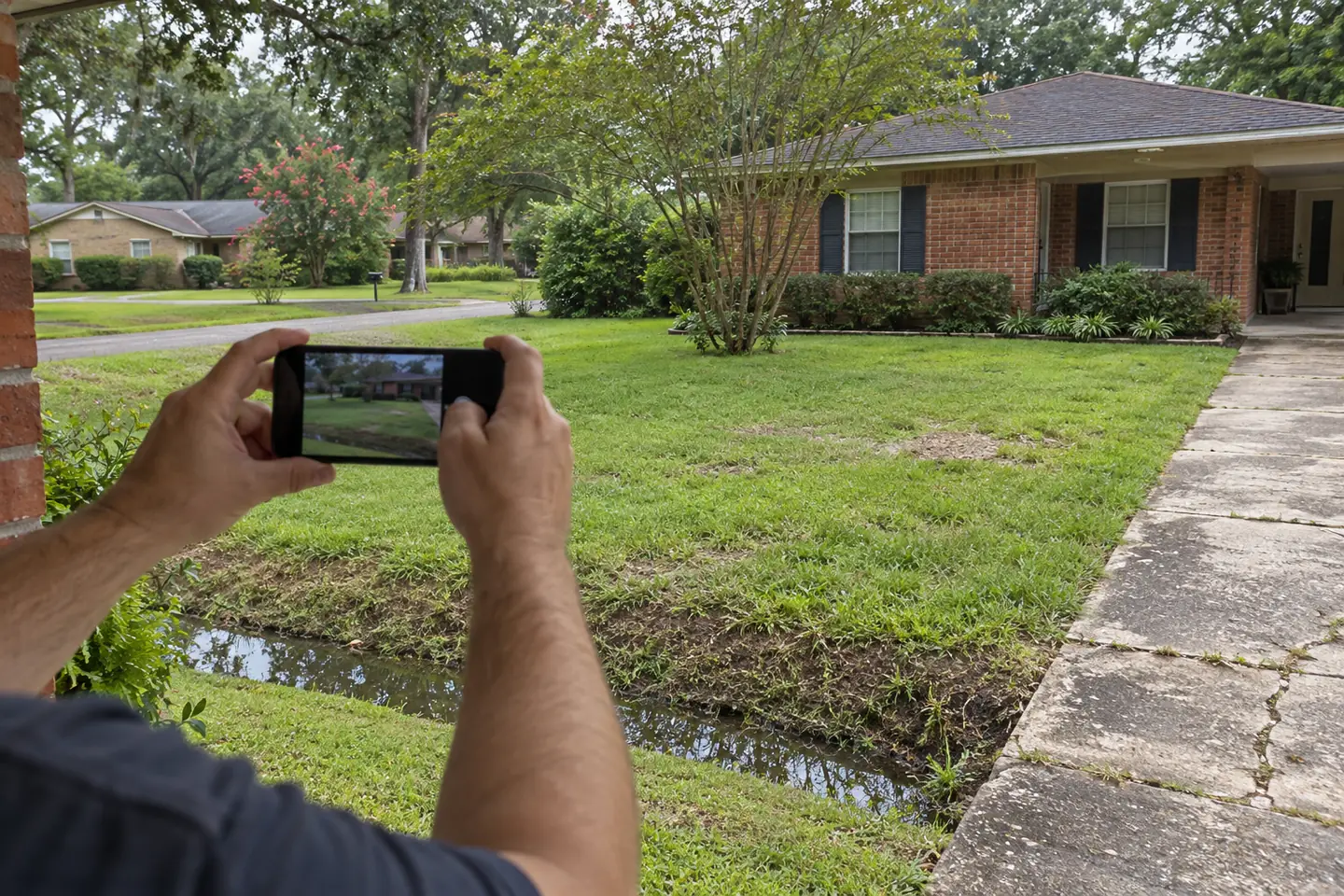
Give the front lawn a little context
A close picture of grass blades tells very little about the amount of grass to cut. Step back far enough to include the driveway, sidewalk or porch path alongside the front lawn. These fixed features help explain where mowing stops and where edging might begin. If your property has grass on both sides of a driveway, show both sides. A small strip near the curb can disappear from a photograph taken close to the house.
For a corner property, take a view of each frontage from your own property or another safe, permitted place. Mention which sidewalk strips belong in your request. Avoid assuming every visible patch is yours to authorize. When the boundary is uncertain, say so in your message. A question about the limit of the job is easier to resolve before anyone plans the visit.
Show the backyard beyond the gate
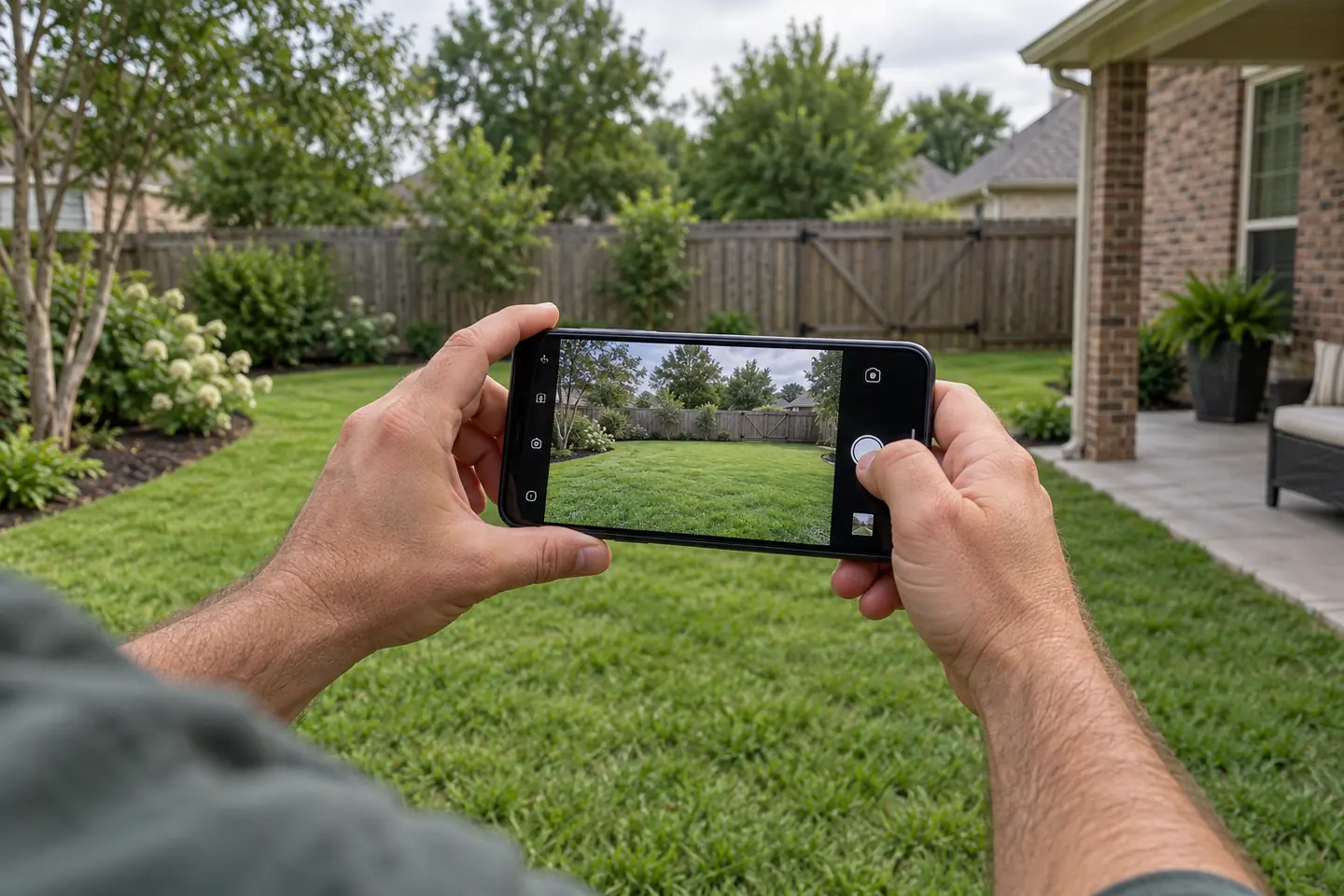
A front-yard photo cannot explain a fenced backyard. Take a wide view from the patio or back door, then a second view toward the house if that reveals a separate grass section. Include fixed obstacles such as a shed, raised planting bed or play structure. These are part of the lawn layout even if you are asking only for routine mowing. If an area is excluded, identify it rather than leaving Happy to guess.
Do not move a heavy object just to improve the photo. Instead, show what is there and describe whether it will remain during service. A trampoline that stays in place presents a different request from one the homeowner moves before each visit. The same goes for portable pools and stored materials. Photos help start that conversation; they do not create an agreement to lift, dismantle or relocate anything.
Photograph the whole access route
Open the gate only if you can do so safely and keep pets secure. Photograph the opening with the gate in its normal usable position, including the latch side and anything immediately beyond it. Then show the route from the gate into the yard. An opening may look generous while a tight turn, air conditioner or raised threshold makes the actual passage more complicated.
If you can measure the clear opening safely, send that measurement with the photos. Measure the usable gap at the narrowest point, rather than the outside width of the fence posts. Do not guess whether a particular mower will fit. Equipment and turning room still need review. Mention a shared passage, locked gate or access that requires someone to be home. Never put a gate code or spare-key location in a publicly posted picture.
Let the edges have their own close-ups
After the wide views, add a few detail photos where the finish matters most. A sidewalk with grass growing over the concrete, a fence line that needs weed-eating or a patio edge hidden by grass can help explain your priorities. Keep enough surrounding detail in the frame to show where the problem is. Ten close-ups of the same corner are less useful than one clear detail linked to a wide view.
- Show the driveway edge if edging is part of the request.
- Include fence corners that need trimming.
- Photograph planted borders you want protected.
- Point out a walkway you want cleared of loose grass clippings.
Mowing, edging, weed-eating and blowing are related jobs with different purposes. Listing the ones you want helps Happy review the complete request. Do not assume a photo of an overgrown planting bed means plant removal or bed renovation is included.
Make current conditions easy to understand
Use recent photos and say when they were taken. A picture from last month can show the layout, but it may not show the current grass height. If growth has changed since the picture, explain that in a short sentence. For taller grass, include an ordinary fixed feature for context. You do not need to put your hand near hidden objects or step into dense growth to demonstrate height.
Mention standing water, soft ground, loose wire, irrigation parts or debris you know about. A photograph may miss an obstacle beneath the grass. Do not enter an unsafe spot to investigate it for the quote. Happy can review the information and discuss what still needs an on-site look. A clear description of uncertainty is more useful than a confident guess about a place you cannot safely see.
Pair the pictures with a short message
Photos work best when they arrive with the basics. Send the property address privately, the city, your preferred contact method and the areas you want maintained. Say whether you are asking about a first visit, weekly mowing or an every-other-week schedule. If the last cut was several weeks ago, include that too. There is no need to write an essay; the pictures and a handful of accurate details should work together.
For example: “Harvey, front and fenced backyard. Please review mowing, edging, weed-eating and blowing. The gate opens inward, and I can be home for access. These photos are from today. We would like to discuss recurring visits after the first cut.” That explains a request without promising a price, a route slot or a mowing method. Happy can then ask about anything that is still unclear.
Keep the useful details and protect the private ones
Before sending a picture, look at what else is visible. You can usually frame out vehicle plates, mail, family paperwork, security screens and unrelated people. Avoid including children in yard photos. If a phone automatically adds precise location information, review your sharing settings and use the private quote channel you are comfortable with. Your service address belongs in the request, not in a public photo caption.
Keep a clean set of current yard photos for your own reference. It can help when you discuss a change in scope later, such as adding a side strip or excluding a new planted bed. Do not rely on photo labels alone to convey a safety issue. Put access restrictions, pets and known obstacles into the written message as well, so the important details are not hidden in an image filename.
Know what happens after you send them
Pictures begin a property-specific conversation. They do not guarantee an exact quote from photos alone, immediate availability or acceptance of every requested task. Happy may need another view, an access measurement or an on-site review. If that happens, answer the specific question rather than retaking the whole yard. One photo of the narrow gate corner may resolve more than another dozen front-yard shots.
Keep the current condition honest, and tell Happy if anything changes before the visit. A locked gate, new construction materials or a backyard that has become much taller can affect the original plan. Ready to give that lawn a happier outlook? Gather the wide views, the access picture and your short task list. Ask Happy about your property in Harvey, Marrero, Gretna, Algiers, Belle Chasse or Westwego, and let’s kick some grass.