
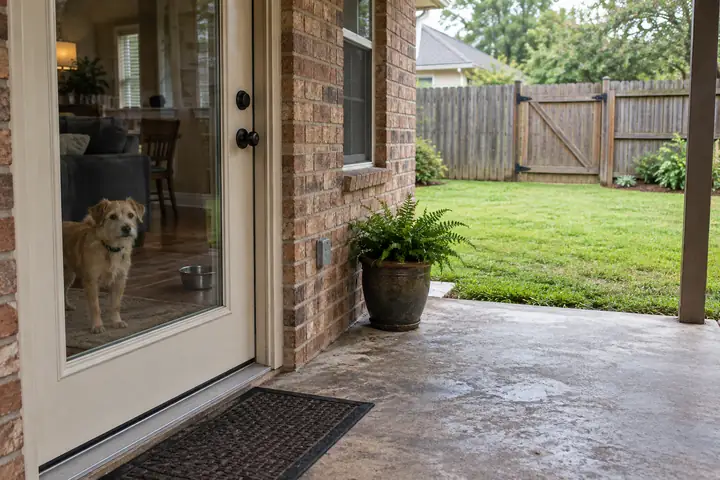
Start the conversation before the visit
If pets use the grass areas included in your lawn request, tell Happy when you ask for the quote. You do not need to describe every part of your pet’s routine. Focus on the facts that affect access and separation: which yard the pet uses, whether the gate is part of the route and who will secure the pet before work. These details belong in the visit plan, rather than in a last-minute conversation over a running mower.
A friendly dog still needs a secure arrangement away from equipment and an open access gate. Do not rely on the idea that your pet usually stays close or knows the boundary. Describe what the household can actually arrange, and ask Happy to confirm whether that works for the proposed visit. The goal is simple: the yard is available for the agreed work while pets have their own separate place.
Choose a secure place away from the route
Plan where pets will stay before entry is needed. For many households, that may be a suitable indoor area with a closed door, managed by the owner. Your arrangement should fit your pet and home; lawn service is not a reason to improvise housing or leave an animal somewhere unsuitable. If you are unsure how to manage a pet’s needs, get advice from an appropriate animal-care professional rather than relying on a lawn checklist.
What matters for the lawn visit is reliable separation from the work and access route. A pet behind the same gate that must be opened is not separated. A lead stretched across a mowing area is also an obstacle. Tell Happy if the available arrangement changes, or if nobody will be able to handle it on the planned day. A realistic access plan comes before a visit is confirmed.
Tell the whole household what is happening
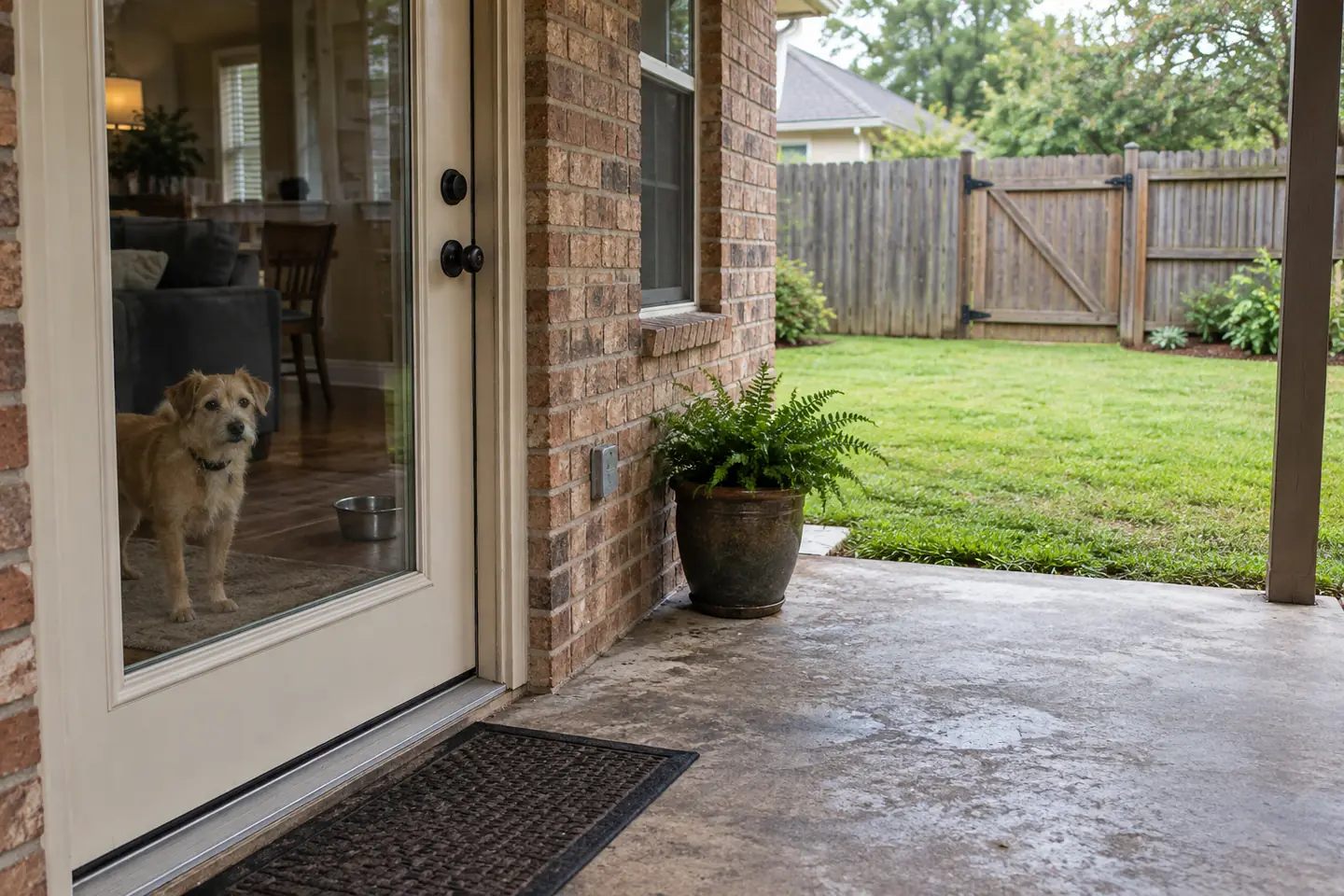
A secure pet plan can fall apart when someone opens the back door without knowing lawn service is underway. Make sure the people who use the yard understand the arrangement. This includes a relative visiting for the day or another person who normally lets the dog out. Keep the instructions plain: who is handling the pet, where it will stay and when the yard can be used again.
If you are arranging service for a family member or rental property, identify a contact who can actually carry out the plan. Do not assume a tenant, neighbor or household member has agreed to handle the animal because their name was mentioned in a message. Confirm that responsibility with the person involved. Happy needs a workable point of contact rather than several people each expecting someone else to open the gate or secure the pet.
Prepare the grass your pet uses
Pick up pet waste from the included lawn areas before the visit. Check the places the pet uses regularly, including fence corners and the side strip near the back door. If grass has become too tall for you to inspect safely, say so rather than entering an uncertain area. Describe the condition in the quote request so Happy can review what needs to happen before mowing.
Move ordinary loose pet items you can safely manage, such as toys, water bowls, feeding dishes and portable leads. Put them outside the work and access route, in a place appropriate for the animal. Heavy kennels, installed runs and fixed structures are different. Show those in the request and discuss the mowing limits around them. Lawn maintenance does not automatically include lifting structures, cleaning animal enclosures or handling pet waste as an added service.
Show fixed pet areas in the quote photos
A fenced dog run, worn route along the boundary or separate grass pen can affect how the yard is laid out. Photograph fixed features from a safe place and explain which grass areas are included. If a section is excluded, identify its boundary. Do not expect Happy to infer the scope from the presence of a bowl or a small interior fence that is difficult to see in a wide photo.
If the pet enclosure changes the gate route, include an access picture as well. A yard may need two gates opened in sequence, or a passage may be unavailable while an animal is in one section. That is a planning issue to resolve before the visit. There is no general promise that moving a pet from one outdoor section to another will provide enough separation for the requested lawn work.
Treat gates as part of the pet plan
Tell Happy which gate is used and whether it has a latch problem. A gate that looks closed but does not engage properly needs attention from the responsible owner. Do not leave that information hidden in a long list of mowing preferences. Access and closure should be clearly understood before anyone enters. Keep lock codes and other security details in the agreed private channel.
After the visit, the household should verify that the yard and gate are ready before releasing pets. Do not rely on a distant view or the assumption that someone else checked. If the plan includes keeping a gate closed except during entry, explain that expectation when access is arranged. Any concern about the latch or fence condition should be raised directly. Lawn mowing does not repair an enclosure or guarantee that a damaged fence will contain an animal.
Separate mowing from weed-control questions
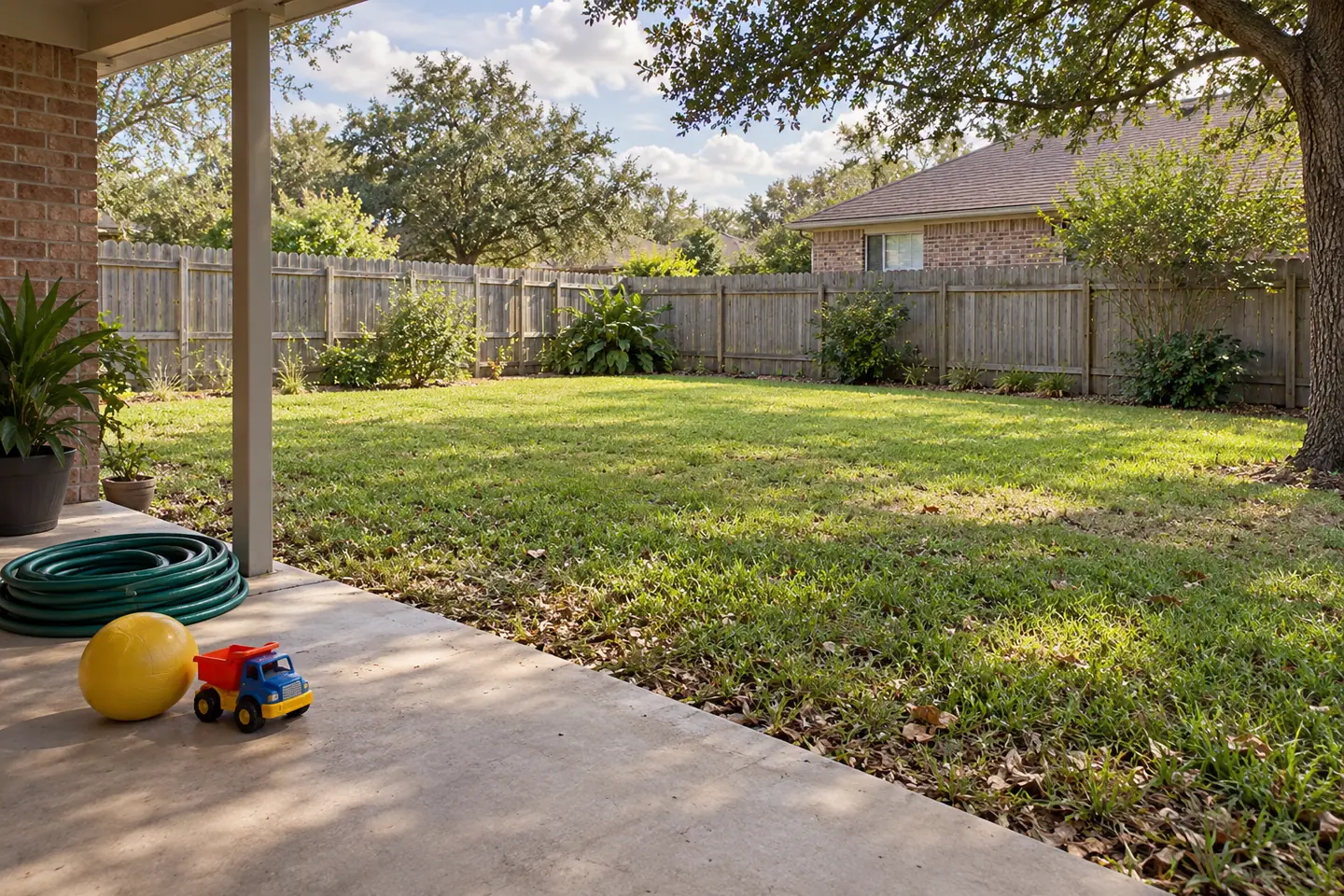
Mowing, edging, weed-eating and blowing are different from applying a lawn product. If you are asking about weed control, say that explicitly and mention pets when the treatment is discussed. Do not take a general mowing-day plan as an instruction about when animals may enter a treated area. The actual product, label directions and provider’s instructions govern that discussion.
Ask for the relevant instructions before a treatment is agreed, and make sure the person caring for the animal can follow them. This guide does not supply a universal waiting time or claim that a lawn treatment is safe for every pet. Likewise, cutting the grass is not a diagnosis or a treatment for damaged patches where animals spend time. If you want both routine maintenance and a separate lawn concern reviewed, put both questions into the request.
Have a plan when the schedule changes
Rain, ground conditions and access can change a lawn visit. If you have arranged to be home to manage a pet, tell Happy that access depends on your availability. Ask about the revised arrangement rather than assuming the same household plan will work at a different time. A relative who could help in the morning may not be available later, and a pet should not be left unsecured to preserve a schedule.
Keep the latest agreed plan in one message thread where possible. Include any limit on access and the best way to reach you about it. If you cannot secure the pet, say that promptly so the visit can be reviewed. Avoid creating an informal arrangement in which a lawn worker is expected to catch, move or supervise an animal. Pet handling remains a separate responsibility that needs an appropriate, agreed solution.
Send Happy the details that matter
A useful note might say: “Our dog normally uses the backyard. I will keep her indoors before gate access is needed. Toys and waste will be picked up, and the side gate is the agreed entrance. Please contact me if the visit changes because I need to handle access.” Adjust the note to describe your real arrangement rather than copying a promise you cannot keep.
Happy can review those details with the rest of the lawn request: the grass areas, current growth, trimming boundaries and preferred visit frequency. You get a clearer plan, and your pet gets a space away from the work. Asking about service in Harvey, Marrero, Gretna, Algiers, Belle Chasse or Westwego? Give Happy a shout, explain the property and pet setup, and let’s get that outdoor to-do list looking a little happier.