
Start with the result you actually want
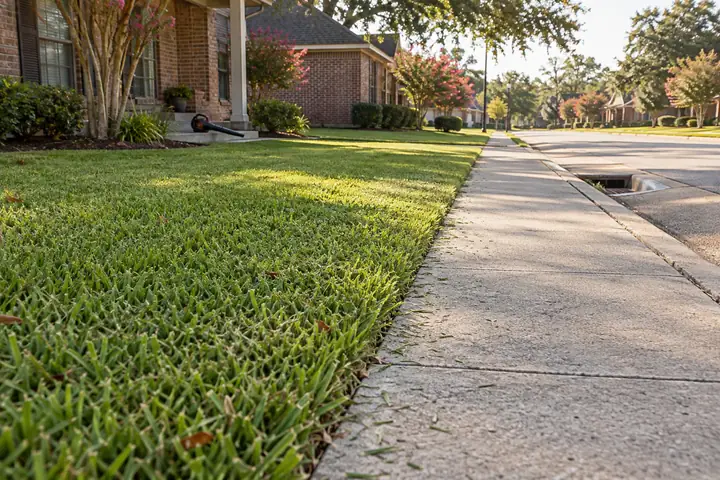
When you ask for mowing, you probably picture more than shorter grass. You may also be picturing a clear front path, a tidy driveway edge and no loose cuttings across the patio. Tell Happy which hard surfaces matter and ask what finishing work is included. The lawn, borders and surfaces form one property, but mowing, edging, weed-eating and blowing are separate tasks within the request.
A useful description is specific: “front and backyard mowing, driveway edging, fence-line trimming and blowing the front walk and patio.” That gives the finish a boundary. “Make everything spotless” can mean many different things, from loose clipping removal to stain removal or full debris cleanup. Agree on the real work before the visit so the result can be reviewed against the same understanding, rather than two different pictures of what a lawn service should include.
Know where the clippings came from
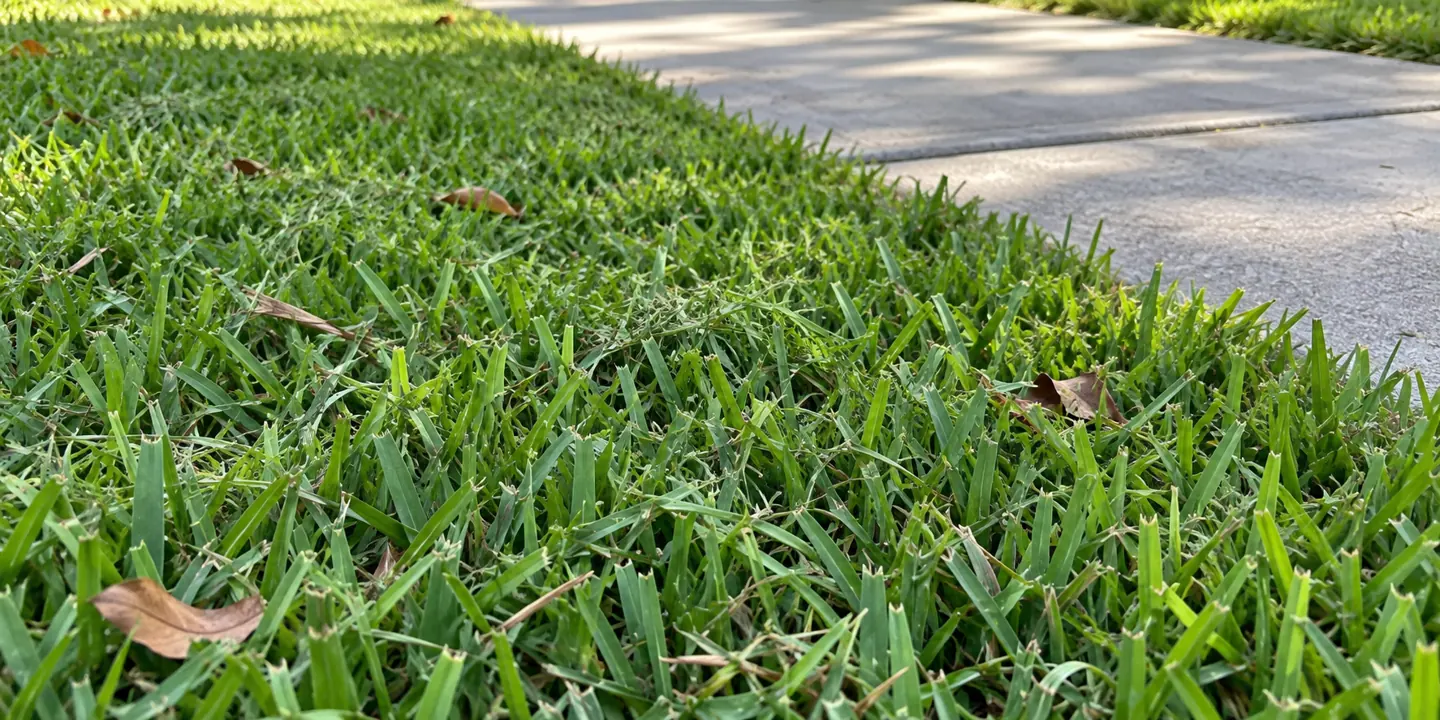
Cut grass is a normal result of mowing. Its amount and appearance depend in part on the growth being removed and the conditions at the time. Small, evenly distributed clippings within a regularly maintained lawn are a different situation from heavy rows or piles. A photo taken close to the grass can exaggerate small fragments, so include a wider view when you ask about something you have noticed after a cut.
LSU AgCenter explains that removing clippings is not generally necessary when a lawn is mowed appropriately. Its mowing guidance also links clumping with grass allowed to get too tall or mowing when wet. Those general points help explain why a good clipping conversation includes the mowing interval and current conditions. They do not establish a diagnosis from a photograph or guarantee how every property should be handled on every visit.
Separate grasscycling from a pile of cut material
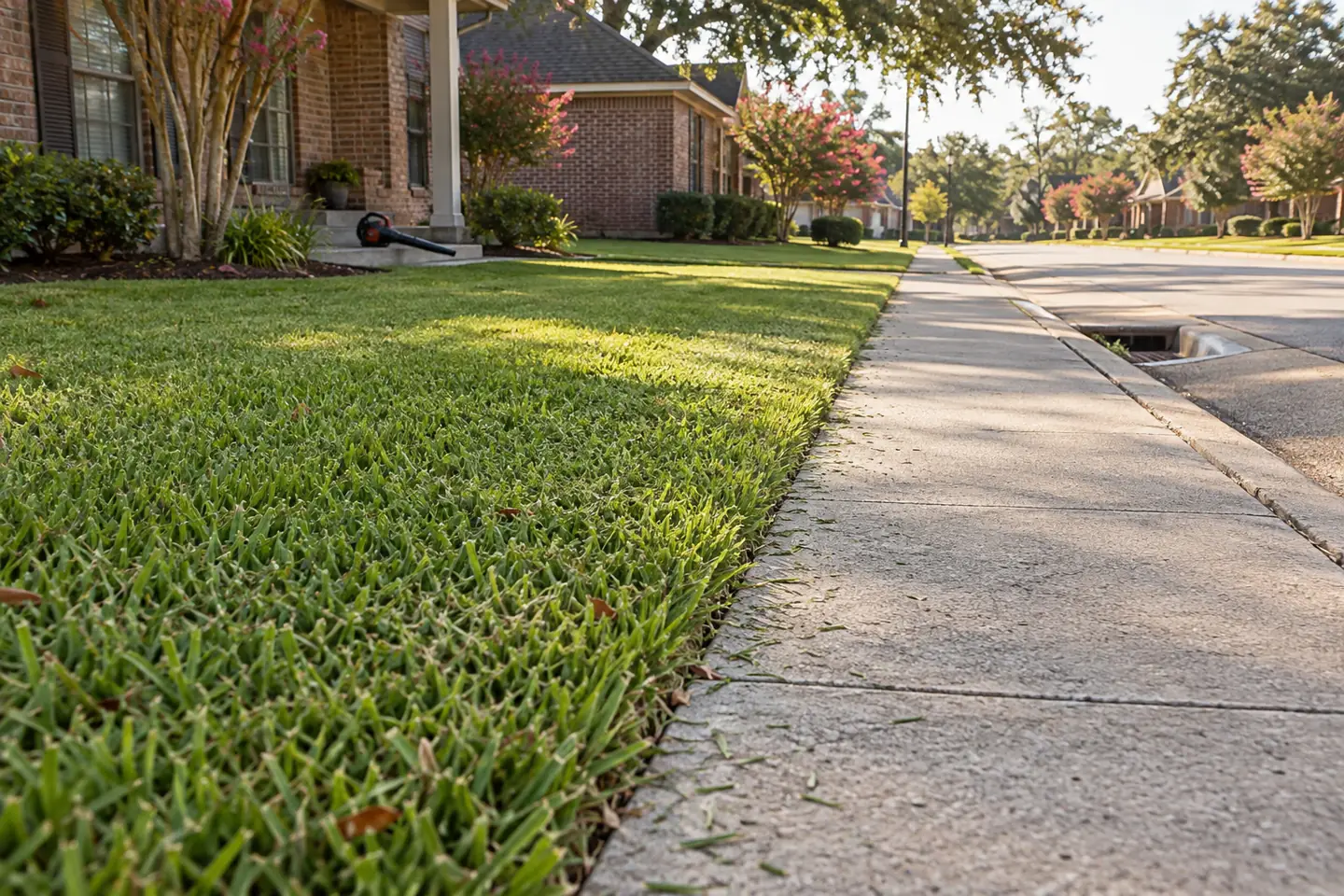
Returning suitable fine clippings to turf is often called grasscycling. UC Integrated Pest Management describes it in connection with appropriate mowing frequency, species-specific height and small amounts removed. That is a maintenance approach, not permission to leave thick piles covering the lawn. If you are unsure whether what you see is a normal light distribution or an issue to review, send a clear picture and ask.
Do not assume clippings should be swept from the lawn onto a sidewalk to create a neater photo. The lawn and hard surfaces need different finishing decisions. Ask Happy what the agreed mowing and cleanup approach is for your yard. If the grass is unusually long, the first-visit plan may need a different discussion from the recurring plan. Current conditions should guide the conversation rather than a blanket demand to remove every fragment from every blade.
Identify the hard surfaces in scope
Walkways, driveway sections and patios can be separated by gates, furniture or planted beds. Show the surfaces you want included in quote photos and explain how they are reached. A front path beside the mowing area is easy to recognize; a rear patio around a corner may not be visible. If you want both included, say so. Do not rely on the assumption that every paved part of a property will be addressed.
- Name the front walk or porch approach.
- Identify the driveway sections beside the grass.
- Include the patio if it is part of the request.
- Point out fixed items or planted borders to protect.
Loose clipping cleanup is different from pressure washing, stain removal or moving heavy furniture. If you want another kind of surface cleaning, ask separately. Keeping the request specific makes it easier to compare quotes and understand the finish.
Ask where cut material will go
A clear finish should include a sensible plan for the material being moved. Ask Happy how clippings on the agreed surfaces will be handled rather than assuming they should be blown into the street, a drain, a neighboring lot or a planted bed. The point of cleanup is to resolve the loose material within the agreed scope, not simply shift it to someone else’s space.
If your property has a curb inlet or another drainage feature near the lawn, show it in the request. Do not cover it with collected clippings while preparing for service. Likewise, do not push household debris into a grass pile and treat it as part of blowing. Grass, leaves, litter and building material are different things to identify. Happy can review what the lawn visit includes and what requires another arrangement before work starts.
Make edging and blowing work together
An edge can make a path easier to read, while blowing addresses loose material remaining on the agreed surface. One does not replace the other. If grass has crept onto concrete, ask about edging. If the boundary is already defined but covered in light cuttings, describe the loose material. Photos should show both the line and the surrounding surface so Happy can understand what you want changed.
A heavily buried edge may involve more than a routine pass along an established boundary. Explain the current condition rather than calling every overgrown strip a quick touch-up. Soil accumulation, damaged concrete and plants crossing a path may need separate consideration. There is no need to diagnose the work yourself, but there is value in showing it accurately. That keeps the lawn finish connected to the actual state of the property.
Discuss collection before assuming it is included
Bagging and hauling are not automatic just because grass is being cut. If you want material collected, ask about that during the quote discussion and wait for confirmation of scope. Do not leave empty bags in the yard as the only instruction. The condition of the grass, the amount of material and the agreed work need review before a collection arrangement can be understood.
If you already have a household plan for yard material, explain it without assuming it applies to the lawn provider. A bin, compost area or collection service may have its own limits. This guide does not tell you to place clippings in a specific local collection stream or mix them with other material. Check the actual arrangement that applies to your property. Happy’s quote should state what the lawn visit is doing rather than depend on an unstated disposal assumption.
Notice when the mowing plan needs a review
If heavy cuttings are a recurring concern, discuss the interval rather than treating each visit as an isolated cleanup question. Tell Happy when the appearance changes and whether weather or missed access has affected the schedule. A dated wide photo can help compare the condition without relying on memory. Avoid asking for a drastically lower cut simply to stretch the calendar.
Weekly and every-other-week visits should be considered against the property’s growth and current condition. There is no guarantee that the same interval suits every lawn or every part of the year. The useful question is whether the agreed routine is still producing the manageable finish you want. If it is not, review the frequency, scope and expectations together. That is more practical than adding a vague instruction to “clean up better” without discussing what has changed.
Review the finish with a clear question
After a visit, look at the agreed areas and raise any concern specifically. Name the location, describe what you see and send a photo if it helps. “There are loose cuttings across the front walk beside the gate” is easier to review than “the lawn looks wrong.” Keep the conversation tied to the work that was confirmed and the current conditions, without assuming a new task was included.
You can also ask about a future change, such as adding the patio to recurring blowing or including an extra driveway edge. Confirm that change before treating it as part of the next visit. Happy can review the property, tasks and timing with you. Ready for a shorter lawn list and a clearer finish? Send the yard details, ask for mowing, edging, weed-eating and blowing as needed, and let’s kick some grass on the Westbank.