
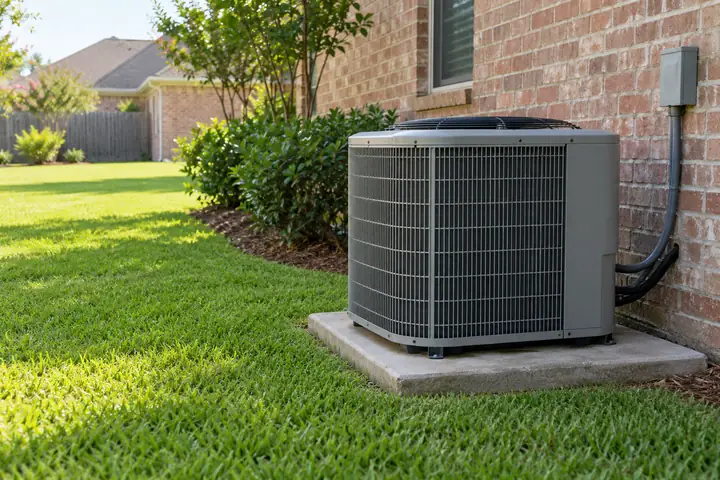
Look at the whole corner before naming the task
The outdoor air conditioner often lives in the least glamorous part of the yard. Grass grows between the pad and the fence, a hose appears beside the wall, and suddenly a simple mowing request has a few extra details. Start with a broad view that shows the equipment, the surrounding lawn and the route into that corner. Happy needs to understand the space, not just see a close picture of tall grass.
Describe the result you want in lawn terms. Perhaps the open side strip needs mowing or the grass beside the concrete pad needs attention. Keep questions about the equipment itself separate. A tidy lawn visit does not include servicing an air conditioner, moving its connections or deciding whether its installation has the right clearances.
Use the equipment instructions for equipment questions
There is no single clearance number in this guide. Outdoor units and installations vary, so use the instructions for your actual equipment and ask your HVAC professional when the space is questionable. A lawn crew should not have to guess whether a fence, screen, plant or stored object is appropriate beside the unit. Resolve that question through the right source before asking for changes around it.
If you already have maintenance instructions, explain the lawn-related restrictions that matter. For example, an HVAC technician may have identified a particular area that needs to stay accessible. Share that information without expecting Happy to certify the installation. The useful handoff is a clear property boundary: here is the grass to consider, here is the equipment area to leave alone, and here is the access that must stay available.
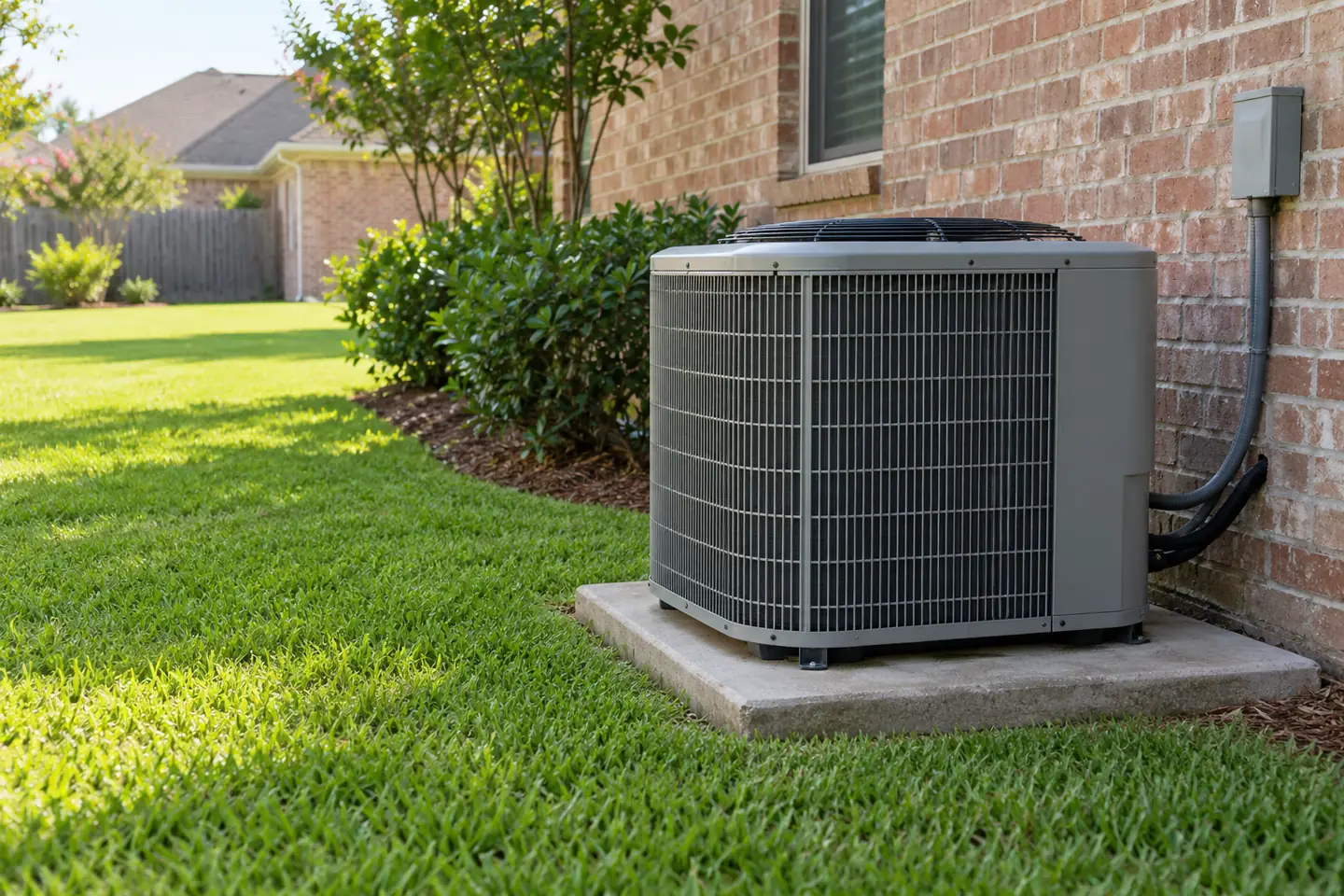
Show the pad and the ground beside it
A concrete pad gives the eye a landmark, but it does not describe the whole mowing surface. Show whether the nearby ground is level, muddy, covered in loose stone or partly concealed by growth. A close photograph from a safe position can explain a lip or narrow gap after the wider image establishes where it belongs. Avoid stepping into an uncertain spot simply to get a better picture.
Tell Happy if the pad edge has changed since the last visit or if another contractor recently worked there. Fresh soil, leftover packing material and moved landscaping can alter the practical lawn request. Do not assume that mowing the open strip also means clearing everything touching the pad. Identify the grass concern and ask what can reasonably be handled around the existing conditions.
Treat wires, tubing and hoses as boundaries
You do not need to identify every connection to report that one is present. A visible line running through the grass, a loose cable or an unfamiliar piece near the unit deserves a plain description and a photo. Leave unfamiliar components alone. Do not pull, bury, tape or reposition them to make a lawn visit easier. Equipment concerns need the appropriate technician or responsible owner.
A photograph also cannot prove that every obstacle has been found. Say when growth hides the ground or when you cannot see the full route. Ask Happy to review the area before work is agreed. If a concern remains unresolved, the practical answer may be to exclude that small section while maintaining another accessible part of the yard. A missed strip is easier to discuss than an unspoken equipment assumption.
Make the clippings conversation specific
If you notice grass clippings near the condenser, identify where they collect and when you see them. There is a difference between material resting on the surrounding pavement and material inside equipment. Ask about the lawn finish and the direction of work without asking a lawn visit to become coil cleaning. Do not insert tools into the grille or try to inspect internal parts for a quote photograph.
Describe the paved surfaces you want considered for ordinary blowing, including the route out of the side yard. Happy can discuss the agreed finish around the lawn. Washing the unit, removing its panels, clearing an internal blockage or evaluating cooling performance belongs in an equipment-service conversation. Keeping those tasks separate gives you a clearer answer and avoids turning one familiar word, cleanup, into several unrelated jobs.
Keep an access route that works beyond mowing day
The side gate and the passage to the equipment may be used by more than one contractor. Explain any fixed bottleneck, low step or tight turn before arranging service. If bins or furniture block the route, identify who will move them. Do not assume that Happy can relocate heavy items or dismantle a screen as part of a grass-cutting visit.
Consider how the route changes during your ordinary week. A gate may be clear when the bins are at the curb and blocked when they return. A garden hose may normally cross the passage. Tell Happy about the usual arrangement rather than preparing a photograph that makes access look permanently wider than it is. The plan should work with the real household routine, including the access needed for later HVAC maintenance.
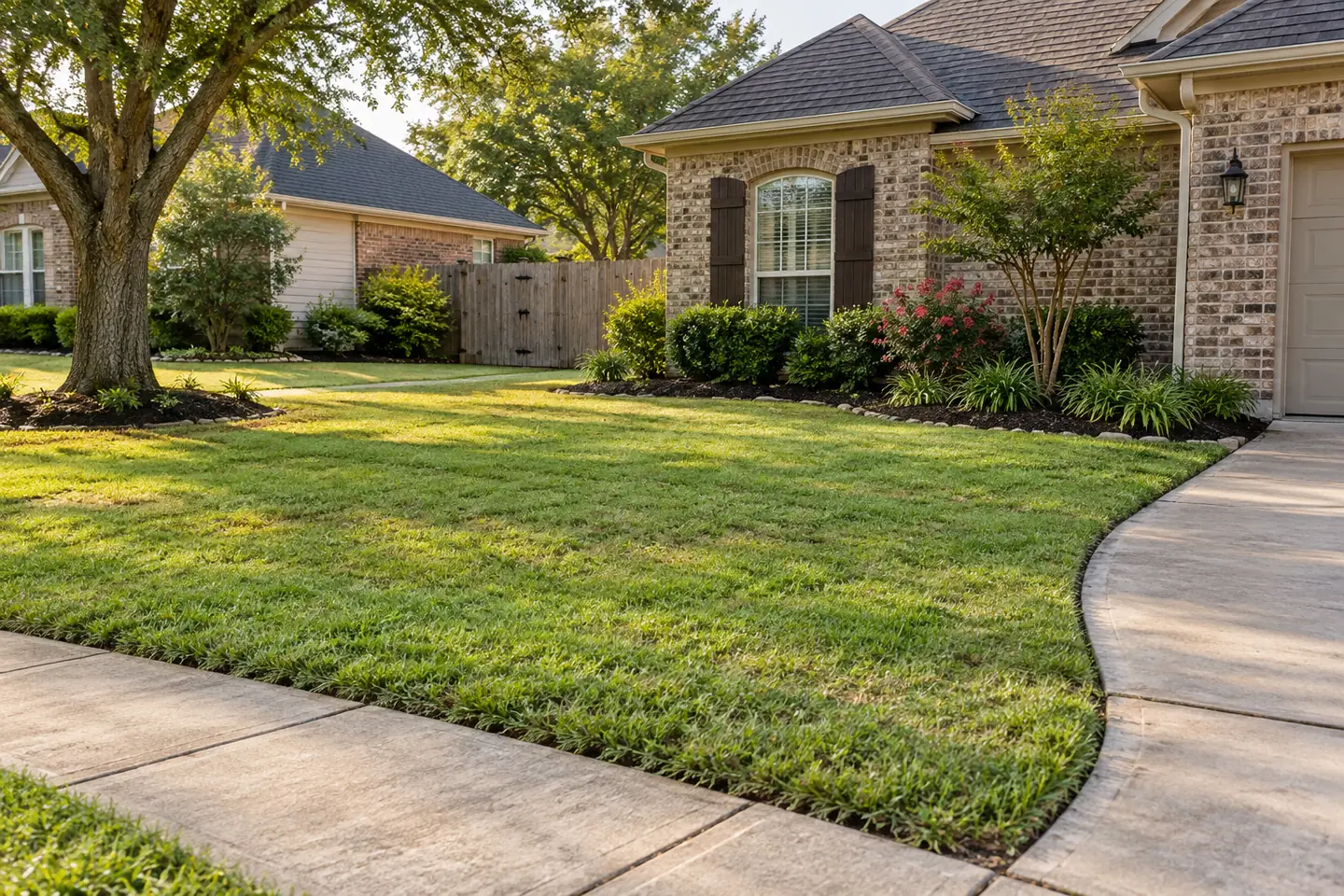
Put cosmetic projects on a separate list
You may want a gravel border, a new screen or a different bed shape beside the equipment. Those are separate project ideas, even when the motivation is easier lawn care. Do not treat them as included mowing tasks or rely on this guide as a construction specification. Ask an appropriate contractor about the equipment requirements before changing the surrounding layout.
For the lawn request, identify the grass that remains and the existing boundaries to respect. Happy Grass offers mowing, edging, weed-eating and blowing, with weed-control questions reviewed separately. Fertilization, aeration, overseeding and pest control are outside the service scope. The presence of outdoor equipment does not expand lawn maintenance into electrical work, HVAC repair, drainage correction or installation services.
Give useful instructions without a long technical message
A short property note can do more than a page of equipment guesses. Name the side of the house, identify the pad and explain the grass area you want reviewed. Add any known restriction from the responsible owner or technician. If you are unsure about a connection, say so. Clear uncertainty is more useful than a confident label that turns out to be wrong.
- Send one broad view of the side yard and access route.
- Add a closer view of the pad edge and nearby grass.
- Identify known wires, tubing, hoses and recent changes.
- State which equipment questions remain unresolved.
- Ask Happy to confirm the lawn work and any excluded strip.
Keep private gate details in your direct service conversation. The photos need to explain the space without displaying account documents, equipment serial labels or household information that is unrelated to the lawn request.
Review the finish from the same viewpoint
After an agreed visit, use the same broad viewpoint to discuss the lawn finish. If a narrow strip remains, identify its position relative to the pad or fence and ask whether it was excluded or needs another look. A specific photo makes the conversation easier than saying the whole side yard was missed. Refer to the actual agreement when describing the result.
If the air conditioner develops an operating problem, contact the appropriate equipment professional. A lawn photograph is not a diagnosis, and timing alone does not establish what caused a mechanical issue. Keep the service conversations factual and separate. You can ask Happy about the lawn work while getting qualified help for cooling equipment, without asking either person to guess outside their role.
A neater side yard starts with a clear handoff
The goal is simple: cared-for grass, understandable boundaries and an equipment corner that does not turn every visit into a puzzle. You do not have to make the side yard beautiful before requesting help. Show what is there now, explain what you want maintained and let the practical details be reviewed before the work is settled.
Call or text 504-339-3571 and Ask for Happy, or use the quote form with current photos. Mention the outdoor unit early if it affects the lawn area or access. Happy Grass serves Harvey and the surrounding Westbank communities. Let’s kick some grass with a plan that respects the yard and the equipment sharing it.
Describe the grass route without inventing equipment clearance
For a narrow strip beside outdoor air-conditioning equipment, show the route as a relationship between fixed objects. Identify the wall, equipment pad, gate and grass edge in the same overview when possible. Explain which side provides the normal approach. This communicates the layout without asking a lawn photograph to establish technical working clearances for the equipment.
If a clearance or equipment-access requirement matters, use the applicable equipment information or ask the responsible equipment professional. Do not turn a guessed distance into a lawn instruction. The maintenance conversation can still address the grass that is reachable under the confirmed arrangement.
Before sending the request, separate movable household items from installed components. You may be able to prepare a storage container, while pipes, wires and equipment remain outside that preparation plan. Describe any unresolved obstruction as it actually stands. This avoids a proposed lawn route that only works if someone silently takes on equipment work or moves a component that was never part of the request.