
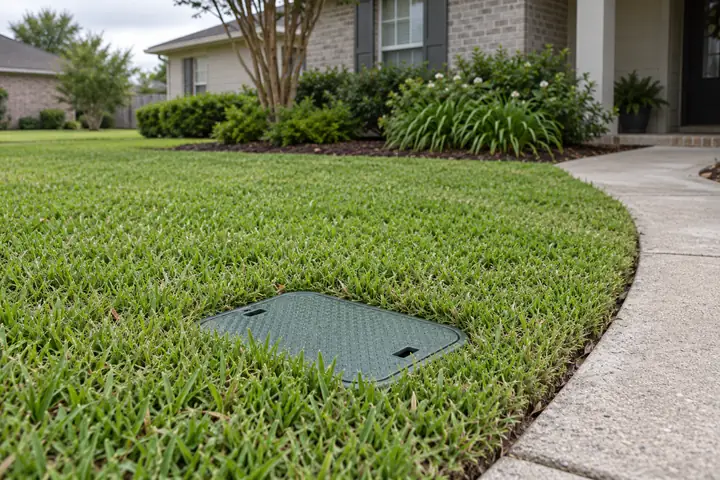
Start with the lid you can actually see
A utility cover may look like a small detail until the grass grows around it. The first useful step is to show its position in the yard. Take a broad photograph from a familiar landmark, such as the front walk or driveway, then add a closer image if you can do so without entering an uncertain area. A close-up of a green rectangle alone does not explain the approach.
Describe what you know and leave the unknowns visible. You might know that a box belongs to irrigation, or you might only know there is a lid near the walkway. Either description can start the conversation. Do not identify a cover by color alone or expect Happy to determine which system it serves. The lawn request needs a location and an agreed boundary, not a guessed utility diagnosis.
Separate identification from lawn maintenance
If a cover is unfamiliar, ask the responsible property owner, utility provider or appropriate service professional about it. A mowing visit is not a utility survey. Existing records can help, but a previous owner's sketch may be incomplete or outdated. Share relevant information honestly and distinguish a verified feature from a mark that you have not confirmed on the ground.
Do not open a box, remove a lid or probe around the edge to improve a quote photo. You can explain the concern from a safe position. If a lid is missing, broken or uncertain, tell the responsible party and make that condition clear before a visit is arranged. Keeping the information accurate helps Happy discuss the surrounding lawn without being asked to repair or certify equipment outside the service scope.
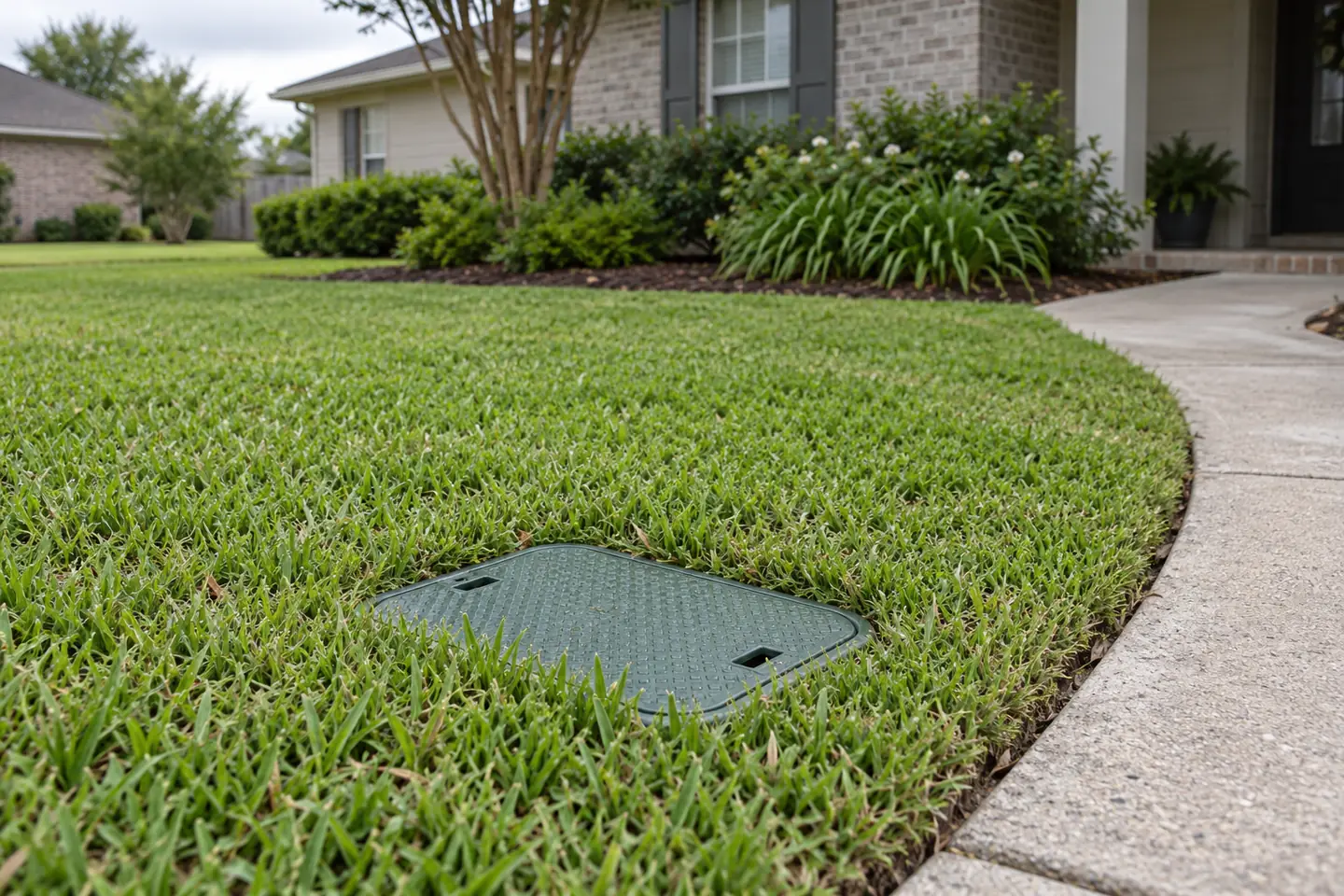
Describe the relationship to the mowing surface
The practical question is how the cover sits relative to the surrounding grass. Is it plainly visible, partly hidden, raised above the ground or beside an uneven patch? Describe the appearance without testing it with your foot or equipment. A broad photo followed by a detail can show why the area needs review while avoiding assumptions about whether the lid can support weight.
Mention nearby features too. A cover beside a sidewalk, tree root or narrow planting edge presents a different route from one in an open lawn. The same mowing pattern should not be assumed everywhere simply because the grass is continuous. Ask Happy to confirm what can be maintained around the actual feature and whether a small section needs to remain excluded until another concern is resolved.
Do not turn a mowing request into excavation
Grass growing over the edge can make a lid difficult to notice, but that does not make digging part of ordinary lawn care. Cutting turf back, changing the grade or exposing a buried box raises a different set of questions. Describe the desired change separately and ask the appropriate responsible party what is needed before anyone disturbs the ground.
This guide does not provide digging clearance or replace the applicable utility-location process. If your project involves excavation, use the relevant official guidance and arrange the required steps for that project. For a routine lawn conversation, focus on known surface features, visible conditions and the work you are requesting. Keeping those categories separate prevents a small grass concern from silently becoming a utility-access or construction job.
Share locations privately and clearly
A simple yard sketch can help when there are several covers. Label landmarks in ordinary words: front walk, side gate, driveway and rear fence. Add a number to each feature in the sketch and use the same number in your photographs. The aim is to keep each note connected to a real place, especially when several similar-looking lids appear in different parts of the property.
Avoid posting detailed property diagrams publicly. Send relevant information through the agreed direct contact channel and leave unrelated household details out. If you manage the property from elsewhere, ask a responsible local contact for current photos rather than relying entirely on old listing images. The plan should reflect what is visible now, including any cover that has changed or become harder to see.
Ask who handles damage and repair concerns
A lid that rocks, appears cracked or is surrounded by washed-out soil needs a report to the responsible person. You do not have to establish the cause before explaining the observation. State what you can see, when you noticed it and whether the area has changed since the last known visit. Avoid using a lawn quote as the reason to postpone an equipment or ground-safety concern.
Happy Grass lawn maintenance does not include utility repair, electrical work or certifying cover strength. Ask about maintaining another accessible section while the affected area is reviewed. A temporary exclusion should identify the actual spot and the person responsible for the next step. That is more useful than a vague instruction to be careful somewhere near the front of the house.
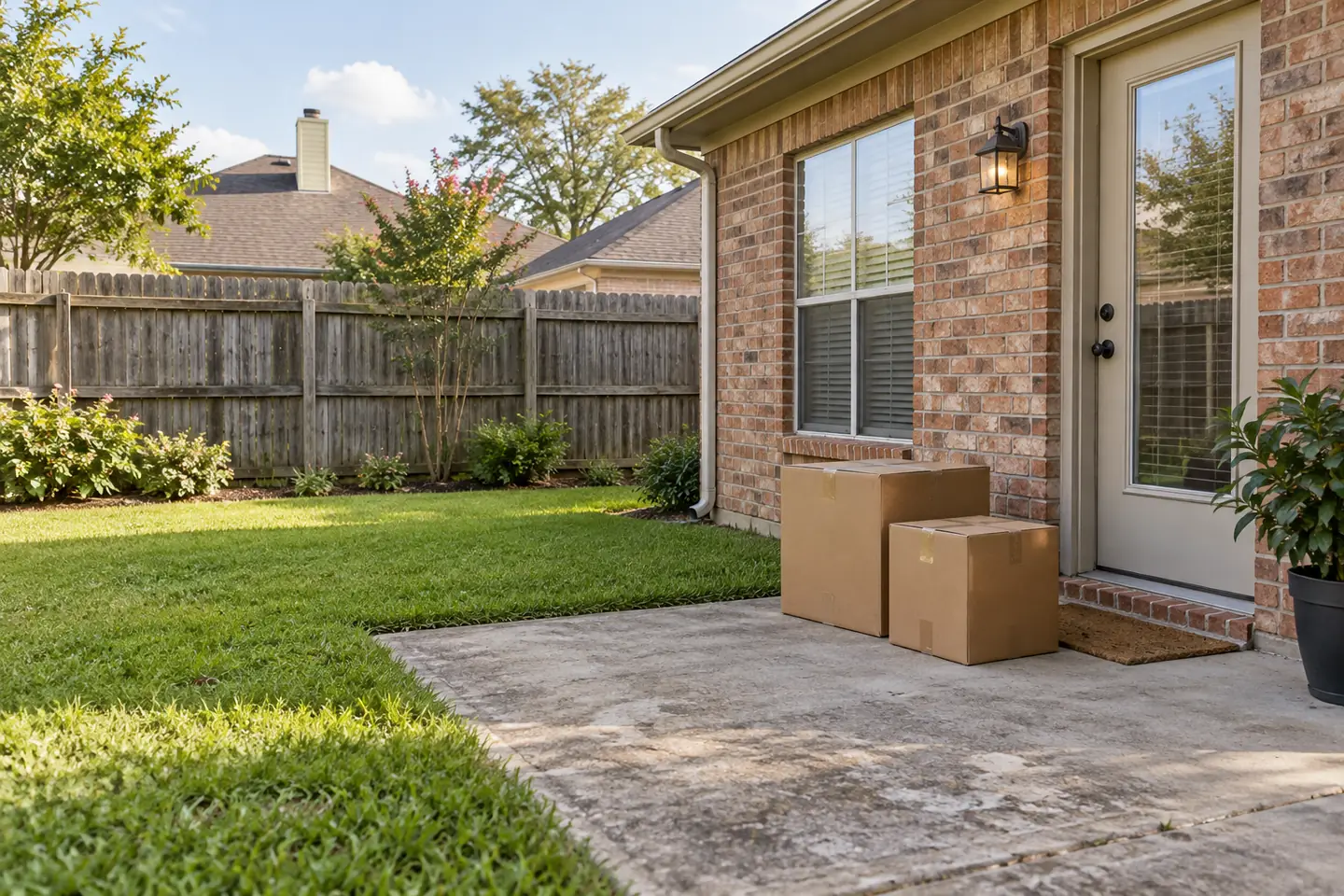
Set a finish expectation around the feature
Your preferred appearance matters, but it needs to fit the existing installation and agreed work. Ask what a reasonable lawn finish would look like beside the lid. Do not assume the answer requires mowing over it, removing the surrounding soil or trimming directly against every edge. The appropriate approach depends on the actual site and should be discussed before the visit.
If you want an ornamental border or a change to the surrounding landscape, list that as a separate project. It may affect access requirements and should be reviewed with the right person. Happy Grass offers mowing, edging, weed-eating and blowing, with weed-control requests reviewed separately. Fertilization, aeration, overseeding and pest control are not offered. The lawn scope does not become utility servicing because a box happens to sit in the grass.
Update the note when other work changes the yard
A new installation or repair can leave the lawn different even after the contractor has gone. There may be fresh soil, a shifted route, temporary markers or a cover in a position that was not there before. Send updated photographs and explain the completed work you know about. Ask what lawn maintenance is appropriate now rather than assuming the old arrangement still describes the property.
Keep instructions from the installing or repairing contractor with the project records. If they affect access or require an area to remain undisturbed, communicate that directly. Do not remove unfamiliar markers merely because the work looks finished from the porch. Ask the responsible contact what remains in effect. A small update before the next lawn visit is easier than reconstructing the situation afterward.
Review a concern with a location and a date
If grass remains beside a cover after a visit, compare the result with the agreed scope. Take a current broad photograph and point out the exact feature. Ask whether the section was excluded, could not be reached or needs another review. The goal is a useful answer about that spot, rather than a general argument about whether the whole lawn looks finished.
If you believe equipment has changed or been damaged, describe the observation factually and contact the responsible service provider as appropriate. A photograph may show the condition without establishing its cause. Preserve the useful dates and images, and keep repair questions separate from requests about the grass finish. That makes it easier for each person to address the part they can actually assess.
A visible detail makes for a simpler visit
The best lawn note does not need technical language. It needs a known location, current photos, a clear request and an honest statement of anything uncertain. A small cover can be easy to overlook from a wide street view, so bring it into the conversation early. You should not have to make the yard perfect before asking about maintenance.
Call or text Happy Grass at 504-339-3571 and Ask for Happy, or use the quote form. Explain which grass areas you want considered and where known covers or access points sit. With the surface details accounted for, the conversation can focus on the tidy, usable yard you want and the actual work that fits it. Let’s kick some grass with the little details in view.
Keep uncertain identification attached to the right feature
Two covers in one lawn can be easy to confuse in photographs. Give them neutral location labels, such as the cover beside the front walk and the cover near the rear fence. If you know the purpose of one but not the other, keep that difference in the note. A confirmed label for the first cover should not migrate to the second simply because the shapes look similar.
Show the surrounding grass and an ordinary fixed reference without opening, lifting or probing either feature. The photograph's job is to explain the location and visible condition. Identification of an unknown component is a separate question for the appropriate responsible party.
This distinction matters when considering a route or finish. You can explain where the requested grass area stops and where uncertainty remains without promising that every visible lid can be treated in the same way. If another contractor later identifies or alters a feature, update the relevant label and current view. Preserve the older uncertainty in the history rather than rewriting it as though the information had always been known.