
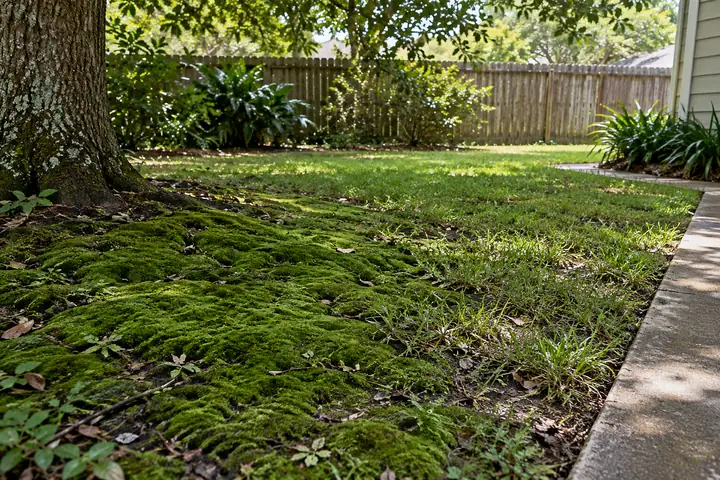
Look at the surface before calling it grass
Moss can form a low green mat that looks different from a lawn made of grass blades. Start with a broad photo that shows where the patch sits beside the surrounding turf, walk or planting area. Add a closer picture of the surface if you can take it from a firm position. If you are unsure what the growth is, describe the appearance rather than confidently assigning a name.
The distinction matters to a maintenance request. A grass section that needs cutting and a low mat without ordinary grass blades are not automatically the same task. Tell Happy whether you want the adjacent lawn maintained, the area reviewed or a separate identification question answered. A clear first description keeps the mower from becoming an assumed solution before the actual surface has been understood.
Treat moss as a clue about the setting
Clemson Extension lists several conditions associated with moss in lawns, including shade, wet or poorly drained ground, compaction and fertility or soil-acidity issues. More than one condition may be involved. That does not mean a green mat diagnoses every problem beneath it. The practical point is to consider the growing environment rather than assuming the moss appeared because the lawn simply needed another cut.
Notice what you can describe without testing or changing the site. Is the area shaded for much of the day? Does water remain visible after nearby surfaces clear? Is there thin grass at a frequently used route? These observations help form useful questions for a qualified lawn or soil resource. Keep them as observations until the relevant condition is actually assessed.
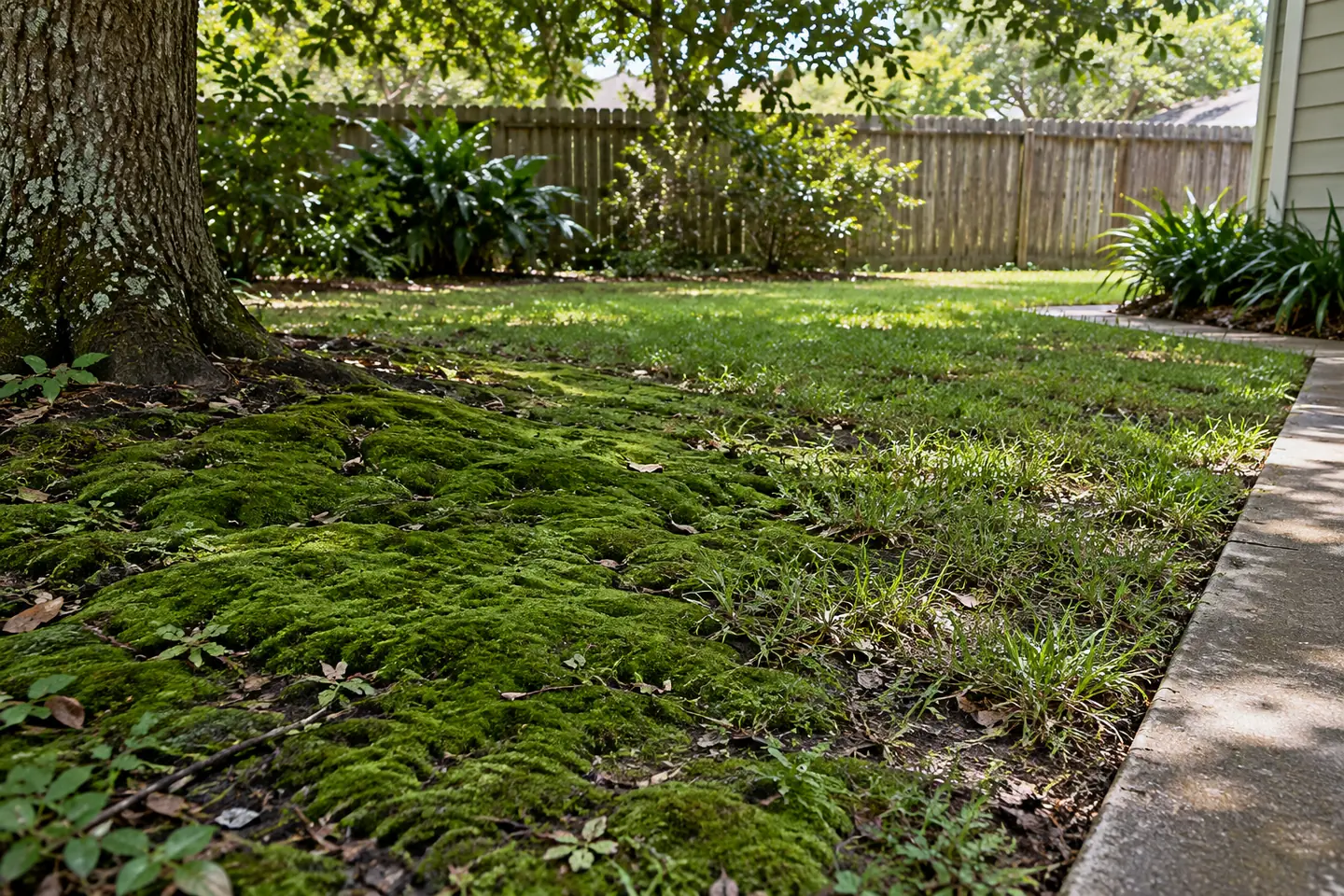
Do not use moss alone as a lime instruction
A familiar yard myth is that any moss proves the soil needs lime. Do not turn a surface observation into an amendment plan without an appropriate soil test and interpretation. Iowa State Extension includes multiple possible conditions associated with moss, not a single universal cause. If acidity is part of the question, ask the appropriate local soil-testing resource how to sample and interpret the result.
Happy Grass does not offer fertilization, aeration, overseeding or pest control. A mowing conversation should not quietly become a promise to test soil, apply amendments or correct every growing condition. You can explain a known recommendation from another qualified source when it affects the maintenance request, while keeping that project and its responsibility clear rather than treating it as included grass cutting.
Compare shade with the actual lawn you want
A shaded area and an open sunny lawn may not support the same appearance. Show both in your photographs if the contrast matters to the request. Note fixed shade sources such as a building or fence, and describe changes you actually know about. Do not assume that one neighboring yard proves the same grass result is available under a different canopy or daily light pattern.
NC State Extension describes shade and other site conditions as important considerations when grass struggles and moss is present. If you are considering a different groundcover or layout, discuss that with an appropriate landscape professional. This guide does not recommend removing a tree or installing a new planting scheme. The lawn-service conversation can focus on maintaining the actual grass areas while a separate long-term design question is reviewed.
Separate mowing height from moss removal
Request the lawn finish you want without assuming the lowest cut is the most useful response. A mower cannot be expected to turn a moss mat into a dense grass stand. The nearby turf still needs a mowing approach that suits its identity and condition. If the grass type is uncertain, say so and show clear views rather than choosing a label based on the patch's color.
If you want moss physically removed, ask about that as a separate task and confirm who provides it. Removal, surface renovation and replacing vegetation are different questions from routine cutting. Do not describe all of them with a vague cleanup request. A service scope is easier to understand when each action has its own name and the expected result matches the work actually offered.
Give wet ground an independent review
Moss-like growth does not by itself establish that the ground is wet on the planned visit date. Likewise, a dry-looking green surface does not prove the passage is firm. Show current conditions and any standing water or soft route separately. A simple update about the shaded side passage can matter even when the open front lawn looks ready from the street.
Use established paths where practical when collecting photographs. Do not repeatedly walk a questionable area to demonstrate how soft it feels. If access or the ground is uncertain, identify the section and ask Happy what can reasonably be considered. A clearly described exclusion can leave the rest of a maintenance request understandable while a separate drainage or ground-condition concern receives appropriate attention.
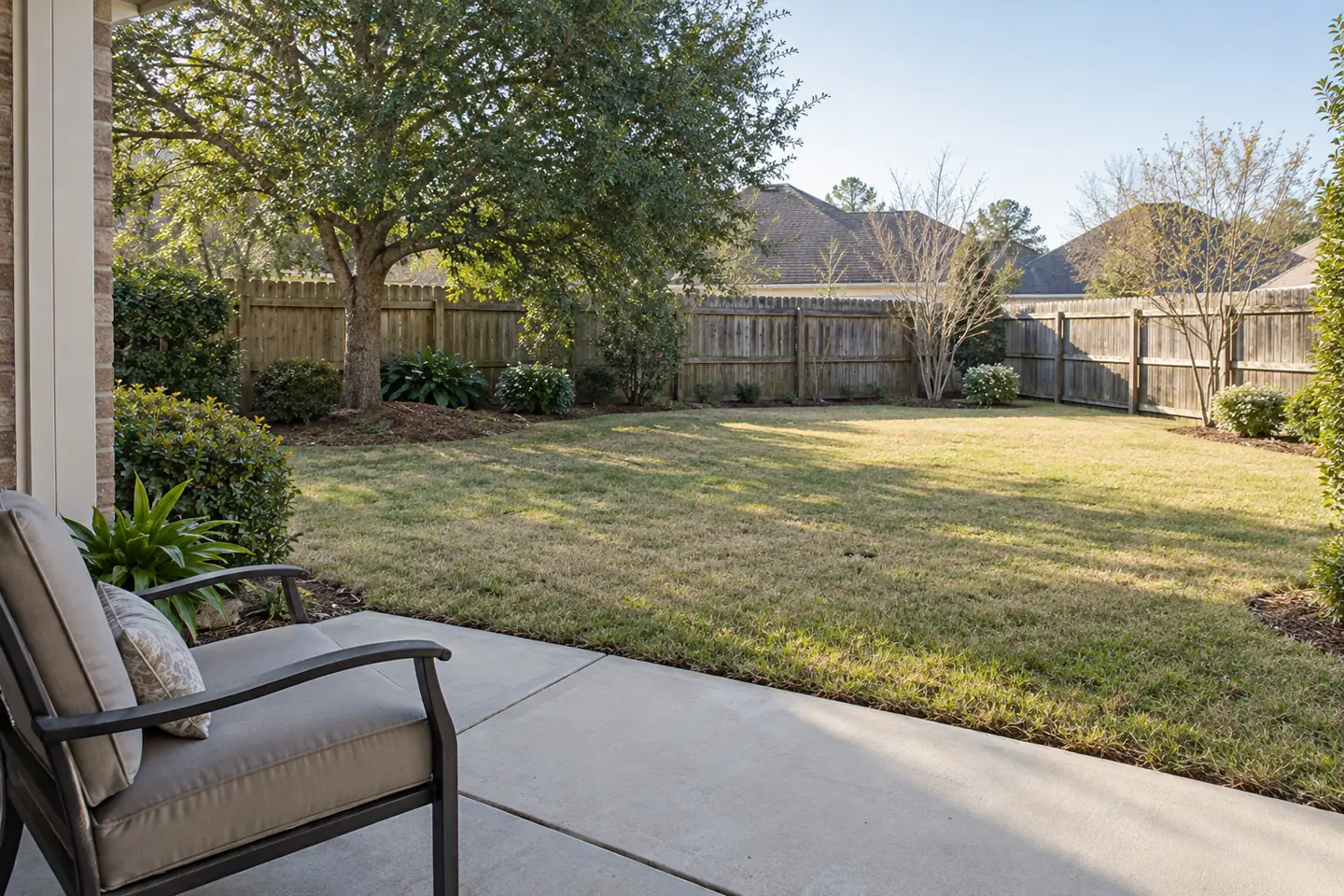
Identify the edges you want kept tidy
A moss patch often sits beside a walk, bed or other recognizable feature. Explain which existing grass-to-hard-surface edges you want reviewed and show nearby low objects or uneven surfaces. The appearance of the adjoining path can be a useful lawn-finishing question even when the patch itself needs a different discussion. Name the actual surface instead of asking for the whole corner to be fixed by assumption.
Routine edging does not automatically include reshaping beds, excavating soil or repairing paving. If those are part of your goal, list them separately and ask about appropriate scope. Happy Grass offers mowing, edging, weed-eating and blowing, with weed-control questions reviewed separately. Keep the distinction between those services and a larger change to how the shaded area is designed or managed.
Keep a small observation record instead of a treatment diary
A few dated broad views can be enough to show whether the patch is spreading in appearance or whether nearby grass looks different. Use similar viewpoints when possible and keep the actual dates. Note a known change such as a blocked downspout, a relocated object or a new daily traffic route. Do not assume every change in the pictures has the same cause.
- Show the patch in relation to the surrounding lawn.
- Add a detail of the surface without disturbing it.
- Describe known shade and current ground conditions.
- Keep soil or plant advice from qualified sources with the record.
- State which grass areas you want maintained now.
That record supports a useful conversation without asking you to diagnose the lawn from your phone or apply a product merely to see what happens.
Agree on the next visit while keeping other projects clear
You may want ordinary mowing on the open lawn while leaving the moss-like corner alone pending another review. Say that directly and ask Happy to confirm the included areas. A maintenance plan does not have to settle every long-term landscape question in one message. It should make the work available now clear enough that the visit does not depend on an unspoken guess.
After an agreed visit, review any concern against that same scope. If a particular edge needs attention, show its location in a current picture. If you want a different task next time, ask about the change before treating it as included. That makes the finish easier to discuss and prevents a separate growing-condition question from being mistaken for a missed mowing area.
A greener-looking patch can still need a different question
You do not need perfect terminology to ask about a lawn with moss-like areas. A clear photo, an honest description of the setting and a practical maintenance request are enough to start. The helpful distinction is between grass that needs routine care and the conditions or vegetation that may need a separate qualified assessment. Both can be described without promising an instant transformation.
Text 504-339-3571 and Ask for Happy, or use the quote form with current property views and access details. Tell Happy which areas you want considered and which question remains unresolved. Happy Grass serves Harvey and nearby Westbank communities. Let’s kick some grass with a plan that works with the yard you have, including the quiet green corner that is asking for a closer look.
Describe the surface pattern before choosing the question
When a low green mat appears among grass, record its shape and position without making the name do all the explaining. Is it a small patch beside paving, a band beneath a tree or several disconnected spots? Show grass and non-grass surfaces together so the maintenance question remains tied to the actual pattern. A close texture photograph alone can hide how little or how much of the requested area is involved.
Then state which decision you need help with. You may be asking about the grass that remains around the patch, about a boundary you want kept tidy or about a separate growing concern. Those questions do not require the same answer, and a mowing arrangement does not settle every issue represented by the photograph.
Keep observations from later dates under the same location labels. If the patch changes, describe that change without assuming one household action explains it. This preserves a useful record while avoiding an unsupported treatment plan built from a single surface feature.