
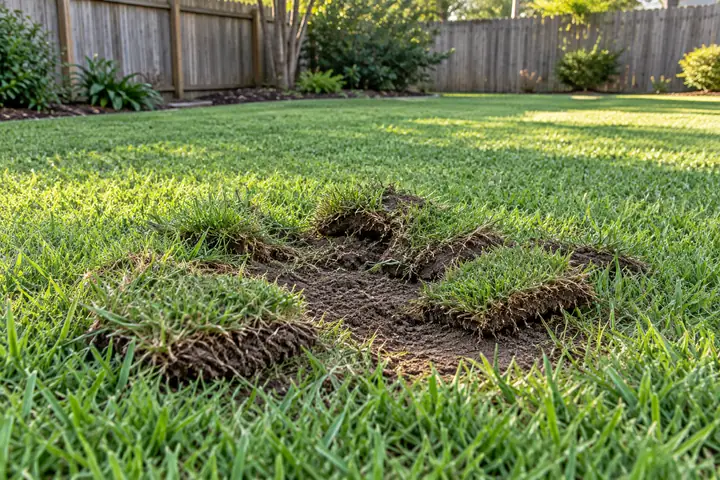
Begin with what changed in the actual lawn
You may notice a small patch of turned turf, several shallow depressions or an unfamiliar opening beside the fence. Start by describing the appearance and location rather than naming an animal immediately. Take a broad photograph from a safe established position that connects the disturbance with the lawn and nearby landmarks. The overall view helps explain how much of the requested work area is affected.
Add the date and say whether the change is new or has appeared before. If you saw an animal directly, that is different information from a guess based on a hole. Keep those observations distinct when you contact Happy. A clear maintenance request does not require you to identify the cause first, but it does need to show what the lawn looks like now.
Do not ask one photo to identify every cause
Different kinds of activity can leave disturbed soil or turf, and a photograph may not settle which one occurred. University of Maryland Extension describes several animal digging patterns and the need to consider the actual evidence. A hole can be useful context without becoming proof of a particular species or an automatic pest diagnosis. Avoid copying an explanation from an unrelated yard because the photograph looks similar.
If identification matters, ask an appropriate local extension or wildlife resource what information is needed. Share what you actually observed and leave uncertain details uncertain. Happy Grass lawn maintenance does not identify every animal, inspect burrows or provide wildlife control. The service conversation can focus on the current grass area while the separate cause is assessed through the appropriate channel.
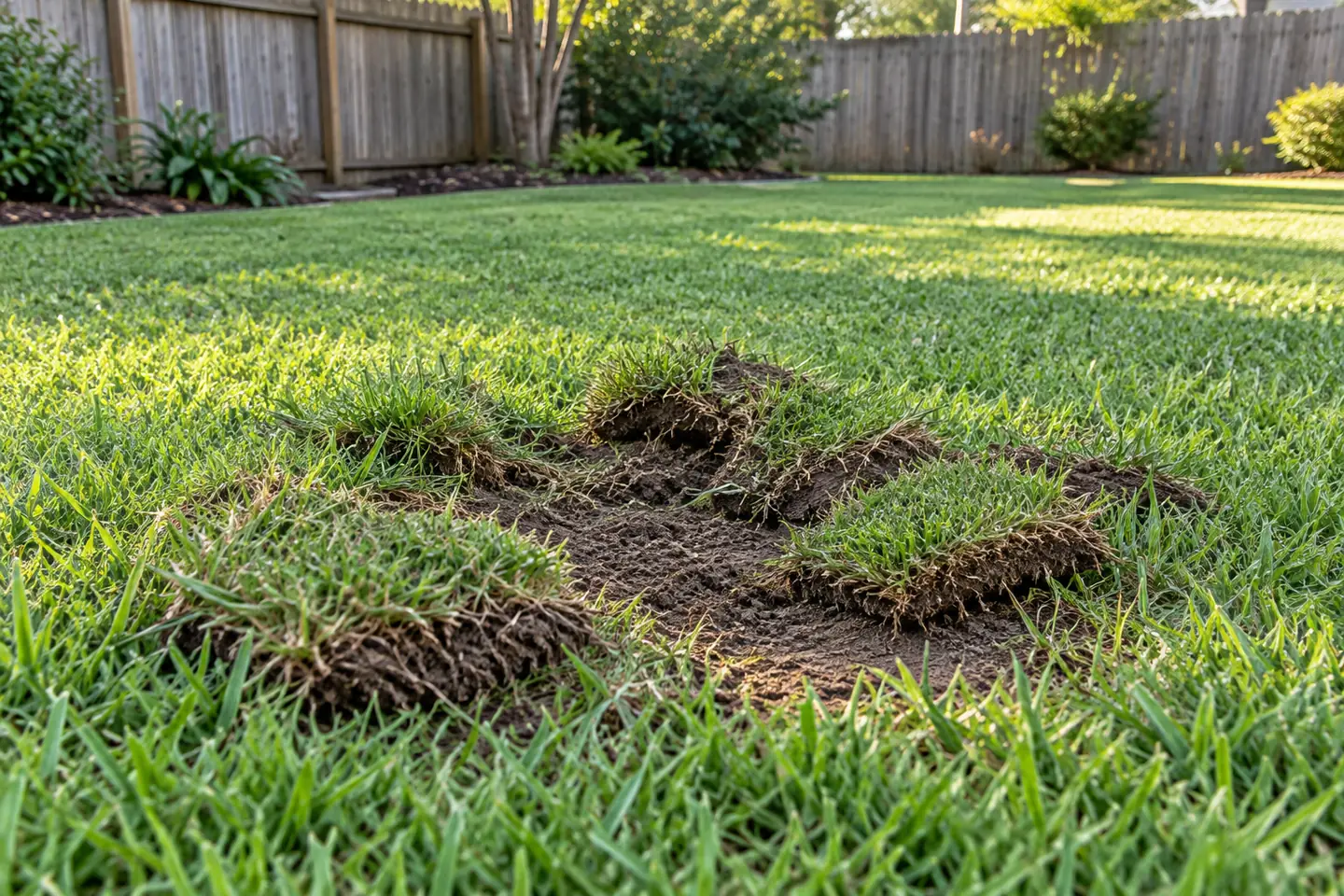
Distinguish a shallow surface disturbance from an uncertain opening
A few loosened turf pieces and a hole with an unknown depth should not be described as identical conditions. Show the visible difference without probing, stepping into or reaching inside an unfamiliar opening. You do not need to test it to make a quote request useful. State what cannot be seen and keep people and pets away from an uncertain spot.
A lawn photograph also cannot establish that the surrounding ground will support equipment. Tell Happy if a section appears undermined, soft or difficult to judge from a safe route. The practical response may be to exclude an affected area while another concern is reviewed. That should be an explicit part of the arrangement rather than an assumption that every opening can simply be mowed across.
Show where the normal access route passes
A small disturbed patch can matter a great deal if it sits at the only gate into the backyard. Include the approach and the space around the feature in your pictures. An open lawn beyond the gate does not explain the narrow passage that must be used to reach it. The maintenance plan needs the actual route as well as the destination.
Mention changed parking, bins or storage that might otherwise force a detour near the disturbance. Identify who can clear movable items before an agreed visit. Do not assume that another route is available just because it looks possible from a distant photograph. Ask Happy to review practical access, and send an update if the available passage changes before work is expected.
Keep the grass concern separate from a treatment assumption
An animal searching through turf does not automatically prove that the lawn needs a particular pesticide. A mark in the ground is not a product recommendation. If the concern involves insects, plant health or wildlife behavior, ask an appropriate qualified resource for assessment before deciding what action is suitable. This guide does not prescribe a treatment or claim that one lawn product solves every disturbance.
Happy Grass does not offer pest control, fertilization, aeration or overseeding. A mowing request should not quietly include trapping, baiting, chemical treatment or filling an unknown burrow. If another provider is involved, explain any relevant instruction that affects the lawn visit while keeping responsibility for that work clear. Routine maintenance and a separate control plan need their own conversations.
Describe loose material before expecting cleanup
Disturbed turf may include loose soil, uprooted grass, scattered stones or other material. Show what is present rather than describing everything as ordinary clippings. The type and extent of material can affect the work being requested. A few surface pieces and a larger torn-up section are different conditions, and a useful estimate should account for the yard that exists now.
Do not assume that blowing includes moving soil, collecting every turf piece or hauling away mixed debris. Name the extra task and ask whether it is offered. Happy Grass provides mowing, edging, weed-eating and blowing, with weed-control questions reviewed separately. A broad cleanup request should not expand those services into ground restoration, landscape construction or an unlimited disposal arrangement without an actual scope review.
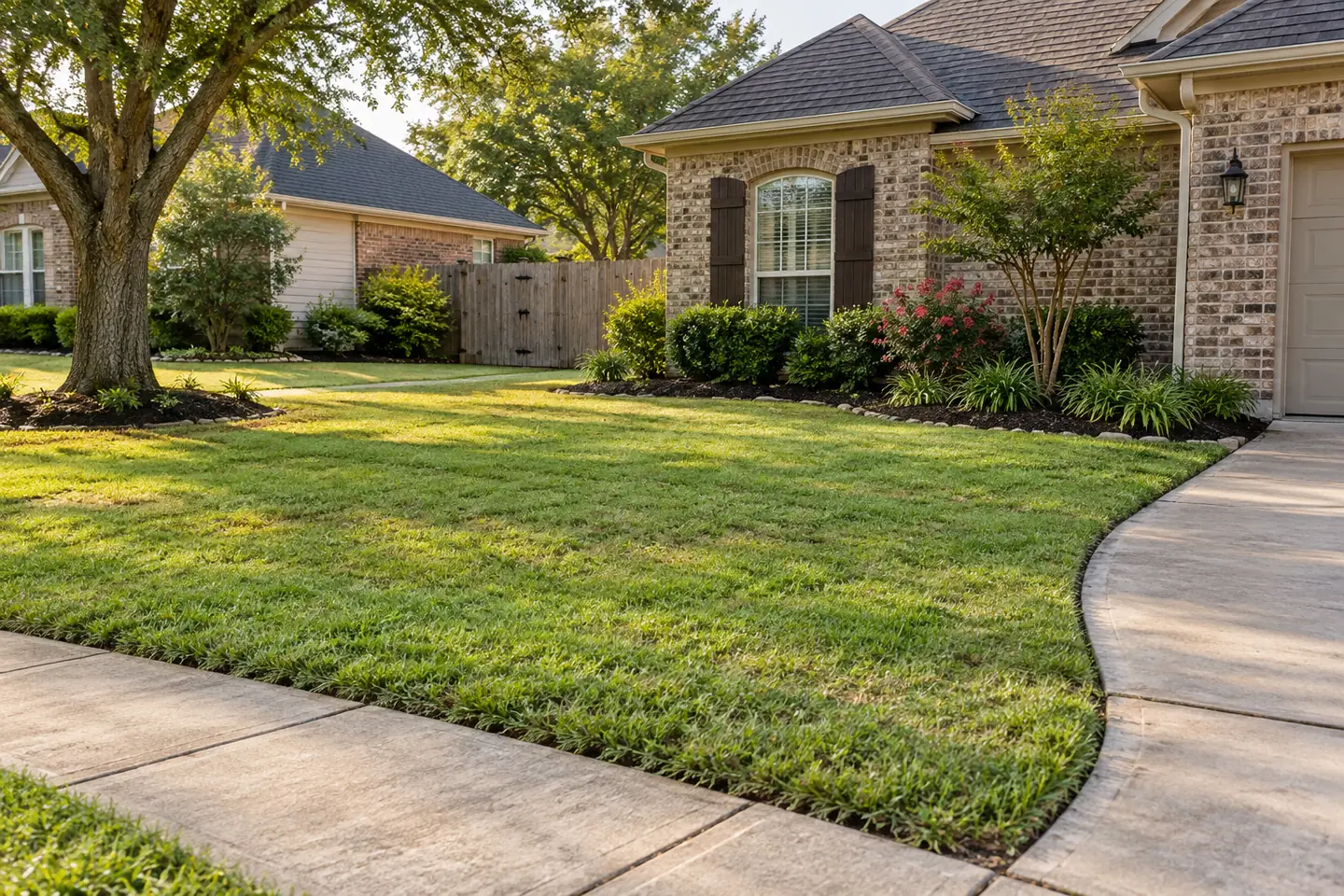
Keep a small record if the disturbance returns
A few dated broad views can show whether the same area changes repeatedly or whether new spots appear elsewhere. Use familiar landmarks so the record is easy to follow. Note visible weather conditions or another recent yard project when relevant, without treating timing alone as proof of a cause. An ordinary accurate photograph is more useful than a heavily edited image that hides the surrounding surface.
- Photograph the affected area from a safe location.
- Keep the actual date and a recognizable landmark.
- Separate a directly observed animal from an inferred cause.
- Record whether access or the ground appears uncertain.
- State the lawn work you want reviewed and any proposed exclusion.
You do not need to monitor the yard constantly or collect unfamiliar material to make this record useful. The aim is a clear handoff, not a wildlife investigation undertaken for a mowing estimate.
Agree on the work that can be considered now
An unresolved patch does not necessarily mean every lawn question must wait. You may want the accessible front grass reviewed while leaving a backyard section alone. Identify the areas and ask Happy what fits the actual site conditions. An explicit included area and exclusion are easier to follow than a general instruction to do whatever seems possible around an unknown hole.
If you want repairs after the cause has been assessed, arrange that as a separate project. Filling depressions, replacing turf, regrading and restoring a damaged surface should not be assumed to come with ordinary mowing. The appropriate work depends on the actual condition and responsible provider. Keep those decisions distinct so that a tidy grass request does not turn into an unplanned repair commitment.
Update the lawn plan after another service visits
A wildlife, utility or landscape visit can change the surface or access even if the main lawn looks similar from the porch. Send current pictures after the work and explain any instruction that remains in effect. A previous quote photograph should not stand in for a newly changed area. The maintenance arrangement needs to reflect the property available for the next visit.
Ask the responsible project contact before removing unfamiliar markers, barriers or temporary features. If an area needs to stay undisturbed, identify it clearly in the direct service conversation. Happy can discuss lawn work around the agreed limits without being expected to certify the earlier repair or control work. A short update is easier than expecting the next person to reconstruct another provider's project from the grass alone.
Review a later concern against the actual agreement
If you notice an uncut strip after service, show its location and compare it with the agreed scope. An excluded or inaccessible section is a different question from a finishing concern within the included lawn. Keep the message specific enough that Happy can see which area you mean. A broad statement that the whole yard was missed makes a small practical question harder to resolve.
If another disturbance appears, record the observation and seek appropriate assessment where needed. A later hole does not establish what caused it, and one cut does not promise that animal activity cannot recur. The maintenance conversation works best when it stays factual: the current grass, the known boundaries and the work that was actually agreed. That gives everyone a clearer basis for the next step.
A clear update can make an awkward yard easier to discuss
You do not need a perfect lawn or a confident explanation before asking about maintenance. Start with current photos, a safe view of the changed area and the practical work you want considered. Text 504-339-3571 and Ask for Happy, or use the quote form with access details. Let’s kick some grass with the important ground changes accounted for before the visit is arranged.
Explain the alternative approach without testing the hole
If a disturbed spot interrupts the usual route, show the available view from a normal approach and identify any other established way into the requested lawn. Describe the alternative as a possibility to discuss, not as a route you have certified suitable. There is no need to cross or investigate the spot merely to complete the photograph.
Separate three questions in the update: where the change is, which grass areas lie beyond it and whether those areas remain in the current request. Filling, leveling or diagnosing the disturbed ground is a different conversation. Keeping those questions apart lets the maintenance scope be reviewed honestly while the condition of the ground remains unresolved. It also prevents a description of an alternate entrance from becoming accidental permission to improvise through an unfamiliar area.