
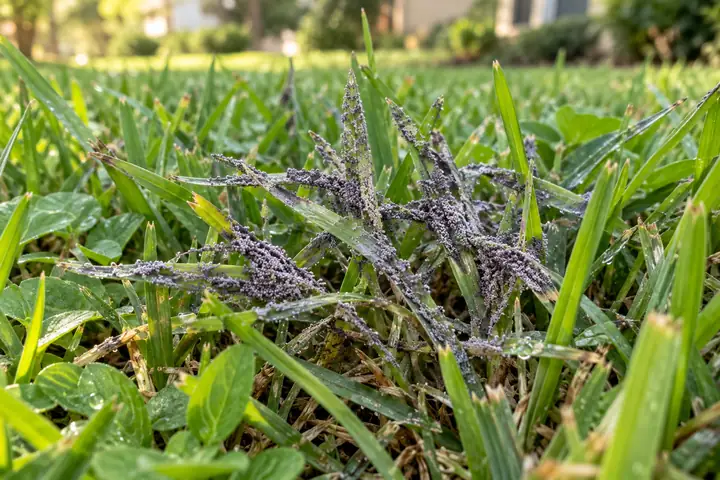
Start with the coating, not a diagnosis
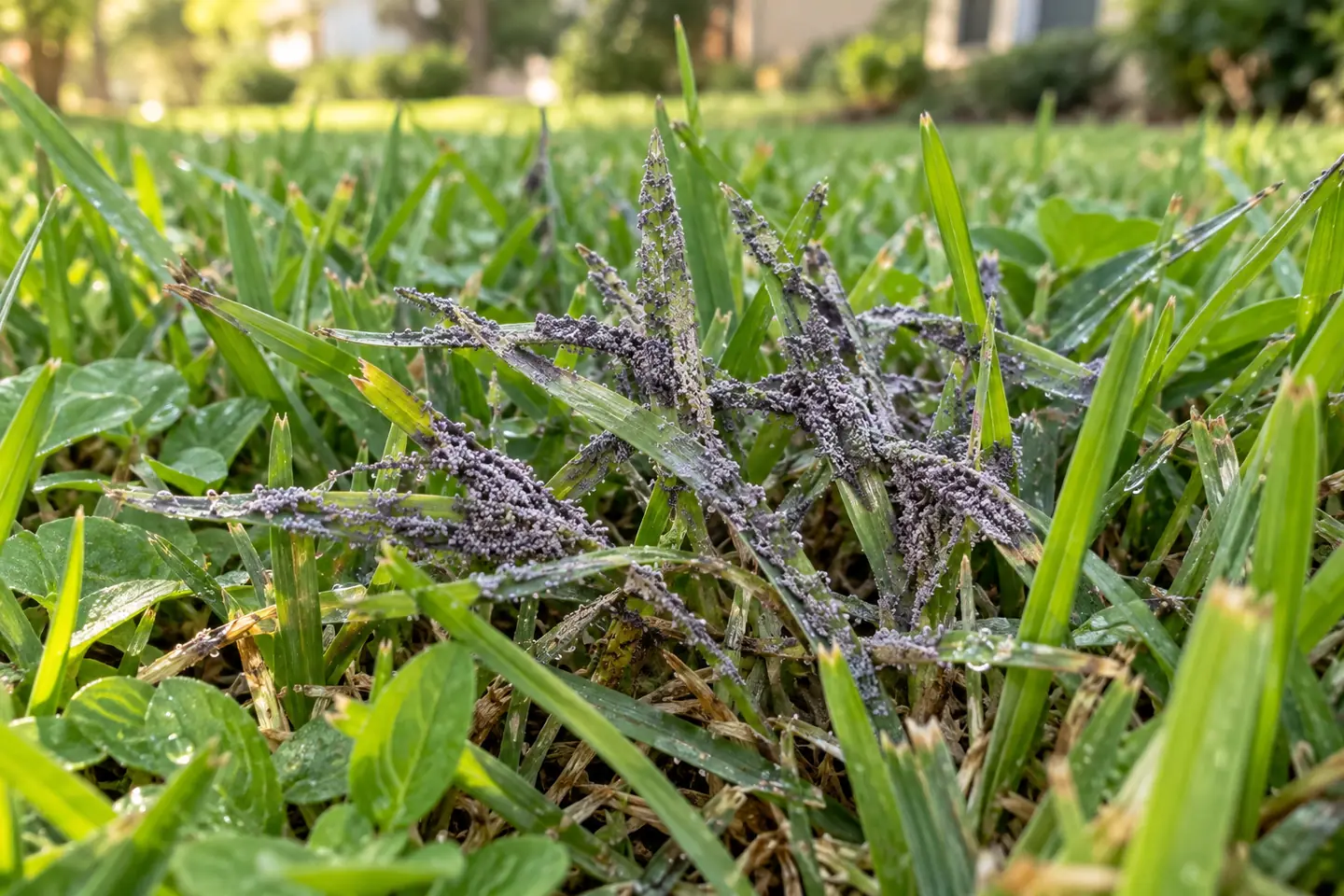
An ashy patch that appeared suddenly deserves a closer look before anyone calls it dead grass. Slime molds can produce tiny rounded structures on lawn leaves, making green blades look gray, purple or dusty from a distance. LSU AgCenter describes these organisms as nonpathogenic: they use the blades for support rather than feeding on the grass. That is useful background, but a photograph of a gray lawn patch does not establish that slime mold is the cause.
Look from a comfortable position at the edge. Are individual green leaves still visible beneath a surface coating? Is the affected area scattered among otherwise ordinary turf, or does the grass itself appear collapsed and deteriorated? Note the difference without rubbing an unfamiliar substance on your hands. Happy Grass needs a clear description of what is visible, not a confident name supplied from an internet picture. A patch can stay outside the cutting route while the owner seeks identification.
Give Happy two views of the same patch
Take one wide photograph that includes a recognizable yard feature, such as a fence corner, and one closer photograph showing the coated leaves. Keep the phone outside the patch rather than walking across it to get an overhead shot. Side light can reveal whether the gray appearance comes from material on the leaf surface. A second close view from another angle is more helpful than a heavily zoomed, blurry image.
Add the date you first noticed it and whether the lawn was recently wet. Describe the extent in everyday terms: a few scattered patches beside the back path, for example, is more useful than saying the whole yard is sick. If the appearance changed between photographs, send both with their dates. Avoid filters that change the color. Do not scrape a sample into a household container unless an extension specialist gives you collection instructions; the immediate service question is where the affected grass is located.
Decide whether the lawn can carry equipment
An identified surface growth and a mowable yard are separate questions. A sunny front section may be firm while the shaded patch remains soft after rain. The mower still needs a suitable route to enter, turn and leave. If that route would pass through ground that is yielding or wet enough to mark, postponing that section may be the sensible choice even when the organism itself is harmless to turf.
Describe the route as well as the patch. Is it beside the only backyard gate? Does avoiding it leave enough usable grass to complete a meaningful visit? Can the front lawn be reached independently? Those details let Happy review a partial visit instead of treating the property as one uniform surface. Do not add water just to make the gray coating disappear immediately before service. Wetting the grass changes the cutting conditions and makes yesterday's dry-ground photograph less representative of the yard the crew will encounter.
Keep appearance work gentle and limited
University extension guidance includes mowing or light raking as ways to disperse identified slime mold on turf. That does not mean the lawn should be cut unusually short or combed aggressively. A normal, suitable cut may reduce the visible coating without turning a small cosmetic concern into a larger disturbance. If identification remains uncertain, leave the patch for review rather than treating every dark speck as something to remove.
Discuss the intended finish before the visit: ordinary mowing of the reachable lawn, a temporary exclusion around the patch, or another clearly agreed approach. Do not assume an extra cleanup process is included. Scrubbing the turf, applying household cleaners or adding a chemical treatment is outside the mowing decision described here. Happy Grass can review routine lawn maintenance; a diagnosis or a treatment recommendation belongs with an appropriate lawn specialist. A friendly conversation about the patch should end with an understandable cutting boundary and an honest expectation for its appearance.
Separate surface color from lasting damage
After an ordinary visit, the grass may look less gray without becoming perfectly uniform. Some coated material may remain on leaves below the cutting height. LSU notes that heavy coverage can shade blades and make them look yellow. That observation is not a promise that every yellow patch will recover on its own, especially if the lawn also has other problems. Compare the underlying turf over time instead of judging the result solely by how much gray material disappeared that afternoon.
Use the same wide viewpoint for a follow-up photograph. Look for a change in coverage, continuing thinning, or a patch that is growing beyond its original boundary. If the actual grass condition is worsening, seek further advice instead of repeatedly mowing the spot closer. A lawn visit can tidy the length while leaving the underlying question unresolved. Keeping the pictures in order helps an extension office distinguish a short-lived surface event from a longer pattern that needs investigation.
Plan around nearby beds and hard surfaces
A patch near a garden edge can create a different cleanup question from one in the center of an open lawn. Tell Happy whether the adjacent area contains delicate plants, fresh mulch or a narrow paved path. The aim is to avoid making the surrounding space messy while working on the grass. A clean path does not require blowing loose material through an open doorway, onto a neighboring property or into a drainage opening.
Move ordinary lightweight belongings away from the affected edge before the visit if you can do so without stepping into questionable ground. Keep pets and children out of the work area. If a pet has been investigating an unidentified growth, ask the appropriate animal-health professional about exposure concerns rather than using this guide as a safety determination. The editorial photograph illustrates a lawn appearance; it cannot identify a substance at your property or tell you whether contact is safe. Clear access and a modest exclusion area are often enough to keep the maintenance conversation practical.
Watch for a recurring location
When a similar coating returns, note whether it occupies the same shaded corner, follows a recent wet spell or appears in a different part of the yard. A short log can be just three entries: date noticed, location and recent moisture conditions. The point is to preserve observations, not to build a complicated lawn diary. Keep observations about watering separate from guesses about disease, drainage or soil quality.
Recurring moisture concerns may need their own review. Happy should know about an irrigation change, a downspout extension moved into the lawn or a newly shaded area before the next cut. None of those details proves a cause, and mowing does not redesign the site's drainage. They do help explain why an otherwise familiar service route may need adjustment. In a Harvey or Marrero yard with a single narrow entry, a small recurring patch can influence access more than its size suggests. The route deserves as much attention as the close-up picture.
Send a useful request for the next visit
A helpful message might say that several dusty patches appeared beside the rear fence after wet weather, the front lawn feels firm, and photographs show the only path to the back. Ask whether the next visit should include the rear section or leave it untouched pending identification. That gives Happy a concrete decision to review without asking the crew to diagnose the yard from a color description alone.
Include any previous identification from an extension office and explain whether conditions have changed since that advice. Do not copy an old treatment instruction into the request as though it were part of routine mowing. Confirm the intended service and any excluded area together. If all that is known today is that the patch is unfamiliar, say exactly that. You can call 504-339-3571 and ask for Happy. A calm, well-located description is a good first step toward keeping the lawn presentable while giving the unfamiliar patch the attention it actually needs.
Keep a dated visual record without turning it into a diagnosis
An unusual surface appearance can look dramatically different after the lighting changes. Save the original photograph and record the observation date before comparing it with a later view. Use the same nearby path, border or fixed object to locate the patch. If the later image was taken from a different direction, explain that difference rather than treating the apparent color change as a measured result.
State what you actually observed: the visible pattern, its location and whether the grass area can be seen clearly around it. Keep the plant or organism name provisional if it has not been confirmed. A maintenance discussion can consider the current lawn condition without requiring a photograph to answer health, treatment or identification questions.
If you seek separate identification guidance, keep the answer with the record it concerns. That way a later service request can distinguish verified information from an earlier guess. The useful record remains a description of one patch over time, with the limits of the evidence still visible.