
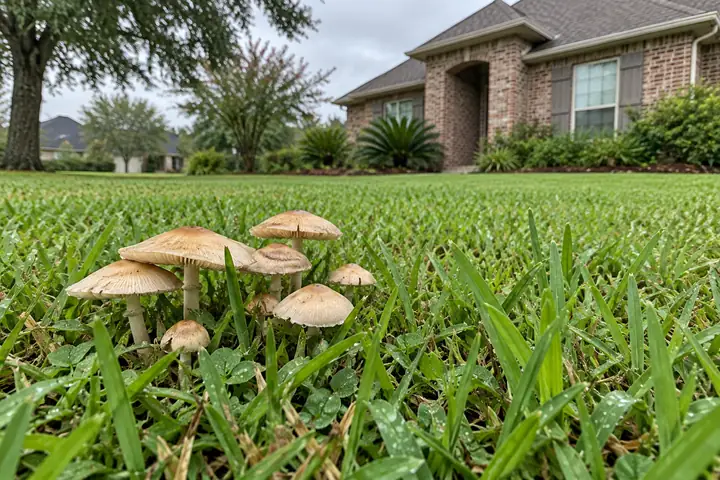
Start with the whole patch, not just a mushroom
The first thing you notice may be one pale cap near the walkway. Before deciding what it means, look at the surrounding lawn from a safe position. Is the grass still an ordinary color? Is the area scattered through the yard or concentrated beside an old tree location? A broad photograph can connect the mushrooms with the actual grass and make a service question easier to understand.
Add a closer view if you can take it without handling an unknown mushroom. Keep the two pictures together and note the date. A close image may show appearance, but it cannot explain the size of the affected lawn area or the route into it. You do not need to identify the organism yourself before telling Happy that something new has appeared where mowing is being considered.
Understand why cutting the cap is not the whole story
LSU AgCenter explains that the visible mushroom is a reproductive structure produced by a fungus; the organism can extend through material beneath the surface. Many mushroom-producing fungi break down organic matter. Removing a visible cap does not establish that the underlying fungus is gone or that another mushroom cannot appear later. That distinction matters when you are deciding what result to expect from ordinary lawn maintenance.
A mowing visit is about the agreed grass work and finish. It should not be represented as a cure for every underground fungal process. Tell Happy whether your concern is a visible obstruction, the lawn's appearance or a separate question about plant health. A request becomes much clearer when those concerns are named rather than grouped into a promise that one cut will permanently fix the mushrooms.
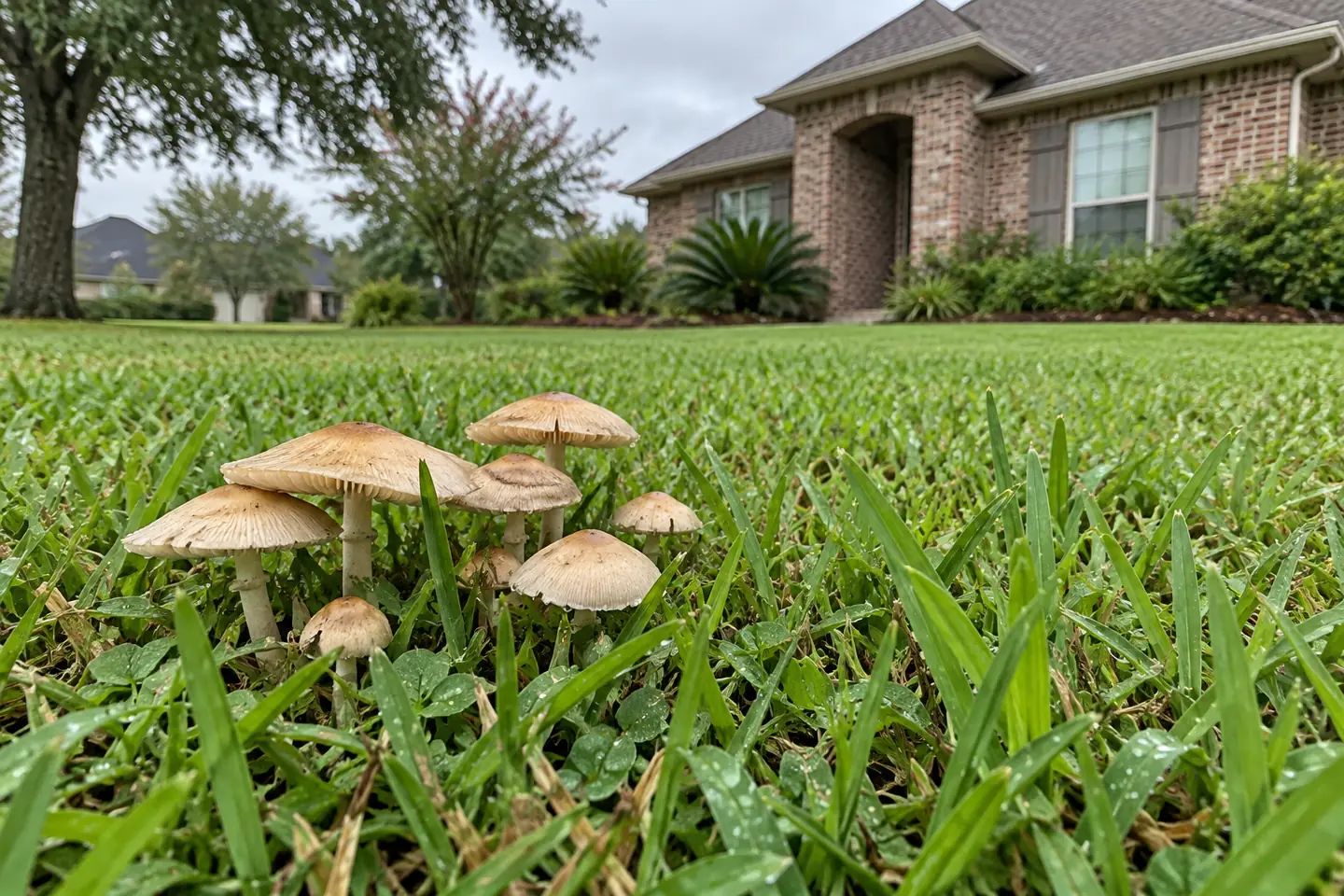
Keep lawn appearance separate from mushroom identification
A mushroom photograph is not a reliable eating-safety decision. Do not taste an unknown mushroom or treat an attractive lawn image as evidence that a species is safe. Keep children and pets away from unknown mushrooms, and use appropriate expert help for identification or a suspected exposure. Happy Grass lawn service does not identify edible species or provide medical or veterinary advice.
That boundary does not mean every visible cap signals dying grass. Look separately at the turf around it and describe any actual change. A mushroom next to ordinary grass and a broader patch of injured turf are different observations. You can report both without deciding that one caused the other. A practical maintenance request starts with what is visible and leaves technical identification to the appropriate source.
Notice patterns without turning them into a diagnosis
Mushrooms may appear scattered, grouped or in an arc. A ring-like pattern can be useful information, but shape alone does not settle the diagnosis or the work needed. LSU AgCenter's fairy-ring guidance describes different turf appearances, including rings associated with changed grass color or mushrooms. A photo that includes the surrounding lawn is more useful than a close-up that leaves that context out.
If you see a ring or an unusual grass pattern, record where it lies and how the turf differs inside and outside it. Do not assume that every circular patch has the same cause. Ask a qualified local plant diagnostic resource when the concern involves turf injury or a persistent unexplained change. The mowing discussion can still identify the grass areas and practical limits while that separate question is reviewed.
Mention recent rain and old organic material honestly
A short history can help explain the setting without becoming a homemade diagnosis. Say when the mushrooms were first noticed, whether there was recent wet weather and whether a tree or stump previously occupied the area. These details are context, not proof of a cause. If you do not know the property's older history, say that rather than filling the gap with a guess.
You should not excavate the lawn to find an explanation for a quote photograph. Hidden roots, buried material and unfamiliar features need their own review if they become a project concern. For the lawn conversation, current surface views and a few known facts are enough to start. A clear record of what you know is more useful than an elaborate story about what must be happening underground.
Check access and ground conditions independently
The presence of mushrooms does not tell you whether the ground is suitable for equipment. Show any soft area, standing water or narrow route separately from the mushroom detail. A firm-looking front strip may not describe a shaded passage to the backyard. Give Happy the actual access picture before assuming that the whole property can be handled in the same way on the requested day.
Use established paths for your photographs when possible. Do not repeatedly walk across a soft patch simply to test it, and do not move an unfamiliar object under the growth. If a section is uncertain, identify it and ask whether it should remain excluded pending another review. Lawn readiness and organism identification are separate questions, even when they happen to involve the same corner.
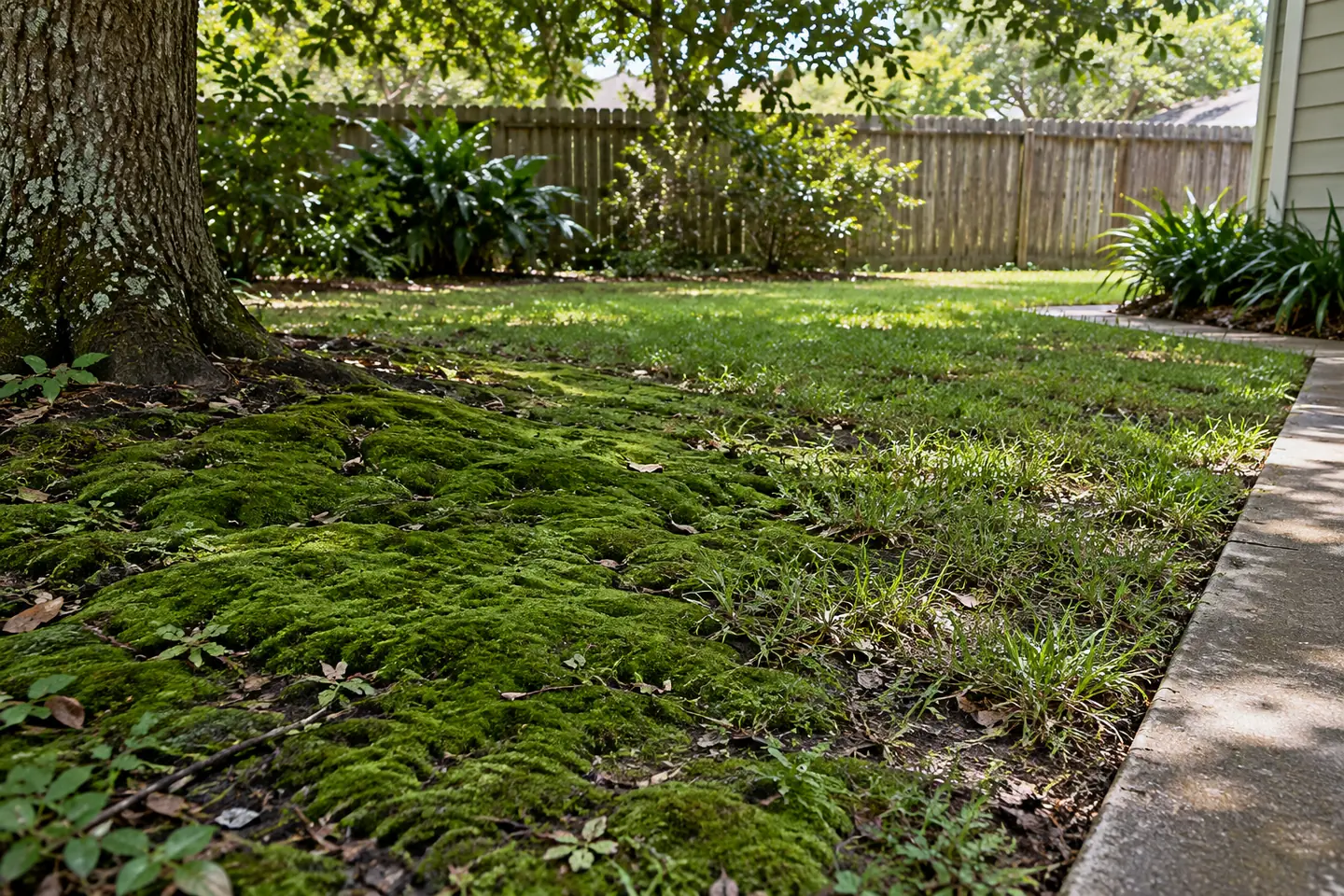
Define the requested lawn finish in ordinary words
You might want the open grass maintained, the walkway edge tidied or the backyard assessed for a first visit. State that plainly. If you also want visible mushrooms collected or another task performed, name it separately and ask whether it is offered. Do not assume collection, disposal or a fungal treatment is automatically part of mowing because the objects sit within the lawn.
Happy Grass offers mowing, edging, weed-eating and blowing, with weed-control questions reviewed separately. Fertilization, aeration, overseeding and pest control are outside the offered scope. A mushroom concern does not add plant-disease treatment, stump removal or underground investigation to those services. A clear request leaves room for a useful lawn answer without asking routine maintenance to promise a result it cannot establish.
Save a short record if the pattern returns
If mushrooms appear again, compare current broad views with the earlier dated images. Note whether the visible area has changed and whether the grass itself looks different. Keep the observations separate: caps returned near the old corner, grass remains similar, or a larger area now needs a plant-health question. You do not need daily photographs of every mushroom to make the record useful.
Do not treat recurrence after a cut as proof that the mowing caused it or that a promised cure failed. The actual agreement matters, and visible caps are only part of the fungal picture. Ask a specific question about the lawn finish while directing ongoing diagnostic concerns to an appropriate resource. A few accurate dates and photographs make both conversations easier to follow.
Use a simple message rather than a guessed solution
A useful message can be brief: mushrooms appeared in this area, these pictures show the grass around them, and this is the work I want reviewed. Add the access condition and any known recent change. If you have already received professional guidance that affects the lawn visit, explain the relevant instruction without expecting Happy to certify the diagnosis or treatment plan.
Keep the instructions connected to the current yard. An older mushroom photo from another part of the property should not stand in for today's concern. If the area becomes inaccessible or another service is scheduled there, send an update. The maintenance plan should describe the space available now, including any part that needs to be left alone while another question is resolved.
Give the grass and the question their own room
You do not have to solve every fungal mystery before asking about lawn care. Start with the real appearance, the surrounding turf and the work you want considered. A little context can keep a surprising patch of mushrooms from turning the entire service request into guesswork. Clear expectations make the next step more useful for everyone involved.
Text 504-339-3571 and Ask for Happy, or use the quote form with relevant current photos. Mention the mushrooms when they affect the area or result you want reviewed. Happy Grass serves Harvey and nearby Westbank communities. Let’s kick some grass with a practical maintenance plan and an honest distinction between a tidy lawn and a separate identification question.
Keep identification information out of the mowing shortcut
If you seek help identifying a mushroom, retain the identification question separately from the lawn-service request. Record the source of any answer and the limits attached to it. A resemblance in an online picture is not a reason to label the mushroom confidently or to treat a mowing preference as an instruction for handling it.
For Happy, describe the visible area, current access and the work you want discussed. If the household has kept people or pets away from an uncertain patch, make that boundary clear rather than relying on the crew to infer it. Compare later observations by location and date without treating a change in visible mushrooms as proof that an underlying cause was solved. The maintenance record can stay useful while a separate identification or safety concern remains with an appropriate source.