
Read the ground and the grass separately
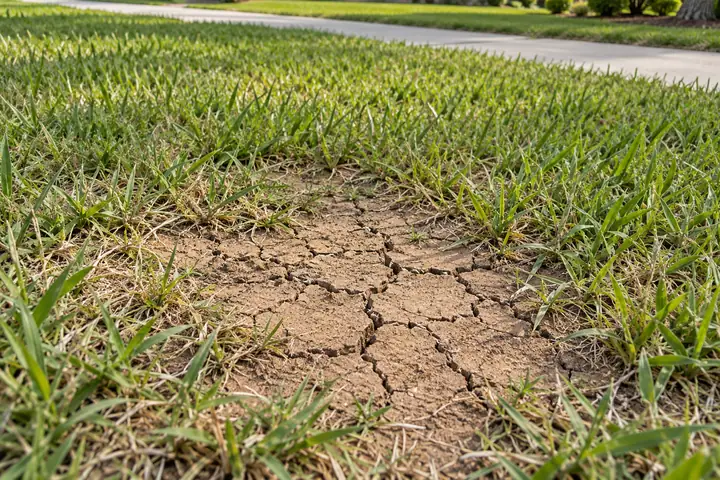
A brown crack between green blades can be striking, especially when it appears after a change from wet weather to dry conditions. Some clay-rich soils shrink as they lose moisture and swell as they become wetter. Kansas State Extension explains that relationship, but its regional examples are not a soil survey of your Louisiana property. Seeing a crack does not tell you the soil's exact composition or establish why a particular lawn section is struggling.
Begin with two observations: what the exposed soil looks like and what the living grass is doing. A small crack in an otherwise dense canopy raises a different maintenance question from broad bare ground with sparse, brittle growth. Describe the location and pattern before deciding whether to mow. Happy Grass can use that information to review access and the intended finish. If the ground is changing substantially or the cause is uncertain, the lawn may need a separate assessment beyond the next ordinary cut.
Capture a safe view of the pattern
Take a wide photograph showing where the cracked section sits in the yard. Include a familiar reference such as a walkway, fence or bed edge. Add a closer view from the stable edge so the spacing of the cracks and the amount of surrounding grass are visible. Do not put fingers, tools or a phone into an opening to measure depth. A photograph is enough to begin a discussion without disturbing a surface whose condition is not yet understood.
Write down when you first noticed the change and whether it followed a dry interval, recent digging or another known event. Distinguish a long continuous gap along a hard edge from a scattered network within exposed soil. If the area looks sunken, widened or newly displaced, say so plainly. Avoid calling a deep opening an ordinary drying crack merely because the surface is dry. Unfamiliar holes or abrupt settlement should be kept out of the mowing route until they receive appropriate review.
Check whether there is anything useful to cut
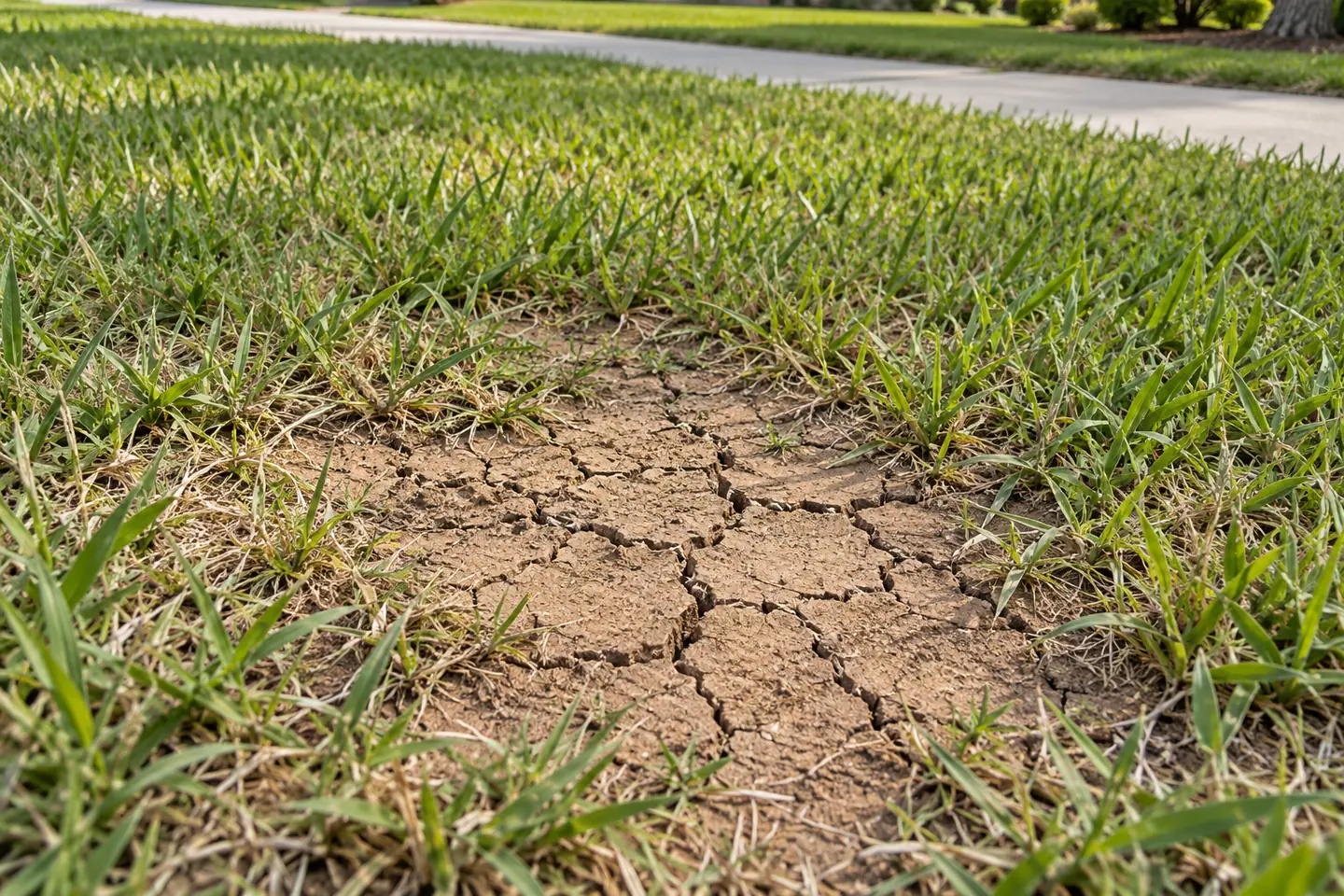
A calendar reminder does not establish that cracked or sparse ground needs mowing. Look at the grass that is actually present. Is it actively growing beyond the usual maintained height, or does the area consist mostly of exposed soil and short resting blades? Lowering the mower to chase a few uneven stems can change the appearance of surrounding grass without addressing the bare ground that made the patch noticeable.
Describe each section rather than averaging the entire property into one height. An open front lawn may need cutting while a dry side strip has little new growth. Happy can review whether a partial visit has a useful purpose and a workable route. Do not promise yourself that one extra-low pass will make the exposed soil blend in. Mowing manages the existing leaves; it does not create missing turf or close soil openings. A realistic finish may include a deliberately untouched patch that still needs attention after the rest of the lawn is tidy.
Keep wheels away from uncertain edges
An apparently small surface gap may sit beside an unstable edge, a low spot or an area altered by previous work. Do not test it by repeatedly walking or driving over it. Point it out before service and explain whether it crosses the normal entry or turning route. If the available path requires equipment to straddle uncertain ground, that access question should be resolved before the mower enters the section.
Mark the general location with an agreed visible reference placed on sound ground, without pushing a marker into unknown underground services. A wide photograph with the area identified can be simpler than a new physical marker. Tell Happy if an existing boundary flag belongs to another contractor and must remain in place. The aim is to make the concern easy to find while avoiding a new obstacle. A patch does not have to be large to affect the route; a narrow strip across the only gate opening can matter more than a broad patch in an unused corner.
Do not make an improvised repair for mowing day
Filling visible cracks with whatever material is available can hide the evidence without resolving the cause. Sand, gravel, compost and garden soil are different materials with different purposes. A handful added to an opening may also leave loose particles where equipment will travel. Before any repair, seek advice suited to the actual soil and the nature of the change. The mower should not be used to compact a home-made fill into place.
Similarly, a sudden soaking immediately before the visit may change both the ground and the grass without making the area ready to carry equipment. If watering is part of an existing landscape plan, tell Happy when it occurred. Do not use this guide to set a universal watering amount or schedule. The immediate maintenance decision can stay simple: identify the affected section, preserve a clear route around it if possible and agree what is excluded. Soil repair, drainage changes and structural concerns require their own qualified review and should not be folded silently into a lawn-mowing request.
Compare the surface after conditions change
A follow-up picture after a later weather change can help explain whether the same surface gaps become less visible or whether the ground profile remains altered. Keep the camera position similar and include the same reference feature. Do not interpret a less visible crack as proof that every underlying issue has resolved. Grass cover, lighting and moisture can all affect what the camera shows.
If the patch repeatedly opens, stays bare or changes shape, record that pattern for an appropriate adviser. The useful comparison is factual: this gap was visible on one date and the area looked different on another. If nearby paving has moved or a building shows new concerns, take that question to a qualified professional rather than relying on a mowing assessment. Happy's role in this conversation is to understand which grass can be maintained and which ground should be avoided. Keeping those responsibilities clear makes it easier to arrange ordinary service without pretending that a tidy lawn is a soil or structural inspection.
Account for loose soil during the clean finish
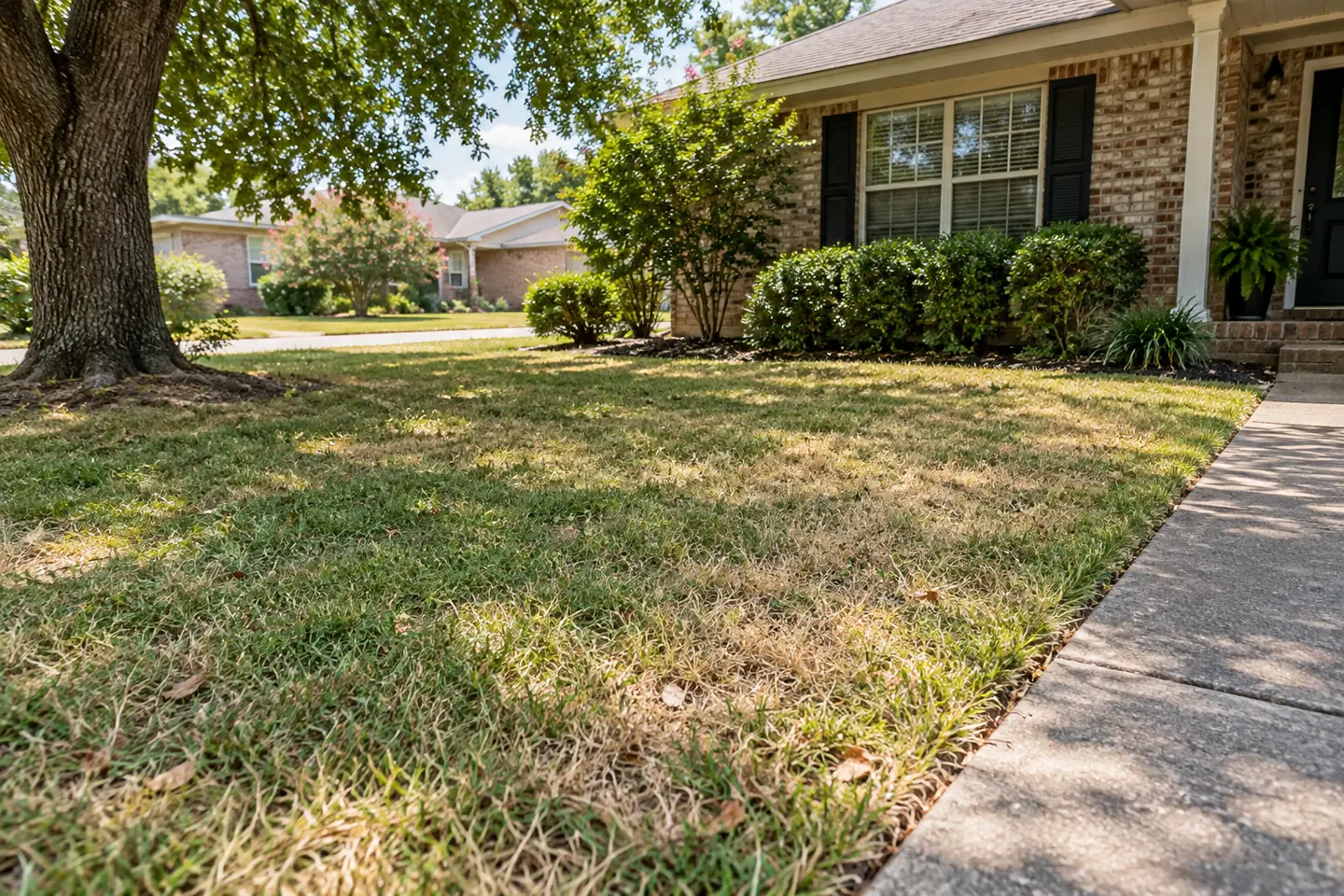
Bare dry ground can create dust when disturbed. A clean-finish request should identify exposed patches near doors, vehicles, patios or neighboring property. The goal is to leave accessible hard surfaces tidy without pushing loose soil through openings or moving it onto another property. Tell Happy about an open porch, freshly cleaned patio or sensitive nearby items before the visit so the finish can be considered alongside the cutting route.
Move lightweight belongings off the adjacent grass when it is practical and safe to do so. Do not sweep loose gravel from a path into the cracked patch as a convenient disposal spot. If a previous project left construction material in the area, explain that separately; a dry soil appearance should not conceal debris that might affect equipment. Photographs of the surface after you remove ordinary belongings can help show what remains. A clear description of the exposed ground reduces the chance that everyone arrives expecting a normal dense-lawn visit when the property actually needs a more limited approach.
Give Happy a decision-ready description
Your request can be short and useful: the grass beside the drive has little growth, a new network of cracks is visible, and you would like the front lawn maintained while that strip is reviewed. Include the photographs and explain whether the route to the back crosses the same area. That is more actionable than asking for the yard to look perfect without mentioning the ground change.
If you already have advice from an extension office or another qualified professional, share the relevant maintenance restrictions and their date. Explain any work performed since that advice, especially added material or changes to access. Ask Happy to confirm the intended cutting boundary rather than assuming it will be obvious on arrival. You can reach Happy Grass at 504-339-3571 and ask for Happy. A well-described limitation is not a failed visit: it is the information needed to maintain suitable grass while giving a changed soil surface a separate, honest review.
Show the crack's position without trying to measure its depth
For a visible crack, a useful overview shows where it lies in relation to the grass area and the approach. A second view can document the surface from a position you can ordinarily reach. Avoid probing or opening the crack to make the description seem more complete. A photograph can communicate a visible interruption without establishing its depth, cause or structural significance.
If the same feature appears in several pictures, label it consistently so the record does not suggest several separate cracks. Explain whether the current question concerns access, the edge of the requested grass area or a change you noticed since an earlier visit. Those practical details can support a maintenance review while questions about the ground itself remain with an appropriate separate assessment.