
Look beyond the apparent height
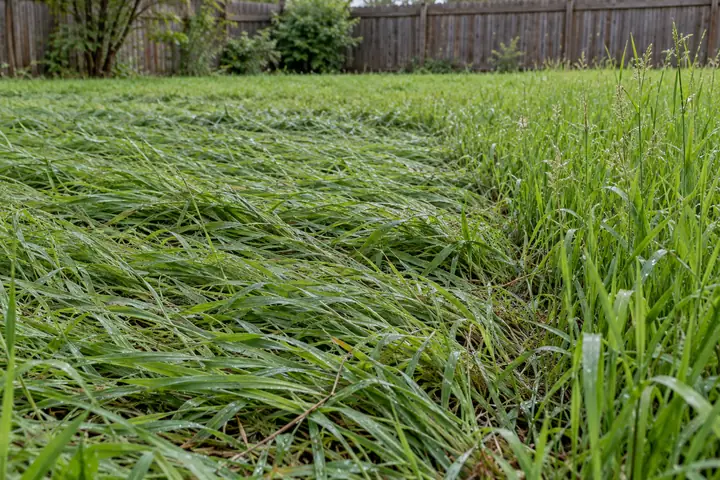
Tall grass lying sideways can look shorter than the same leaves standing upright. That makes a quick glance from the porch a poor basis for choosing the next cut. Begin by noticing the direction of the lean and whether the flattened area is broad or localized. A sweeping patch after rain, a narrow traveled line and a flattened circle where an object sat deserve different descriptions. Do not assume all bent grass has the same cause.
Happy Grass needs to understand what the canopy looks like before equipment reaches it. A wide photograph from the path can show the lay of the grass against an upright edge. Mention whether the lawn recently became wet, carried foot traffic or held an object that has now been removed. If the history is unknown, leave that part open. The useful maintenance question is what can be cut appropriately today, with a clear view of the ground and a fair expectation for the finish.
Show the lay without trampling the patch
Take one picture along the direction the blades lean and another across it. Those views often show the flattened canopy better than a single overhead image. Include the adjacent upright grass so Happy can see the contrast. Do not repeatedly walk through the patch to demonstrate its spring or flatten it further while staging a photograph. A naturally visible edge is enough to begin the conversation.
If you measure the lawn, explain where you took the reading. A ruler held above flattened leaf tips may describe the canopy's current position rather than the full length of the leaves. Do not tug the grass into an artificial pose and present that as the normal standing height. The point is not to produce a perfect number; it is to show that the grass is both long and leaning. A photograph with a brief note about the direction and extent helps prevent an ordinary mowing request from understating the amount of growth.
Confirm what is hidden beneath the leaves
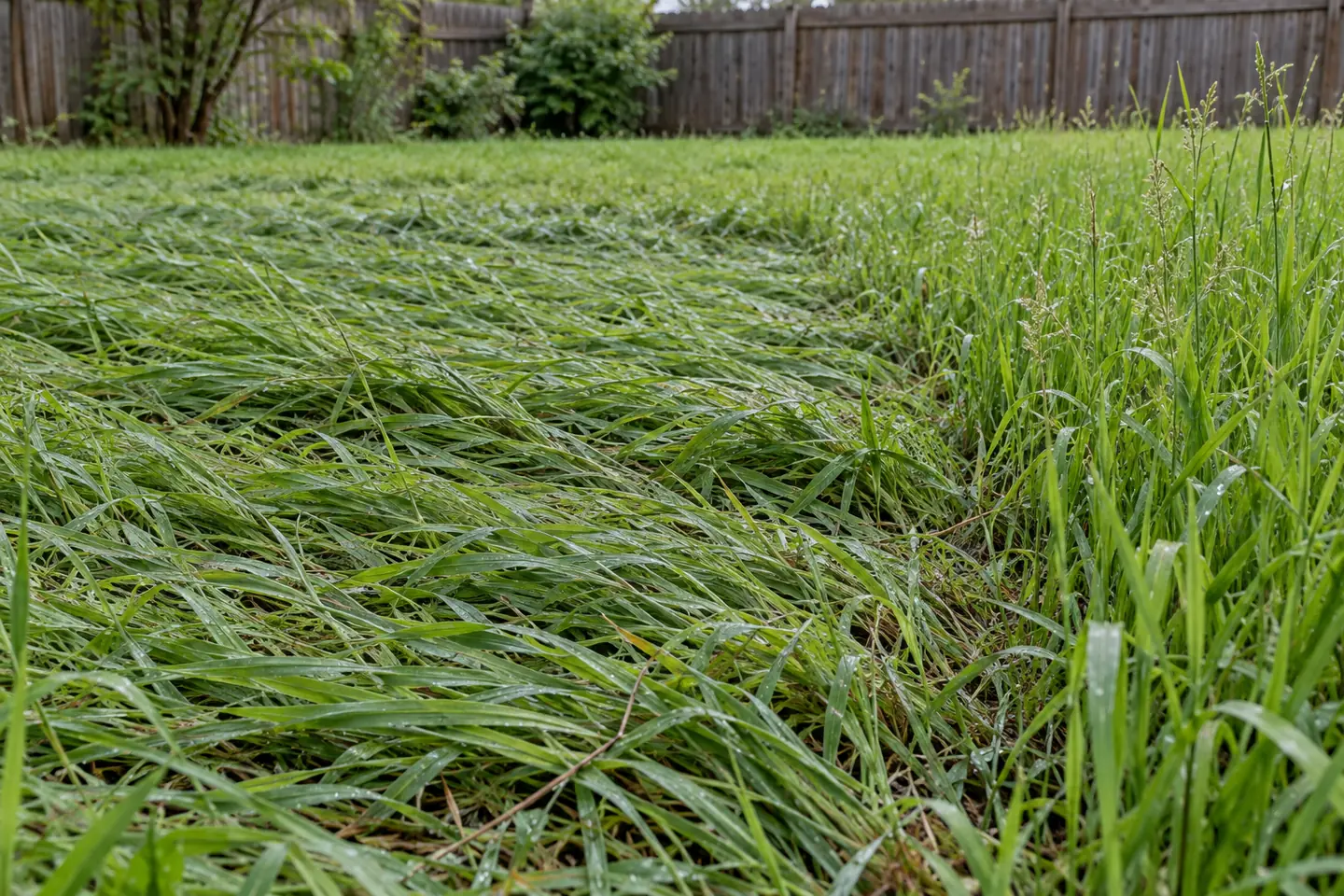
A dense flattened canopy can conceal small belongings and changes in the surface. Before a visit, remove ordinary visible toys, lightweight garden items and loose household objects when you can reach them safely. Tell Happy about anything that cannot be found or moved, including a missing hose fitting, pet tie-out or recent project debris. Do not send the mower through tall cover as a way to discover what is underneath.
Look from accessible ground for known features such as sprinkler heads, utility covers and bed borders. Identify their locations even when the grass makes them difficult to see. If the surface is unfamiliar or the vegetation prevents a useful inspection, the job may need a different review before normal equipment enters. Toro's operator guidance emphasizes inspecting the work area and removing objects that could be thrown; the actual machine's manual governs its operation. This guide is about preparing a useful property description, not replacing that inspection or telling an operator to bypass a guard to handle long grass.
Separate a wet canopy from soft ground
Leaning grass may remain damp while the surface beneath it has another moisture condition. Both matter. Wet leaves can affect the cut and clipping handling, while soft ground affects the route and the marks equipment may leave. Describe them separately instead of saying the yard is dry because the patio is dry. Sheltered grass behind a fence can behave differently from the open front section.
If recent rain caused a delay, update the photographs before the rescheduled visit when practical. Additional growth and a changed lean may make the earlier picture less useful. Do not add a quick watering to make the grass stand differently for the camera. Happy should see the conditions that influence the real visit. A partial cut may be worth discussing when suitable access reaches the open lawn independently, but that decision needs a defined boundary. The fact that one section looks manageable does not establish a suitable route across a flattened damp section to reach it.
Discuss a first-cut expectation honestly
A lawn with tall leaning growth may need a more cautious recovery plan than a regularly maintained canopy. University extension guidance generally recommends limiting the amount of leaf removed at one mowing, with a height appropriate to the grass. That principle is a reason to review the first cut and later growth, rather than demand a familiar low appearance immediately. Do not choose a universal setting from this page; species, condition and equipment all matter.
Ask Happy what finish is realistic within the proposed visit and whether further review will be needed after the canopy changes. The first cut may reveal an uneven ground surface or mixed growth that was hard to see before. Longer pieces and bent leaves can also influence the appearance. An honest agreement can acknowledge those limits without treating them as permission for an undefined job. Clarify the area, ordinary finish work and any added clipping handling before work starts. A recovery visit should have a concrete scope even when the lawn will not look like a long-established maintenance result afterward.
Avoid trying to force an instant upright lawn
Brushing, raking or repeatedly driving over the grass to make every leaf stand up is not automatically useful preparation. Aggressive handling can disturb the canopy and may conceal the original condition that Happy needs to assess. If a specialist has recommended a particular action for your lawn, share that advice and its context rather than improvising a new process immediately before mowing day.
Do not assume repeated passes are included or beneficial. Each pass changes the surface and adds traffic, so its purpose should be considered by the operator under suitable conditions. The owner's useful role is to identify the lean, clear ordinary belongings and explain known obstacles. Leave equipment settings and travel decisions to the person responsible for the machine. If the grass is tangled around debris or hides an uncertain area, point that out and leave it untouched. The goal is a sensible cut of a known lawn area, not a demonstration of how much tall cover a mower can push through.
Compare the result from the same viewpoint
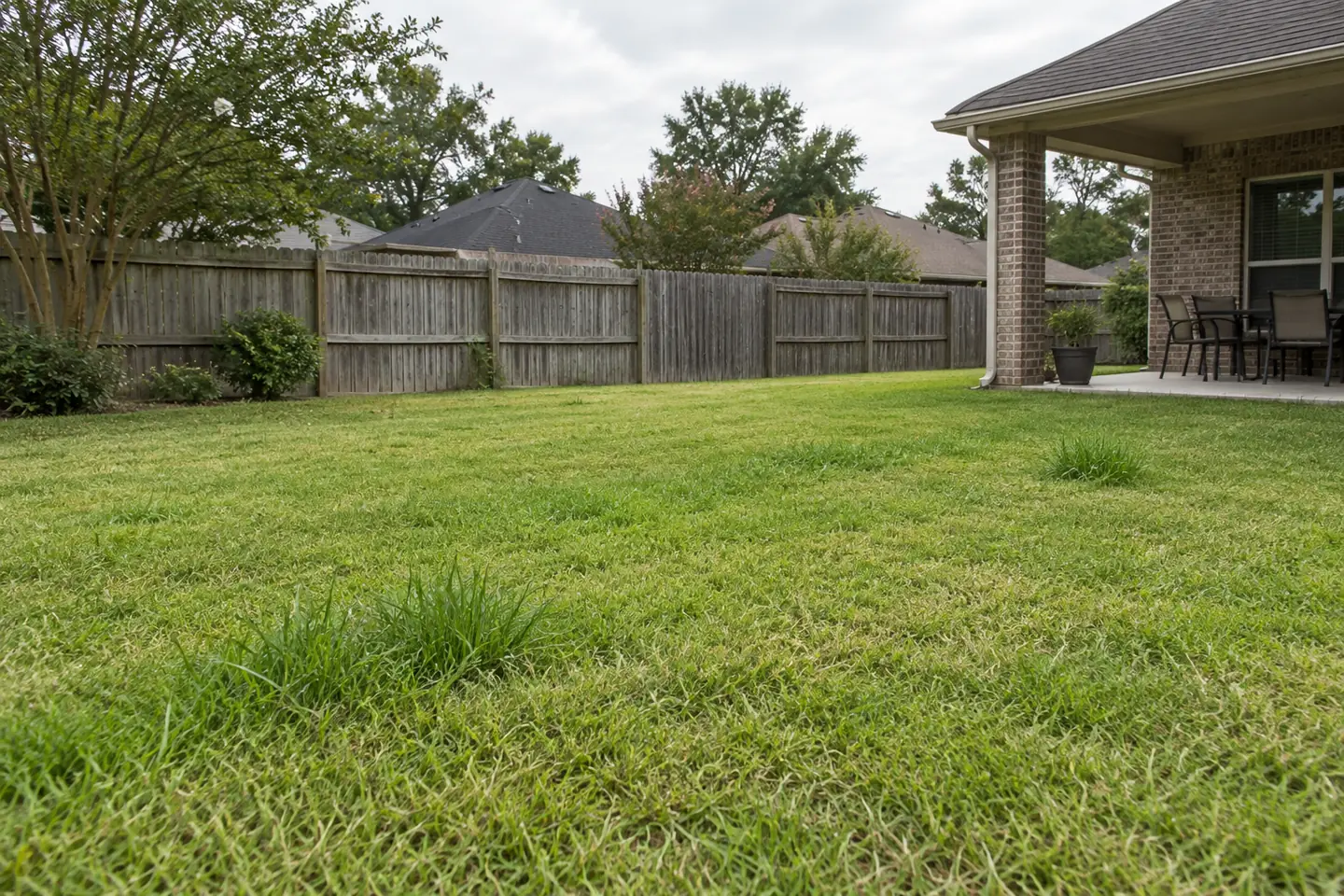
After the visit, use the same two angles to see what changed. Look for standing long leaves, remaining flattened sections and the distribution of cut material. A stripe that changes with viewing direction may be a canopy effect, while an actual long patch can be shown with a closer picture. Describe what you see without assuming the cause from a distant photograph.
If leaves rise later and become more visible, record when you noticed them. The timing can help distinguish the appearance immediately after cutting from the lawn's condition afterward. Do not lower the next cut solely to erase every directional difference. Discuss the recurring pattern with Happy and show the earlier pictures. If the underlying turf looks thin, damaged or unlike the rest of the lawn, that may require its own review. A mowing result can expose a pre-existing concern without explaining it. Keeping the observations separate makes a follow-up request fairer and more likely to resolve the actual issue.
Prevent a long-gap cycle where possible
Once the lawn returns to an ordinary manageable state, discuss whether the service interval fits its growth. A repeated pattern of tall grass leaning before each visit suggests the timing deserves another look. Record the actual cut dates and interruptions, including gate-access problems that prevented a planned visit. Those details are more useful than assuming a calendar label guarantees the same amount of growth every time.
For your next request, send the current views, the last known cut and the locations of hidden fixed features. Tell Happy which sections are flattened and which have independent access. Call 504-339-3571 and ask for Happy to review the yard. A workable plan can include a first cut, an agreed clipping finish and a later look at the remaining canopy. It should not promise instant perfection or silently expand into clearing unknown ground. Clear information gives the lawn a fair start back toward a routine that suits the property.
Use the direction of the grass to orient the view
When tall grass lies across itself, a straight-down photograph can obscure the direction of the flattened section. Add an ordinary side or oblique view from an accessible position, with a fixed border in frame. Explain which way the grass lies relative to that border. This helps describe the condition without asking someone to infer the whole patch from apparent height alone.
Keep any hidden-ground question open. A view of the upper leaves cannot confirm that the surface beneath is clear, and pushing through the patch to investigate is not needed for a useful initial request. State what has been checked and what remains unseen. The next scope discussion can then address the actual starting condition instead of assuming that a flattened canopy is simply a shorter version of upright grass.