

Make the whole lighting layout visible
A path light is easy to notice beside a walkway and easier to miss when grass leans around its base. Before requesting service, show Happy Grass the layout in daylight. Include small spotlights near trees, fixtures beside beds and any lights that sit inside the grass rather than behind a defined border. Do not assume the tallest fixture represents everything installed in the yard.
Count the visible fixtures and identify their general locations in plain language. A useful note might distinguish three lights along the front path from two small fixtures beside the back bed. If you do not know whether there are more under dense growth, say so. A maintenance visit should not discover an incomplete lighting map by contact with equipment. The goal is a recognizable cutting boundary around known features, with uncertain sections reviewed before work. That practical preparation matters more than describing the system by its brand or the color of the light it produces at night.
Show bases and nearby surfaces
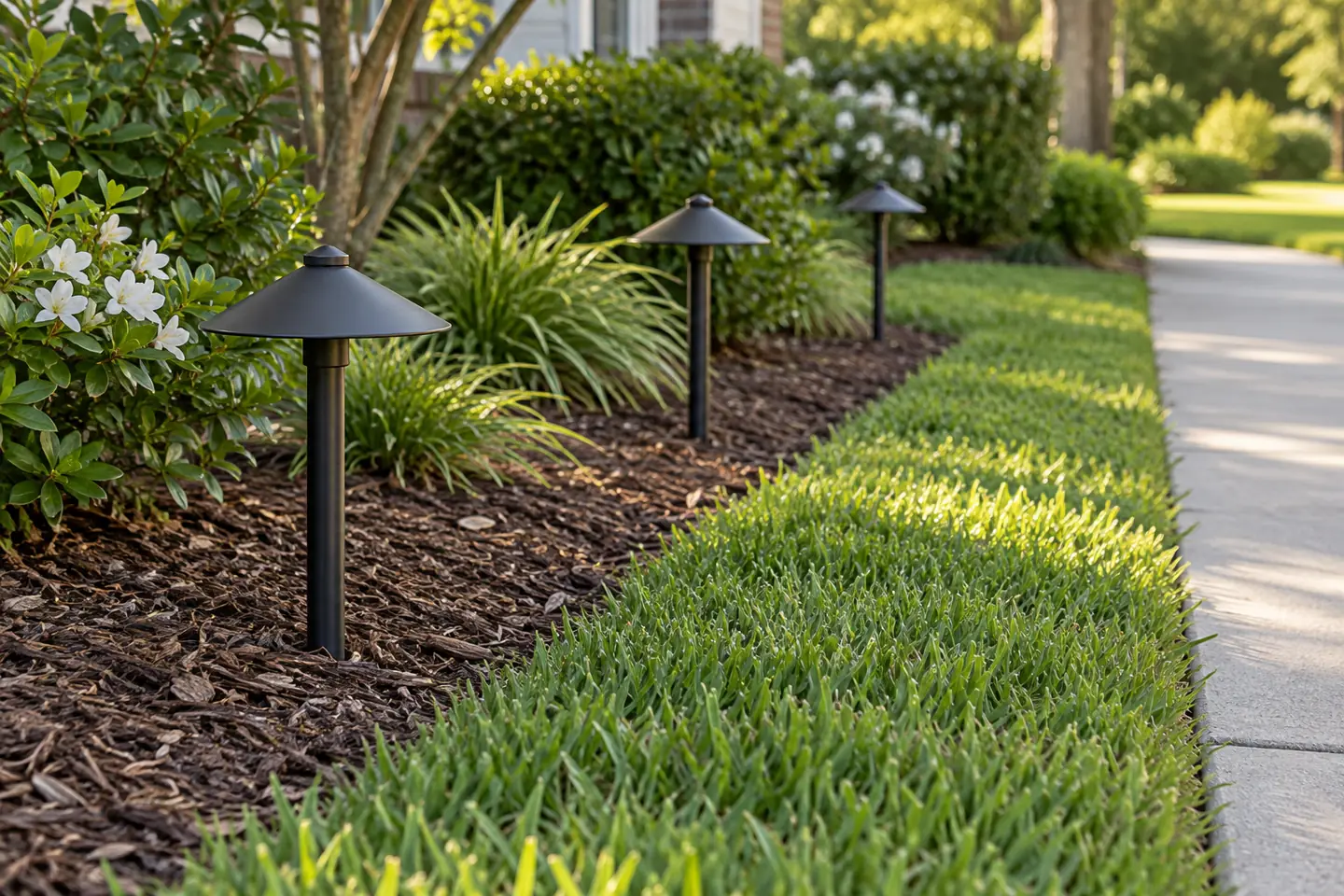
Take a wide photograph of each group, then a closer view showing how the fixtures meet the ground. The base location matters more to mowing access than an attractive night photograph of the illuminated path. Include edging, mulch, gravel and grass around the fixtures. If a light leans, has a loose cover or appears recently disturbed, identify that condition before the visit rather than asking the crew to straighten it in passing.
Lighting manufacturer Kichler discusses fixture movement and the care needed when adjusting equipment. That is a reason to leave adjustments to the appropriate person and follow the actual product instructions. A mower visit should not become an improvised repair session. Do not pull a fixture upright by its shade to make the photograph look tidy. Preserve the existing condition, point it out and seek the right maintenance review if needed. A clear record protects the conversation from confusion about whether a lean was present before grass cutting began.
Treat visible cable as a separate concern
If a cable, connector or unfamiliar wire is visible in the lawn, keep it out of the cutting and trimming route pending appropriate review. Do not assume it is harmless because the lights are described as low voltage or powered by a small panel. A photograph cannot establish the electrical condition, connection or suitability of an exposed installation. Happy needs to know where the restriction is, without being asked to identify or repair the wiring.
Do not push the cable into the soil with a tool, cut it shorter or hide it under a handful of clippings before the visit. Have the responsible qualified person address the system as appropriate. If you know an installer left a temporary route or a section awaiting completion, share that information and the affected boundary. The service plan can exclude a clearly identified area when other grass remains reachable. It should not depend on an operator guessing which visible wire belongs to which light while equipment is ready to run.
Choose a boundary the crew can recognize
A fixture inside a mulched bed creates a different maintenance edge from one standing in an open grass strip. Show whether the border is continuous and visible. If the grass has spread over it, identify the intended line without assuming the crew can infer the original design. A clear bed edge can help define where routine lawn work ends, but it does not establish where buried cable runs.
For fixtures in turf, discuss the margin and finish that can reasonably be maintained around each one. Do not specify a universal tiny clearance from this guide; the fixture, ground, equipment and actual access matter. An intentionally cautious margin should be agreed instead of mistaken for a missed patch. If you want a different landscape arrangement to simplify future maintenance, take that project to the appropriate installer. Happy can review the existing lawn boundary without moving lights, changing cable routes or promising that every blade against a delicate stem can be cut the same way as open turf.
Keep portable and installed lights distinct
Some small solar lights are removable household items; other similar-looking fixtures are installed parts of a larger system. Tell Happy which is which based on what you know, not on appearance alone. If you plan to remove ordinary portable lights before the visit, confirm that preparation and keep their stakes or loose parts out of the lawn as well. A light head in storage is not enough if its base remains hidden in the grass.
Use a simple preparation check:
- Identify the lights the owner will remove.
- Verify that no loose stakes or parts remain in the work area.
- Show the installed fixtures that will stay in place.
- Explain the service boundary if preparation is incomplete.
Do not ask the crew to dismantle an unfamiliar installed fixture just because a nearby portable light lifts out easily. A consistent distinction prevents surprises during an unattended visit. If another household member handles the preparation, make sure the service note reflects what was actually completed rather than what someone expected to do earlier that morning.
Plan travel and the clean finish together
Fixtures can narrow a mower route near a gate, path junction or corner bed. Photograph that pinch point from the direction equipment would approach. The lights may be individually small while their combined layout leaves little room to pass or turn. Happy can review the route and decide what maintenance area is reachable under suitable conditions. Do not treat contact with a fixture as an acceptable part of squeezing through.
Also show delicate lenses, freshly planted beds and loose mulch near the finish area. Blowing cut grass off a path should be considered with those surfaces in mind. Tell Happy if a lens or cover is already missing so that the condition is visible in the record. Ordinary cutting and blowing do not include opening fixtures or cleaning their electrical components. Keep children and pets away from the work area, and move household belongings clear of the route. A tidy path is easier to achieve when the surrounding features are known and the approach has enough usable space.

Update the record after installation changes
New lights, relocated fixtures and garden work can make an old access picture unreliable. Send an update before the next visit whenever the layout changes. Include temporary installation materials and areas where the ground has been opened. Do not assume the crew knows which contractor worked on the property or whether a new trench is ready for traffic. A previous cutting route is only useful while the conditions it describes remain current.
After lawn service, a daylight view from the original position can document the finish and fixture positions. If you notice a change, identify the particular light and what looks different. Share the earlier picture when available instead of making a broad claim about every fixture. If the concern involves an exposed connection or damaged equipment, leave it for the appropriate repair review. The maintenance discussion can address the lawn result and the observed condition without asking Happy to certify an electrical system. That distinction keeps a follow-up request focused and helps the right person handle the actual problem.
Include the lighting constraint in the quote
A good request shows the daylight layout, names any owner preparation and asks Happy to review the reachable grass around the installed fixtures. Add whether another entrance avoids a narrow group of lights. That lets the quote consider the property's actual maintenance boundary instead of a simple lawn area that omits its obstacles.
For an ongoing arrangement, keep one current set of pictures and revise it after changes. Tell Happy when a previously excluded section has been appropriately repaired and is ready to be reconsidered; do not quietly remove a restriction without explaining why. Call 504-339-3571 and ask for Happy to discuss ordinary mowing, edging, weed eating and blowing around the property. Clear locations and realistic margins give the crew useful information while keeping fixture installation and repairs with the people responsible for that equipment. The lawn can look cared for without pretending small lights are invisible obstacles.
Do not use whether a light is on to describe the boundary
A fixture that is dark in a daytime photograph is still a feature of the lawn layout. Identify the base and its location without drawing conclusions about whether the system is connected or operating. If a cable or component is visible, show where it is from an ordinary viewpoint and keep equipment questions with the person responsible for the lighting.
For several similar fixtures, use position labels tied to the route, such as the first light beside the walk and the corner light near the gate. This helps distinguish a new concern at one fixture from a general request around all of them. The lawn scope can then describe recognizable grass boundaries while leaving electrical operation, repairs and system changes outside the assumptions of the visit.