
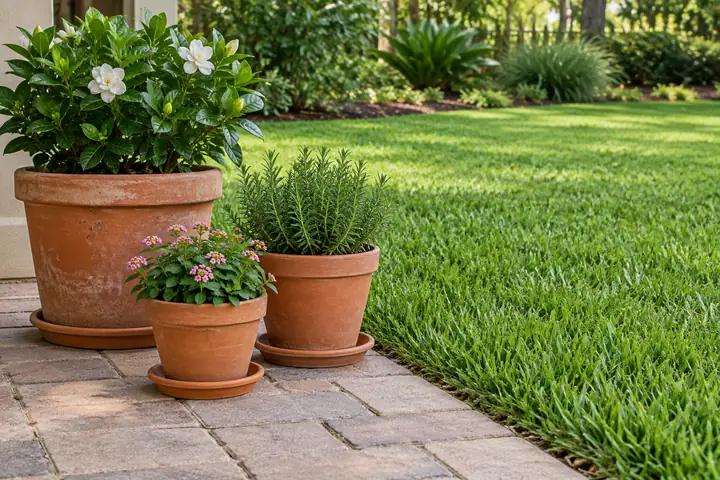
Count the whole container arrangement
A planter is more than the pot visible above the grass. A saucer, rolling base, support stake or trailing stem may extend beyond it. Show Happy Grass the complete arrangement before requesting close mowing or trimming. Photograph the base from the lawn side so the edge of the grass and the objects resting on it are easy to distinguish. A picture of the flowers alone leaves out the maintenance question.
Start by deciding which containers will stay in place. Do not assume a decorative pot is light because it is small, or portable because it was moved once before. Soil, water and the plant itself affect how an owner handles it. A container may also be fragile or attached to a support. The quote should describe the grass that is accessible under the proposed arrangement, with any owner preparation settled separately from ordinary mowing. A cheerful garden corner can remain a garden corner without requiring the crew to reorganize it by guesswork.
Separate plant growth from lawn growth
Trailing plants may lie over grass beyond the container, and small seedlings can make the intended boundary unclear. Identify what belongs to the container display and what lawn growth you want maintained. Do not expect a trimmer operator to know which stem is a valued plant solely because it happens to be near a pot. A clear picture and a short explanation can prevent that ambiguity before the visit.
If a plant has grown across the normal equipment route, have the person responsible for the planting decide how it will be handled. Do not bend, tie or cut it merely to create a temporary path unless that is an appropriate owner action for the plant. Happy can review the existing lawn boundary without offering plant pruning or container maintenance as an assumed service. The useful question is where grass cutting can stop while leaving the intended plants and their supports outside the operating area.
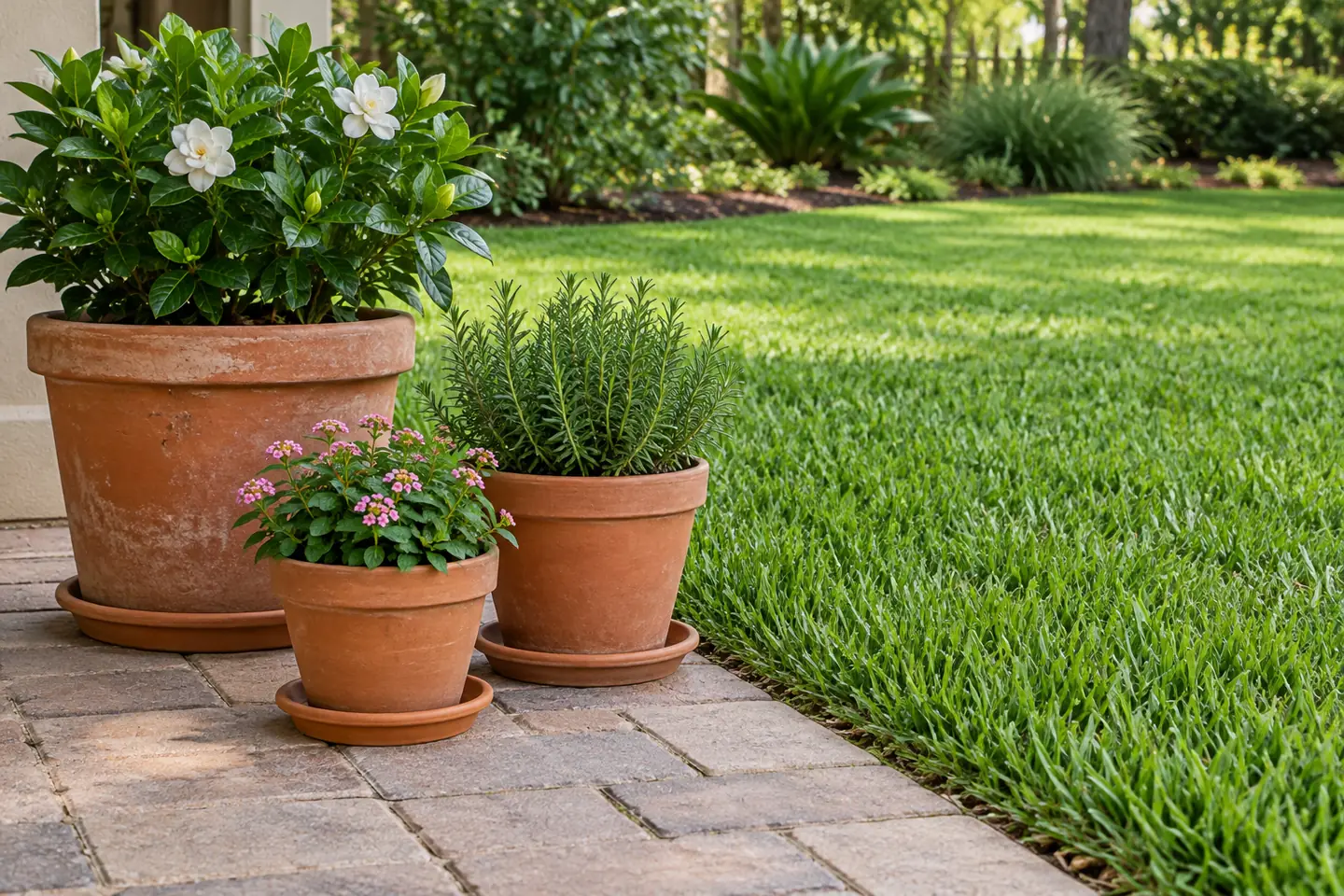
Decide who handles heavy or delicate pots
Tell Happy if the owner plans to move containers before service, including where they will be stored and whether their bases will move too. Leaving a rolling platform or saucer behind can keep the grass obstructed after the pot is gone. Avoid making preparation depend on someone lifting an item they cannot reasonably handle. A container that cannot be moved appropriately should be treated as a fixed feature for the quote.
Do not ask the crew to test a cracked pot, pull a large planter across the lawn or discover whether a root has attached it to the ground. Those are different handling questions from maintaining nearby turf. If another person will prepare the yard, explain the agreed arrangement to them directly. The mowing request should match what will actually be ready, rather than an optimistic assumption that every container will be moved somewhere before arrival. An intentional uncut patch beneath a stationary pot is clearer than an undefined expectation of access underneath it.
Give watering observations their own note
Containers may be watered on a different routine from the lawn. Iowa State Extension describes water draining through a container's bottom openings during watering. That background makes it useful to note where drainage reaches adjacent grass or paving. It does not establish that a damp patch beside your pot is caused only by the container or tell you how to change the plant's watering needs.
Tell Happy when a nearby strip has recently been watered and whether you have observed the ground staying soft there. Keep the maintenance observation separate from a plant-care recommendation. Do not stop watering a valued container simply because a mowing date is on the calendar without considering its needs. Instead, coordinate with the person responsible for the plants and report the conditions honestly. A dry open lawn and a damp planter corner can require different decisions within the same visit, especially when that corner lies on the only route through the gate.
Review the surface under and between containers
After pots are moved, the newly visible grass may be flattened or thin, and loose potting material may remain. Photograph the uncovered area before a cut if its condition matters to the request. Do not assume mowing can restore the previous footprint immediately. The visit can maintain accessible leaves while the owner considers any separate plant or ground concern that the arrangement concealed.
Look for supports, plant labels, loose stones and small pieces of a damaged container. Do not sweep those materials into the lawn to make the pavement look clear. If broken pottery or another sharp material is present, identify the affected area and arrange appropriate cleanup before routine lawn equipment enters it. A decorative gravel surface also needs to be shown; loose stone beside the grass changes the boundary from an ordinary pot sitting on pavement. The preparation should make the actual surface easier to understand rather than hide small obstacles beneath fresh soil or clippings.
Choose a practical finish around the display
A row of pots may leave separate pockets of grass that cannot be approached like a single open strip. Discuss whether those pockets are included and how an intentional margin will be recognized. Do not assume a very tight finish is possible against every delicate container, low plant stem or narrow support. The current layout, material condition and equipment access all matter to the appropriate boundary.
Use the ordinary service scope as the starting point: mowing reachable grass, suitable edging, weed eating and the agreed clean finish. Do not silently add pot cleaning, repotting, plant relocation or removal of old container debris. A request can be friendly and still be specific. If you want a future layout that simplifies maintenance, that is an owner or garden-design decision to review separately. For the present visit, clear photographs of the bases and the lawn edge give Happy the information needed to describe what can reasonably be reached without disturbing the display.
Keep small preparation tasks complete
Container displays change through the season. New supports, a larger saucer or a relocated pot can make an old service photograph unreliable. Update the picture when the layout changes, especially if the containers now narrow an entrance or cover a previously accessible grass edge. A service note that says the pots will be on the patio should reflect their actual position for that visit.
Before calling the preparation complete, check the details:
- Account for every saucer, dolly and separate stand.
- Identify plant supports or labels that remain in the grass.
- Keep any stored pots out of the equipment entrance.
- Report fresh watering or loose material near the intended route.
For an unattended visit, confirm who checks those items. If the planned preparation has not happened, tell Happy rather than relying on a crew member to infer a new arrangement. The fallback may be a smaller clearly defined area or a different plan, and that decision should be made with the actual layout in view.
Make the quote about the reachable grass
Send a current wide view of the container corner and closer base photographs. Explain which pots stay, which the owner will move and what surface will be left behind. Include a view of the gate if the arrangement affects access. That is more useful than a close-up of attractive flowers paired with a request to make all the surrounding grass disappear.
After maintenance, look at the finish before returning movable pots to the lawn. If you have a question, photograph the visible margin and explain any preparation or movement that occurred. A later photograph taken after containers have been rearranged may show a different boundary from the one available during the visit. Call 504-339-3571 and ask for Happy to discuss the yard. With the planting display and lawn scope both described clearly, you can keep the colorful part of the garden while arranging a sensible cut of the grass around it.
Describe the display from the lawn side and the access side
A row of planters can have an open grass edge in front and a much narrower space behind. Include both relationships in the request if both areas matter. A photograph taken toward the flowers may hide the rear strip completely. Explain whether that strip is part of the work being considered, deliberately excluded or still awaiting a decision about the display arrangement.
Keep moving the containers as an explicit household preparation question. A small-looking planter in a picture may be heavy, fixed or connected to a watering setup. Do not make its apparent size stand in for permission to move it. Describe the arrangement that will actually exist when the grass needs to be reached.
After changing the display, retain the same area labels so the update is easy to follow. A new pot does not necessarily create a new lawn section, but it may change which grass remains accessible. That distinction keeps the request focused on the reachable area and the finish you want discussed, rather than an assumed plant-moving task.