
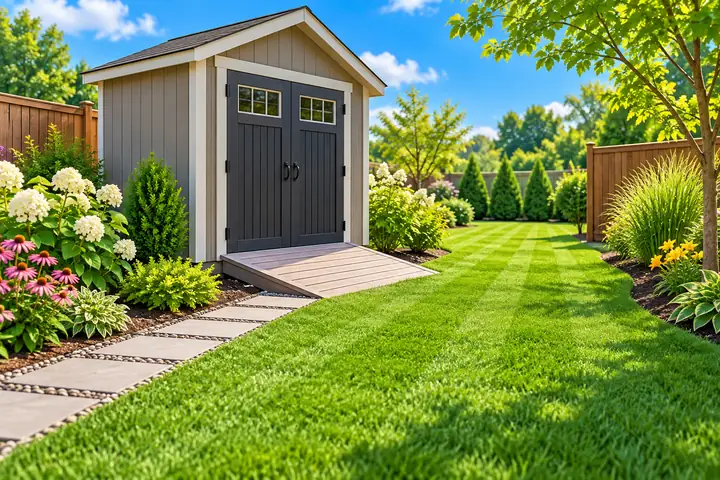
Start with the whole shed footprint
Walk all four sides and mark the walls, ramp, threshold, roof drip line, utility attachments and any narrow pocket against a fence. A front view alone can hide the tightest grass and the only practical turn.
Treat the building as fixed. Happy Grass can plan around visible lawn features, but does not judge foundations, siding, doors or structural condition. A leaning panel or soft floor belongs with the owner and an appropriate building professional.
Draw the ramp and landing separately
Show where the ramp begins, how wide it is and whether its lower edge meets grass, gravel or pavement. The landing should remain clear enough for the owner to enter the shed without stepping over lawn equipment.
Grass that grows against a wooden ramp is a trimming question, not a hard-surface edging line. Avoid cutting into lumber, fasteners or an uncertain buried border. A small protected strip can be cleaner than repeated contact damage.
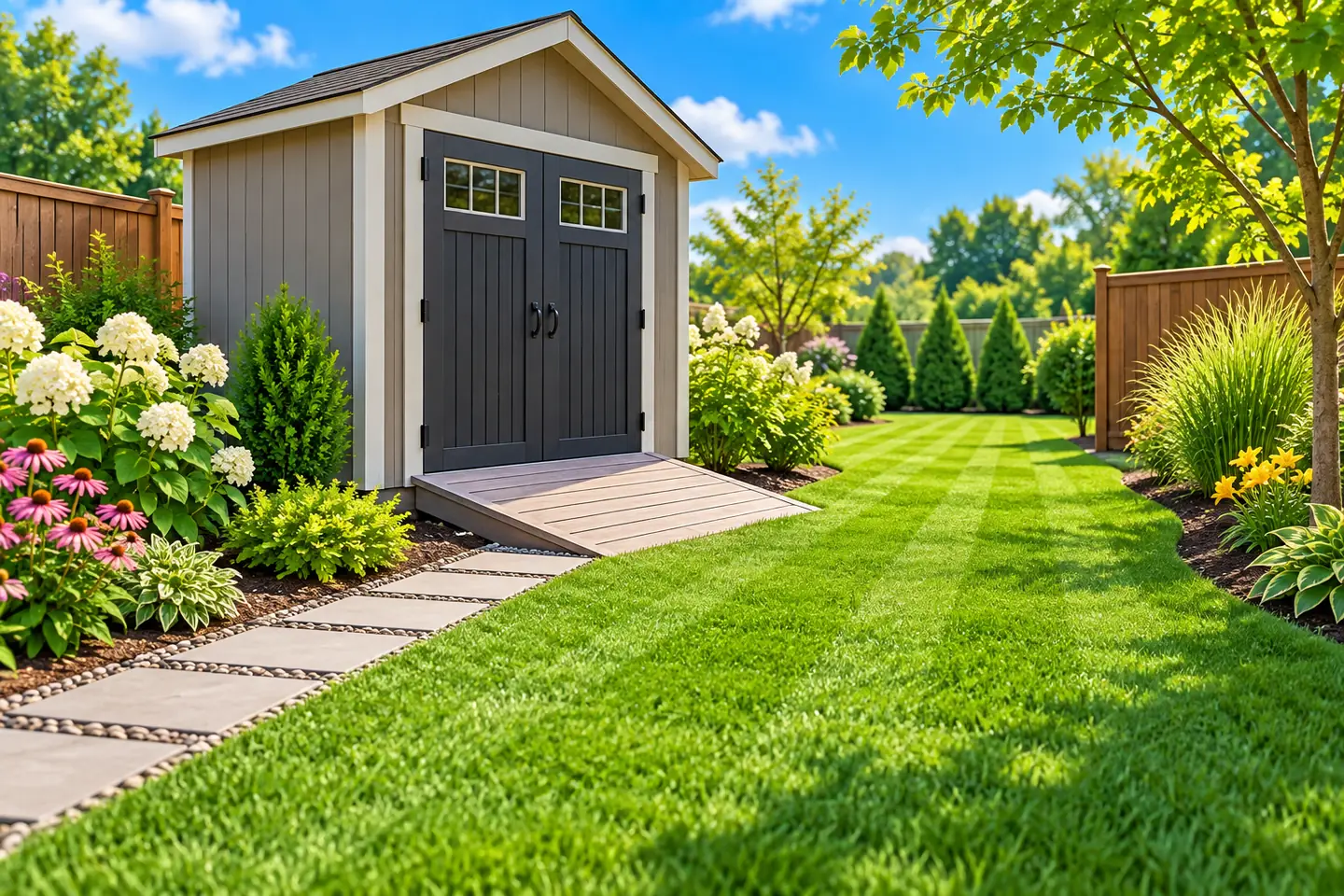
Respect the full door swing
Open each door before mapping the route and record the area it occupies. Double doors can sweep across grass even when the threshold is on a pad. Keep the swing area free of hoses, pots and temporary storage.
Do not prop, latch or repair a shed door as part of lawn service. The property contact should place it in the agreed visit-day position and make sure wind cannot move it into active equipment.
Clear the outside storage lane
Wheelbarrows, fuel cans, lumber, bicycles and garden tools often collect beside a shed. Move them to an owner-approved location before the visit rather than asking a lawn crew to sort valuable, sharp or heavy property.
If an item remains, define an exclusion around its entire footprint. Include handles, tongues and boards that extend over grass. Blowing clippings beneath a pile does not create a finished edge and can hide later hazards.
Name every reachable grass strip
Separate the open approach, ramp-side strip, rear wall pocket and fence-side lane. A wide front area may accept ordinary mowing while a shaded rear strip requires trimming or remains unavailable.
Write those differences into the quote. “Mow around the shed” is too vague when one side has comfortable access and another cannot be seen without squeezing behind the structure.
Check the route before choosing equipment
Measure the gate, the space beside the ramp and the turn at the shed corner. Consider fence hardware, tree limbs and steps along the approach. The narrowest point controls what can safely reach the rear lawn.
Never force equipment between siding and a fence. Contact can damage both the property and the machine. If the route is not workable, keep that pocket outside the recurring scope until access changes.
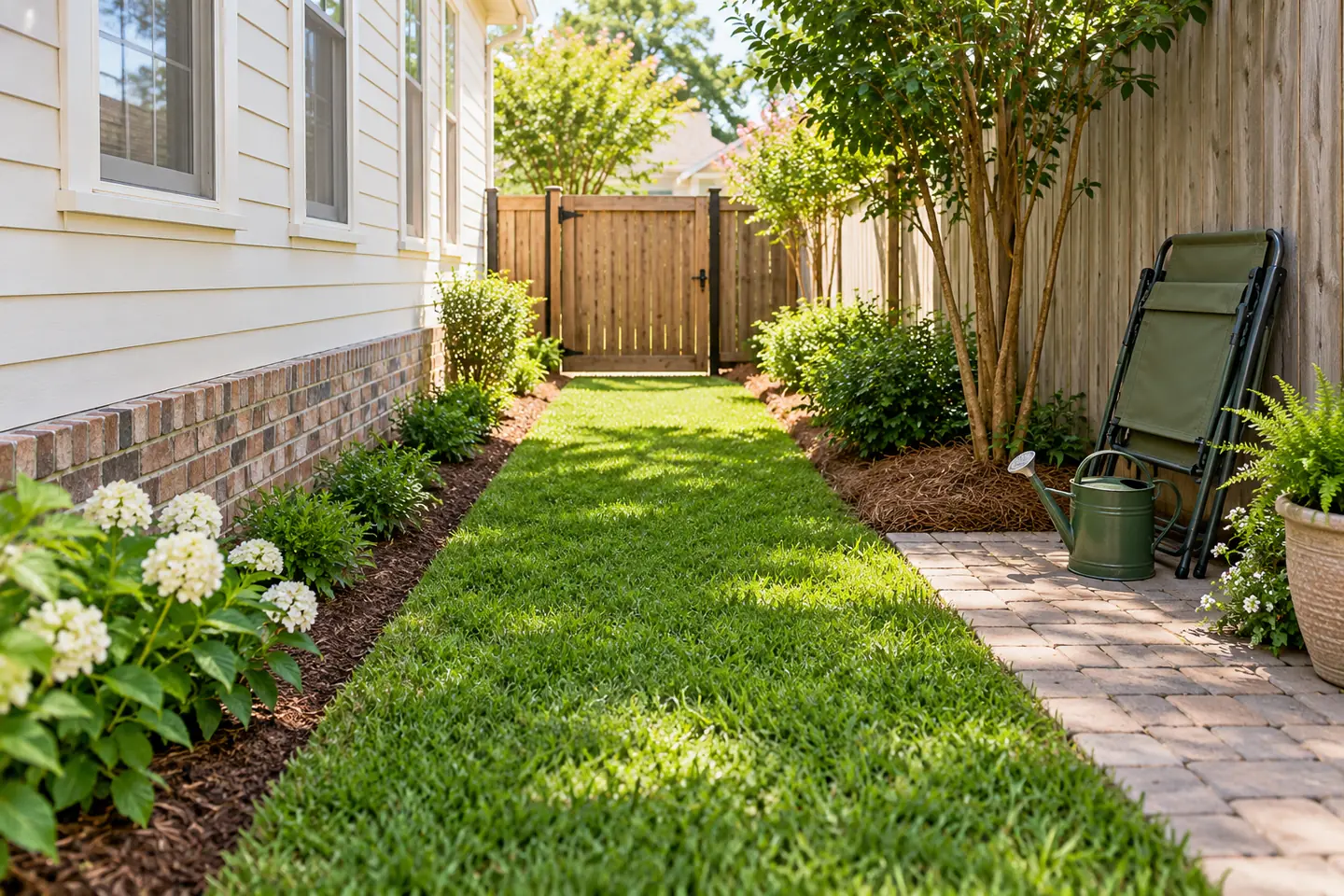
Keep ground anchors and utilities visible
Look for anchors, tie-downs, skids, conduit, drain lines and low cables around the base. Photograph what is above grade and ask the owner to identify known underground work before any new stake, border or digging project.
Happy Grass does not relocate utilities or investigate buried lines. Louisiana property work that involves digging should begin with the proper 811 process, not assumptions made from the visible shed layout.
Read wet ground around the drip line
Roof runoff can leave one wall firm and another soft. Observe the lawn after ordinary rain and note where water falls from eaves or exits a gutter. Do not diagnose drainage from a single dry-day photo.
Skip a saturated turn rather than pressing ruts beside the foundation. Drainage construction, grading and erosion repair are separate projects; the lawn note should simply identify the wet strip and the condition needed for access.
Protect vents and low wall fixtures
Record vents, electrical boxes, spigots and decorative lights that project from the shed. A fixture above eye level may still have a cable or pipe descending through the grass.
Do not cover, open, disconnect or clean building equipment. The safe lawn boundary stays outside the visible hardware and leaves utility access available to the owner or qualified technician.
Use conservative mowing in a recovered pocket
A previously blocked strip may be much taller than the open lawn. First clear it of boards, screws, glass and hidden tools. Then return gradually instead of removing most of the green blade in one pass.
LSU AgCenter’s general one-third mowing guidance supports a measured return. Matching the open lawn may take more than one suitable visit, especially where shade and roof runoff change growth.
Keep people and pets out of the work corner
Let household members know when the shed approach will be active. Children may treat the ramp as a play surface, and pets may investigate an open door. Close or manage the area before equipment enters.
Do not block the household’s only path to stored emergency items. If access is needed during the visit, pause, secure equipment and let the route clear before work resumes.
Photograph the current condition
Use wide images showing the shed, ramp, gate and surrounding lawn. Add a closer photo only when it explains an anchor, narrow pocket or border. Avoid people, house numbers and neighboring private space.
Replace old views after a new ramp, gutter, fence or storage arrangement changes the route. A short set of current pictures is more useful than a large archive containing contradictory layouts.
Plan around shed projects
Painting, reroofing and ramp repair may introduce ladders, tarps, nails and wet coatings. Pause the affected lawn zone until the project contact confirms the area is clear and the finish can tolerate nearby work.
Construction cleanup is not routine mowing. The owner should remove sharp debris and materials, then request a new walk-through if the building footprint or grass boundary changed.
Define the paved and planted borders
Identify actual concrete, paver or metal edges that belong in the edging scope. Mulch beds and planted strips need a separate boundary. Do not invent a trench along shed skids or wooden ramp sides.
Where grass meets loose gravel, agree on a visible stopping line. The goal is to keep stones out of moving equipment while preserving the owner’s intended surface, not to redesign the border during a visit.
Finish without filling the shed
Routine blowing can clear fresh clippings from an included ramp or pad when the door is shut and the destination is appropriate. Do not blow residue through an open doorway, under stored equipment or into a drain.
Heavy dirt, oil, sawdust and project waste require their own cleanup. A tidy lawn finish should reveal those conditions, not spread or conceal them.
Use a shed-side readiness list
Before service, confirm the door is secured, ramp and landing are clear, loose property is moved, anchors are visible, pets are contained and the ground is firm. Report a new hazard instead of leaving it for discovery.
The list describes observable access. It does not certify the shed, approve fuel storage or guarantee every strip is reachable. Those limits keep the plan honest and repeatable.
Write the quote by zone
List open-lawn mowing, named reachable trimming strips, approved hard edges and included paved surfaces for routine blowing. Exclude moving stored property, carpentry, utility work, construction cleanup and wet inaccessible pockets.
Happy Grass does not provide fertilization, aeration, overseeding or pest control. Weed-control questions need a specific conversation and should never be assumed to include plants, gravel or materials beside the shed.
Ask Happy about the usable route
For a shed-side yard in Harvey, Marrero, Gretna, Algiers, Belle Chasse or Westwego, call 504-339-3571 and ask for Happy. Share wide photos, the gate width and the grass zones you want considered.
A clear map can protect the building, keep the ramp usable and give the reachable lawn a dependable finish. The best recurring plan comes from current access facts rather than a promise to squeeze everywhere.
Describe the shed in its service-day position
The shed corner can change when doors are open, a ramp is lowered or outdoor storage is brought out for a project. Show the position that will actually exist during the lawn visit and identify which parts are owner-managed. A photograph taken on a fully cleared day may not explain the narrower arrangement planned for service day.
Give the grass beside each side a separate label if access differs. For example, the door-side strip may be reachable while the rear pocket remains blocked by fixed storage. Leave that difference visible in the quote discussion instead of describing the whole shed perimeter as available. When the project ends or the storage layout changes, date the update and review the route again. That keeps the lawn note tied to the real working footprint rather than a remembered tidy corner.