
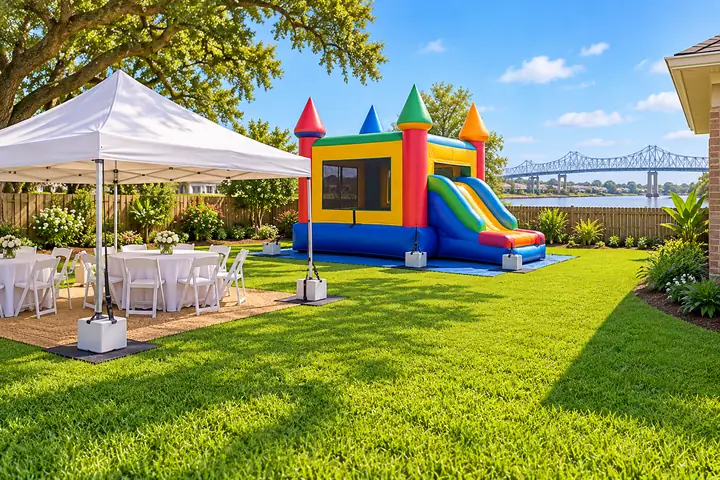
Decide whether lawn work happens before or after setup
The cleanest option is usually a completed lawn visit before the rental company arrives or after every temporary item leaves. Trying to mow through an active setup creates disconnected strips, hidden anchors and responsibility conflicts. Choose the sequence early and share the event date when requesting service.
Happy Grass does not move tents, tables, inflatables or rental equipment. If the event setup is already in place, only the clearly separate open lawn can be considered. A quoted visit cannot assume the installer will pause or relocate a structure.
Map the installer’s delivery route
Rental carts, dollies, trailers and blowers may cross the yard. Ask the provider where equipment will enter and keep that route separate from the normal lawn gate when possible. Freshly mowed grass can still rut under heavy delivery traffic.
Show Happy the planned layout with a wide photograph or simple sketch. Include gates, narrow passages and the portion reserved for parking. Lawn service should not occur while delivery vehicles or installers are moving through the same area.
Treat every stake and anchor as a project feature
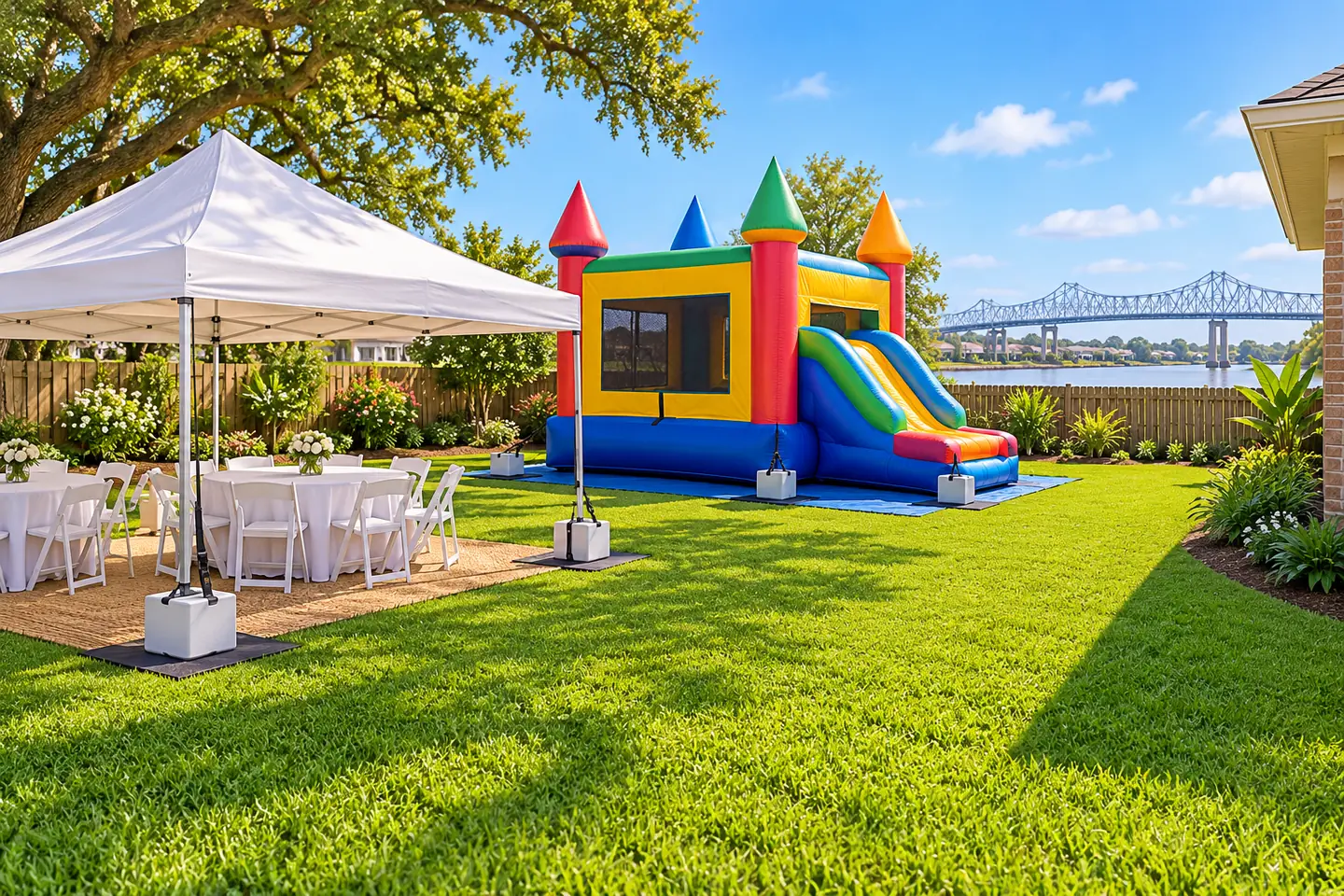
Tent stakes, inflatable anchors, ballast blocks and ropes can extend well beyond the visible fabric. The national 811 campaign specifically reminds tent installers to contact 811 before ground penetration. The installer, not the lawn crew, is responsible for safe staking and utility coordination.
Once anchors are installed, keep powered lawn equipment outside the complete anchored zone. Do not loosen a line, pull a stake or move ballast for trimming. Even a stake that appears unused may be carrying load or marking a utility response.
Keep blower cords and power off the lawn route
Inflatables use blowers, cords and sometimes generators. All electrical setup belongs to the rental provider and property owner. Happy Grass does not unplug equipment, move a running blower or decide whether a cord is safe to cross.
Plan separate days whenever cords would span the grass. After teardown, inspect the route for connectors, tape, cable covers and small stakes before mowing resumes. A hidden metal pin can remain after the colorful structure is gone.
Protect the grass under covered areas
Tents and inflatables block light, trap heat and press the turf. The grass beneath them may flatten, yellow or stay wet. That temporary change does not call for a dramatically lower cut. Give the lawn air and time after teardown before deciding what the next visit needs.
Long event runs create a larger effect than a few hours of shade. Tell Happy how long the structure stayed in place and whether rain occurred. The first post-event service may exclude soft sections or use a different route.
Remove party debris before lawn service
Confetti, balloons, ribbon, food scraps, zip ties and broken decorations do not belong under a mower. Complete a careful pickup in daylight, including under tables and along fences. Small plastic pieces can disappear into grass even when the yard looks clean from the patio.
Bagged waste should leave the lawn route. Happy Grass does not provide event cleanup or sort unknown debris. If glass, sharp metal or damaged rental hardware is found, keep everyone away and contact the responsible provider.
Account for tables, chairs and flooring
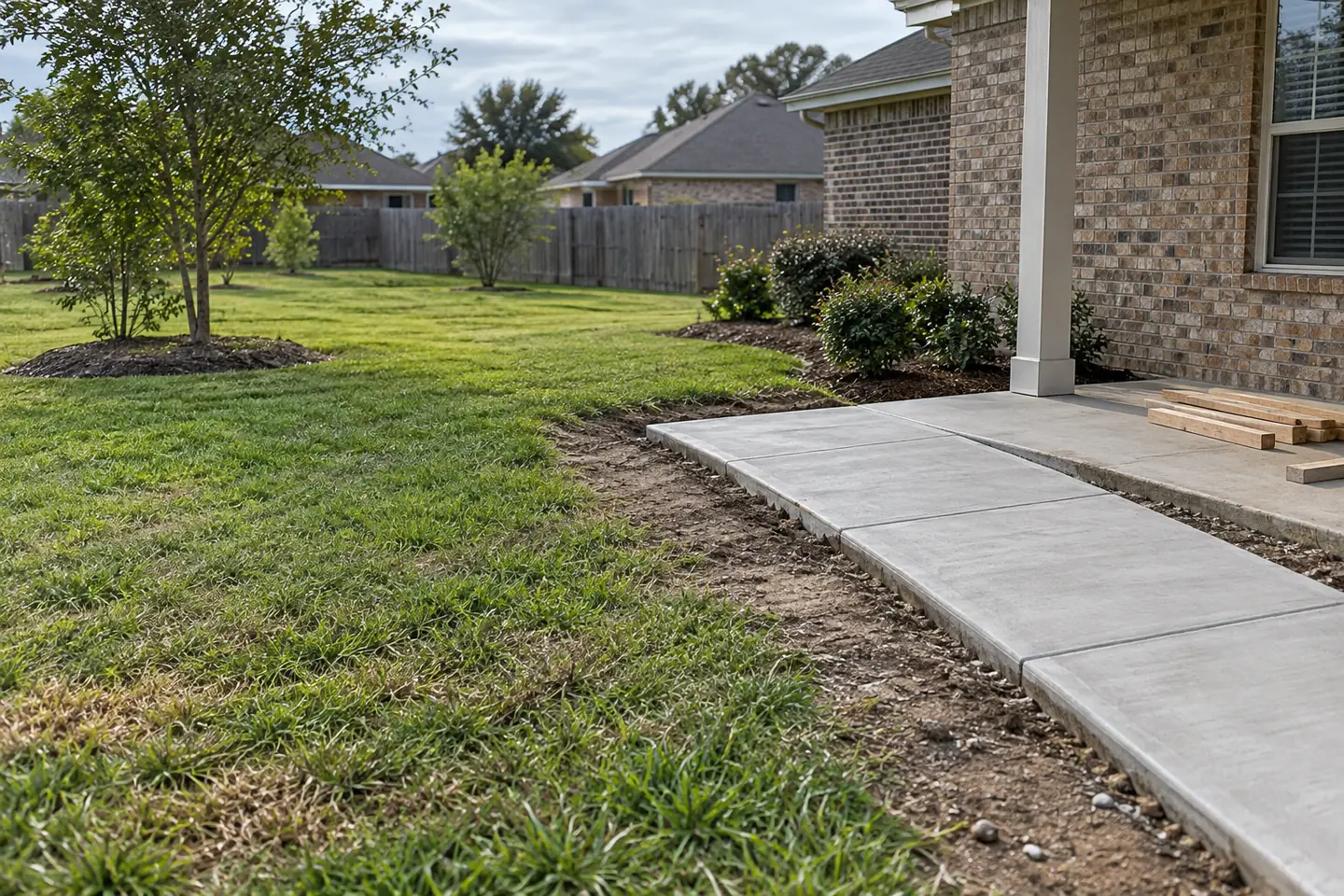
Event furniture often expands beyond the tent. Do not stack chairs on an unquoted grass corner and expect that area to be mowed. Return rental pieces to the provider’s designated pickup zone or wait until they are removed.
Temporary flooring and protective mats may leave seams, fasteners or damp patches. The owner should inspect the ground after pickup. Happy will not lift flooring to search for grass or accept responsibility for a surface that has not been cleared.
Keep children and guests away from service
No lawn equipment should operate through an active party. Schedule service outside guest hours and after play items are closed or removed. Children may be drawn to both machines and inflatables, making overlapping work especially impractical.
Secure pets as well. Event gates are opened more often than normal, and unfamiliar delivery activity can change the household routine. Happy Grass cannot monitor entrances, supervise guests or manage a bounce-house area.
Review the lawn after teardown
Walk the former footprint before the next visit. Look for stakes, holes, compacted paths, wet patches, torn turf and items left by installers. Photograph damage before filling or repairing anything if rental responsibility needs to be documented.
Small anchor holes should be handled according to the property owner and installer’s plan. Happy Grass does not repair event damage, level soil or reinstall turf. Report changed conditions so the next mowing scope can avoid unstable spots.
Plan around rain and storm changes
A tent installation that was safe on dry ground may create a muddy delivery route after rain. Inflatables and canopies also have manufacturer and rental-provider weather limits. The provider controls takedown and safety decisions, not the lawn crew.
If the event is postponed, update the lawn schedule rather than leaving a service request based on the original date. After severe weather, confirm that every anchor, cord and temporary structure has been removed or secured before anyone enters with equipment.
Use a practical event timeline
A simple sequence keeps responsibilities clear. – Schedule lawn service before delivery when possible. – Let the installer complete utility and anchoring requirements. – Keep lawn equipment out during setup and the event. – Remove rental items, cords, stakes, mats and debris. – Inspect the turf in daylight and allow wet ground to firm. – Send updated photos before the first post-event visit.
This order protects both the rental setup and the lawn. It also avoids asking one provider to change another provider’s work. Happy handles the agreed grass; the rental company and property owner handle everything connected to the event.
Request a quote with the temporary layout in mind
Tell Happy the delivery, event and pickup dates; the expected footprint; the gate route; and whether the open lawn remains connected. Share a current picture after setup if any partial service is still requested.
Happy Grass does not install tents, anchor inflatables, handle electrical systems, clean events, repair turf, fertilize, aerate, overseed or provide pest control. A good quote identifies the lawn that will truly be open and the date when it will be safe to reach.
Separate ballast setups from staked setups
Some providers use weighted blocks or water ballast instead of ground stakes. Those systems still extend beyond the tent legs and should remain untouched. Do not assume a weight can be slid aside because no rope enters the soil. The installer’s complete footprint is an exclusion zone.
Water-filled ballast can leak and soften a small patch. Inspect beneath every removed weight after pickup. A square of flattened wet grass may need more drying time than the open yard, so tell Happy exactly where the setup stood.
Photograph the lawn before delivery
A few wide pre-event photos create a useful baseline for the owner and rental provider. Include the route, surface and any existing thin patches. The pictures are not a promise that the lawn will remain unchanged; they simply help distinguish old conditions from delivery marks or anchor holes.
Take matching views after teardown in daylight. Share them if the next lawn visit needs a revised boundary. Happy Grass does not document rental claims, but accurate before-and-after context prevents an old service note from overlooking new obstacles.
Give compressed grass time to lift
Flattened blades can hide small debris and make the surface appear lower than it is. Rake only if that is part of the owner’s normal lawn care and the ground is dry; do not request an extra-low cut to erase the event footprint. The grass often needs light, air and ordinary growth.
When the former tent area differs sharply from the rest of the yard, treat it as a separate condition. Happy can discuss the next reachable cut without offering fertilization, aeration or overseeding as a shortcut.
Write the release as an actual event handoff
After temporary equipment leaves, ask the person responsible for the event setup to account for what was installed and what has been removed. Keep the large equipment, its supporting parts and any temporary power arrangement in the same handoff. A photo of an empty central lawn area does not explain what may remain around the perimeter.
For the next lawn discussion, identify the areas that are confirmed clear and those still awaiting review. Date that distinction so a planned removal does not look like a completed one. If another contractor is returning, keep the remaining work in the timeline instead of describing the project as finished. A factual release gives Happy a useful starting point for reviewing accessible grass after an event without making the mowing visit responsible for closing out an unfamiliar installation.