
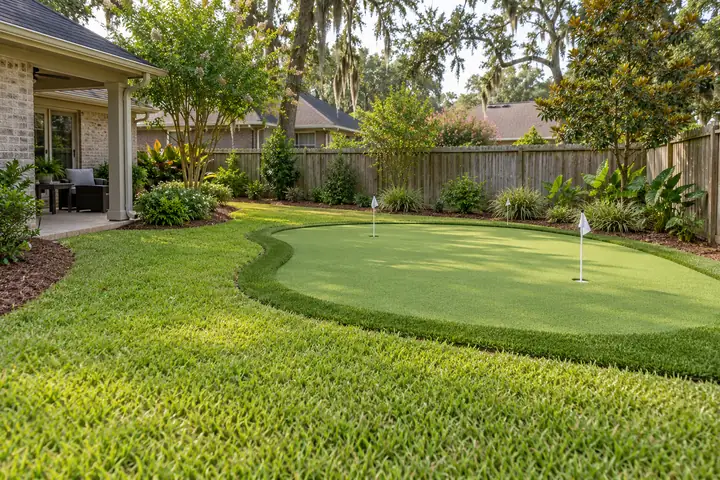
Name the surface before the visit
Backyard putting greens can be synthetic turf, closely maintained natural grass or a combination with a separate fringe. Do not assume the difference will be obvious in a photograph. Tell Happy exactly which area is part of the ordinary lawn and which is a specialty surface. A synthetic green may resemble dense grass from a distance, while a natural practice green may require equipment and maintenance outside our routine scope. Happy Grass does not provide golf-green construction, rolling, cup setting or specialty turf programs. We can mow the surrounding residential lawn when the boundary, access and expected finish are clear. Start with an overhead-style yard photo and a close view of every transition.
Protect seams and installed edges
The seam between synthetic turf and living grass may use a hidden nailer, curb, paver strip or flexible edging. Mark low corners and tell us about loose or lifted sections. Routine mower wheels and trimmer line should not be used to press a seam back into place. If the edge has separated, close that portion until the installer or appropriate professional repairs it. Remove infill or aggregate that has migrated into the natural lawn. Happy will not pull, cut or reattach synthetic turf. The lawn route should follow the outside of a sound, visible installation rather than crossing the specialty surface for convenience.
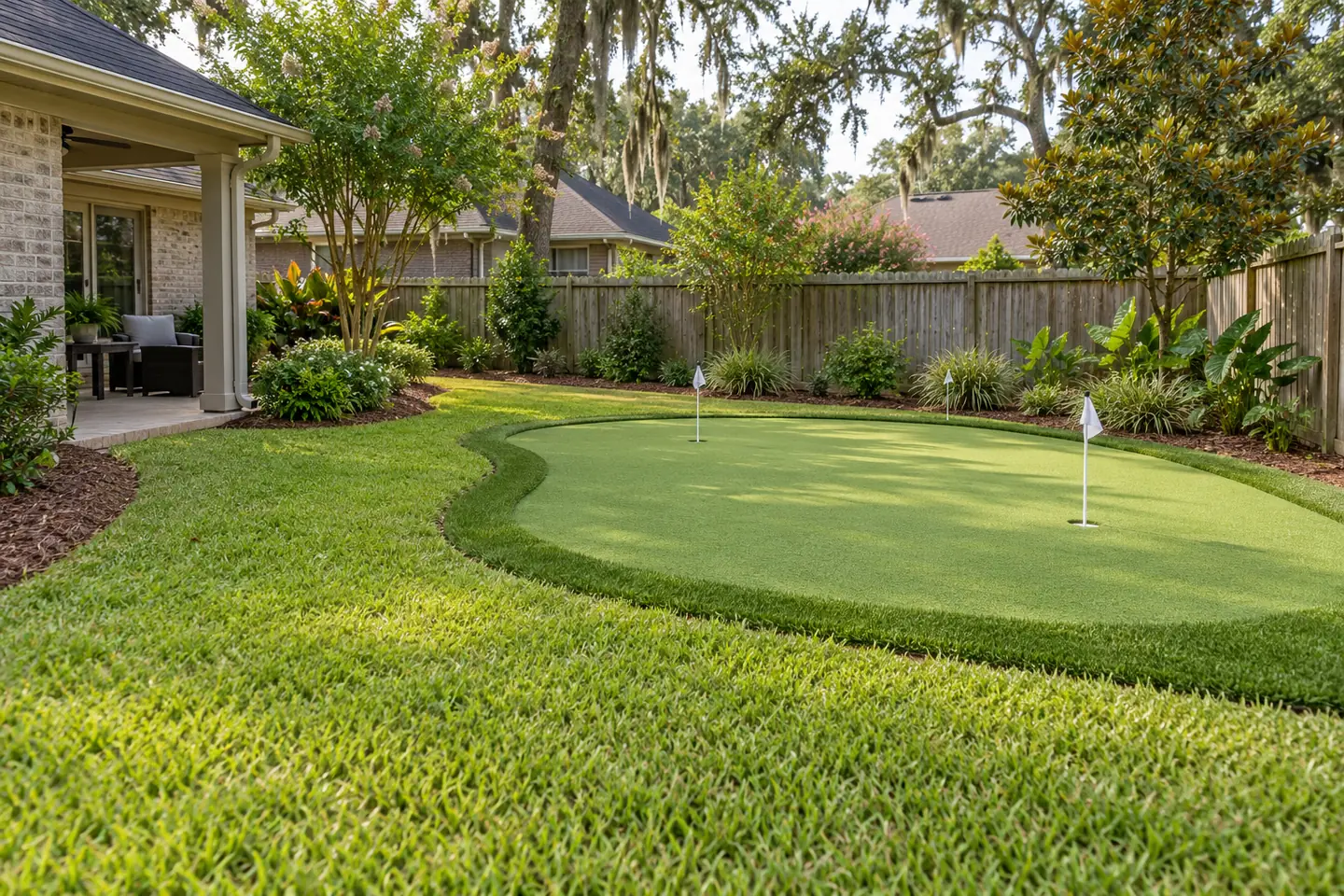
Keep cups, flags and practice gear contained
Remove practice balls, alignment sticks, training gates, portable targets and rakes before mowing day. Flags can remain in securely installed cups if they are completely inside an excluded green, but loose flagsticks and cup covers should not lie in the grass. Search beyond the green for missed balls; a small white ball can hide beneath St. Augustine or centipedegrass leaves. Store accessories away from the access route. Happy does not collect golf equipment or blow debris into cups. Clearing the gear lets the crew distinguish permanent features from temporary practice pieces.
Define the fringe as its own zone
A fringe may be synthetic, natural or mixed. It can also be a narrow strip of ordinary lawn that owners expect to look like a golf collar. Discuss that expectation before the quote. Residential mowing equipment cannot automatically create the height or texture of a golf-course surround, and Happy does not promise putting performance. The practical choices are to include a clearly identified living-grass fringe in the lawn scope, exclude it with the green or establish a visible transition strip. Avoid vague directions such as “make it blend.” A measured boundary and realistic finish produce better repeatable results.
Plan access without crossing the green
Show how equipment reaches the lawn on every side. A putting green can divide a backyard into separate pockets, and the shortest path may be across the specialty surface. Happy will not assume that route is allowed. Provide a firm grass or hard-surface lane wide enough for the agreed equipment. Move furniture, bag stands and planters away from the passage. If the only access changes after rain, tell us before the visit. Synthetic surfaces can also become hot or slippery, so they are not default walkways for lawn equipment.
Manage clippings at the transition
Grass clippings can collect on synthetic fibers, in cups and against low curbs. Tell Happy which direction ordinary blowing should follow, especially if the green sits near a pool, patio or pond. We can direct routine lawn debris away from a clearly identified surface when access permits, but detailed brushing, vacuuming, washing and infill grooming are specialty maintenance. Remove existing piles of leaves or sand before service so the boundary remains visible. If the green manufacturer provides care instructions, follow them rather than asking a lawn crew to improvise.
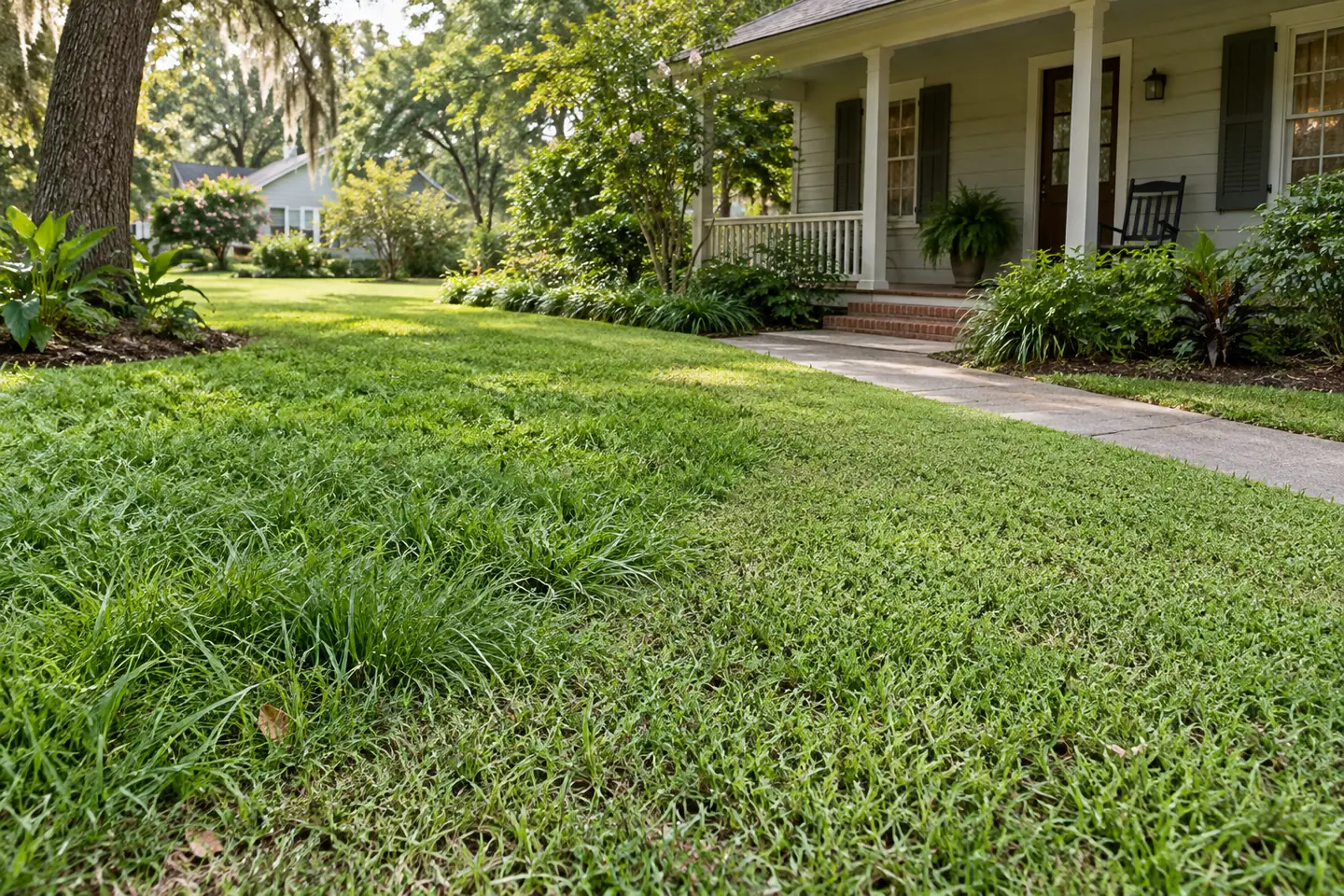
Watch moisture and grade
Water may drain off a synthetic or tightly graded surface onto the surrounding living grass. One edge can stay soft even when the center of the yard is firm. Check the transition after irrigation or rain. If footprints sink, send a photo and exclude that side until it dries. Do not ask equipment to ride half on a curb and half on wet turf. Drainage diagnosis, base repair and regrading are outside routine mowing. A wider turn on firm ground is better than leaving a rut along an expensive feature.
Separate golf performance from lawn appearance
The USGA notes that a backyard putting green involves different choices and maintenance demands from a normal home lawn. Happy's work around the feature focuses on access, the ordinary grass edge and cleanup. We do not measure green speed, manage infill, diagnose specialty turf or adjust mowing to create tournament conditions. If the putting surface is natural grass, tell us who maintains it and where that provider's work ends. Clear roles prevent conflicting heights, duplicated passes and accidental entry onto the specialty area.
Update the plan when the setup changes
New cups, a reshaped fringe, replacement turf or a practice net can change the service route. Send updated photos before the next visit and keep installer materials out of the lawn. Inspect for loose fasteners and exposed base material from a safe distance. Preserve the same stopping line once the final layout is complete. A backyard green can be a fun focal point without confusing routine care. The key is a visible handoff: the specialty surface has its own maintenance, the surrounding lawn has its agreed service, and neither side depends on guesswork.
Keep lawn chemicals and specialty products separate
Happy Grass does not provide fertilization, overseeding, aeration or pest-control service. Do not ask us to apply a putting-green product to the surrounding lawn or carry a product across the property. Synthetic-turf cleaners, weed treatments and infill products should be handled according to the installer and label directions by the responsible person. If another provider treated either surface, tell us about access restrictions before mowing day. Clear separation avoids accidental mixing of scopes and protects the specialty installation from an inappropriate lawn routine.
Document the installed edge before it disappears
Save a few photographs from the day the green is completed: the full shape, the perimeter material, drainage outlets and any access sleeves. These private records can help an installer later without requiring the lawn crew to expose the base. For Happy, share only the current visible boundary and route. If grass grows over a low curb, reveal it carefully before service rather than asking the mower to find it. A known edge is much easier to preserve than one reconstructed from memory.
Plan for leaves, acorns and storm debris
A green beneath trees can collect material that is harmless on ordinary turf but troublesome on a specialty surface. Remove branches, nuts and hard debris before mowing day. Keep collection bags, blowers and extension cords outside the lawn route. Happy can direct normal clippings as agreed, but full leaf removal from synthetic fibers or cups is separate maintenance. After strong weather, inspect for a lifted seam, displaced flag or exposed fastener. Close any changed edge until it is safe and stable.
Keep guests out of the work zone
Putting greens invite people to keep practicing, but lawn equipment and golf activity should not share the yard. Collect balls and bring players, children and pets inside or to a secure area before service. A missed ball can travel far beyond the green, so check beds, side yards and the route to the gate. If a net or rebound screen is temporary, fold and store it unless it is entirely outside the scope. An empty recreation area gives the crew a clear view of every permanent boundary.
Write two separate finish descriptions
A specialty putting surface and the ordinary lawn beside it need separate descriptions in the request. Identify which surface belongs in Happy’s lawn-maintenance conversation and which remains with the owner or the appropriate specialist. A single phrase such as cut the backyard can hide that distinction, especially when the transition is subtle in a distant photograph.
Use a close view of the installed transition and a wider view of the surrounding route. Label any uncertain material rather than guessing whether it can be crossed or treated like ordinary turf. If the owner later changes the fringe, cup accessories or nearby furnishings, update the scope note with the practical boundary change. This helps everyone judge the requested lawn finish against the correct surface without implying specialty-green maintenance or equipment handling that was never part of the discussion.
Keep the practice surface out of the ordinary-lawn comparison
When reviewing a backyard with a putting area, compare the ordinary lawn with its own agreed finish. A specialized practice surface can have a different purpose and appearance, so it should not become the assumed standard for the surrounding grass. Identify the installed edge and describe any uncertain fringe separately instead of asking a photograph to settle the maintenance method for both surfaces.
If the owner or installer provides instructions for the practice area, retain them with that surface's record. They do not automatically expand an ordinary lawn scope into putting-green care. A clear request can explain how the surrounding grass is reached, where the boundary lies and which specialized area remains outside the work being considered.