
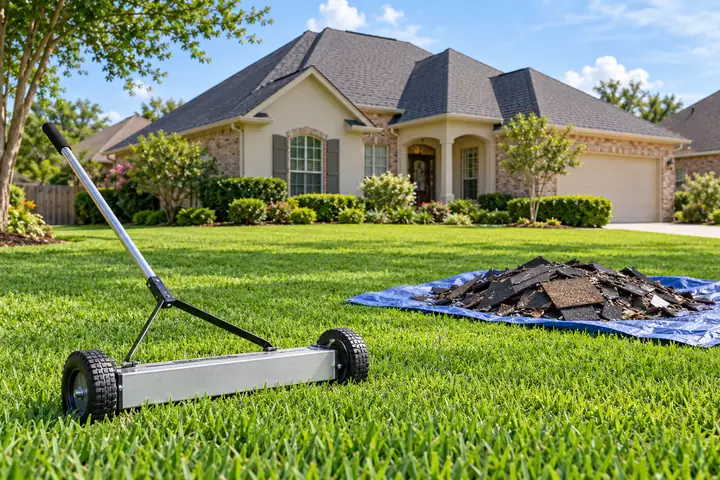
Treat the whole fall zone as a work area
Roofing debris can land beside the house, bounce from hard surfaces, collect in shrubs or ride runoff toward a ditch. Walk more than the obvious tarp line. Check the driveway edge, gates, side yards, downspouts, air-conditioning area and the route used to carry materials. A single clean photograph from the contractor is useful but not conclusive. The property owner remains responsible for confirming that the roof work and cleanup are complete before lawn equipment enters the site.
Nails are a special thrown-object risk
CPSC warns that nails and wire are among the most hazardous objects a mower can throw. A nail hidden in turf is not only a tire concern; blade contact can send metal beyond the deck. Do not mow over a suspected debris field or rely on grass height to hold objects down. Keep people, vehicles and pets away while the area is evaluated. Happy can report a visible hazard, but does not certify a property as nail-free or replace the contractor's cleanup responsibility.
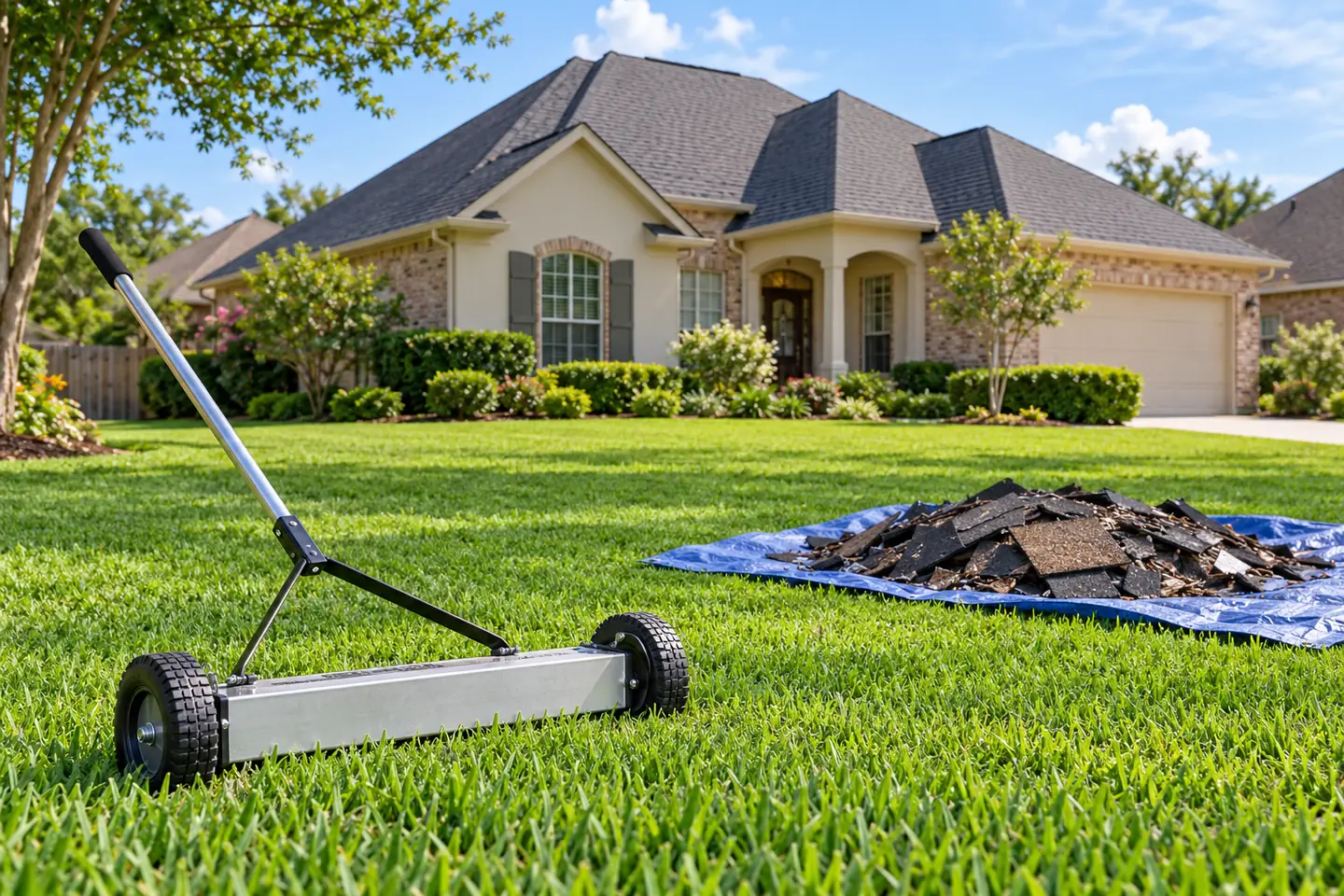
Ask for a magnetic sweep, then verify visually
A roofing contractor may use a rolling magnet around the house, but no tool reaches every crevice and magnets do not collect aluminum, plastic or shingle pieces. Ask whether the sweep covered the lawn, beds and access lanes. Then walk the grass in overlapping lines while there is good light. Look from different directions because a nail can disappear when aligned with the blades. A second sweep after tarps and dumpsters leave may catch material that was trapped underneath them.
Check gates and narrow side yards carefully
Material crews often move through the same gate Happy uses. Nails can collect at thresholds, tire tracks and places where a tarp was dragged. Confirm that gate hardware is secure, the opening is not blocked and no stack of shingles narrows the mower path. Look behind utility equipment and along fence lines where a blower may have pushed fragments. If the side yard cannot be inspected safely, exclude it from the visit until the owner or contractor clears it.
Do not turn mowing into construction cleanup
Happy Grass is not a roofing contractor, hazardous-debris service or metal-detection company. A few ordinary leaves are lawn preparation; a pile of shingles, sharp flashing, fasteners or underlayment is construction debris. Keep it contained and arrange removal before service. Do not place sharp scraps in a thin household bag where they can puncture through. The roofing contractor or property owner should use the appropriate container and disposal method, leaving the lawn route physically empty.
Protect fresh landscaping and soft ground
Dumpsters, material pallets and repeated foot traffic can compress soil or leave ruts. Downspout work may expose a soft patch, and a loaded trailer can damage driveway edges. Identify these changes separately from debris. A magnet cannot tell whether the soil supports a mower. If the ground is rutted, newly filled or saturated, mark it and adjust the route. Grading, soil repair and sod replacement require their own plan; a mowing visit should not flatten the damage into a less visible problem.
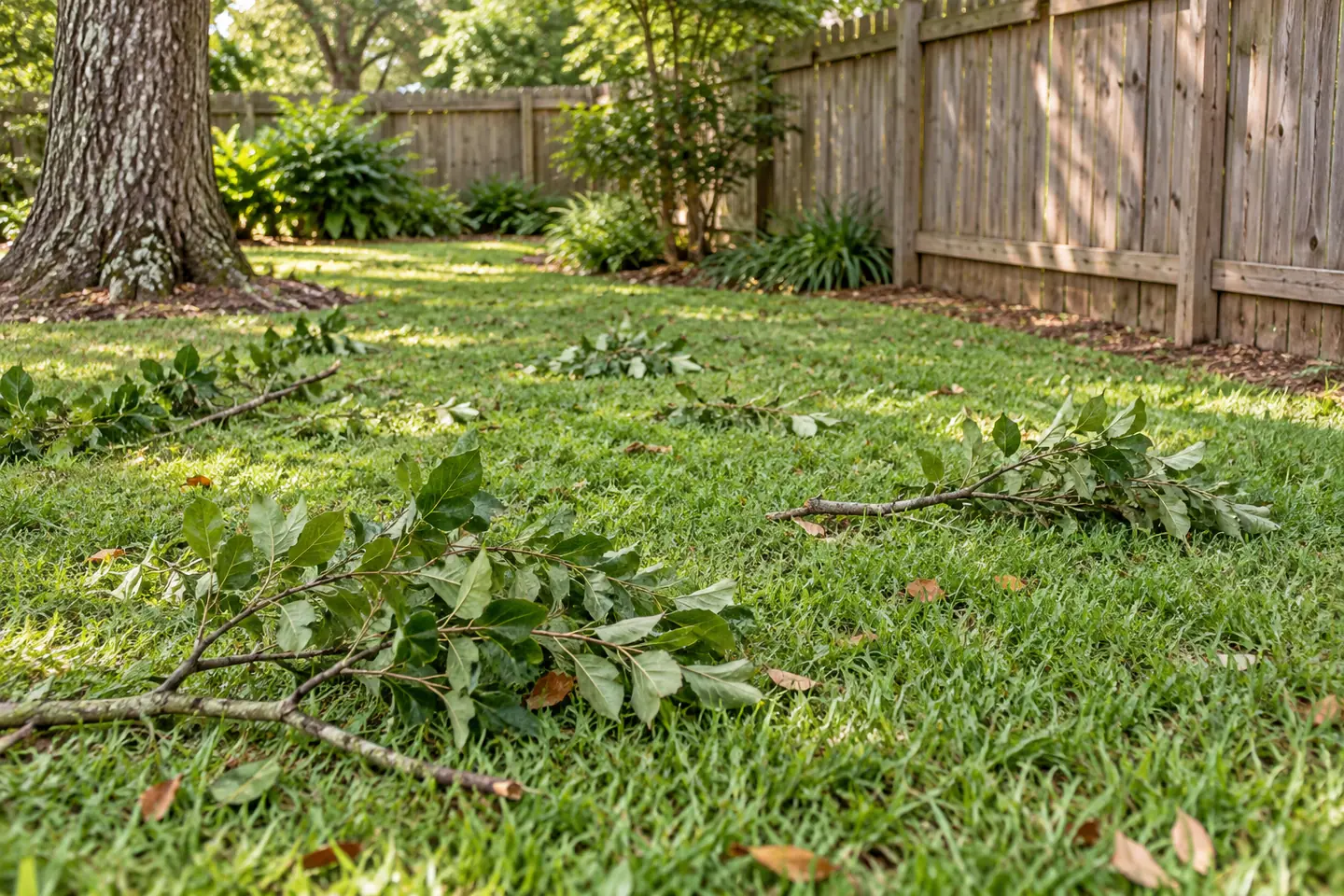
Inspect shrubs, beds and roof-drain outlets
Shingle tabs and nails can hide beneath foundation shrubs or wash from a valley into a gutter discharge area. Lawn service does not include reaching into dense plants or opening gutters, but the owner should ensure those areas were checked. Keep mulch and debris from migrating onto the grass edge. If fresh fragments appear after a storm, take a photo and contact the roofer. Repeated material may indicate incomplete cleanup above, which cannot be solved by blowing it across the yard.
Use a first-visit hold point
- Confirm all roof workers, ladders, trailers and dumpsters are gone.
- Ask whether the contractor completed a full magnetic sweep.
- Walk lawn lanes, beds, gates and hardscape edges in daylight.
- Remove or professionally contain every sharp construction item.
- Mark ruts, soft soil and damaged irrigation or lighting components.
- Release the lawn visit only after the owner accepts the route.
Watch for pieces that are not magnetic
Aluminum flashing, copper, plastic caps, sealant tubes, shingle granules and wood splinters may remain after a successful magnetic sweep. This is why the visual walk matters. Granules alone may look like coarse sand on a hard surface; a concentrated spill should be addressed by the contractor instead of blown into turf or a drain. Small nonmagnetic fragments can still cut tires, feet and pet paws. Clear the route based on all debris, not only what sticks to a magnet.
Coordinate with irrigation and outdoor wiring
Roof work can disturb drip lines, landscape-light cables, downspout extensions and exterior cords. Look for displaced components before blades start. Do not reconnect unknown wires or bury a line under clippings. If a sprinkler head or valve cover was broken, keep equipment away and inform the responsible provider. The post-project inspection should compare the yard with earlier property photos so new hazards do not get mistaken for ordinary lawn features.
Rain can reveal a second round of debris
Heavy rain may move hidden scraps from the roof, gutter or mulch bed into the lawn. Wait until the ground is safe, then repeat the perimeter walk before the next cut. Pay attention below downspouts and along drainage swales. If runoff carries shingle granules or sharp pieces toward a public drain, the owner should coordinate proper cleanup rather than washing material farther. Lawn blowing should leave drains and hard surfaces clear, not redistribute roofing waste.
Document what was excluded and why
If one strip remains suspect, record a wide photo, the date and the boundary Happy avoided. Do not use dramatic language or claim the entire roof job is unsafe. The note should be factual: visible nails beside the east gate, roofing scraps under a shrub, or soft ground where the dumpster stood. This helps the owner ask the contractor for a targeted return and gives the next crew a clear recheck point.
Reopen the yard in stages when necessary
A large project may leave the front lawn ready while a rear access lane is still active. Separate the property into released and excluded zones instead of forcing an all-or-nothing decision. Each zone needs a safe entrance and no chance of discharge toward workers. Once the contractor removes equipment and the owner confirms cleanup, update the map. This staged approach keeps useful work moving without pretending that an unfinished construction route is an ordinary lawn.
Inspect before guests, pets and children return
The lawn should not reopen to ordinary barefoot play simply because the mower visit is delayed. The property owner should complete the same debris review before pets or children use the yard. Focus on fence corners, play areas and routes between the door and driveway, where small pieces may be carried. Happy's photos can support coordination, but they do not replace the owner's safety decision or the roofer's contractual cleanup. Keeping the area closed until both construction debris and lawn equipment are gone avoids mixing two separate hazards.
Check tires and equipment after the controlled visit
Even after a careful release, the operator should look over mower tires and the loading area before leaving. A fastener caught in a tread can travel to the trailer or next property without causing an immediate flat. Do not handle embedded sharp metal with bare hands. Stop the equipment, follow safe maintenance procedures and document where the item appeared. This follow-up does not prove the lawn contains more debris, but it gives the owner a useful reason to request another contractor sweep before the next service.
A clean handoff protects everyone
The roofer knows where material moved, the owner controls the property and Happy knows the mowing route. When those three pieces connect, the first cut after roof work can be routine. Ask for cleanup evidence, inspect for magnetic and nonmagnetic debris, and keep construction items outside the service scope. A neat roofline deserves a lawn visit that starts only after the grass is genuinely clear.
Make the roof-project closeout specific to the lawn
Ask the person responsible for project cleanup to identify which outdoor areas have actually been checked and which remain unfinished. Keep that information dated and tied to recognizable parts of the yard. A statement that the roof work is finished does not necessarily describe the grass beneath each work area or the access path beside the house.
For the lawn discussion, identify the released areas and any continuing exclusion. If uncertainty remains, state it rather than using mowing as a final debris search. Retain a wider current view that shows the relationship between the former project footprint and the ordinary route. This gives Happy a factual handoff while the roofing crew or responsible cleanup provider closes its own work. A clear release is an account of completed preparation, not just the departure of the last contractor vehicle.