
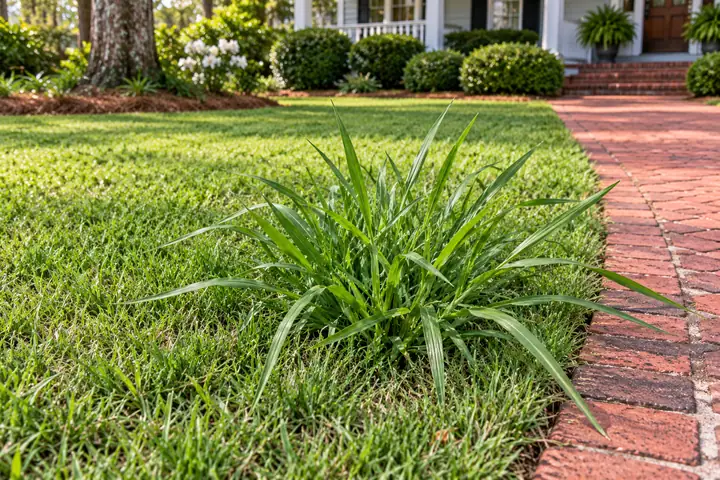
A coarse clump is more than a tall spot
A single rough-textured bunch can make an otherwise maintained lawn look uneven. Dallisgrass is one possible explanation, but not every tall tuft is dallisgrass. Begin by locating the plant's base and comparing the coarse blades with nearby intended turf. The difference may remain obvious even after the tips are cut. That persistent texture is a different issue from a mower simply leaving ordinary grass too long in one place.
LSU AgCenter describes dallisgrass as a warm-season perennial grassy weed that forms clumps. UC IPM explains its bunching growth and short rhizomes. The perennial base helps explain why the same coarse location can remain familiar across seasons. Cutting leaves does not establish removal of the clump. A useful lawn conversation should therefore distinguish the immediate mowing finish from a separate question about the plant that keeps occupying that spot.
Follow an attached seed head to the bunch
Dallisgrass seed heads have several spreading branches arranged along a central stalk rather than all arising from one point. Look at their arrangement on an intact head and trace the stalk toward the plant below. This gives a more coherent comparison than collecting a detached seed head from the lawn and pairing it with whichever coarse leaves happen to be nearby. Several grasses can grow together in one apparently uniform clump.
If heads have been cut off, use the base, leaves and growth habit for an initial description, while keeping the identification provisional. Do not let a recent cut force a guess. A later intact head or an extension identification may resolve uncertainty. The target matters before management is selected, particularly in a lawn where the desired grass and unwanted grass look similar enough that a casual glance could confuse them.
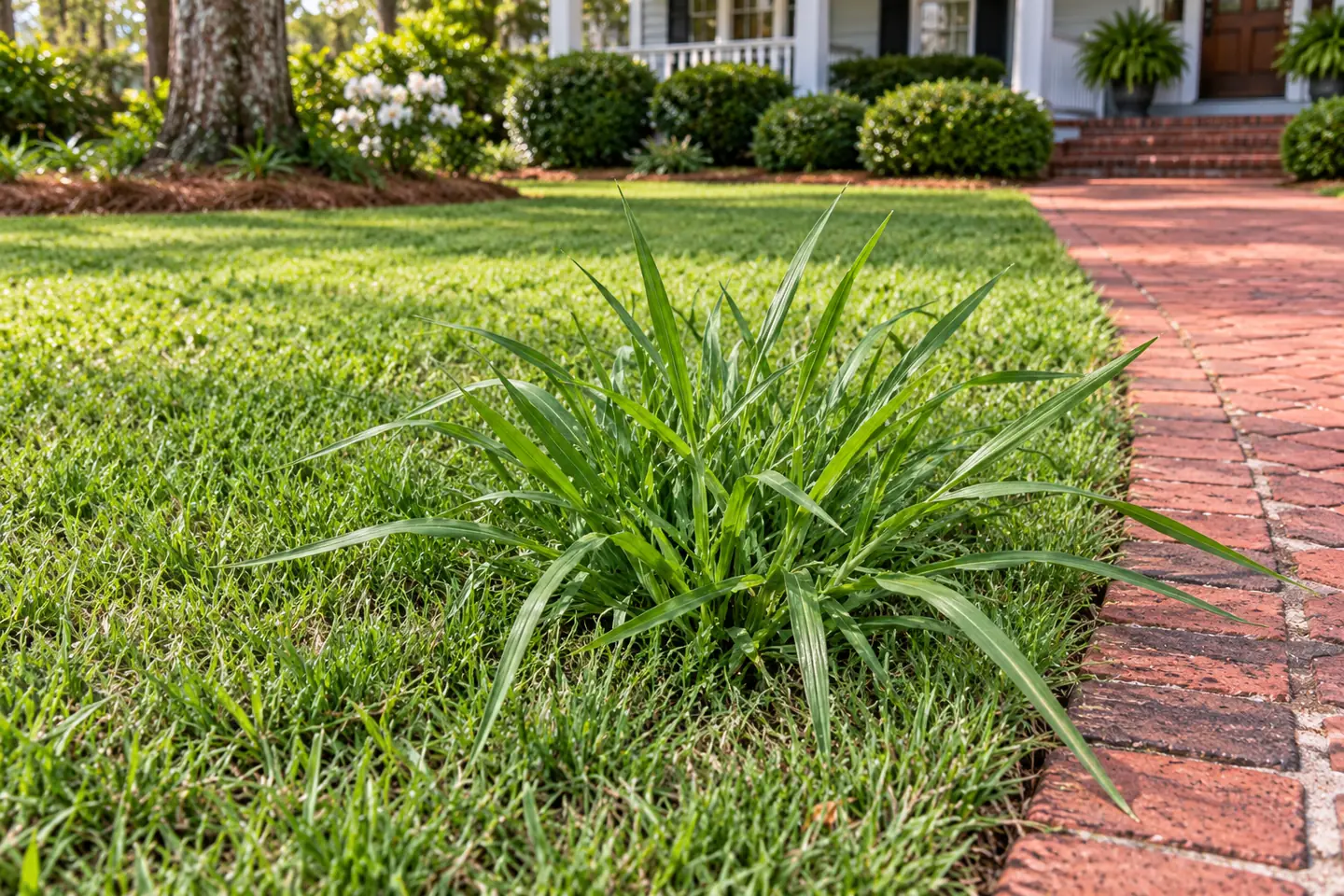
Examine the center and outside edge separately
A mature bunch may have a different-looking center from its active outer leaves. UC IPM notes that older dallisgrass clumps can develop a dead center as growth continues around them. This pattern can help describe the plant, but it should not be used to diagnose every brown middle as dallisgrass. Look at the whole bunch and compare reliable references. A damaged turf patch and an old bunchgrass crown are not automatically the same condition.
Map the outside edge of the coarse blades and the position of the base. These can differ because leaves arch beyond the crown. A wide leafy silhouette does not tell you the exact size of the root system or the hole a removal task would leave. Avoid promising a small simple extraction based only on the width of the center visible from above. Any removal discussion should consider the actual plant and surrounding lawn.
Distinguish plant height from surface height
A coarse tuft can look like a raised mound even when the ground has not been measured. Check whether the apparent bump comes from leaves, the dense base or an independently uneven surface. Describe what is known rather than reporting that the soil must be high. Mowing can reduce leaf height while leaving a substantial base or a separate ground irregularity. The three features should not be collapsed into one request to cut the bump flat.
If the location catches a foot or makes walking awkward, mention that history before the visit. UC IPM notes that solid uneven clumps can create a tripping concern. Do not repeatedly walk over the spot to demonstrate it. A clear location and description are enough to bring it into the access review. A neat cut should not be represented as a correction of an unassessed ground or footing issue.
Count bunches without treating the lawn as one giant clump
Several isolated plants call for a different description from a broad area of overlapping coarse growth. Mark distinct centers where visible and identify outliers near the driveway, fence or bed. The map does not need a perfect plant count. Its purpose is to show whether the concern is a handful of persistent locations or a more continuous change in the lawn's plant mix. That distinction helps make the next assessment proportionate.
Keep smaller coarse tufts on the record too, while leaving their identity uncertain until checked. An owner may notice only the largest plant because its leaves rise quickly after a cut. If smaller plants are present elsewhere, removing the big bunch would not address the entire observation. Conversely, do not label every textured patch dallisgrass just because one confirmed bunch exists. The actual plant arrangement matters more than an alarming whole-yard label.
Review the turf around the crown before removal is discussed
Look for desired grass between the bunch and neighboring turf. Is the clump isolated within a continuous lawn, or does it supply much of the cover in a sparse strip? That affects expectations for the appearance after work. Removing an unwanted bunch may leave an opening. The removal task and the condition of that opening deserve separate discussion rather than an assumption that surrounding grass instantly fills the space.
For example, a clump beside a brick drive may be easy to locate but still intertwined with desired turf. A clump at the center of a bare patch raises a different question about what the finished surface should be. This guide does not prescribe excavation or turf replacement. It explains why the visible plant, desired grass and resulting surface must all be considered before selecting a method or promising a same-day uniform appearance.
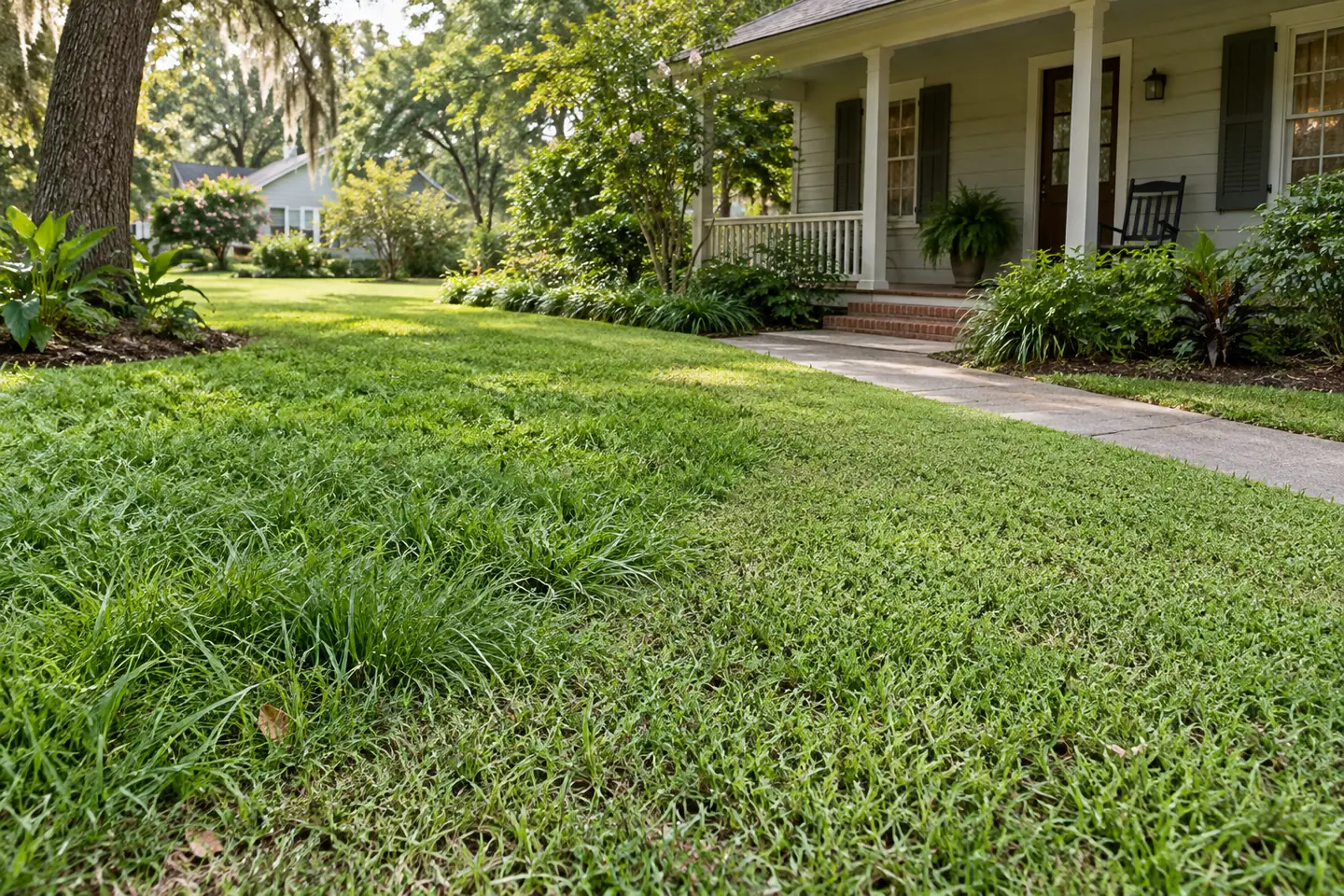
A lower cut can hide evidence without solving persistence
Tall coarse blades may return to visibility after maintenance because the plant's base remains. That is not the same observation as an uncut strip left on the day of service. Compare a same-day finish with later regrowth as separate records. If the lawn was evenly maintained and a persistent bunch later stands out again, the next useful question concerns that bunch rather than automatically repeating the entire cut at a lower setting.
Keep the intended turf's maintenance needs in the discussion. A request to reach the base of a coarse clump can be unsuitable for the surrounding grass. The mowing setting should not be chosen solely to conceal the unwanted plant. If identification requires an intact head or uncut leaves, preserve clear views before the visit so a change in appearance does not remove the evidence needed for a more useful management decision.
Perennial persistence changes the follow-up question
An annual grassy weed and a perennial bunch can look similarly tall from the porch, yet their life cycles differ. With a suspected dallisgrass clump, record the location across seasons and distinguish a surviving base from separate young plants nearby. A seasonal slowdown or brown top does not establish that the perennial structure is gone. The useful review focuses on the actual crown and later growth, within the terms of any agreed plan.
UC IPM describes dallisgrass as difficult to manage once established. That background supports careful expectations, not a promise that one generic lawn product will solve it. Before any specific treatment, confirm the species, the desired turf and the exact site. Current labels and appropriate local guidance matter. Recommendations for another climate, turf species or agricultural setting should not be transferred to a West Bank home lawn without checking their applicability.
Compare a bunch with a genuine missed strip
An isolated coarse bunch and a continuous strip of ordinary tall turf should not be reviewed in the same way. The bunch has a localized base and a different texture. A missed strip follows a line or area of unmaintained intended grass. Compare the same-day surface before attributing later tall leaves to the wrong cause. This distinction can make an otherwise frustrating service conversation much easier to resolve.
There may also be a surface question beneath the bunch. If the apparent bump remains after leaves are shortened, identify whether the concern is the plant base or an independently uneven area. Do not ask for equipment to shave an unknown surface flat. The exact issue should be established before the next task is selected.
- Localized coarse crown: retain a close plant view and an attached seed-head view when available.
- Continuous tall turf strip: document the actual same-day finish and its location.
- Reappearing coarse leaves: compare with the known bunch base rather than judging the whole lawn.
- Persistent footing concern: report it separately from leaf height.
These categories do not excuse an uneven cut or diagnose every tuft. They keep observations precise enough that a mowing issue, a perennial plant issue and a surface issue can each receive the appropriate review.
Describe the clump, the footprint and the requested result
Tell Happy where the persistent coarse bunches occur, whether an attached seed head is available and whether the concern includes walking or equipment access. State whether you want the surrounding turf maintained or a separate weed-control discussion. Identify any turf gaps that would matter to the finished appearance. This makes the task reviewable without assuming that ordinary mowing includes extraction, ground leveling or complete lawn restoration.
For Happy Grass requests around Harvey, Marrero, Gretna, Algiers, Belle Chasse and Westwego, call 504-339-3571 and ask for Happy. Fertilization, aeration, overseeding and pest control are not offered. A realistic dallisgrass conversation puts the perennial bunch in its own place in the plan, with a tidy lawn finish and clear expectations for the plant and surface that remain after the mower has passed.