
A neat border can hide a persistent crossing
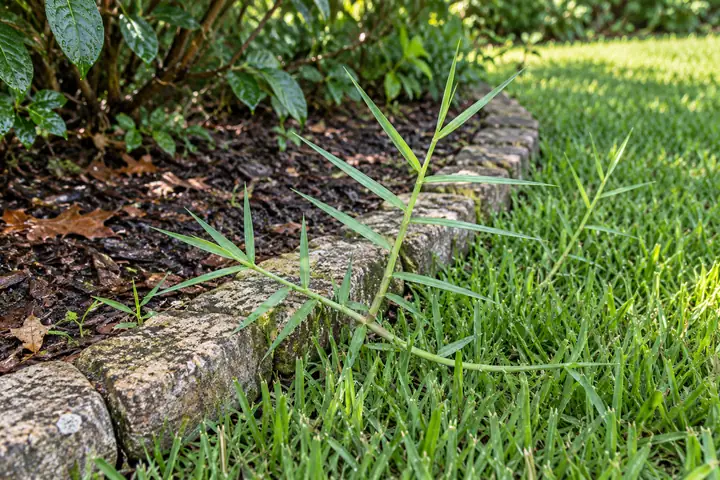
A stone or mulch border may look clearly separated from the lawn, yet stiff grassy shoots keep appearing on both sides. Torpedograss is one possible explanation. The useful question is not simply how short the shoots can be trimmed. It is whether the same kind of growth occupies the lawn, bed and disturbed soil nearby. Map those surfaces separately before assuming that a sharp visible edge defines the plant's actual boundary.
LSU AgCenter describes torpedograss as a perennial grass with aboveground stolons and strong underground rhizomes. The sharply pointed rhizome tips give it its name. UF/IFAS also discusses the plant's persistence and spread in ornamental beds. These underground structures explain why surface trimming and plant management are different outcomes. A tidy line can be an accurate maintenance result without proving that the grass has stopped crossing beneath it.
Compare stiff leaves and connected growth carefully
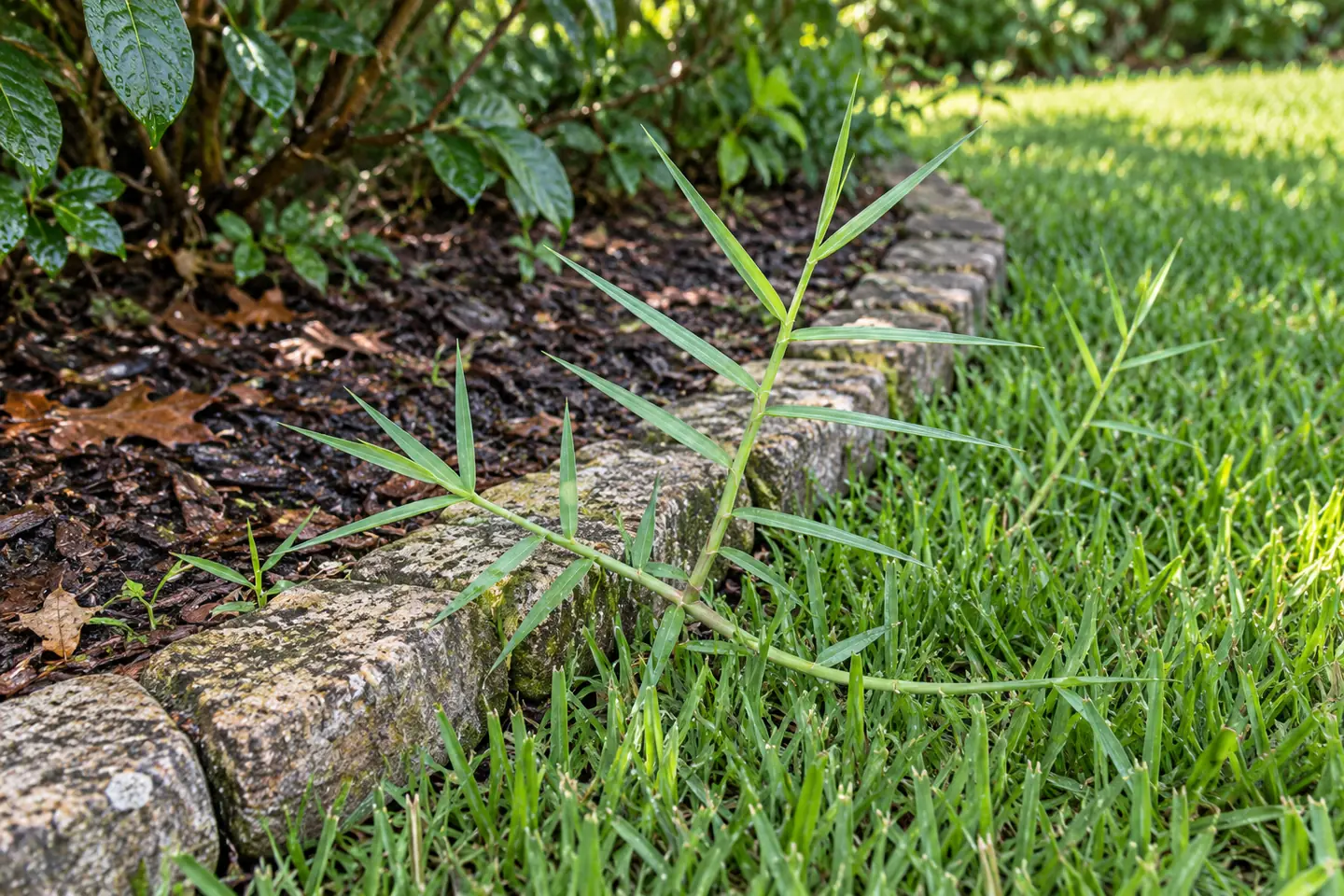
Look at the narrow leaves, stem joints and overall habit on intact shoots. Then compare several locations. Do the shoots in the bed resemble those in the lawn, or are visibly different grasses mixed together? A wide view of one green strip may merge unrelated plants. Do not assume every stiff blade near the border is torpedograss just because one plant has been identified. The target needs to be accurate at each affected surface.
If a rhizome is already exposed during authorized landscape work, its pointed tip may be useful identification evidence. Do not excavate utilities, irrigation or ornamental roots merely to find the feature shown in a reference picture. A plant can be referred for qualified identification without an owner digging through the entire border. Describe what is visible and leave uncertain underground connections uncertain until an appropriate assessment provides better evidence.
A rhizome is a stem, not just an ordinary root
The distinction matters when discussing soil movement. Rhizomes carry growing points and can support new shoots. UF/IFAS explains torpedograss spread through rhizomes and fragments. Calling every pale underground piece a root can hide why moving infested soil is a concern. If plant material is found in soil during another project, identify it before treating the material as clean fill for an unaffected part of the yard.
This does not mean every fragment produces a new plant or every new shoot proves recent soil movement. It means the movement history deserves attention. Keep soil and live plant material from being casually redistributed as a cosmetic cleanup step. A plan to tidy the bed surface should not unknowingly become a plan to carry the suspected perennial to another growing area. Discuss material handling before removal or excavation is selected.
Record soil history without blaming a delivery
Useful history includes a recent bed renovation, moved soil, a repaired trench or a new planting pocket. Write down what actually happened and where. Then mark where torpedograss-like shoots have been observed. The two maps may overlap, but that overlap does not establish the source of the infestation. A plant may have been present before it was noticed, and older underground growth can complicate a simple arrival story.
Avoid accusing a supplier, neighbor or previous worker based only on the timing of visible shoots. The record is for assessment, not blame. A practical statement says that new soil was placed in this bed and similar shoots are now visible at these locations. That preserves useful context while leaving causation open. It also helps separate the immediate lawn-maintenance need from any larger landscape investigation that may be appropriate.
Map the crossing by surface and direction
List shoots in turf, mulch, planting pockets and paving joints separately. Note whether visible growth appears along a continuous line or as separated groups. You do not need to invent an underground route between them. A map of surface observations is enough to show where work may need different boundaries or protection. The absence of visible blades between two groups does not prove either connection or separation beneath the soil.
For a border review, compare the lawn side, the bed side and a nearby unaffected reference area. A trimmed edge can make these comparisons easier by revealing which shoots stand beyond the intended grass line. It does not function as an underground barrier. If the goal is containment or removal, discuss that goal explicitly instead of expecting an ordinary edging pass to produce an outcome it cannot verify.
Protect the plants that share the bed
Torpedograss-like growth through ornamentals raises different decisions from growth in open lawn. Identify the desired plants and their locations before selecting a method. Pulling or digging through a planted crown can disturb what you want to keep. A chemical approach also cannot be chosen simply because the target is called grass; suitability depends on the exact site, desired vegetation and current label directions.
UF/IFAS's publication focuses on ornamental beds, which is useful context but not a universal prescription for turf. Keep those settings distinct when reading recommendations. A method discussed for an open bed is not automatically suitable in St. Augustinegrass or another intended lawn species. This guide does not prescribe a product, rate or sequence. Obtain appropriate local guidance and confirm the available business scope before agreeing to a specific management task.
Trimming changes visibility, not the entire system
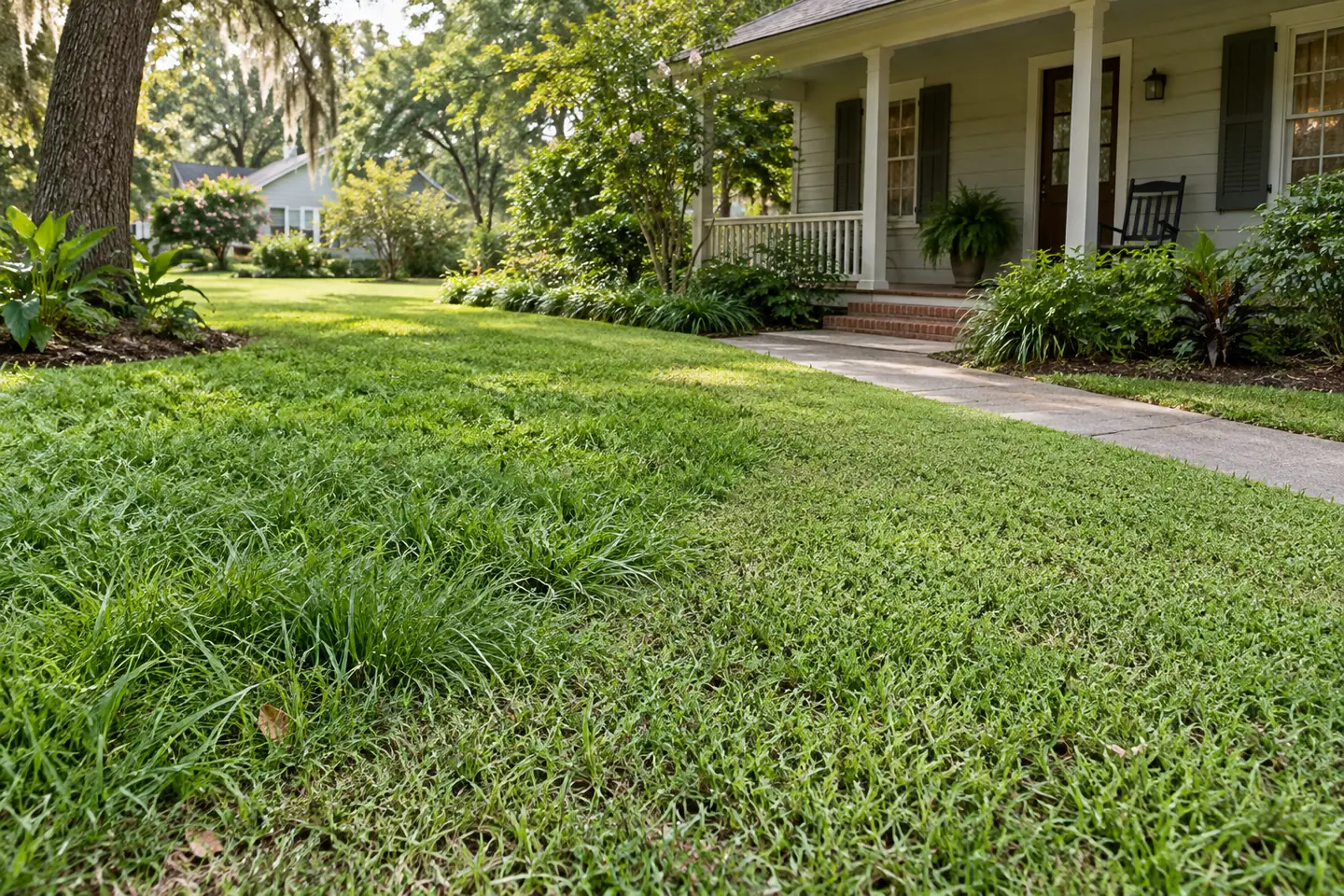
After a border trim, look for the remaining shoot locations rather than deciding from the overall neatness alone. The shoots may be shorter while the same perennial growth points remain. A later return of blades at those locations is a different observation from an area missed during the visit. Keep same-day finish and later persistence separate when reviewing the result. Both can be described honestly without treating mowing as proof of eradication.
Repeatedly lowering surrounding turf to chase stiff shoots does not establish that rhizomes have been addressed. Likewise, stripping all cover from a bed without a considered plan may create an exposed surface while leaving the original question unresolved. Discuss the plant's persistence before choosing work based only on the appeal of a bare border. The desired outcome should include what is to remain, what is to be removed and how the result will be reviewed.
Follow up on the border, not only the tallest blade
Record the number and location of visible groups at useful fixed landmarks. On a later inspection, compare where shoots appear on each side of the border and whether outliers occur beyond the original map. A single tall blade can be conspicuous, while many shorter ones are easy to miss. Looking at distribution keeps the review from becoming a contest over which photograph looks greener or more dramatic.
If another landscape project is planned, tell that provider about the suspected plant before soil is moved. Share the actual locations and identification status, not an unverified claim that every underground piece is torpedograss. A coordinated description can prevent maintenance and construction assumptions from conflicting. The purpose is to keep each task informed by the same observed site, while qualified assessment determines the broader management decisions.
Keep a soil-movement map separate from a shoot map
If a border project is planned, draw where soil is expected to move before the work begins. Then add the locations of identified or suspected torpedograss. The two maps can reveal a practical handling question even when the original source of the plant is unknown. Soil from a suspect bed should not be casually described as clean material for another planting area without an appropriate check.
For a completed project, reconstruct only what is actually known. Record a trench location, a pile destination or a bed section that was disturbed. Leave unknown origins and underground connections unfilled. An honest incomplete map is more useful than a confident story created from the newest visible shoot.
- Shoot location: record the surface and desired vegetation around it.
- Disturbed area: record the actual project boundary rather than an assumed spread route.
- Material destination: identify where soil or plant debris was placed if known.
- Unaffected growing area: keep it separate from temporary holding places for suspect material.
This approach connects the perennial-grass concern to a concrete task without assigning blame. It also helps keep ordinary edge maintenance from becoming an unplanned excavation or redistribution project. The next decision can address handling and identification while the larger origin question remains open.
Give the perennial border problem a separate scope
For Happy Grass, describe the stiff shoots, affected surfaces, desired plants and any known soil movement. Say whether the immediate request is maintaining the lawn edge or discussing available weed-control options. Do not assume that a mowing agreement includes excavation, soil disposal, landscape renovation or an underground containment guarantee. Those are different outcomes and should not be inferred from the instruction to clean up the border.
Call 504-339-3571 and ask for Happy for requests around Harvey, Marrero, Gretna, Algiers, Belle Chasse and Westwego. Fertilization, aeration, overseeding and pest control are not offered. A useful torpedograss conversation looks beyond the tallest blade while staying honest about what can actually be seen and agreed. The goal is a maintained edge and a clear next decision for the persistent plant, with no invented story about where it came from.