
Look between the grass blades
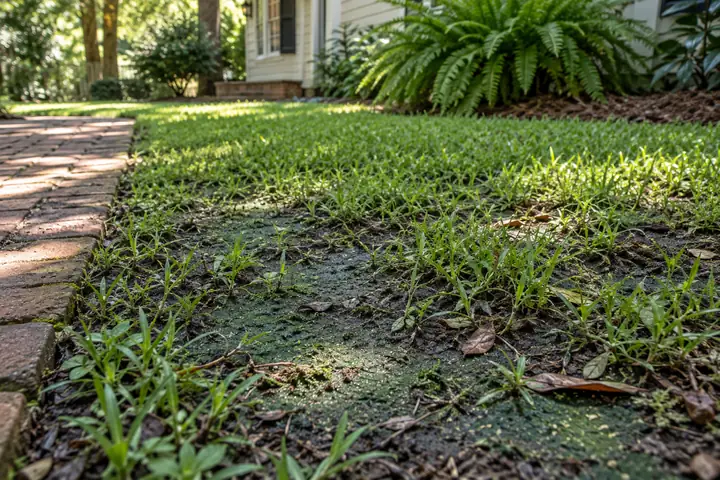
A green lawn surface is not always a dense stand of grass. In a thin area, a low film may occupy the spaces where leaves no longer cover the ground. After drying, that same area may look dark and cracked. Iowa State Extension describes this wet-film-to-dry-crust appearance for algae in lawns. It is a useful sequence to recognize, but color alone does not identify every slippery or dark patch in a yard.
Begin by looking at the relationship between the material and the grass. Is the growth coating individual blades, spreading across exposed ground, or sitting as separate little structures above the canopy? Do not combine all three into a report of mold. Describe the layer you can actually see. A surface concern may call for a different assessment from spots inside leaves or an unfamiliar plant growing upright among them. That difference is easy to lose in a photograph taken from the porch.
A surface colonizer is different from an infection inside a leaf
NC State explains that these algae do not infect grass plants in the way a leaf pathogen does. Their presence is often associated with a canopy already thinned by unfavorable conditions or another problem. That does not make the surface layer irrelevant: a drying crust can interfere with water movement and turf recovery. Keep both questions open, rather than deciding either that the film caused every missing plant or that it cannot matter at all.
Think of the assessment as two connected tasks. First, identify the material on the surface. Second, investigate why the intended turf is sparse enough for that material to be prominent. If only the first task is addressed, the same conditions may remain after the visible layer changes. If only the second is discussed, a real surface obstruction may be overlooked. A clear homeowner request can ask for both without guessing which one started the sequence.
Compare wet and dry appearances without staging a test
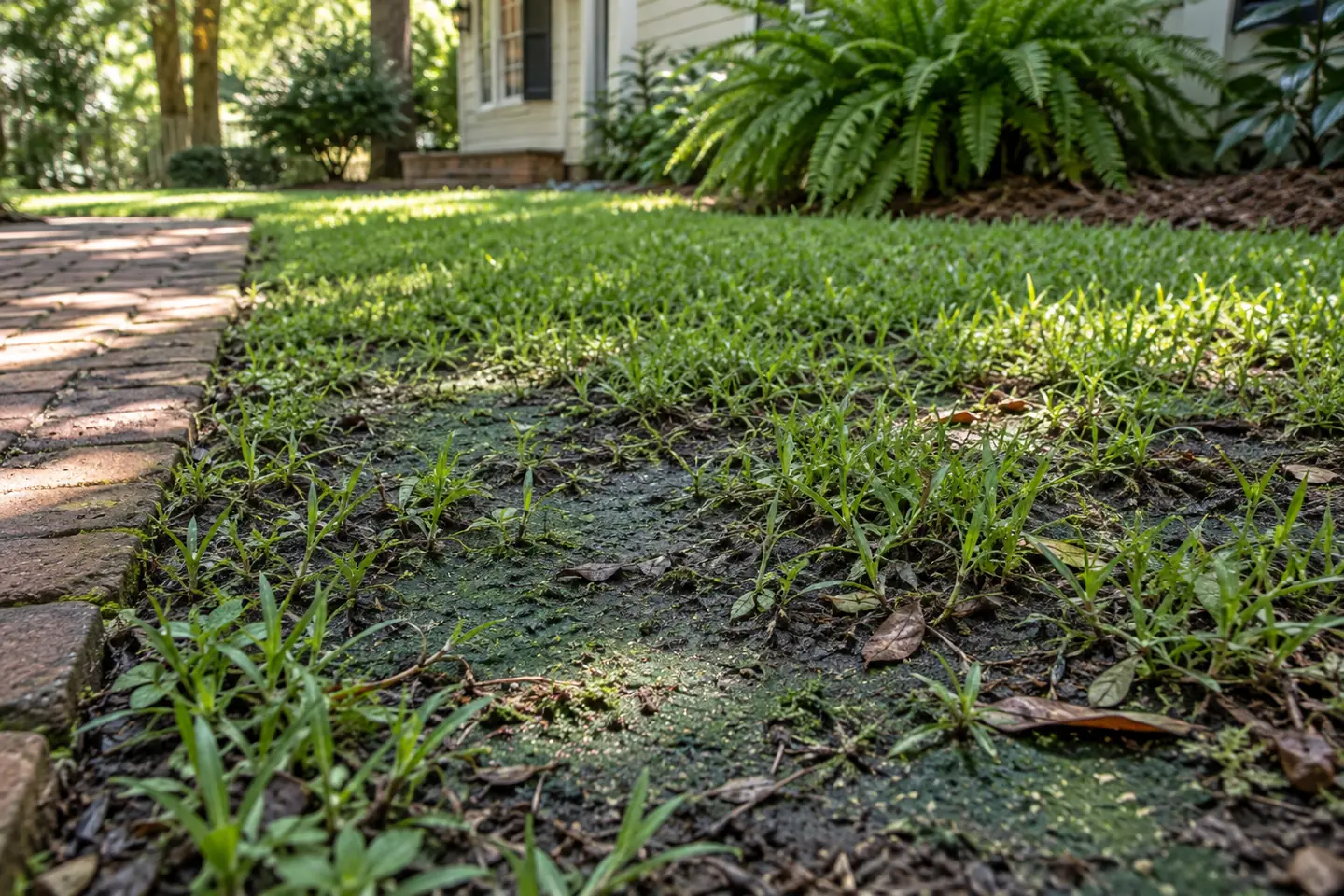
The same location can look slimy after rain and crusted later. If you have observed both states naturally, keep them together in the history. There is no need to soak the patch or scrape it into a dramatic display for a photograph. Record the weather context of the actual observation. A dry cracked surface and a fresh wet film should not be passed around as though they were two unrelated problems.
Useful comparisons include: – Whether the material is mainly on bare ground, thatch or living foliage. – Whether a green film becomes a darker layer as it dries. – Whether the patch changes when nearby grass remains visually similar. – Whether water is standing there or the surface simply stays wet longer.
Those observations help explain the location. They do not measure the organism's identity, soil compaction or irrigation performance. Keep the distinction between a visible sequence and a confirmed cause in the notes you share.
Read the gaps in the canopy
Algae become more noticeable when the grass does not shade the surface effectively. NC State identifies low mowing, shade, poor drainage and frequent irrigation among conditions favoring growth. The practical question is which of those conditions, if any, applies to this area. Do not assume every dark patch beside a tree has the same history. A thin place under a hedge and a bare strip created by repeated traffic may look alike from above while needing different attention.
Compare the affected spot with the nearest area of the same grass that remains dense. What is actually different about exposure, traffic or water? Keep the comparison local enough to be useful. A sunny front lawn is not a perfect control for a deeply shaded backyard. If the lawn was recently disturbed by a project, retain that history too. The empty spaces may have existed before the film was first noticed, and that sequence matters when deciding what recovery would involve.
Moisture deserves a specific explanation
A wet surface does not automatically prove excessive irrigation. Rain, runoff, an outlet or slow drying may contribute. Conversely, a sprinkler being off does not mean that no water reaches the area. Describe the route you can observe: water crossing from a paved surface, droplets under a drip point, or a shallow depression holding rain. If the source is unknown, leave it unknown instead of choosing the most obvious nearby pipe.
Before changing irrigation, ask what condition the change is meant to address. Reducing a whole zone to dry one small corner can affect other turf in that zone. Increasing watering because a crust looks dry can also miss the reason the surface behaves differently. A useful review considers the grass and the surface together. The aim is to understand where moisture is coming from and how the area dries, with an appropriately supported response for the actual site.
Do not confuse the crust with moss or a harmless loose covering
Moss, algae, loose soil, clipping residue and material on leaves are different things. A green color does not make them interchangeable, and a casual common name may hide that uncertainty. Describe whether the material has recognizable tiny leafy shoots, a film-like surface or loose fragments. An adviser can then decide whether closer identification is needed. Avoid scraping away the entire feature before someone has had a chance to see what concerned you.
This is also why the location matters. Material spanning the gaps between living plants tells a different story from a growth perched on the leaves. Our separate moss and slime-mold guides discuss those other observations. Use them to compare the feature, not to cycle through names until one photograph seems close. If the appearance does not fit comfortably, ask for identification rather than treating a nearly matching image as proof. The lawn can tolerate an honest unanswered question while the next step is arranged.
Keep slippery areas out of the routine route
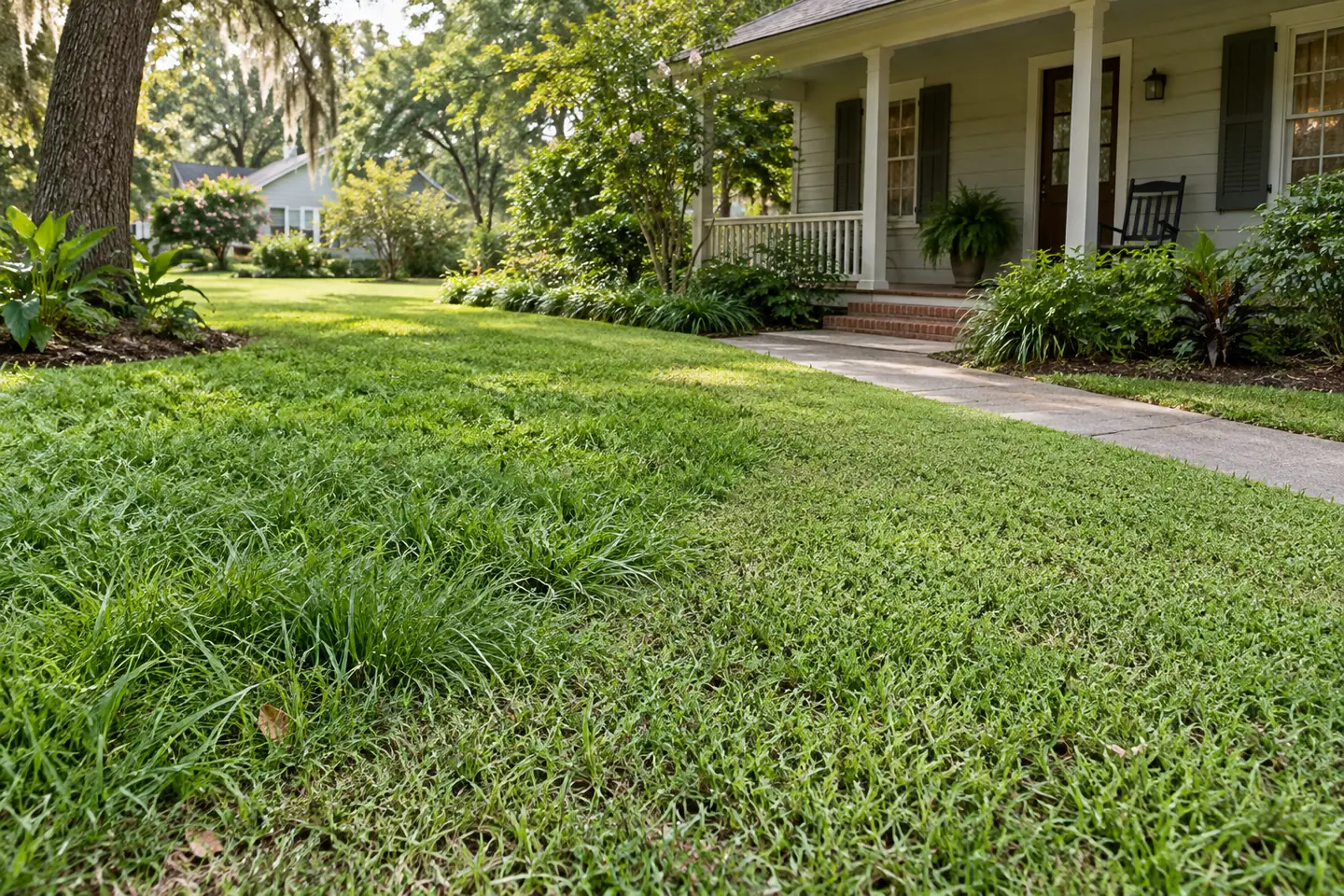
University of California Extension notes that algal growth can be slippery on shaded walks or lawn surfaces. If you have noticed poor footing, identify the affected route before a visit. Do not require someone to step on it to prove the condition. A small film beside the only gate may matter more to equipment access than a larger patch in an unused corner. Explain how the area is normally crossed and whether an alternate route exists.
Surface cleaning, turf assessment and repair are separate requests. Blowing away routine mowing debris does not establish that an attached film or crust has been addressed. Likewise, leaving a wet patch untraveled is a practical visit decision rather than a diagnosis. Confirm the work and the route while the area is still easy to point out. That avoids turning an ordinary mowing appointment into an improvised effort to scrape or wash an unidentified layer.
Ask what a proposed surface operation will accomplish
Breaking up or removing a layer may be discussed by an appropriate adviser, but that action is not the same as restoring a dense grass stand. Ask what has been identified, why the operation is suitable and what happens to the exposed area afterward. Do not assume aggressive raking is a universal first step. The surface may contain vulnerable runners or another feature that needs to remain intact for the assessment.
Also ask which outcome will be reviewed. A less visible film, better rooting into the surface and improved living cover are different observations. Keep a record of the original boundary so the next review can compare more than neatness. If another cause of thinning is identified, connect its separate plan to the surface work. This gives recovery a practical direction instead of leaving the homeowner to repeat the same cleanup every time the dark area reappears.
Bring the lawn back into the conversation
For a West Bank homeowner, the useful goal is a surface that supports the intended grass and can be maintained sensibly. That starts with distinguishing the film from the turf, identifying the reason for the gaps and arranging any separate assessment needed. The green layer is a clue to investigate; it is not a substitute for understanding the lawn beneath your feet.
In Harvey, Marrero, Gretna, Algiers, Belle Chasse and Westwego, explain the affected location and how it changes between wet and dry conditions before the next visit. A small amount of precise description can keep several different tasks from being bundled into one vague request. The next cut can then follow the actual grass and access conditions while the surface question receives the attention it needs.
Confirm the maintenance work with Happy
Call 504-339-3571 and ask for Happy. Discuss the available lawn-maintenance scope and any access limits before booking. This educational guide does not offer laboratory identification, algal treatment, fertilization, aeration, overseeding or pest control. Any separate corrective work needs its own appropriate provider and agreement.