
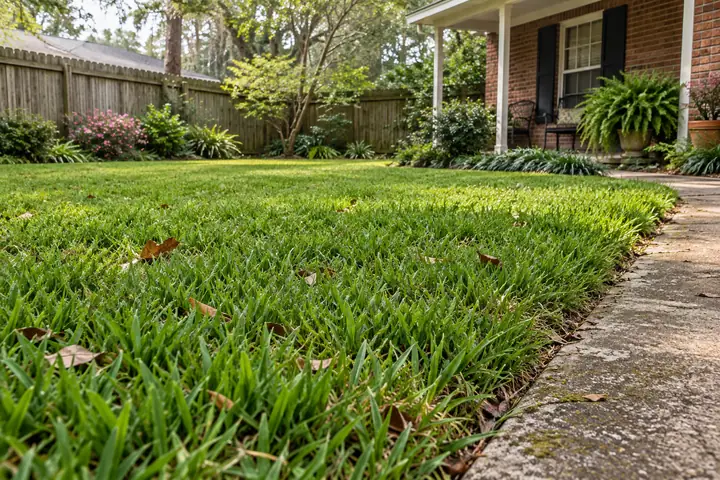
The surface you walk on has several levels
From above, a lawn looks like one green surface. Under the leaves, however, living shoots, runners, older plant material and soil occupy different levels. Thatch is a particular layer between the green canopy and soil, not a name for everything brown beneath the mower. LSU AgCenter describes living and dead turf tissues, including spreading stems, within that layer. Some is useful; excessive accumulation can change how the lawn functions.
That distinction matters when a homeowner says the grass feels puffy or springy. The sensation is worth describing, but it does not measure thatch by itself. Soft ground, burrows and a thick canopy can also change footing. Before requesting removal, identify which level is responsible for the condition. A lawn should not be subjected to a disruptive operation simply because a handful of brown material can be pulled from the surface.
A layer forms when production outpaces decomposition
University of Minnesota Extension explains that thatch accumulates when plant material is produced faster than it breaks down. Tougher tissues from stems and other structures persist differently from small, soft leaf clippings. This is why the last mowing is not necessarily the origin of a layer that developed over time. A visible clipping clump and an interwoven mat beneath the canopy are different observations, even if both contain brown grass material.
Think about the question you want answered. If fresh clippings are lying in windrows after a cut, the immediate concern is their distribution and cleanup. If the base of the living turf seems elevated above the soil, the question concerns the underlying profile. One does not establish the other. Keep the two requests separate so routine cleanup is not mistaken for correcting an accumulated layer, or an old layer blamed entirely on a recent visit.
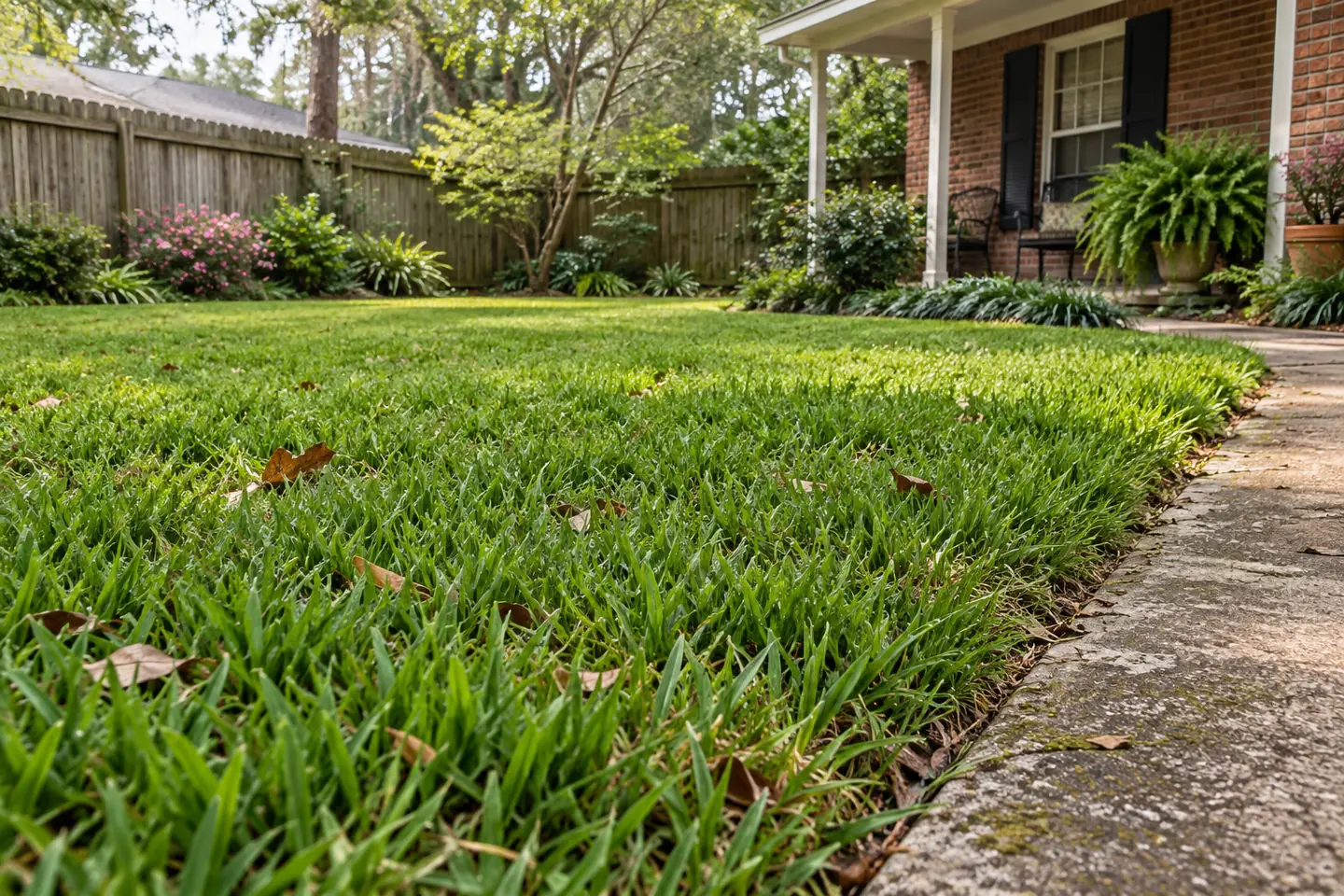
Some thatch is part of a functioning lawn
LSU notes benefits from a modest layer, including cushioning and moderation of moisture and temperature. The goal is not to remove every trace of organic material until bare mineral soil is visible. A blanket instruction to get rid of all the brown can therefore lead the conversation in the wrong direction. Ask whether the actual amount and condition of the layer are interfering with this turf, rather than assuming its presence is a defect.
The amount alone also needs context. Which grass is present? Where are its runners and roots located? Is the layer evenly distributed or concentrated in a section with a different maintenance history? Those questions help explain what the lawn is doing. A single attractive photograph of an exposed profile does not set a universal target for every yard. Use an appropriate local assessment to interpret the finding instead of treating every regional threshold as a prescription for your property.
Inspect the profile rather than measuring loose debris
An intact view through the turf can show where leaves end, the interwoven layer begins and soil lies below. Measuring a pile pulled loose by a rake does not show its original thickness. Air spaces and disturbed material can make that pile appear much larger than the layer it came from. If an adviser requests a core or wedge, ask for current directions and choose the location carefully before disturbing the ground.
A useful profile review distinguishes: – Loose material resting on top of the canopy. – The base of living leaves and spreading shoots. – A distinct interwoven layer beneath them. – The transition into soil and the location of roots.
Keep the original orientation visible when showing a sample. If the layers are hard to distinguish, say so rather than assigning a precise thickness to an uncertain boundary. The purpose is to understand the structure, not to produce a dramatic-looking handful.
Grass species influence the tendency to accumulate
LSU lists different thatching tendencies for the warm-season grasses commonly grown in Louisiana. Zoysiagrass, bermudagrass and St. Augustinegrass do not necessarily behave like centipedegrass or a cool-season lawn described in another state. Even within one property, a change in turf can affect the profile. Confirm the grass in the sample area before borrowing a conclusion from the healthier-looking section across the yard.
This is particularly important when a mixed stand has been maintained at one height and interval for years. Different growth habits may be hidden by an apparently uniform finish. Tell the assessor if one section spreads or grows differently, but avoid choosing a grass name merely because it appears in a thatch article. An honest identification question is useful. A mistaken species label can send later mowing and corrective decisions in the wrong direction before the layer itself is even assessed.
Rooting above the soil changes the recovery question
An excessive layer can affect where roots develop and how the turf responds to moisture and temperature stress. The practical concern is the plant's connection to the soil, rather than the untidy look of old material. Ask where the living roots are concentrated and what that means for the actual grass. A deep-looking canopy does not automatically mean a deep root system underneath it.
If runners are loose or the lawn seems to scalp unexpectedly, retain those observations for the review without assuming thatch is the only explanation. Uneven ground, an unsuitable cut and other surface conditions need consideration. Do not repeatedly peel up the lawn to demonstrate weak attachment. An appropriate sample can preserve the relationship between shoots, layer and soil while leaving most of the stand intact. The next decision should follow that relationship, not simply the color of the material.
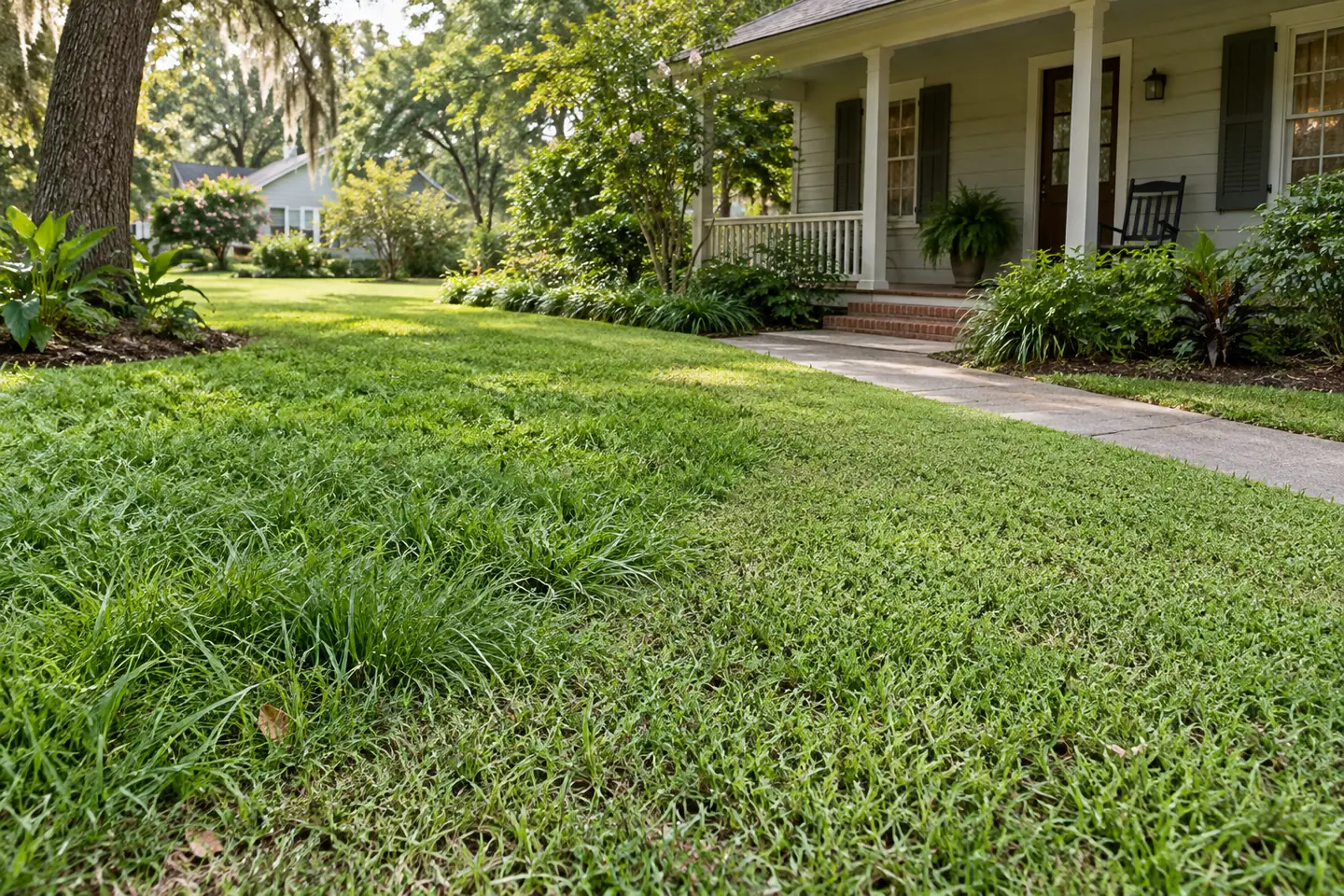
Removal is a separate operation from an ordinary cut
Vertical mowing and other thatch-management operations are discussed in Extension resources, but a routine rotary cut does not perform the same job. Removing a little more leaf height is not a substitute for assessing and managing the layer. Likewise, an attachment described as a dethatcher does not establish that it is suitable for every grass or condition. Ask the proposed provider what operation is intended, what it will disturb and why it fits this lawn.
The conversation should include the amount of resulting material and who will remove it. A disruptive operation may leave the yard looking very different from a normal finished cut. Know that before it begins. Confirm access, sensitive features and the area included, and keep any specialist work separate from Happy Grass's agreed maintenance scope. The presence of a thatch guide on a lawn website should not be interpreted as a promise that every corrective operation is offered.
Recovery timing should follow the grass
LSU emphasizes active growth and suitable recovery conditions when discussing disruptive thatch work on warm-season turf. Minnesota guidance uses a different seasonal context for its lawns. These are not interchangeable calendars. A homeowner should ask why the proposed timing suits the identified grass and current conditions rather than copying the first month found in a search result. The condition of the soil also matters to equipment access and disturbance.
Before arranging separate work, ask how the next routine mowing visit fits the recovery plan. Is there an instruction to wait, avoid part of the yard or review new growth first? Keep that instruction specific and dated. Do not assume the normal interval continues unchanged merely because the calendar appointment is still present. The objective is to maintain the surviving lawn sensibly while the corrective plan is evaluated, with each provider understanding the work already performed.
Address the reasons for accumulation as well as the appearance
If an excessive layer is confirmed, ask which factors are contributing at the site. Extension references discuss growth rate, soil conditions and management history. The useful response is a supported explanation for this lawn, not a list of every possible cause. Retain any actual soil information and product history, and distinguish known facts from guesses. A recommendation should identify the condition it is intended to change.
Across Harvey, Marrero, Gretna, Algiers, Belle Chasse and Westwego, the homeowner's goal is a grass stand connected to a suitable growing surface. A less puffy appearance may be one observation along the way, but it is not the whole outcome. Compare the assessed layer, living turf and maintenance behavior at follow-up. That gives the lawn a plan extending beyond the next pile of material removed from it.
Discuss the confirmed maintenance scope
Call 504-339-3571 and ask for Happy to discuss available lawn maintenance. Share any profile assessment or recovery instructions before the next visit. This educational guide does not add dethatching, aeration, fertilization, overseeding, diagnosis or pest control to your agreement. Separate corrective work needs its own appropriate provider and scope.