
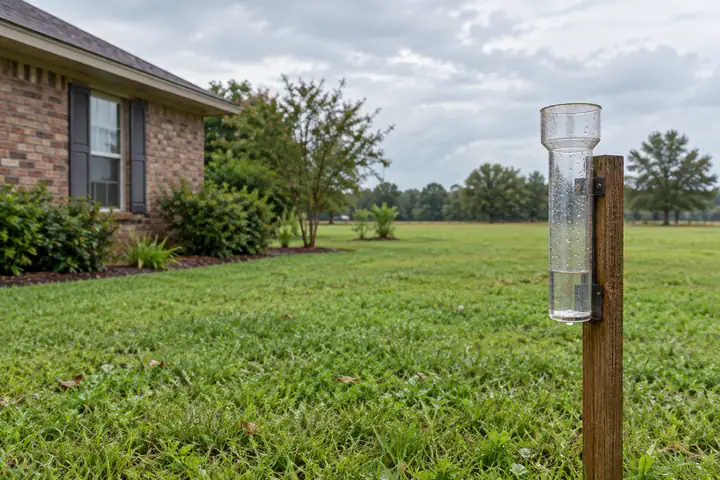
Start with the rain that reached this lawn
A thunderstorm can sound impressive on the roof without telling you how much water landed on the grass. A rain gauge gives that conversation a number. It does not decide whether the lawn needs watering, but it replaces one guess with an observation from the property itself. For a Westbank homeowner, the useful question is often whether the shower actually reached the backyard as well as the street. Record what the gauge collected and when you checked it. Then look at the turf and ground separately. A measured shower, a firm walking route and a pale grass patch can all exist together without proving that any one of them explains the others. Let the measurement narrow the question before it becomes a watering instruction.
Choose a gauge you can read consistently
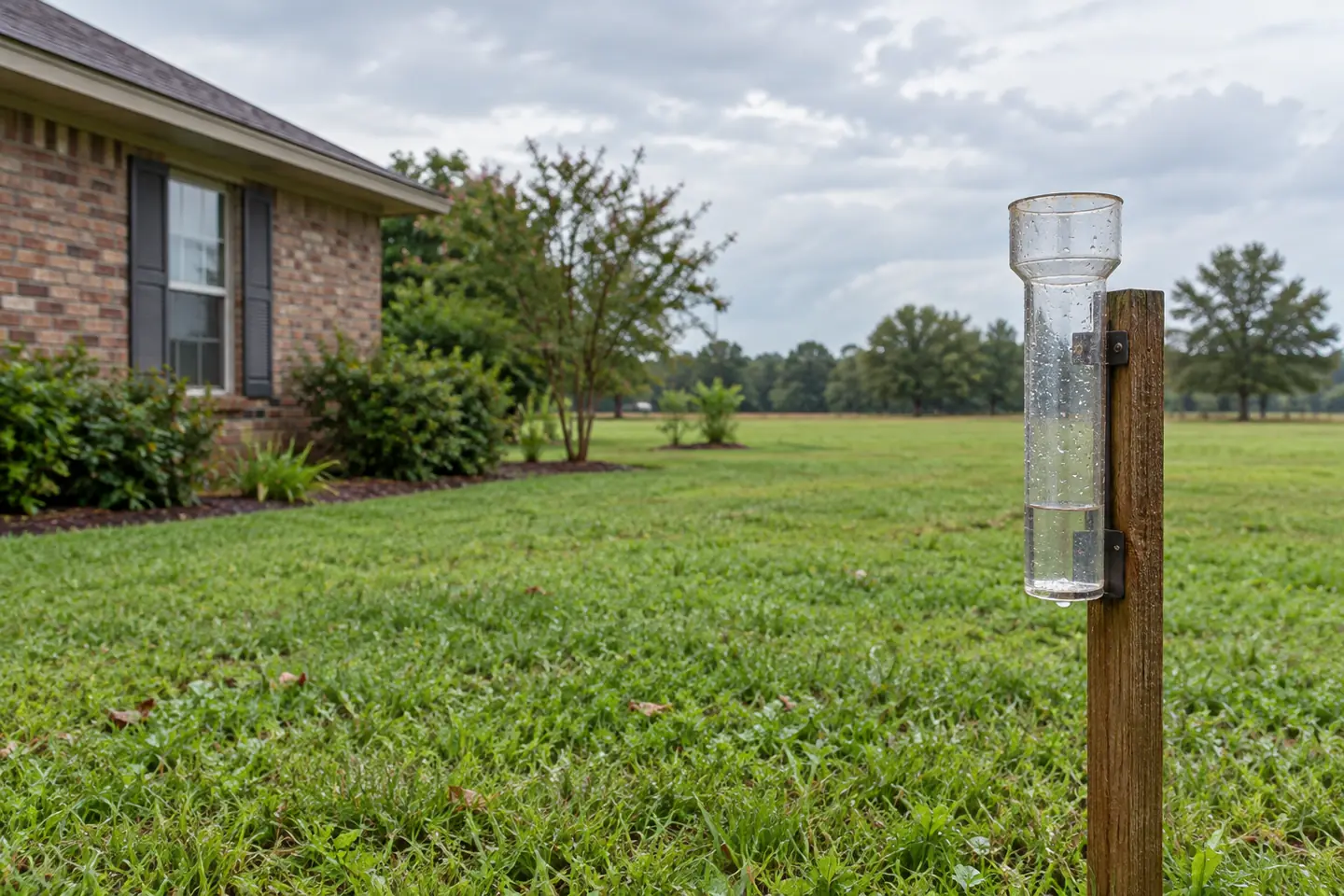
Use a purpose-made gauge with its own scale and instructions. An attractive bottle is not automatically a measuring instrument: the size of its opening and the shape of its reservoir matter. Read the scale that belongs to that device instead of holding a ruler against an unfamiliar funnel-shaped container. Before relying on a new gauge, check that its parts are assembled correctly and that the mounting bracket holds it in the intended position. Pick a location where you can approach it without stepping through an already soft lawn. A slightly less convenient reading spot can be worthwhile if it produces a clearer record, but a gauge you never check quickly becomes another forgotten object beside the fence.
Find an open collection position
The goal is to observe rainfall, not roof drainage or water shaken from a tree. Avoid putting the gauge under an eave, directly beneath foliage or in a downspout splash area. Those settings can make the reading represent a small artificial catchment rather than the open lawn. Follow the gauge maker's placement guidance and keep its opening unobstructed. Photograph the position once, including nearby structures, so a later reading has context. If the only accessible place is partly sheltered, write that limitation into your notes. A clearly described imperfect observation is more useful than presenting a sheltered gauge as a precise property-wide measurement. Do not climb a wet roof or improvise a risky mounting position just to obtain a better location.
Give every reading a beginning and an end
An amount without an interval is easy to misinterpret. Water found on Tuesday morning might include several showers since the last time the gauge was emptied. Record the reading time, the previous emptying time and whether you know of intervening rainfall. Empty or reset the device according to its instructions after saving the result. Keep that task separate from changing an irrigation controller. Otherwise, a quick look outside can turn into several unrecorded adjustments and leave you unsure which event affected the lawn. A simple notebook line works: checked before breakfast, collection started yesterday evening, no sprinkler operated near the gauge. Add the measured amount exactly as its scale displays it, including the unit.
Keep sprinkler water separate from rainfall
The LSU AgCenter recommends measuring rain as part of a watering decision. That only works when you know what entered the gauge. If a sprinkler can reach it, the reading may combine two sources. Note any irrigation during the collection period rather than labeling the total as rain. You can also choose a collection location outside the spray pattern while keeping the opening exposed to the sky. Do not move the gauge casually between readings and then compare its totals as though the position never changed. For an owner using a portable sprinkler, a small sketch of the usual spray area helps explain why one week's gauge record differs from another. The distinction matters most when a brief shower follows an irrigation event.
Compare the gauge with a weather report sensibly
A forecast predicts conditions; a weather station reports conditions at its own location. Your gauge is another observation with its own placement and reading limits. None should be forced to agree perfectly. If the phone shows rain but your gauge is nearly empty, first check the collection interval, obstructions and whether a localized shower missed the property. If the gauge seems unusually full, consider roof splash, a nearby sprinkler or a long gap between readings. Treat disagreement as a reason to inspect the record. It is not proof that the app is broken or that your lawn received a precise amount. Save the date and location description with any comparison so an old screenshot is not mistaken for the current event.
A rainfall total does not describe the root zone
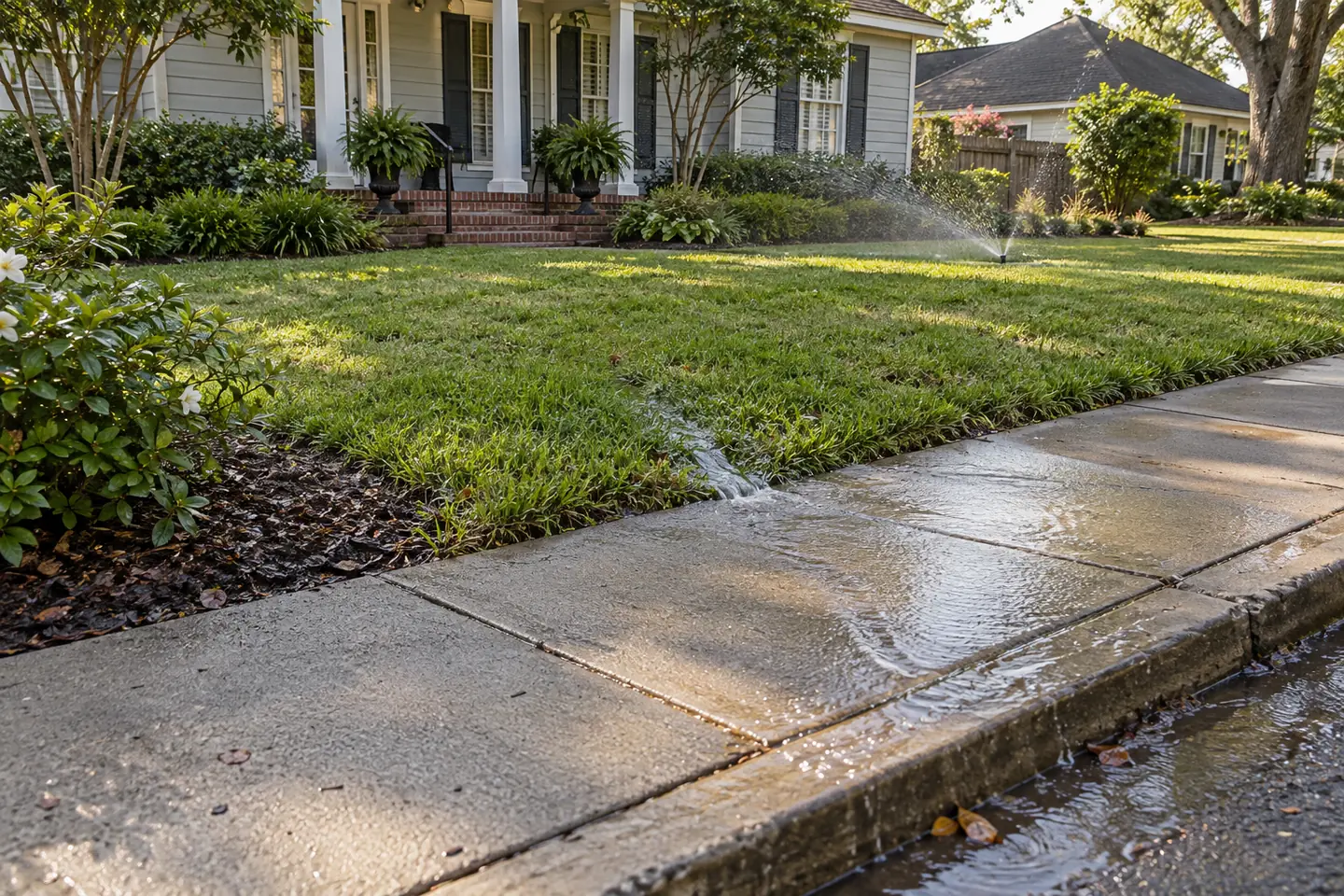
The gauge tells you about collected precipitation, not how every part of the property accepted it. A sloping strip may shed water toward a walk. A low corner may collect water arriving from elsewhere. A narrow sheltered space may receive a different amount than the open collection point. Look for those differences without inventing an exact absorption figure. When a patch remains soft, describe its location and how long the condition persists after the rain stops. When another patch looks dry, compare the setting rather than automatically adding water across the whole lawn. A single number becomes much more useful when it sits beside a few careful observations instead of trying to stand in for them.
Make a small record you will actually maintain
Keep the entry short enough to repeat. A large spreadsheet with empty columns is less useful than six consistent lines in a phone note. Separate measurements from impressions so that a phrase such as heavy rain does not quietly replace the recorded gauge amount. You can include a photograph of the scale if it is readable, but avoid relying on a distant photo as the only record. Glare, viewing angle and a forgotten date can make that image ambiguous later. If someone else checks the gauge while you are away, give them the same reading and reset instructions. Continuity matters more than turning a household observation into a complicated monitoring project.
- Save the amount and unit shown by the gauge.
- Note when collection started and when you read it.
- Identify any sprinkler contribution or collection obstruction.
- Add a separate note about soft ground or visible turf changes.
- Record a move, cleaning or missed reading instead of hiding the gap.
Account for the instrument as a yard object
A gauge can help with watering decisions and still be an obstruction during maintenance. Place its stake where it is visible, stable and outside the agreed mowing route. Do not assume a clear plastic tube will stand out against a fence or that a temporary marker can be spotted from every direction. Tell the person maintaining the lawn whether the gauge stays in place or will be removed beforehand. If you relocate it for a visit, note the move in the rainfall record. Keep loose mounting pieces off the grass. The practical goal is a useful measurement without turning a small piece of equipment into a surprise at the edge of the next cut.
Keep an observation total separate from a watering target
Imagine a note showing a small amount from one shower and another amount collected the following morning. Adding the two recorded amounts can describe the combined collection only if their intervals do not overlap and the gauge was handled consistently. That arithmetic does not establish a weekly watering requirement. Preserve the individual entries so someone can check what was added together. If the gauge was not emptied between them, the second reading may already include the first. Clear intervals prevent this common double-counting problem without requiring sophisticated equipment or a complicated spreadsheet.
Use the record to ask a better question
Suppose your front gauge collected a shower, but the backyard remains soft the following afternoon. A useful question includes both observations: how much was collected, where the instrument stood, which part stayed soft and whether a sprinkler also ran. That is a stronger starting point than saying the lawn needs less water everywhere. An irrigation professional or Extension resource can help interpret a watering problem; a maintenance request can explain which route or patch needs a fresh look before work. Keep those conversations connected while allowing each person to answer the question within their role. You do not need perfect data to make progress. You need a record honest enough that the next decision is based on the yard you actually have.
Talk with Happy about the mowing route
For mowing, edging, trimming or the finishing blow-off, tell Happy where your gauge sits and whether rain has changed access. Call 504-339-3571 and ask for Happy, or send your yard request through the quote page. Rainfall measurement and irrigation assessment remain separate from the agreed lawn-maintenance scope.